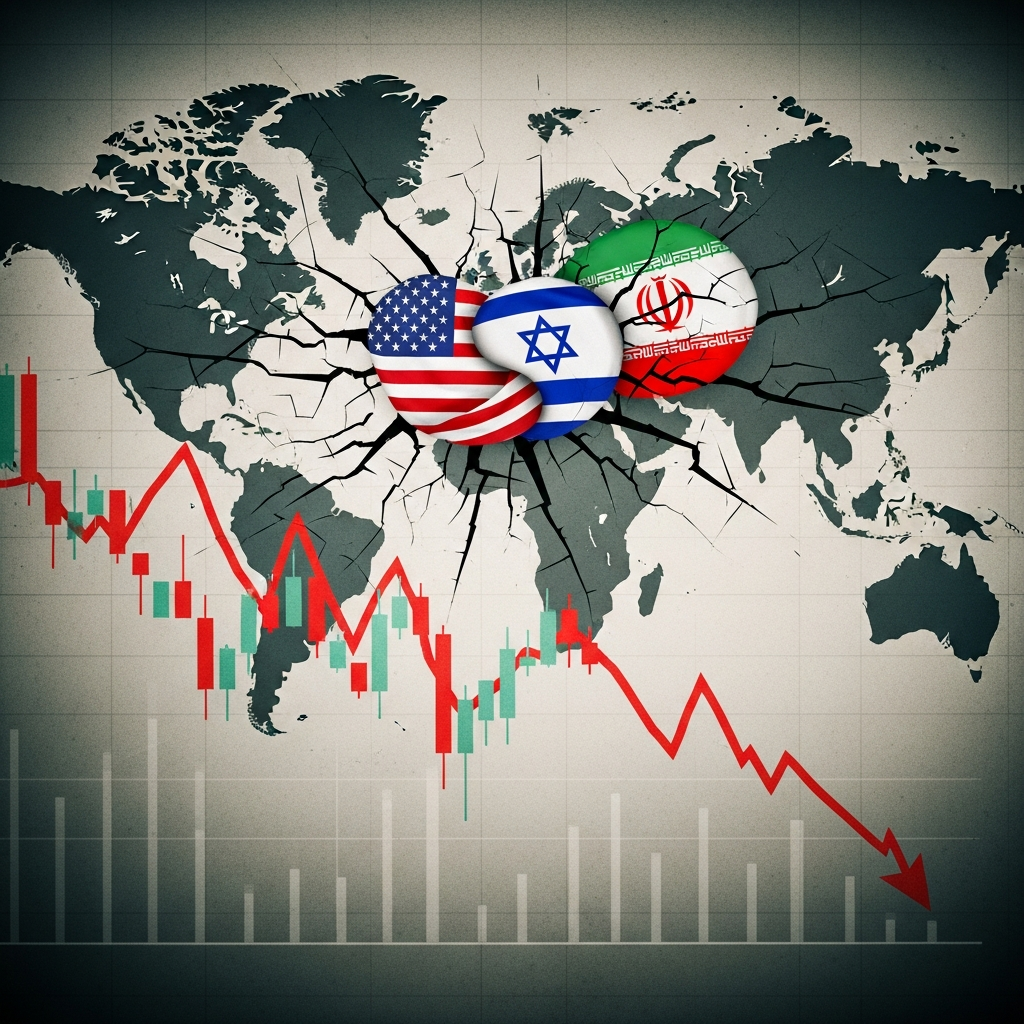
The escalating conflict in the Middle East, particularly the recent US-Israel war on Iran, is sending significant tremors through the global economy. Experts are actively comparing its potential economic shock to the unprecedented disruptions caused by the COVID-19 pandemic. While different in nature, this new geopolitical crisis threatens to reshape energy markets, drive up inflation, and impact household finances worldwide. Initial assessments suggest that while the immediate shock mechanisms differ, the magnitude of potential global economic disruption demands serious attention.
Understanding the Iran War’s Economic Impact
The current Middle East conflict, following Russia’s invasion of Ukraine and the lingering effects of the pandemic, has sharply exposed the world’s persistent reliance on fossil fuels. This dependence creates a significant vulnerability. Key energy infrastructure attacks, such as those on Qatar’s vital LNG export facility and sites in Saudi Arabia, Kuwait, and the UAE, have quickly escalated the situation. These strikes, including a response to an Israeli attack on an Iranian gas field, have triggered dramatic price spikes. Brent crude oil, for instance, surged from below $70 to nearly $120 a barrel, with projections suggesting it could reach $150 or even $200 if attacks continue. This represents an unprecedented energy shock in percentage terms, potentially surpassing even the crises of the 1970s.
The Immediate Energy Crisis: A Supply-Side Shock
The impact on global energy markets is immediate and multi-layered. A critical factor is the potential closure of the Strait of Hormuz, a vital chokepoint for global oil and gas shipments. Such a closure instantly leads to insurers refusing coverage for cargoes, stranding hundreds of loaded tankers and causing a severe shortage of empty vessels. Major Gulf producers might initially continue pumping oil, but storage facilities quickly become saturated. This forces producers to shut in millions of barrels of oil per day, fundamentally disrupting global supply. This supply-side shock is distinct from the demand-side contraction seen during early COVID-19 lockdowns, creating unique challenges for businesses and consumers.
Global Inflation and Consumer Costs
Rising oil and gas prices translate directly into higher costs across numerous sectors. Consumers are already seeing increased gasoline prices, potentially nearing $5 per gallon in some regions. Beyond fuel, the ripple effects are extensive:
Transportation: Airfares and shipping costs soar, impacting supply chains.
Manufacturing: Industries relying on plastics and petrochemicals face inflated raw material expenses.
Agriculture: Fertilizer production, heavily dependent on natural gas, becomes more costly, threatening global food security. The UN climate chief, Simon Stiell, highlights that fossil fuel dependency inherently undermines national security.
These cascading costs contribute to persistent inflation, eroding purchasing power for households and challenging central banks globally.
The UK Financial Outlook: Mortgage and Housing Market Pressures
The escalating Middle East conflict carries significant implications for household finances, particularly in the United Kingdom. The Bank of England (BoE) warns that approximately 1.3 million more UK homeowners could face higher mortgage payments by the end of 2028. This would increase the total number of affected households to 5.2 million within the next two and a half years. While the BoE suggests these increases might remain “modest” compared to the sharp hikes after the 2022 mini-budget, the added pressure is undeniable.
Interest Rate Uncertainty and Lender Adjustments
The BoE’s Financial Policy Committee (FPC) attributes this deteriorating economic outlook to the shock of rising oil and gas prices, alongside an increase in government borrowing costs. These factors are expected to hinder economic growth and push up inflation, potentially forcing central banks to rethink their monetary policies. Before the conflict, interest rates were projected to fall. Now, the prospect of rising energy costs suggests rates could remain elevated or even increase further to combat inflation. Financial markets currently price in two interest rate hikes this year, though BoE Governor Andrew Bailey views this as “getting ahead of themselves.”
The mortgage market has already reacted. Lenders have withdrawn some of the most competitive deals, leading to a rise in average rates. As of early April, a two-year fixed mortgage averaged 5.84%, with a five-year fixed deal at 5.75%. This increased cost of borrowing is expected to diminish affordability and reduce activity in the housing market, as confirmed by major lenders like Nationwide. Despite these challenges, the BoE asserts that the UK financial system remains resilient, capable of supporting households and businesses even under “substantially worse than expected” conditions.
Geopolitics and the Energy Transition: Electrostates vs. Petrostates
The current crisis underscores a profound global division: “petrostates” focused on maximizing fossil fuel extraction versus “electrostates” committed to a low-carbon future. Former US Secretary of State John Kerry aptly describes this as the “dawn of the electrostates versus petrostates,” with electricity as the “holy grail.” While global trends favor renewables—last year saw low-carbon electricity surpass coal and clean energy investment double that into fossil fuels—the conflict reveals a sobering reality.
Beneficiaries and Climate Stances
Many powerful nations, particularly major greenhouse gas emitters, are directly benefiting from the surge in fossil fuel prices:
United States: Despite a green economy boom under President Biden and the Inflation Reduction Act, the US oil and gas sector anticipates a $60 billion windfall. A potential change in administration could dismantle climate policies, boost oil, gas, and even coal, reflecting a “climate nihilism” according to critics.
Russia: Showing no green aspirations, Russia uses oil and gas as geopolitical weapons. As the third-largest oil and gas producer, it benefits significantly from high prices, with minimal engagement in global climate action.
Saudi Arabia: Its national oil company, Aramco, has seen share prices surge, incentivizing further hydrocarbon expansion.
Iran: Despite infrastructure attacks, Iran’s oil revenues have reportedly increased. Rebuilding its inefficient infrastructure, which currently loses significant natural gas (methane), to higher standards could, ironically, offer a “silver lining” for emission reduction.
Conversely, some nations are pushing hard for electrification:
China: The world’s largest emitter, China is leading the charge for electrification. Its emissions have been flat or falling for nearly two years due to record renewable growth for both domestic use and export. Green technology now comprises over 10% of its exports and economy.
- India: As the most populous nation, India is actively transitioning. It targets 60% of electricity from low-carbon sources by 2035, though it maintains coal will remain crucial for energy security in the near term.
- www.theguardian.com
- www.bbc.com
- www.newyorker.com
However, the lines are often blurry. Germany, a renewables pioneer, still relies on gas, while Indonesia’s “just transition” plan faltered due to vested interests and high coal prices.
Long-Term Outlook and Mitigation Strategies
The “Iran war” is, in many ways, a stark reminder of the greater climate crisis looming. The choices made by the world’s 10 biggest emitters will largely determine the future trajectory towards a low-carbon economy or deeper oil dependency. Relying solely on free markets for this transition is insufficient; economist Jayati Ghosh argues that government intervention, similar to China’s approach, is indispensable. This includes electrification of transport, subsidies, and robust infrastructure development.
A critical, immediate strategy for slowing near-term warming is methane reduction. Durwood Zaelke advocates for a mandatory global methane agreement, emphasizing its potential to reduce warming by 0.3°C by the 2040s and prevent irreversible tipping points. Failure to address climate breakdown could lead to economic impacts equivalent to “a new oil war every single year” if global temperatures rise 2°C above pre-industrial levels within two decades.
Frequently Asked Questions
What are the main economic consequences of the escalating Middle East conflict?
The primary economic consequences include a sharp increase in global oil and gas prices due to supply disruptions and attacks on energy infrastructure, leading to widespread inflation. This impacts transportation costs, manufacturing (e.g., plastics), agriculture (fertilizers), and consumer spending. Additionally, central banks may keep interest rates higher to combat inflation, affecting borrowing costs like mortgages, particularly for homeowners in countries such as the UK.
How does this economic shock compare in magnitude to the COVID-19 pandemic?
While the nature of the shocks differs – the current conflict primarily an energy supply shock versus COVID-19’s initial demand and broad supply chain disruptions – some assessments compare their potential global economic magnitude. The oil shock itself is described as “unprecedented in percentage terms,” potentially larger than 1970s crises. However, the overall economic impact on specific sectors, like UK mortgages, might be “modest” compared to other recent events, suggesting a nuanced comparison is needed rather than a direct one-to-one equivalence.
What are the long-term implications for global energy security and climate goals?
The conflict exposes the critical vulnerability of global dependence on fossil fuels, strengthening the divide between “petrostates” benefiting from high prices and “electrostates” pursuing low-carbon futures. It reinforces the urgency for nations to transition to renewables to enhance national security and sovereignty. While some major emitters benefit from high fossil fuel prices in the short term, the long-term implication is a renewed focus on government intervention, investment in green technologies, and strategies like methane reduction to avert a much larger climate crisis.
Conclusion
The Middle East conflict presents a significant and multifaceted challenge to the global economy. Its immediate impact on energy markets, driving up prices and inflation, demands urgent attention from policymakers and businesses worldwide. While the specific mechanisms of this “Iran war shock” differ from those of the COVID-19 pandemic, its potential to disrupt global trade, destabilize financial markets, and strain household budgets underscores its comparable importance. As nations navigate these immediate pressures, the underlying fragility of fossil fuel dependence reinforces the critical need for an accelerated transition towards sustainable energy solutions. The choices made today by major global emitters will determine not only the scale of this current crisis but also the long-term resilience of the global economy against future shocks.