Get ready for a spectacular celestial event in April 2026! The much-anticipated April Pink Moon will grace our night skies, offering a stunning display of lunar beauty. This full moon coincides with a monumental moment in space exploration: a key launch window for NASA’s Artemis II mission. This journey marks the first human mission to the Moon’s vicinity in over five decades. Our comprehensive guide reveals when and how to best experience this rare cosmic convergence. Learn about the moon’s captivating cultural heritage and what other stellar events await you.
The Pink Moon Unveiled: What to Expect
April’s full moon, affectionately known as the Pink Moon, holds a special place in annual skywatching. In 2026, it reaches its peak illumination on Wednesday, April 1, at 10:11 p.m. ET (7:11 p.m. PT). For UK observers, the peak occurs early on Thursday, April 2, at 3:12 a.m. BST. Despite its enchanting name, the moon itself will not appear pink. Instead, it will display its familiar brilliant gray or golden hue. As it rises low on the horizon, atmospheric scattering can make it glow a vibrant orange or red. This filtering of blue light through Earth’s dense atmosphere often creates this captivating visual effect.
Understanding the “Pink Moon” Name
The poetic “Pink Moon” moniker pays homage to early spring blooms. It specifically refers to the Phlox subulata wildflower. This vibrant pink-colored plant is native to eastern North America. Often called “moss pink” or “creeping phlox,” its emergence perfectly coincides with April’s full moon. This traditional naming practice served as a natural calendar for communities long before modern timekeeping existed.
Across various Indigenous communities, April’s full moon carries diverse names reflecting local seasonal phenomena:
Cherokee: “Kawohni,” meaning flower moon.
Hopi: “Kwiyamuyaw,” or moon of windbreak.
Assiniboine: “Tabehatawi,” or frog moon.
Other cultures also refer to it as the Sprouting Grass Moon, Egg Moon, or Fish Moon. These names all highlight the renewal and growth of spring.
Optimal Viewing: Catching the Celestial Show
Observing the April Pink Moon is a rewarding experience. While its precise peak illumination is a specific moment, the moon will appear entirely full to the naked eye for approximately 12 hours before and after this time. This generous window provides ample opportunity for skywatchers. You can enjoy the nearly full moon on the evenings of Tuesday, March 31, and Thursday, April 2, 2026, as well.
Tips for the Best View
To maximize your viewing pleasure, consider these expert recommendations:
Find Clear Skies: Local weather conditions are crucial. Check your forecast for cloud cover.
Seek an Unobstructed View: Locate a spot away from tall trees or buildings. Look towards the eastern horizon as the moon rises.
Escape Light Pollution: The darker your environment, the more dramatic the lunar event will appear. Designated dark sky parks or communities offer ideal conditions.
Timings: On Wednesday, April 1, the moon will rise around 7:14 p.m. BST (in the UK) or approximately 8 p.m. local time across North America.
NASA’s Noah Petro, a leading planetary scientist, emphasizes that even if clouds obscure your view on the peak night, the moon will still look stunningly full on adjacent evenings.
Artemis II: A Historic Journey to the Moon
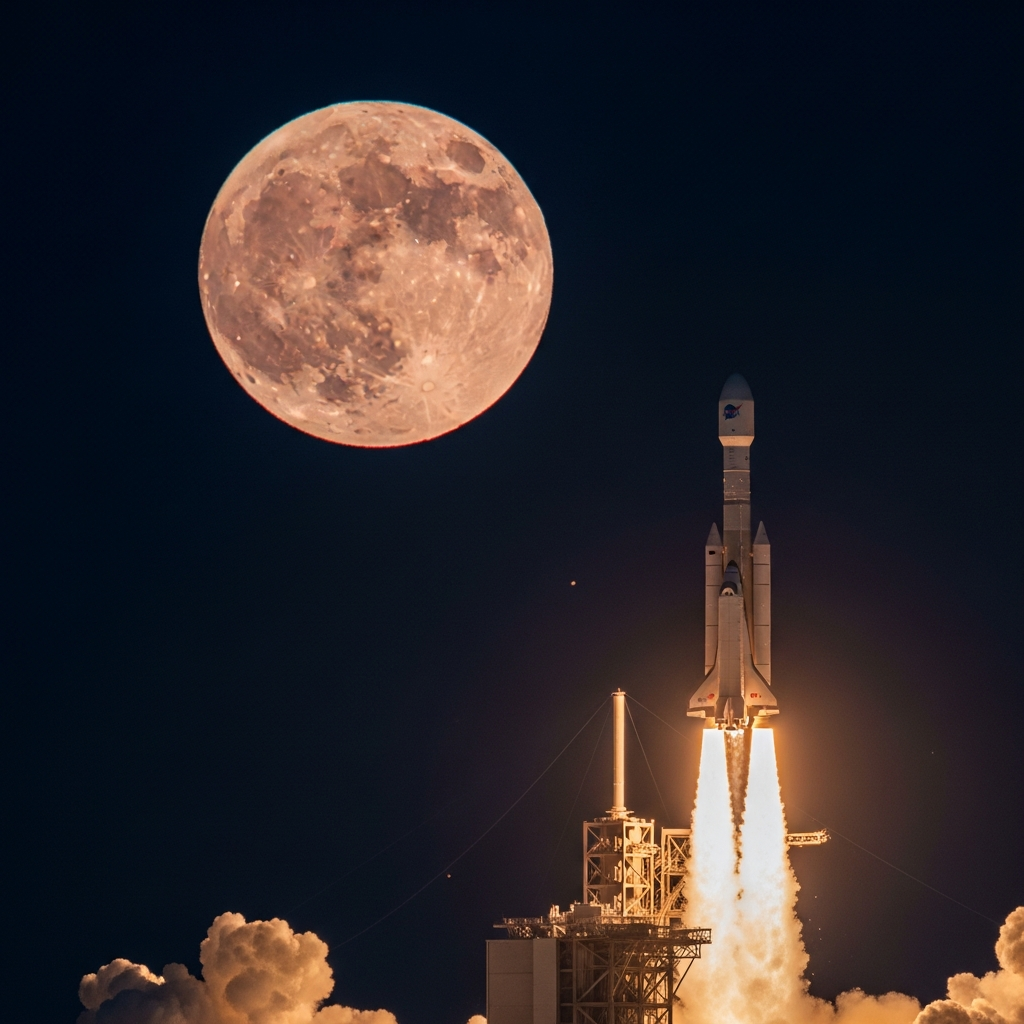
The April Pink Moon of 2026 takes on even greater significance. It marks the first potential launch date for NASA’s historic Artemis II mission. This mission is poised to be the first human journey to the Moon’s vicinity in over 50 years. Four courageous astronauts are preparing to travel farther into deep space than any human before them. They will fly around the Moon and beyond its far side.
This early April launch period runs from April 1 to April 6, 2026. NASA has designated a two-hour launch window each day. On Wednesday, April 1, the window opens 1.28 hours before sunset. On subsequent days, it opens progressively later. Noah Petro reflects on this momentous time, stating, “This will be the last full moon in the pre-Artemis II era.” He highlights how this moon will appear differently to both the crew and global observers.
Beyond the Pink Moon: Other Celestial Spectacles in 2026
April and May 2026 promise a rich tapestry of celestial events for stargazers. After the Pink Moon, the night sky will continue to captivate.
Spring Meteor Showers
Lyrids Meteor Shower: This ancient shower, originating from Comet Thatcher, peaks between April 21 and April 22. Sky-gazers in the Northern Hemisphere can expect to see 10 to 20 meteors per hour. For optimal viewing, find a spot away from city lights after moonset and before dawn. The Lyrids are known for producing “zipping” activity and occasional fireballs.
Eta Aquariids Meteor Shower: Originating from Comet Halley, this shower peaks on May 5-6. Due to interfering moonlight, fewer than 10 meteors per hour are expected. These meteors are known for their speed, traveling at about 40 miles (65 kilometers) per second. They often leave glowing “trains” across the sky.
May’s Lunar Events
May 2026 will feature two full moons. The first, traditionally known as the Flower Moon, occurs on May 1. A rarer phenomenon, a “Blue Moon,” will light up the sky on May 31. A Blue Moon refers to the second full moon within a single calendar month. This typically happens roughly every 30 months.
Planetary Alignments
April’s night sky also offers unique planetary alignments. Mercury reaches its widest apparent distance from the sun on April 3, making it easier to spot before sunrise. Between April 16 and 23, Mercury, Mars, and Saturn will form a close cluster in the pre-dawn sky. Later in the month, Venus and Jupiter will make their appearances. Skywatchers can also find Spica, the 16th brightest star, shining near the moon on April 2.
Cultural & Spiritual Resonance
The April Pink Moon holds deep cultural and spiritual significance beyond its scientific and astronomical aspects. For Western Christianity, this moon is known as the Paschal Moon. It plays a crucial role in determining the date of Easter. Easter Sunday is traditionally observed on the first Sunday after the first full moon following the spring equinox. In 2026, with the spring equinox on March 20 and the Pink Moon on April 1, Easter Sunday will fall on April 5.
Spiritually, the Pink Moon symbolizes a period of fresh beginnings and healing. It encourages the release of old patterns and emotional renewal. Its nurturing energy inspires introspection, gratitude, and a deeper alignment with one’s spiritual path. This celestial event truly connects us to nature’s cycles and our place within the cosmos.
Frequently Asked Questions
What is the significance of the “Pink Moon” name, and will it actually appear pink?
The “Pink Moon” name originates from the blooming of Phlox subulata*, a vibrant pink wildflower native to eastern North America, which typically flowers in April. Despite its evocative name, the moon itself will not appear pink. It generally maintains its usual brilliant gray or golden hue. Sometimes, it may look orange or red, especially when low on the horizon, due to atmospheric scattering. This phenomenon filters out blue light, allowing redder tones to dominate.
When is the best time to view the April Pink Moon in 2026, and what other celestial events are happening?
In 2026, the April Pink Moon will reach peak illumination on Wednesday, April 1, at 10:11 p.m. ET (7:11 p.m. PT), or early Thursday, April 2, at 3:12 a.m. BST for UK viewers. It will appear full for about 12 hours before and after its peak. To view it, find an unobstructed spot away from city lights. Beyond the moon, April and May 2026 also feature the Lyrids meteor shower (peaking April 21-22) and the Eta Aquariids meteor shower (peaking May 5-6), plus a rare Blue Moon on May 31.
How does the April Pink Moon coincide with NASA’s Artemis II mission?
The April Pink Moon in 2026 marks a key launch window for NASA’s Artemis II mission. This is the first human mission to journey to the Moon’s vicinity in over 50 years. The mission’s initial launch period runs from April 1 to April 6, 2026, directly coinciding with the Pink Moon. This means skywatchers looking at the full moon might be witnessing the very beginning of this historic human voyage around the Moon and beyond.
Embark on a Celestial Journey
The April Pink Moon in 2026 offers more than just a beautiful sky-show. It’s a powerful reminder of nature’s cycles, our rich cultural heritage, and humanity’s enduring quest for discovery. This year, it ties directly into the historic Artemis II mission, making it an even more profound moment for observers worldwide. Whether you’re tracking meteor showers or simply gazing at the full moon, take a moment to connect with the vast universe above. Look up, explore, and be part of this incredible celestial and human journey.