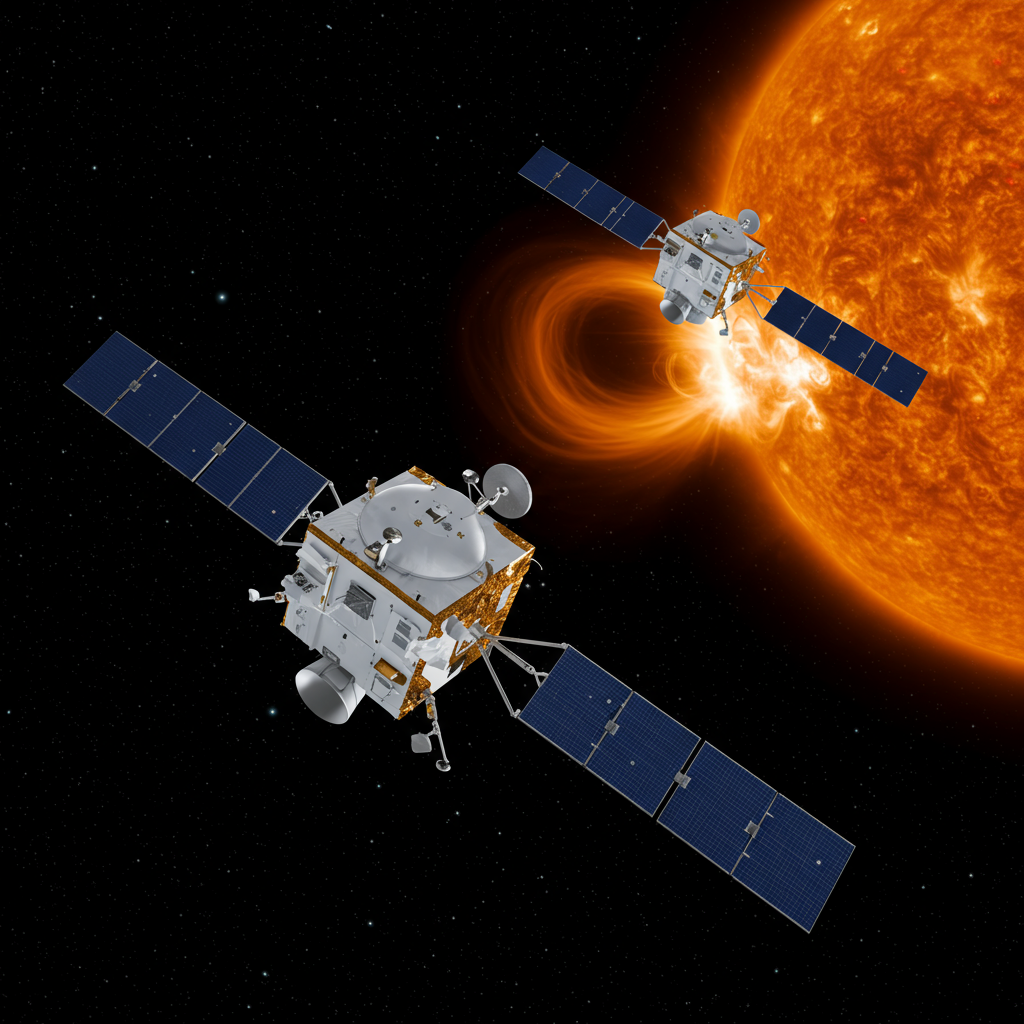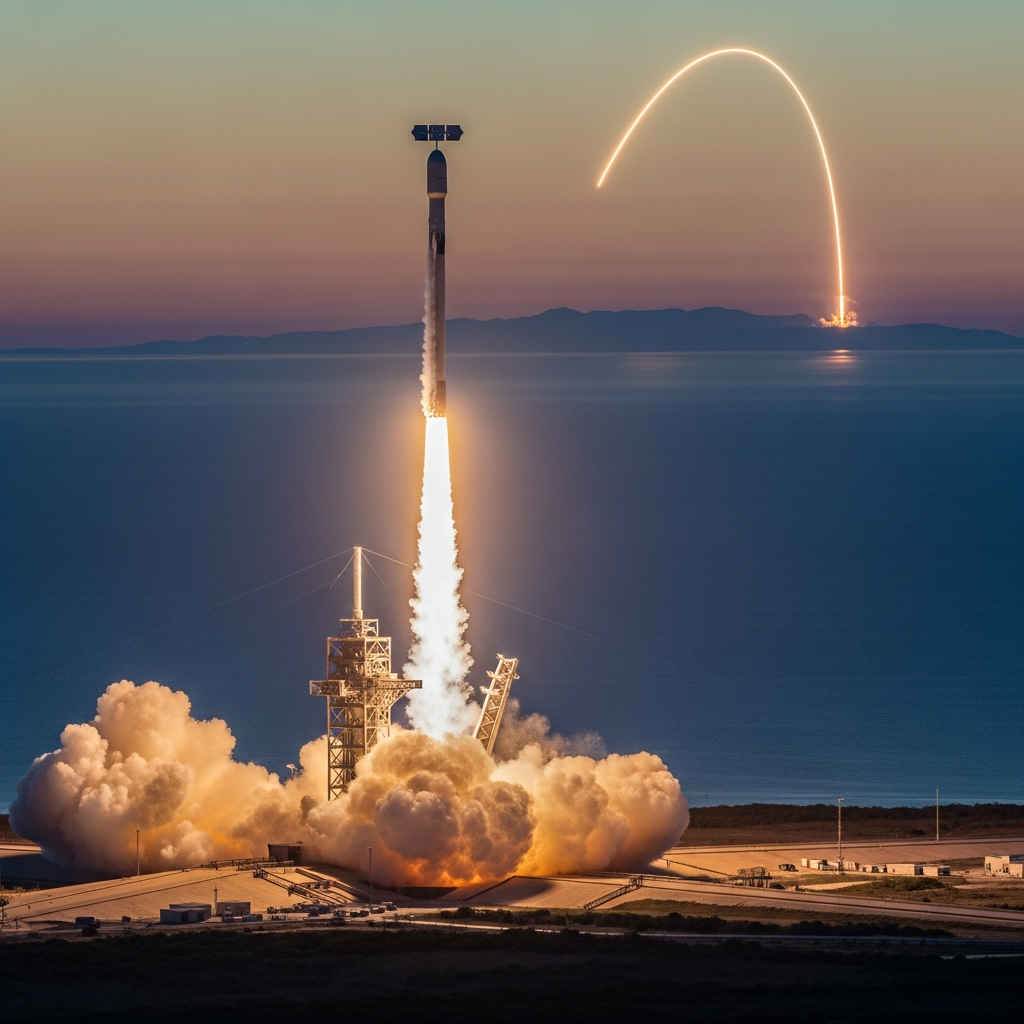
SpaceX executed a remarkable series of back-to-back Starlink missions in March 2026, launching two Falcon 9 rockets from opposite coasts of the United States within a single weekend. This impressive feat saw 54 more Starlink internet satellites deployed into low Earth orbit, significantly expanding the company’s ambitious megaconstellation. The rapid, dual-coast operations on March 13 and 14 underscored SpaceX’s unparalleled launch cadence and robust reusability program, further cementing its role as a leader in global satellite internet provision. These successful deployments mark critical steps in delivering high-speed, low-latency internet access to underserved regions worldwide.
Double Launch, Dual Coasts: A Weekend of Starlink Deployment
The weekend of March 13 and 14, 2026, became a testament to SpaceX’s operational prowess, witnessing two distinct Falcon 9 missions less than 24 hours apart. These launches originated from two key U.S. spaceports: Vandenberg Space Force Base in California and Cape Canaveral Space Force Station in Florida. The coordinated effort added a substantial number of satellites to the Starlink network, propelling its total count closer to 10,000 active units. Such an aggressive launch schedule highlights the continuous demand for Starlink services and SpaceX’s commitment to meeting that demand.
Friday’s West Coast Liftoff: Group 17-31
The first launch ignited the weekend’s spaceflight activity on Friday, March 13. A Falcon 9 rocket successfully lifted off from Space Launch Complex 4 East (SLC-4E) at Vandenberg Space Force Base in California. The launch occurred at 10:57 a.m. EDT (7:57 a.m. PDT local time). This mission carried 25 Starlink satellites, designated as Group 17-31. Approximately one hour after its precision liftoff, these satellites were precisely released into their intended low Earth orbit. This west coast launch demonstrated SpaceX’s ongoing capability to support its growing constellation from multiple geographical points.
Saturday’s East Coast Mission: Group 10-48
Following Friday’s success, a second Falcon 9 rocket roared to life on Saturday, March 14, from the East Coast. This time, the launch originated from Space Launch Complex 40 (SLC-40) at Cape Canaveral Space Force Station in Florida. The rocket departed its launchpad at 7:37 a.m. EDT. This mission successfully deployed 29 Starlink units, identified as Group 10-48. These new satellites seamlessly joined the rapidly expanding SpaceX Starlink megaconstellation, further enhancing its coverage and capacity. The quick turnaround between these two launches exemplifies SpaceX’s efficient operational tempo.
The Core of Reusability: Falcon 9 Booster Landings
Integral to SpaceX’s business model and rapid launch cadence is its groundbreaking Falcon 9 booster reusability program. Both missions featured successful first-stage booster recoveries, a routine but always impressive display of engineering. These precision landings on autonomous droneships positioned in the ocean are critical. They enable significant cost savings and faster mission turnarounds, distinguishing SpaceX in the global space industry. The ability to reuse these boosters is a cornerstone of Starlink’s economic viability and expansion.
Booster B1071’s Pacific Precision
The Falcon 9 first-stage booster for Friday’s West Coast launch was Booster 1071 (B1071). Following its orbital delivery of Starlink satellites, B1071 executed a flawless return. It touched down precisely on the droneship “Of Course I Still Love You.” This vessel was stationed in the Pacific Ocean, off the coast of California. Booster B1071 is a seasoned veteran, having supported an extensive list of previous missions:
NROL-87, NROL-85, SARah-1, SWOT
Transporter-8, Transporter-9, Transporter-13, Transporter-14, Transporter-15
NROL-146, NROL-153, NROL-192, Bandwagon-2
19 previous Starlink missions
This impressive flight history highlights the longevity and reliability of SpaceX’s reusable hardware.
Booster B1095’s Atlantic Return
On Saturday, the Falcon 9 first-stage booster for the East Coast mission was Booster 1095 (B1095). After its successful ascent, B1095 also performed a perfect landing. It touched down on the droneship “Just Read the Instructions,” positioned in the Atlantic Ocean. Booster B1095 also boasts a notable flight record, including previous Starlink missions such as:
Starlink Group 12-15
Starlink Group 10-56
Starlink Group 10-52
Starlink Group 6-86
- Starlink Group 6-101
- www.space.com
- www.thrillist.com
- www.pressdemocrat.com
- www.accuweather.com
- thecurrentga.org
These consecutive booster recoveries underscore the routine efficiency of SpaceX’s recovery operations.
Starlink’s Expanding Network and SpaceX Milestones
These two launches represent more than just additional satellites in orbit. They contribute significantly to the broader growth of the Starlink constellation and mark important milestones for SpaceX as a company. The relentless pace of these deployments reflects a strategic push to achieve global connectivity. It also showcases the unparalleled operational capacity that SpaceX has cultivated over years of iterative development. The sheer volume of missions and successful landings are redefining spaceflight industry standards.
Nearing 10,000 Satellites in Orbit
With the addition of these 54 satellites, the total number of active Starlink satellites reached 9,985. This figure, as tracked by satellite expert Jonathan McDowell, demonstrates the sheer scale of the Starlink network. Approaching 10,000 active satellites signifies a mature and robust constellation. This density is essential for providing continuous and reliable internet service across vast geographical areas. The constant expansion aims to improve coverage, reduce latency, and increase bandwidth for users worldwide.
A Year of Accelerating Spaceflight
The Saturday launch from Cape Canaveral marked several significant achievements for SpaceX. It was the company’s 625th completed mission to date. This also represented its 585th successful booster landing, a remarkable testament to its reusability program. Furthermore, these two flights brought SpaceX’s total number of missions in 2026 to 31 and 32, respectively. This rapid cadence of 32 flights within less than three months highlights an unprecedented pace in the space industry, driven largely by Starlink deployments.
Understanding Starlink’s Impact
The continuous deployment of Starlink satellites holds immense implications for global connectivity. By building out this vast constellation, SpaceX aims to provide broadband internet, particularly to remote and rural areas. These regions often lack access to traditional terrestrial internet infrastructure. The high-speed, low-latency service offered by Starlink can bridge digital divides, fostering economic development and social inclusion. It enables education, telemedicine, and various online services where they were previously unavailable.
The strategic use of dual-coast launch facilities further enhances Starlink’s deployment efficiency. It allows SpaceX to optimize launch windows and trajectories for different orbital planes. This flexibility accelerates the rate at which the constellation can be built and maintained. It also provides redundancy, ensuring mission continuity even if one launch site faces weather delays or operational issues. The ongoing Starlink project is a monumental undertaking, reshaping how the world accesses information.
Frequently Asked Questions
How many Starlink satellites were launched in SpaceX’s March 2026 dual-coast missions?
SpaceX successfully launched a total of 54 Starlink satellites across two missions on March 13 and 14, 2026. The first mission on Friday deployed 25 satellites (Group 17-31) from California. The second mission on Saturday launched an additional 29 satellites (Group 10-48) from Florida. These deployments contributed to pushing the total number of active Starlink satellites to nearly 10,000, as reported by satellite trackers.
Where did SpaceX conduct its back-to-back Starlink launches in March 2026?
SpaceX executed these two rapid Starlink launches from two different U.S. coasts. The first launch, on March 13, originated from Space Launch Complex 4 East (SLC-4E) at Vandenberg Space Force Base in California. The second launch, on March 14, took place from Space Launch Complex 40 (SLC-40) at Cape Canaveral Space Force Station in Florida. This dual-coast capability allows for increased operational flexibility and faster deployment rates for the Starlink constellation.
What is the significance of SpaceX’s rapid, dual-coast Starlink deployments?
The significance of SpaceX’s rapid, dual-coast Starlink deployments lies in several key areas. Firstly, it showcases the company’s unparalleled operational tempo and the maturity of its reusable Falcon 9 rocket technology, enabling back-to-back missions. Secondly, it accelerates the expansion of the Starlink constellation, crucial for providing global high-speed, low-latency internet, especially to remote areas. Finally, using multiple launch sites offers strategic flexibility and redundancy, optimizing launch windows and ensuring the continuous build-out and maintenance of the vital Starlink network.
The Future of SpaceX and Global Connectivity
SpaceX’s consistent ability to perform rapid, dual-coast Starlink launches is not just a technical achievement; it is a foundational element in its vision for global internet connectivity. These missions, combined with the company’s impressive booster reusability rates, translate directly into faster constellation build-out and reduced costs per launch. As Starlink approaches 10,000 active satellites and SpaceX continues its record-setting pace of missions, the impact on worldwide digital access will only grow. The relentless innovation demonstrated by these launches suggests a future where high-speed internet is accessible to virtually everyone, everywhere.