The alarming rise of colorectal cancer in younger adults has long puzzled the medical community, becoming a critical public health concern. While often considered a disease of older age, recent statistics from the American Cancer Society reveal a grim shift: colorectal cancer is now the leading cause of cancer death for individuals under 50 in the United States. This unsettling trend, highlighted by high-profile cases like actor James Van Der Beek, who passed at age 48, and Chadwick Boseman at 43, underscores the urgent need for answers and new detection strategies.
A Striking Discovery from North Texas Research
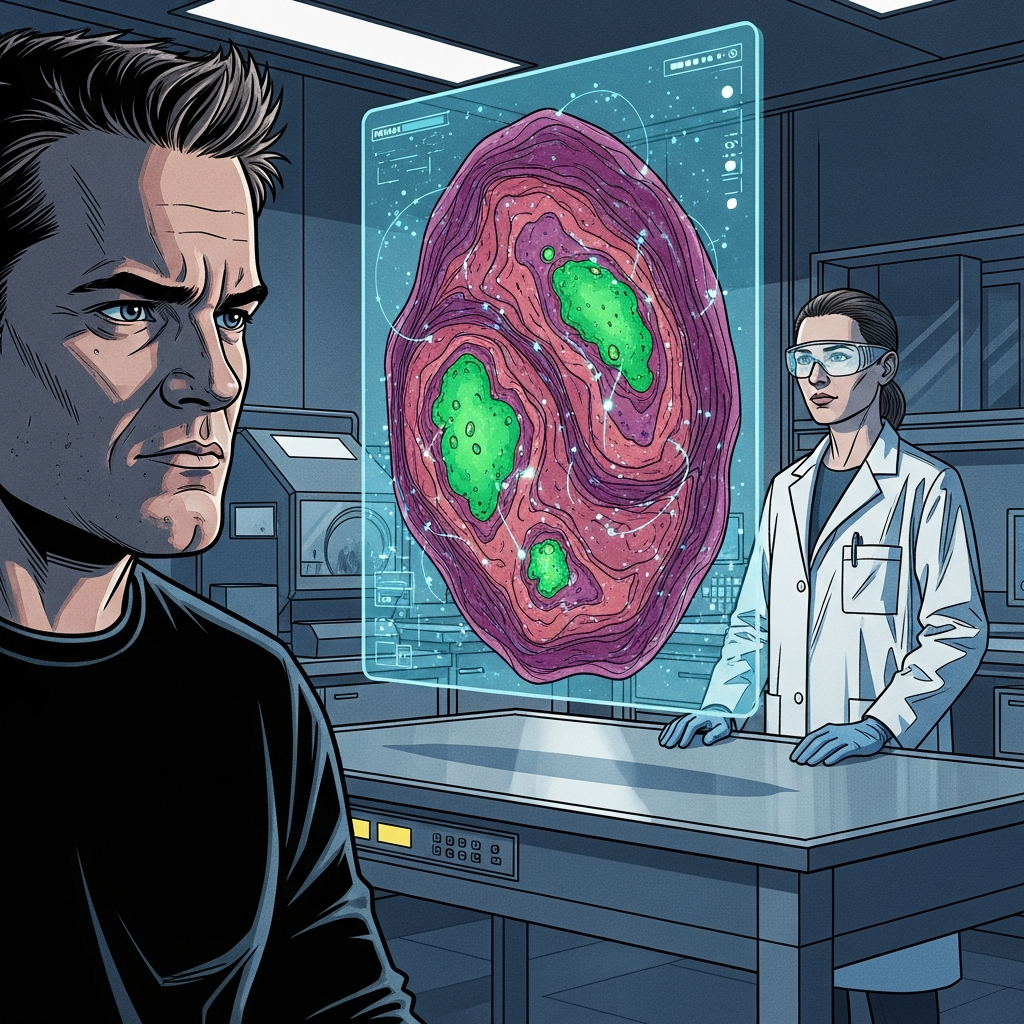
Amid this growing crisis, groundbreaking research from the Dallas-Fort Worth area is offering a vital clue. Scientists at the University of Texas at Dallas and UT Southwestern Medical Center have uncovered a significant difference in how early-onset colorectal cancer develops. Their study, published in Advanced Science, indicates that tumors in younger patients frequently form within colon tissue that is noticeably stiffer and more scar-like—a crucial change that may occur before cancer even manifests.
Dr. Emina Huang, a colorectal surgeon and executive vice-chair of research at UT Southwestern, co-led this pivotal study. Her observations from years of operating on younger patients first sparked the investigation into tissue mechanics. Working alongside bioengineer Jacopo Ferruzzi from UT Dallas, the team set out to quantify these subtle, yet potentially profound, differences.
The Alarming Trajectory of Early-Onset Colorectal Cancer
The statistics paint a stark picture: early-onset colorectal cancer cases have steadily climbed for three decades, increasing by 0.5% to 2.4% annually. Since 2020, approximately 12% of all colorectal cancer diagnoses in the U.S. have been in younger adults. Projections are even more concerning, with some estimates suggesting a staggering 124% rise by 2030, particularly affecting adults aged 20 to 34, who are also more likely to be diagnosed at advanced stages.
Experts like Dr. Rahshana Price-Isuk of NorthPoint Health and Wellness note a disproportionate impact on certain communities, with African American populations experiencing rates about 20% higher. Elevated rates are also observed in Asian Pacific Islander and Native American communities, signaling a complex web of contributing factors beyond just individual choices.
Unpacking the “Stiff Tissue” Phenomenon
The D-FW researchers’ key finding was that tissue stiffness wasn’t confined to existing tumors. Even seemingly normal tissue near the tumors in younger patients showed increased rigidity. This mechanical alteration appears driven by changes in collagen, a vital structural protein, and by chemical signals that prompt adjacent cells to grow and multiply. Collagen is essential for giving tissues their shape and strength, but when its organization changes, it can significantly alter tissue mechanics.
Jacopo Ferruzzi’s team utilized biomechanical testing, including pressing tiny probes into tissue samples, to measure their resistance to pressure. Surprisingly, they found that younger patients consistently exhibited stiffer tissues, directly contradicting initial expectations. This observation is critical because it suggests these mechanical changes could precede and potentially drive cancer development. Dr. Michael White, an assistant professor of colon and rectal surgery at the University of Texas M.D. Anderson Cancer Center, who was not involved in the study, highlighted this as a “clear, distinct feature” distinguishing early-onset from later-onset tumors, offering a new avenue for risk identification.
Beyond Genetics: Exploring Lifestyle and Environmental Links
While no singular genetic reason appears to explain the overall rise, Dr. Huang notes that the disease seems to have “shifted about maybe 20 to 30 years earlier in time.” Researchers are actively exploring various hypotheses for this unsettling trend. One prominent theory involves chronic inflammation, a prolonged immune response linked to conditions like metabolic liver disease, heart disease, and diabetes.
Other significant contributors identified by experts like Dr. Shahnaz Sultan, a Gastroenterology professor at the University of Minnesota, and Dr. Patrick Sullivan, a surgeon at the Winship Cancer Institute at Emory University, include:
Gut Microbiome Imbalances: Disruptions between beneficial and harmful bacteria, or exposure to mutated strains producing DNA-damaging toxins.
Environmental Factors: The growing presence of microplastics in our environment, which can carry bacteria, chemicals, and contaminants into the body.
Lifestyle Choices: Obesity, sedentary lifestyles, excessive alcohol consumption, and smoking.
Dietary Habits: High intake of red meat, low consumption of fiber, fruits, and vegetables, and a particular concern around ultra-processed foods—industrially produced items high in sugar, fat, and salt, which are nutritionally poor and often lead to overeating and obesity.
The Imperative of Early Detection and Screening
The story of Jennifer Yamamoto, a 50-year-old pediatric speech therapist from Decatur, powerfully illustrates the urgency of early screening. Despite a healthy lifestyle and no family history, Yamamoto was diagnosed with Stage 3 colorectal cancer during her first routine colonoscopy at age 50. Her journey involved aggressive treatment, tumor regrowth, and extensive surgery. Now cancer-free, she advocates tirelessly for early screening, emphasizing that even a six-month delay could have had a drastically different outcome.
Colon Cancer Awareness Month, observed in March, serves as a crucial reminder for proactive health management. The American Cancer Society now recommends that adults of average risk begin regular colorectal cancer screening at age 45, a guideline that has gained critical importance in light of these trends. Dr. Price-Isuk underscores that these cancers are highly preventable and treatable when detected early—before symptoms appear. Once symptoms manifest, the disease has often progressed to more advanced stages, making treatment considerably more challenging.
The Path Forward: From Discovery to Prevention
Huang and Ferruzzi’s ongoing research aims to identify precise markers of tissue stiffness. These early mechanical changes are currently too subtle for detection during routine exams or standard colonoscopies. Developing such markers could allow clinicians to flag individuals at higher risk even before cancer develops, enabling personalized recommendations for preventive treatments or crucial lifestyle modifications.
Further studies will also delve into the underlying causes of early-onset colon cancer, examining the complex interplay of diet, environmental exposures, and other factors. By understanding both the how (stiff tissue) and the why (inflammation, lifestyle), researchers hope to develop comprehensive strategies to curb this escalating public health threat. As Dr. Sultan advises, reading food labels carefully, prioritizing whole foods, and cooking at home are tangible steps individuals can take to reduce their risk by minimizing ultra-processed food intake.
Frequently Asked Questions
What is the new discovery about early-onset colon cancer in younger adults?
Researchers from UT Dallas and UT Southwestern Medical Center discovered that early-onset colorectal cancer in younger patients often develops in colon tissue that is unusually stiff and scar-like. This stiffness, which appears linked to changes in collagen and cellular signals, was observed not only in tumors but also in seemingly normal tissue adjacent to them. This crucial finding suggests that these mechanical tissue changes may occur before cancer forms, potentially acting as a driver for the disease.
When should younger adults start screening for colon cancer?
The American Cancer Society recommends that individuals of average risk for colorectal cancer begin regular screening at age 45. This guideline has been updated in response to the alarming rise in early-onset cases. It’s vital to have proactive conversations with your healthcare provider about your personal risk factors, family history, and the most appropriate screening options and timeline for you, even if you are younger than 45 and experiencing symptoms.
What lifestyle factors contribute to early-onset colon cancer, and how can I reduce my risk?
Several lifestyle factors are increasingly linked to the rise of early-onset colorectal cancer. These include obesity, sedentary lifestyles, diets high in red meat and ultra-processed foods (which are often high in sugar, fat, and salt, and low in fiber), insufficient intake of fruits and vegetables, excessive alcohol consumption, and smoking. To reduce your risk, experts advise prioritizing whole, unprocessed foods, increasing physical activity, maintaining a healthy weight, limiting alcohol, and avoiding smoking. Reading food labels carefully and choosing home-cooked meals can significantly help minimize the intake of harmful ultra-processed ingredients.