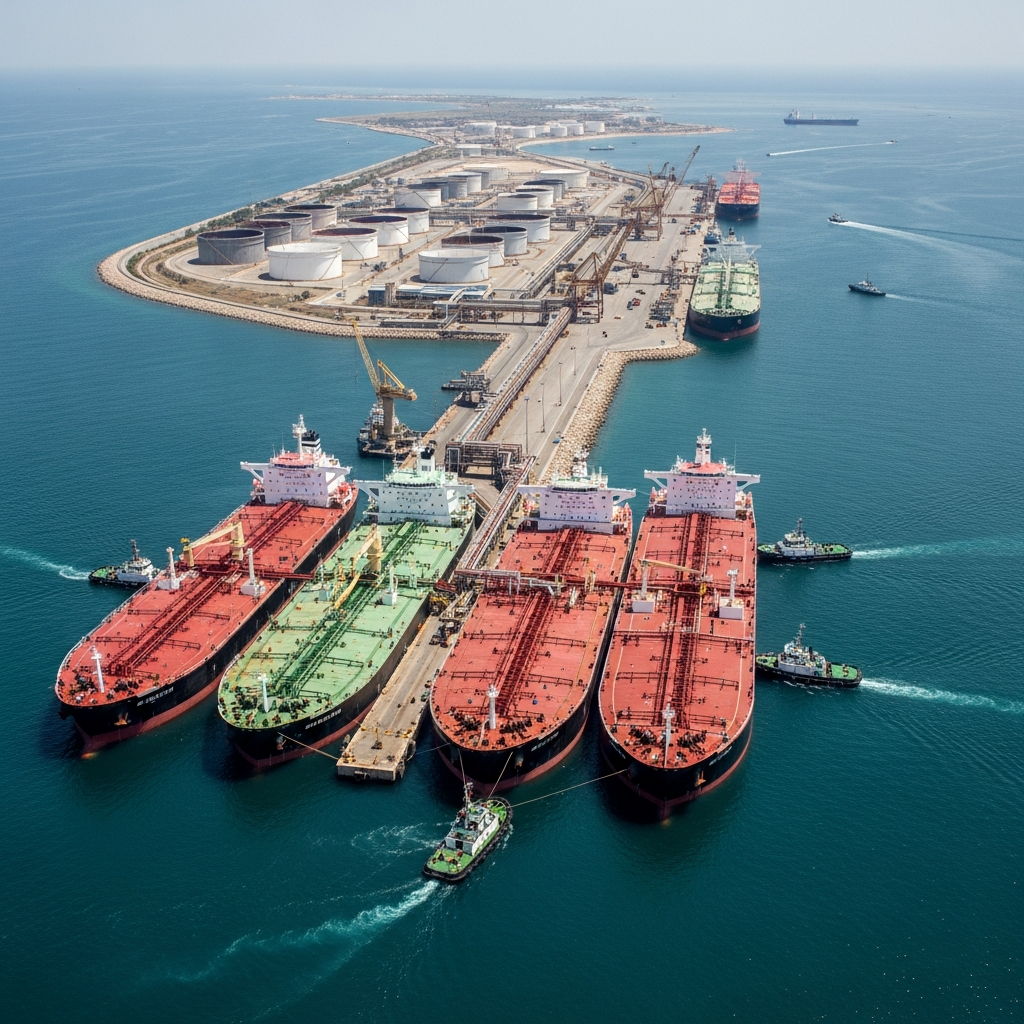
The Middle East is gripped by an intensifying conflict, as the United States launched strikes on Iran’s strategic Kharg Island, prompting immediate and severe threats of retaliation from Tehran. US President Donald Trump announced that American forces had “obliterated” military targets on the vital oil export hub. In response, Iran’s armed forces vowed to unleash attacks on any US-linked energy infrastructure in the region if its own facilities were targeted. This rapid escalation, unfolding on March 14, 2026, marks a critical juncture in the ongoing US-Israel war with Iran, triggering widespread regional instability and global economic concerns, particularly impacting energy markets and shipping routes.
US Strikes Kharg Island: A Major Escalation
President Trump confirmed that the US military had executed a “powerful bombing raid” on Kharg Island, claiming “every MILITARY target” on the island was “totally obliterated.” Kharg Island, located off Iran’s southern coast, is the lynchpin of the nation’s oil industry, handling an estimated 90% of its crude oil exports. Trump emphasized that for “reasons of decency,” the island’s critical oil infrastructure was intentionally spared. However, he issued a stark warning: any interference with the “Free and Safe Passage of Ships through the Strait of Hormuz” would lead him to immediately reconsider this decision, potentially targeting Iran’s oil facilities. Despite Trump’s claims, Iranian state media swiftly reported that no damage had occurred to the island’s oil infrastructure following the US bombardment.
Iran’s Retaliation Threats and Regional Stance
Iran’s response to the Kharg Island strikes was swift and unequivocal. The Islamic Republic’s armed forces declared that any assault on its oil and energy infrastructure would result in immediate retaliatory strikes against the energy facilities of oil companies cooperating with the United States in the region. The military’s Al-Anbiya Central Headquarters specified that such infrastructure would be “immediately destroyed and turned into a pile of ashes.” Iranian Parliament Speaker Ghalibaf further threatened that “all restraint” would be abandoned if any of Iran’s southern maritime frontier islands came under attack, holding President Trump directly responsible for any American casualties. This signals a broadening of potential targets and a deepening resolve to resist perceived aggression.
Unprecedented Regional Volatility and Flashpoints
The US-Israel campaign against Iran has ignited a series of flashpoints across the Middle East, leading to significant military engagements and humanitarian crises. The conflict’s geographical spread highlights a strategy of “horizontal escalation” by Iran, aimed at broadening the conflict and increasing costs for Washington and its allies.
Iraq: Attacks on US Interests and Iran-Backed Groups
Baghdad has become a focal point of retaliation and counter-retaliation. The US Embassy compound was hit by a missile or drone strike on its helipad, with black smoke seen rising over the complex. Iraqi security sources also reported downing drones targeting US diplomatic centers. Concurrently, missile strikes targeted a house in Baghdad used by the Iran-backed group Kataeb Hezbollah, killing a “key figure” and wounding two members. This incident follows an earlier drone strike on a senior pro-Iranian militia commander’s home. The US Embassy has renewed a Level 4 security alert, warning of continued threats to American interests.
Lebanon: Israeli Strikes and Humanitarian Crisis Deepens
The conflict’s devastating impact on Lebanon continues to mount. An Israeli strike on a primary healthcare center in Borj Qalaouiya, southern Lebanon, tragically killed at least 12 medical personnel. The Lebanese health ministry reported an grim toll since early March, with 773 people killed, including 103 children, and 1,933 wounded, including 326 children, due to Israeli strikes. An Israeli strike also hit an apartment building in a northern Beirut suburb for two consecutive days. Hezbollah leader Naim Qassem has declared the group’s readiness for a “long confrontation” with Israel, framing it as an “existential battle.” Israel also destroyed a bridge over the Litani River, calling it a “key crossing” for Hezbollah’s activities.
Gulf States on High Alert: Qatar and Saudi Arabia
The wider Gulf region is also experiencing the direct fallout of the escalating conflict. Blasts were heard in Doha, Qatar, where the defense ministry intercepted an Iranian missile attack. As a precautionary measure, Qatar’s interior ministry initiated evacuations in “several key areas,” including the central Musheireb district, due to Iran’s “retaliatory air campaign against Gulf countries.” In Saudi Arabia, five US Air Force refueling planes at Prince Sultan air base were reportedly damaged by an Iranian missile strike, though no fatalities were reported. Saudi Arabia has also intercepted dozens of drones, including over its Al-Jawf region.
Israel: Missile Threats and Evacuation Warnings
Israel has faced a barrage of rocket, drone, and missile attacks launched by Iran and its proxy, Hezbollah. Iranian state media reported a fresh round of missile launches towards Israel, although initial reports indicated no casualties. Air raid sirens sent residents into shelters across multiple areas. The Israeli military issued an “urgent warning” for people in an industrial zone in the west of Iran’s northern city of Tabriz to evacuate ahead of imminent military operations. Internet shutdowns in Iran since late last month mean residents may struggle to receive these warnings.
Global Economic Reverberations and Strategic Implications
The escalating Middle East war has sent shockwaves through global markets, particularly impacting energy supplies and shipping. Analysts like Peter Beaumont of The Guardian describe the conflict as a “proving ground for two competing concepts of military escalation,” noting that despite significant strikes, Iran’s regime persists, and its highly enriched uranium stockpile remains unsecured.
Energy Markets and the Strait of Hormuz
Oil and gas prices have surged globally, with Brent crude topping $100 a barrel, a level not seen since 2022. The Strait of Hormuz, a crucial global oil transit chokepoint through which approximately one-fifth of the world’s oil supply passes, remains largely closed to commercial traffic. This disruption has left around 500 oil tankers stranded in the Persian Gulf. The US Energy Department anticipates initial deliveries of oil from its Strategic Petroleum Reserve to begin next week, complementing the International Energy Agency’s earlier release of 400 million barrels in an attempt to stabilize prices. The UN Under-Secretary-General for Humanitarian Affairs warned that disruption of the Strait makes humanitarian aid delivery “harder and more expensive.” The US Navy is reportedly considering escorting oil tankers to ensure the flow of energy supplies.
Military Deployments and Shifting Strategies
The Pentagon is significantly bolstering its military presence in the Middle East, deploying approximately 2,500 additional Marines and an amphibious assault ship, the USS Tripoli. This deployment, approved by US Defense Secretary Pete Hegseth, underscores the increased readiness for potential further engagements. Analysts suggest the US and Israel may have underestimated Iran’s capabilities, with a regime change appearing “very slim” without ground troops. The Pentagon estimates the war’s first week cost the US approximately $11.3 billion, with daily costs exceeding $1.5 billion, indicating an expectation for substantial supplemental funding.
Diplomatic Stances and Human Costs
Politically, President Trump continues to assert that Iran is “totally defeated” and seeking a deal, but one he would not accept. Iran’s new Supreme Leader, Ayatollah Mojtaba Khamenei, emphasized continuity and stability, vowing to continue leveraging the Strait of Hormuz and warning against attacks on foreign military bases. Hamas, while affirming Iran’s right to respond, urged Tehran to “avoid targeting neighbouring countries,” highlighting the complex regional dynamics. The humanitarian toll is severe: the UN refugee agency estimates up to 3.2 million people displaced within Iran, and the US State Department has urged citizens to leave 14 regional countries, with around 47,000 Americans having already returned home.
International Ripple Effects
Beyond direct military and economic impacts, the conflict is generating concerning international ripple effects. Europe has seen an alarming rise in antisemitic incidents, including an explosion at a Jewish school in Amsterdam, an arson attack at a synagogue in Rotterdam, and an explosion at a synagogue in Liege, Belgium. These attacks are explicitly linked to the Middle East tensions, underscoring the conflict’s global reach. Meanwhile, European leaders have criticized a US decision to temporarily ease sanctions on Russian oil purchases, fearing it would empower Russia’s war in Ukraine and compromise European security.
Frequently Asked Questions
What were the immediate triggers and responses of the current Middle East crisis?
The immediate trigger was the US military’s strikes on Iran’s Kharg Island on March 14, 2026, where President Trump claimed military targets were “obliterated.” Kharg Island is crucial for Iran’s oil exports. In direct response, Iran’s armed forces immediately threatened to retaliate against any US-linked oil and energy infrastructure in the region if its own facilities were attacked. Iranian state media, however, reported no damage to Kharg Island’s oil facilities.
How is the Strait of Hormuz impacted, and what are the global shipping implications?
The Strait of Hormuz, a vital global chokepoint for oil transit, is severely disrupted, with roughly 500 oil tankers reportedly stranded in the Persian Gulf. President Trump has warned Iran against interfering with “Free and Safe Passage” through the Strait, threatening to target oil infrastructure if necessary. The US Navy is considering escorting oil tankers to ensure energy supplies flow. This disruption has caused global oil prices to surge and made humanitarian aid deliveries “harder and more expensive.”
What are the wider economic and humanitarian costs of the escalating conflict?
The conflict has led to significant economic turmoil, including global oil price surges and stock market slides. Efforts to stabilize markets, like releases from strategic oil reserves, have failed to stem investor fears. Militarily, the Pentagon estimates the first week of the war cost the US approximately $11.3 billion. On the humanitarian front, casualties are in the thousands, with over 770 killed in Lebanon alone and millions displaced within Iran. The US State Department has urged its citizens to leave 14 regional countries, highlighting the widespread human impact.
Conclusion
The Middle East finds itself at a dangerous crossroads, with US strikes on Kharg Island and Iran’s subsequent threats pushing the region closer to an all-encompassing conflict. The volatile situation, characterized by widespread military actions, mounting casualties, and severe economic disruptions, signals a new, perilous phase in the US-Israel war with Iran. The coming days will be critical in determining whether a broader regional conflict can be averted, or if the intricate web of alliances and retaliatory cycles will lead to further, more devastating escalation, with profound global consequences for energy, trade, and human lives.