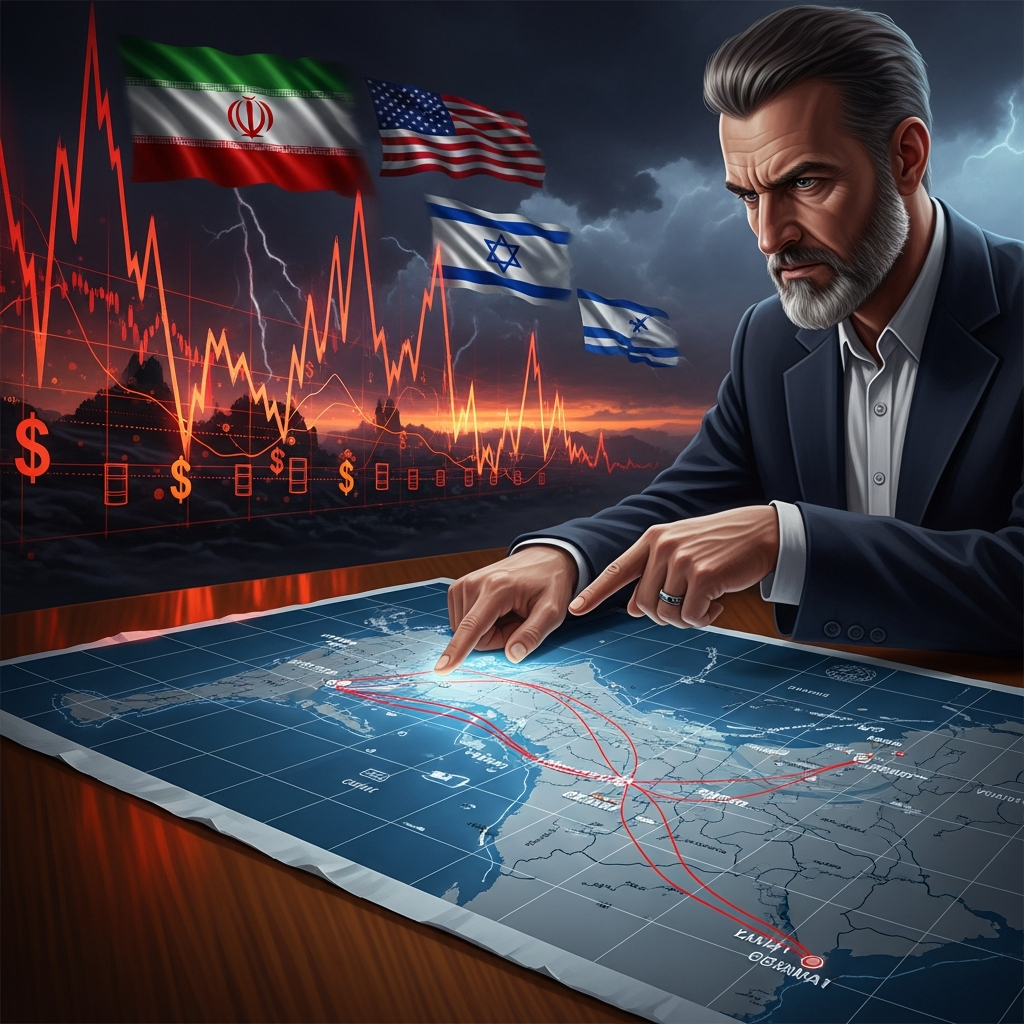
The conflict involving the United States, Israel, and Iran has escalated dramatically, marking its 13th day with profound regional instability and global economic reverberations. A new Iranian leader’s demands for compensation and threats to key shipping routes have ignited fresh concerns. Simultaneously, the global oil market faces unprecedented disruption. Millions are displaced as military actions intensify across the Middle East.
This critical update synthesizes the latest developments as the protracted Iran conflict enters a more volatile phase. We explore the strategic threats, tragic human costs, and significant economic fallout.
Escalating Tensions: Iran’s New Leader and Strategic Demands
The geopolitical landscape shifted with the purported first message from Iran’s new supreme leader, Mojtaba Khamenei. His pronouncements signal a hardening stance and raise the stakes significantly.
Mojtaba Khamenei’s Initial Directives
On Thursday, Mojtaba Khamenei reportedly delivered his first written message as Iran’s new supreme leader. He issued stern demands for “compensation” from the United States and Israel. This compensation, he stated, is for their ongoing attacks on Iranian territory. Khamenei also called for national unity among the Iranian people during this challenging period.
A critical element of his message was the threat to keep the Strait of Hormuz closed. He declared this vital waterway would remain inaccessible as a powerful “tool of pressure.” This assertion, however, was swiftly contradicted hours later by Iran’s UN ambassador, who stated the strait would not be closed. This conflicting rhetoric highlights the high-stakes brinkmanship at play. The new supreme leader has yet to appear publicly, via video or audio statement.
A Region on Edge: Widespread Military Actions and Civilian Impact
Military engagements have intensified across the Middle East, affecting shipping, critical infrastructure, and civilian populations. The initial strikes by US and Israeli forces against Iran began on February 28th, targeting leadership and military infrastructure.
Naval Engagements and Shipping Threats
The Strait of Hormuz, a choke point for roughly one-fifth of global crude oil shipments, has become a focal point of conflict. A container ship off the coast of the United Arab Emirates was struck by an “unknown projectile” on Thursday. This incident followed three similar vessel attacks near the Strait of Hormuz just the day before. UK Maritime Trade Operations and analysis firm Vanguard report at least 18 civilian ships hit since the war began.
Iran’s Islamic Revolutionary Guard Corps (IRGC) issued a chilling warning. They threatened to “set the region’s oil and gas on fire” if Iranian energy infrastructure or ports face attack. Bahrain reported Iranian attacks targeting fuel tanks in its northern region. Greenpeace has identified 85 large oil tankers trapped in the Persian Gulf. The organization warns that if these ships are hit, a massive oil spill could occur, labeling the situation an “ecological ticking bomb.” Separately, the US has claimed to have destroyed 60 Iranian ships, including 16 mine-laying vessels near the strait. BBC Verify corroborated damage or destruction to at least 11 Iranian naval vessels at the Konarak and Bandar Abbas bases.
Israeli Operations and Hezbollah Response
Israel continues to conduct strikes against sites belonging to Hezbollah, the Iranian-backed Lebanese militant group. Israeli Defense Minister Israel Katz has instructed the military to prepare for expanding operations in Lebanon. Prime Minister Benjamin Netanyahu urged the Lebanese government to disarm Hezbollah. He warned that if they fail to do so, Israel would undertake the task “in our own methods,” without specifying ground operations. Lebanon’s health ministry reports a grim toll: at least 687 fatalities, including 98 children, from Israeli strikes since March 2. In retaliation for the death of Iran’s former Supreme Leader, Ayatollah Ali Khamenei, Hezbollah has launched missiles towards Israel. Israel has also reported missile attacks, including one on March 1st in Beit Shemesh that killed at least nine people and injured 27 others.
Strikes and Casualties within Iran
Inside Iran, Israeli drone strikes targeted IRGC and Basij checkpoints in Tehran. Iranian state media reported at least 10 “security defenders” were killed on Thursday. BBC Verify has visually confirmed at least 136 attacks across Iran, with 64 strikes in Tehran alone. The US claims to have attacked a total of 5,500 targets within Iran. Satellite imagery analyzed by BBC Verify shows significant damage to key facilities, including a nuclear site at Natanz, three Iranian missile sites, and damaged aircraft at Mehrabad airport. Four Iranian oil facilities have also shown signs of smoke and fires after strikes.
In a tragic incident, a US military investigation’s preliminary findings suggest an accidental strike on an Iranian elementary school. This occurred likely due to outdated intelligence about a nearby naval base. Iranian state media reported that this strike killed at least 168 children and 14 teachers. Experts analyzing video footage identified the munition as a US Tomahawk missile, noting neither Israel nor Iran are known to possess such weapons. HRANA reports a total of 1,276 civilian deaths since February 28th, including over 200 children.
Spillover into Neighboring States
The conflict’s repercussions extend throughout the region. In western Iraq, a US refueling aircraft went down with at least five crew members aboard. The military attributed the crash to non-hostile causes. In Erbil, northern Iraq, six French soldiers were wounded in a drone attack on a coalition base. While no immediate claim of responsibility emerged, an Iran-backed militia, Ashab al-Kahf, subsequently threatened French interests in Iraq and the wider region.
Other Persian Gulf states have also faced attacks. Kuwait’s international airport was damaged in a drone attack Thursday morning. Neighboring states intercepted new waves of Iranian drones and missiles. In Dubai, a drone fell on a building near the luxury Creek Harbour neighborhood. The UAE Ministry of Defence stated that 268 missiles and 1,514 drones had been launched at the country since the war began. Oman, Qatar, Saudi Arabia, and other parts of Iraq have also come under attack since February 28th. The Department of Defense has confirmed the deaths of seven US service personnel.
Global Economic Fallout: The Oil Market in Crisis
The Middle East instability has sent shockwaves through global energy markets, creating an unprecedented supply crisis.
IEA Warning and Supply Disruptions
The International Energy Agency (IEA) has issued a severe warning. They state the war is causing the “largest supply disruption in the history of the global oil market.” The IEA’s monthly report highlighted that the flow of crude and oil products through the crucial Strait of Hormuz has slowed to “a trickle.” This disruption is projected to cause global oil supplies to plunge by 8 million barrels per day this month. Such a decrease represents an extraordinary challenge to global energy security.
Rising Oil Prices and Emergency Reserves
The effective closure and disruption around the Strait of Hormuz continue to roil markets. Global oil prices settled at $100 per barrel for the first time since 2022. Stock markets simultaneously experienced a downturn. To help absorb this significant economic shock, a global body of countries has agreed to release emergency oil reserves. US President Donald Trump continues to make conflicting comments regarding a potential end to the conflict, adding to market uncertainty.
The Human Cost: A Growing Displacement Crisis
Beyond the military and economic impacts, the Iran conflict has triggered a severe humanitarian catastrophe, displacing millions.
Millions Displaced in Iran
The United Nations reports that up to 3.2 million people have been displaced inside Iran since the conflict began on February 28. Most are reportedly fleeing Tehran and other urban areas. They are seeking safety in the northern and rural parts of the country. This internal migration highlights the widespread fear and insecurity among the civilian population.
Humanitarian Crisis in Lebanon
In Lebanon, the humanitarian situation is equally dire. The UN states that more than 800,000 people have already been displaced. The ongoing Israeli offensive has forced vast numbers from their homes, exacerbating existing vulnerabilities. Aid organizations face immense challenges in providing support to these rapidly growing displaced populations.
Frequently Asked Questions
What are the immediate humanitarian consequences of the escalating Iran conflict?
The conflict has caused a severe humanitarian crisis. The United Nations reports that up to 3.2 million people have been displaced within Iran since February 28, primarily fleeing urban centers. In Lebanon, over 800,000 people have also been displaced by Israeli military operations. Tragically, civilian casualties are mounting; HRANA reports 1,276 civilian deaths, including over 200 children, since the conflict began. Specific incidents, like the accidental US strike on an Iranian elementary school, highlight the devastating human cost, with 168 children and 14 teachers reportedly killed.
How has the US-Israel-Iran war impacted global oil markets and supply?
The war has triggered an unprecedented crisis in global oil markets. The International Energy Agency (IEA) warns of the “largest supply disruption in the history of the global oil market,” predicting an 8 million barrels per day plunge in supplies this month. The crucial Strait of Hormuz, through which one-fifth of global crude passes, has seen its flow reduced to a “trickle” amid threats of closure and attacks on shipping. Consequently, global oil prices settled at $100 per barrel for the first time since 2022, and a global coalition has agreed to release emergency oil reserves to mitigate the shock.
What role does the Strait of Hormuz play in the ongoing Middle East instability?
The Strait of Hormuz is a strategically vital waterway, essential for global energy security as it carries approximately one-fifth of the world’s crude oil shipments. In the current conflict, Iran’s new supreme leader has threatened to keep it closed as a “tool of pressure,” though this was later contradicted by Iran’s UN ambassador. Despite this ambiguity, incidents are increasing. Multiple container ships have been struck near the strait, and the IRGC has threatened to ignite the region’s oil if attacked. Greenpeace has warned of an “ecological ticking bomb” from 85 trapped oil tankers, emphasizing the strait’s critical, vulnerable role in global commerce.
Conclusion: An Unfolding Crisis with Far-Reaching Implications
The 13th day of the US-Israel-Iran conflict underscores a deeply volatile and rapidly deteriorating situation. From the new Iranian leader’s confrontational demands to the severe global economic impact of oil market disruptions, the crisis shows no signs of abatement. The escalating military actions across the Middle East, coupled with a devastating humanitarian crisis, demand urgent international attention. As events unfold, the world watches closely for further developments and their profound, far-reaching consequences on regional stability and global affairs.