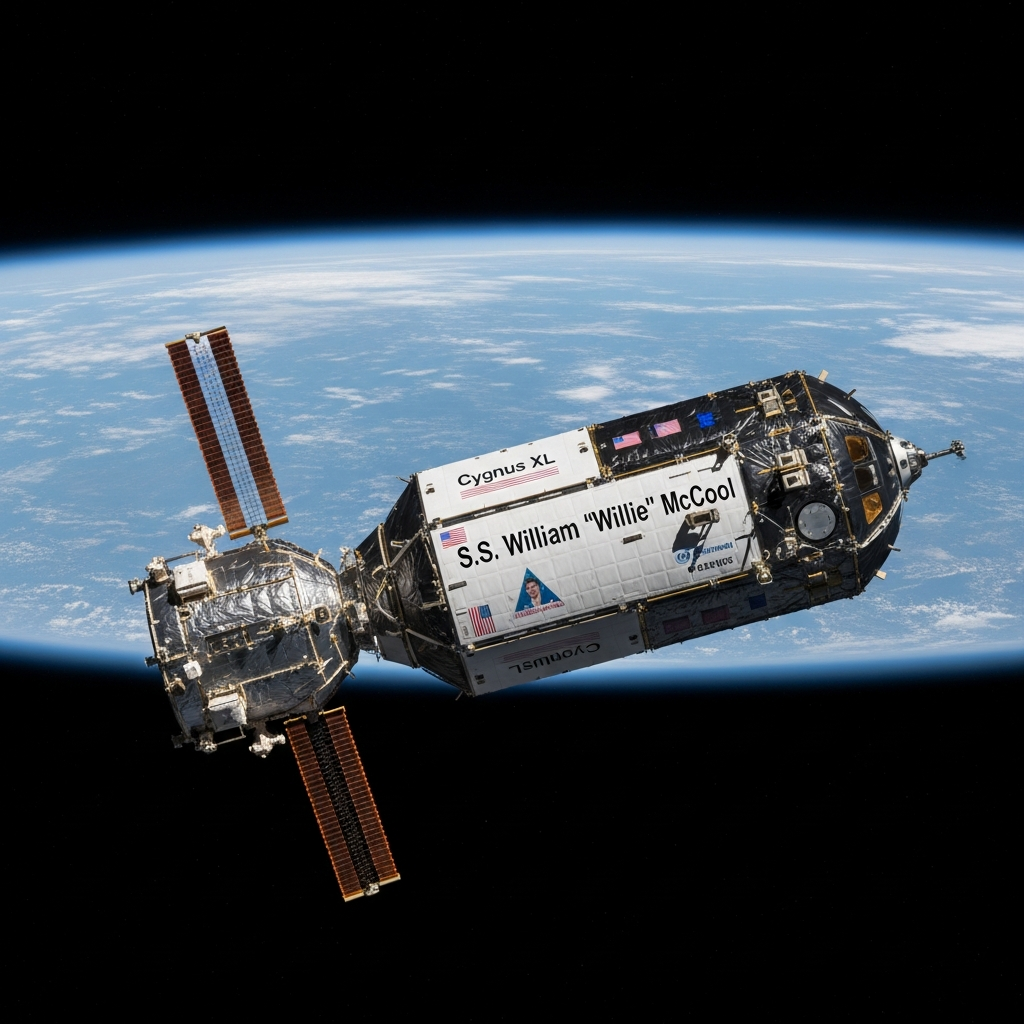
The International Space Station (ISS) recently bid farewell to a crucial visitor: Northrop Grumman’s groundbreaking Cygnus XL cargo spacecraft. After completing its essential resupply mission, the “S.S. William ‘Willie’ McCool” successfully undocked from the orbital outpost, marking a significant milestone in space logistics. This departure concludes the inaugural flight of the enhanced Cygnus XL, which delivered a record-breaking volume of supplies and scientific equipment, fueling the next chapter of research aboard the station.
The mission, designated NG-23, underscores the vital role commercial partners play in sustaining human presence in low-Earth orbit. As the Cygnus XL embarks on its final journey, its legacy of innovation and dedication to space exploration continues. This event wasn’t merely a departure; it was a testament to the intricate coordination and advanced technology that keeps the ISS thriving.
A Crucial Farewell to the “S.S. William ‘Willie’ McCool”
On Thursday, March 12, 2026, at precisely 7:06 a.m. EST, the Northrop Grumman Cygnus XL spacecraft was released from the International Space Station. This final separation marked the end of a nearly six-month orbital stay for the S.S. William “Willie” McCool, a name chosen to honor a NASA astronaut who tragically perished in the 2003 Space Shuttle Columbia accident. The farewell was a carefully orchestrated maneuver, showcasing the precision and teamwork inherent in space operations.
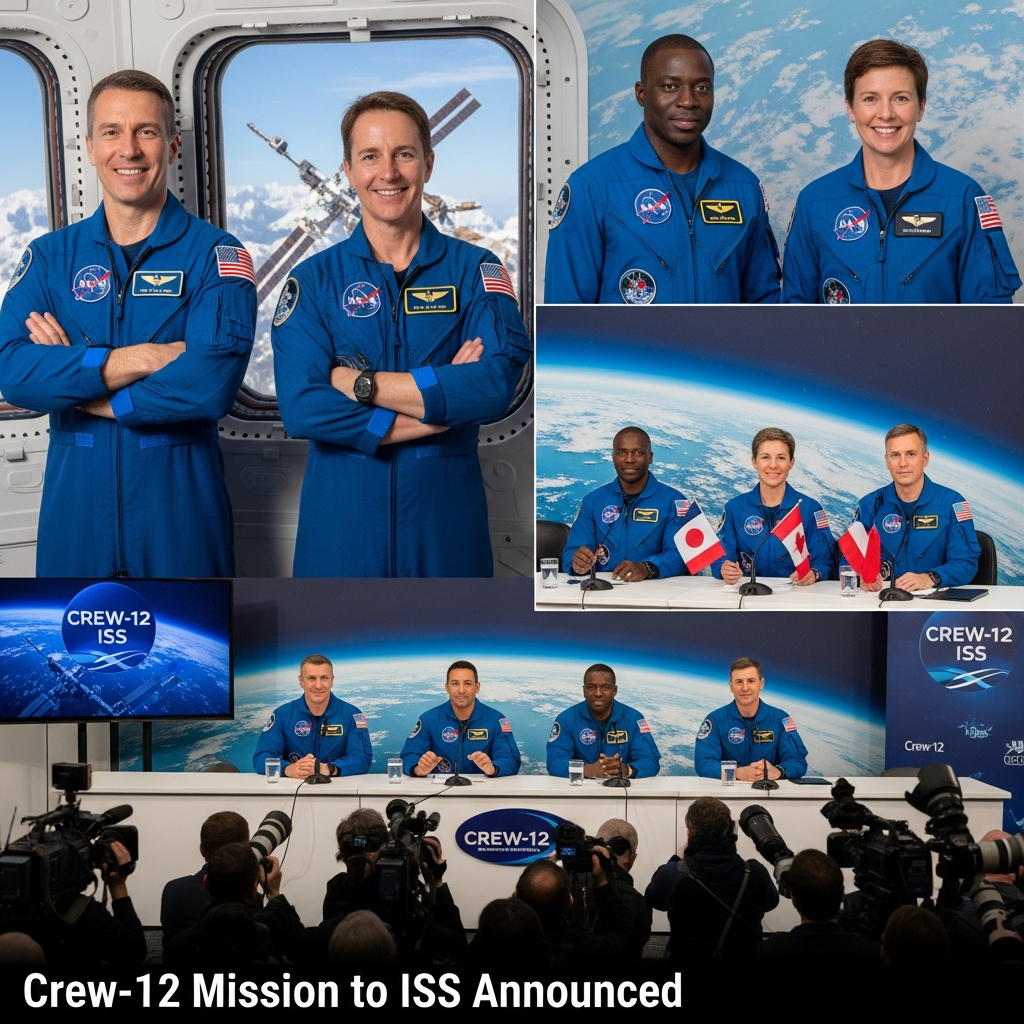
Flight controllers on the ground skillfully commanded the station’s Canadarm2 robotic arm to detach the Cygnus XL. It had been berthed securely at the Unity module’s Earth-facing port since its arrival. ESA (European Space Agency) astronaut Sophie Adenot played a critical role, diligently monitoring the spacecraft’s systems throughout the intricate departure sequence. Her vigilance ensured a flawless undocking, highlighting the international collaboration central to ISS activities. The event was so anticipated that NASA offered live coverage across multiple platforms, including NASA+, Amazon Prime, and its official YouTube channel.
The Power of “XL”: Boosting ISS Cargo Capacity
The Cygnus XL’s maiden voyage as part of the NG-23 mission was particularly significant due to its expanded capabilities. This isn’t just another cargo craft; it represents a substantial leap forward in resupply logistics. The “XL” designation isn’t merely a label; it signifies a massive increase in payload capacity and pressurized cargo volume compared to its predecessors. While earlier Cygnus versions typically carried around 8,500 pounds (3,856 kg), this advanced freighter delivered approximately 11,000 pounds (4,990 kilograms) of scientific equipment, essential supplies, and vital hardware to the ISS.
This enhanced capacity directly translates to more scientific experiments, more provisions for the crew, and more hardware for station maintenance and upgrades. The ability to transport a greater volume of goods with each mission makes resupply operations more efficient and cost-effective. Despite encountering an engine glitch during its initial journey to the station, the S.S. William “Willie” McCool demonstrated resilience, successfully overcoming the problem to arrive just one day later than planned on September 18, 2025. This successful recovery underscores the robust design and dedicated support systems behind these critical missions.
From Launch to Deorbit: The Cygnus XL’s Full Journey
The journey of the S.S. William “Willie” McCool began with a powerful launch in September 2025. A SpaceX Falcon 9 rocket, departing from Space Launch Complex 40 at Cape Canaveral Space Force Station in Florida, propelled the advanced cargo vehicle into orbit. This collaboration between Northrop Grumman and SpaceX highlights the dynamic nature of commercial space partnerships, combining expertise to achieve complex mission objectives.
Upon release from the ISS, the Cygnus XL didn’t immediately plunge back to Earth. Instead, it executed a precise six-minute thruster burn to create a safe 650-foot (200 meters) safety perimeter, known as the “keep-out sphere.” This maneuver ensured the spacecraft moved away from the station without incident. Its ultimate fate, however, is a fiery one. The Cygnus XL is scheduled to be commanded to deorbit on Saturday, March 14, 2026. During its re-entry into Earth’s atmosphere, the spacecraft, along with several thousand pounds of accumulated trash from the ISS, will harmlessly burn up. This controlled destruction is a crucial function, preventing orbital debris and serving as the station’s primary method for waste disposal.
The Bigger Picture: Sustaining Life and Science in Space
The departure of the Cygnus XL is just one piece of a complex and continuous puzzle that is ISS operations. The orbital outpost is a bustling hub of activity, constantly receiving new supplies and sending back scientific data. Cygnus is one of four robotic cargo spacecraft diligently serving the station, alongside SpaceX’s reusable Dragon capsule, Russia’s Progress vehicle, and the Japan Aerospace Exploration Agency’s (JAXA) HTV-X. A key distinction is that while Dragon is designed for return and reuse, Cygnus, Progress, and HTV-X are primarily one-way vehicles, designed to incinerate upon re-entry.
The recent activities aboard the ISS demonstrate this constant state of flux. Just the week prior to Cygnus XL’s departure, JAXA’s HTV-X1 cargo spacecraft also concluded its maiden visit. Uniquely, this HTV-X is slated to remain in orbit as a free flyer for an additional three months, hosting a series of JAXA science experiments before its planned deorbit. Simultaneously, ISS astronauts are busy preparing for an upcoming spacewalk. NASA astronauts Jessica Meir and Chris Williams are slated to conduct an extravehicular activity (EVA) to prepare for the installation of a new roll-out solar array. Their tasks include routing cables and installing a modification kit, crucial steps for upgrading the station’s power systems.
Beyond these operational logistics, the Expedition 74 crew is deeply engaged in a myriad of biomedical studies. From monitoring cardiac health with advanced sensors to scanning veins for changes in blood flow in microgravity, and even conducting cognition tests, astronauts like Sergey Kud-Sverchkov, Sergei Mikaev, Andrey Fedyaev, Jack Hathaway, and Jessica Meir are continually contributing to our understanding of human adaptation to space. These studies are critical for preparing for longer-duration missions to the Moon and Mars, highlighting the profound scientific value delivered by missions like NG-23.
Frequently Asked Questions
What is the significance of the Cygnus XL’s increased cargo capacity?
The “XL” designation on Northrop Grumman’s Cygnus spacecraft indicates a substantial increase in its payload capacity. This upgraded version can carry approximately 11,000 pounds (4,990 kg) of supplies, science experiments, and hardware, significantly more than earlier models. This boost allows for more scientific research to be conducted on the International Space Station, provides more provisions for the crew, and enhances the efficiency and frequency of resupply missions, making the overall operation of the ISS more robust and sustainable.
Where can I watch live coverage of future ISS cargo departures?
NASA frequently provides live coverage of significant events related to the International Space Station, including cargo spacecraft departures and arrivals. These broadcasts are typically available on NASA’s official YouTube channel, NASA+, and sometimes through partners like Amazon Prime. Checking NASA’s official website or social media channels for specific schedules and viewing links is the best way to ensure you don’t miss live events from the orbital outpost.
Why is Northrop Grumman’s Cygnus spacecraft designed to burn up on reentry instead of being reusable?
Unlike SpaceX’s Dragon capsule, which is designed for reusability and returns cargo to Earth, the Cygnus spacecraft is a one-way vehicle. Its design simplifies construction and mission operations, optimizing it for delivering large volumes of cargo efficiently. A key advantage of its destructive re-entry is its crucial role in waste management for the ISS. Upon mission completion, Cygnus is packed with several thousand pounds of trash from the station, which then harmlessly burns up along with the spacecraft in Earth’s atmosphere, preventing the accumulation of orbital debris.
A Legacy of Innovation Continues
The departure of the Cygnus XL, “S.S. William ‘Willie’ McCool,” from the International Space Station is far more than a simple undocking. It represents the successful culmination of a vital commercial resupply mission, showcasing the enhanced capabilities of Northrop Grumman’s next-generation cargo craft. This event highlights the seamless international collaboration, technological prowess, and human dedication required to maintain humanity’s continuous presence in space. As the Cygnus XL completes its final fiery descent, it leaves behind a richer, better-equipped ISS, poised for continued scientific breakthroughs and further explorations of our universe. The ongoing work on the ISS, supported by these critical resupply missions, continues to push the boundaries of what is possible, inspiring future generations to look to the stars.