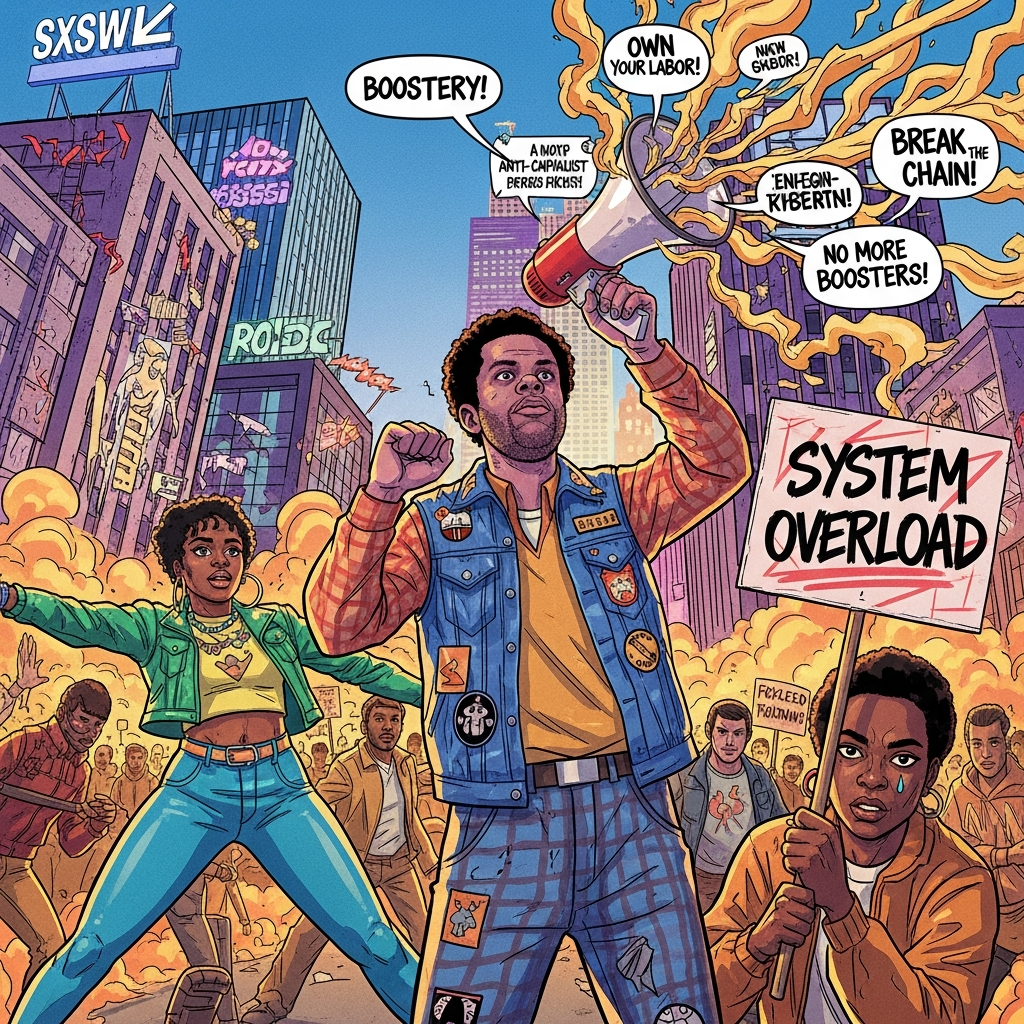
Prepare for a cinematic explosion unlike any other as Boots Riley’s “I Love Boosters” arrives, a daring and wildly inventive follow-up to his critically acclaimed debut, “Sorry to Bother You.” This film isn’t just a movie; it’s a hyperpop-infused, anti-capitalist romp that kicked off the 40th SXSW film and television festival with an undeniable bang. Starring Keke Palmer, Naomi Ackie, and Taylour Paige, “I Love Boosters” plunges audiences into a world of absurdist satire, vibrant visuals, and a searing critique of modern capitalism, proving Riley’s brash, satirical funk surrealism is more potent than ever. It’s a defiant, out-there experience destined to spark conversation and challenge perceptions.
Boots Riley’s Unmistakable Vision: A Funk Surrealism Masterpiece
Eight years after “Sorry to Bother You” cemented his reputation, writer-director Boots Riley returns with “I Love Boosters,” doubling down on his unique brand of social commentary. This latest offering is a cosmic send-up of fashion consumerism, framed as an incendiary prank that’s even more audacious than its predecessor. Riley’s directorial style is distinctive, weaving together surreal elements with pointed social critique to create a stylized, exaggerated reality that mirrors our own. His films are punkish, visually vibrant, and fearless in their exploration of societal injustices, always revealing a joyful and unruly sense of hope beneath layers of frustration.
“I Love Boosters” continues Riley’s tradition of crafting distorted realities to offer profound insights into contemporary society. While his vision occasionally lacks traditional coherence, this film emerges as a more spirited and playfully provocative work. It’s a testament to his belief in collective organizing and a newfound emphasis on a greater love for the people who form such collectives. Riley’s cinematic language is packed with high-energy, go-for-broke moments, making it a faster-paced, more emotionally attuned journey.
The Velvet Gang: Inner-City Robin Hoods of Couture
At the heart of this surreal tale is Corvette, brilliantly portrayed by Keke Palmer, a determined “booster” operating in Oakland. Initially, she appears to be selling an array of boosted (stolen) clothes from her squat in an abandoned chicken restaurant. Corvette forms the “Velvet Gang” with her comrades, Sade (Naomi Ackie), a leonine sensualist, and Mariah (Taylour Paige), who is passive yet sly. This outlaw trio operates as “inner-city Robin Hoods of couture,” systematically stealing from high-end stores and reselling merchandise at discounted prices. Their audacious motto, “Fashion. Forward. Philanthropy.,” perfectly encapsulates the film’s satirical take on capitalist desperation.
Palmer’s imperious performance as Corvette grounds Riley’s often fantastical writing with compelling real-world implications. Her captivating, comedic energy also delivers essential emotional heft. The quippy camaraderie between Corvette, Sade, and Mariah draws the audience in, even as their narrative descends into increasingly deranged, magical-realist territory. Their prowess in theft easily puts the infamous “Bling Ring” to shame, turning shoplifting into an act of insurrection from the street up. This trio’s dynamic forms a crucial emotional anchor, testing their connection against the relentless pressures of capitalism.
A Blinding Critique: Fashion, Greed, and the Capitalist Dystopia
The central conflict ignites with the introduction of Christie Smith, a formidable fashion mogul played with comic dynamism by Demi Moore. Christie is a branding genius whose diva empire symbolizes unchecked control and corporate greed. She publicly denounces the “low-class urban bitches” and, more critically, steals one of Corvette’s original designs. This act of intellectual property theft sparks the trio’s plan: to boost Christie Smith’s entire inventory. This audacious move unexpectedly ignites a wider movement among retail and factory workers, exposing the true cost of “fast fashion.”
Riley’s film critically skewers capitalist society, portraying a world where “grifters” operate at lower levels and “soulless capitalists” at the top. The film highlights how Christie’s greed leads to unsafe working conditions in factories, like the one where Jianpu (Poppy Liu) toils. Christie’s cynical philosophy – “Reality is unchangeable, but we can change how we perceive reality” – becomes a central theme the film actively challenges. Through outrageous scenarios, “I Love Boosters” successfully captures the hopelessness of our current capitalist dystopia, where the rich get richer while destroying the world, and the rest struggle for meaningful existence.
The Audacious Artistry of Absurdist Satire
True to Riley’s distinctive style, “I Love Boosters” is permeated with a strong “camp factor” and an unreserved embrace of sci-fi elements. Christie’s penthouse apartment sits on a steep, impossible angle, reminiscent of old “Batman” villains. The film takes a hard turn into sci-fi with a device capable of deconstruction, exaggeration, or teleportation for retail, leading to increasingly bizarre sequences. This propels the movie into the “reality-hopping realm of ‘Everything Everywhere All at Once.'”
Riley even went old-school for special effects, using claymation for a band of “fashion minions” who have undergone surgery for style. A car chase is acted out with miniatures on a scaled model of San Francisco streets, despite actual filming taking place in Atlanta and Louisville. Further surrealism appears when Sade encounters a seductive nightclub bystander (LaKeith Stanfield) who turns out to be a literal serpent demon. This visually vibrant aesthetic, featuring lime greens, banana yellows, and hot pinks, along with eye-popping costumes, subtly counters Christie’s accusations that the boosters lack originality.
A Stellar Ensemble Amplifies the Message
“I Love Boosters” is rounded out with memorable supporting performances that enrich its ensemble and thematic depth. Poppy Liu shines as Jianpu, a Chinese factory worker driven by intense motivations to dismantle Christie’s business empire, wielding a teleporter that also acts as a “situational accelerator.” Eiza González plays Violeta, a punk retail worker actively plotting to unionize, adding another layer to the critique of labor conditions. Will Poulter is delightfully unhinged as Violeta’s flamboyant, boot-licking store manager, portraying a “fascist bitch” who restricts lunch breaks to mere seconds.
LaKeith Stanfield embodies a pretentious model with a mysterious and sinister past. Don Cheadle appears in a droll cameo, undergoing a significant physical transformation to portray a potbellied motivational speaker operating a pyramid scheme. Each character, regardless of screen time, contributes to the film’s powerful social commentary, showcasing how various individuals navigate or exploit the economic landscape.
Emotional Resonance Amidst the Mayhem
Despite its outrageousness and surreal elements, a crucial strength of “I Love Boosters” lies in its unexpected emotional depth. Riley is more attuned to character in this film, demonstrating a deeper capacity for emotional storytelling. The film merges the grounded realities of life under capitalism with Riley’s characteristic heightened, humorous vision. Corvette’s inability to form genuine connections due to her constant financial struggles provides a poignant illustration of life under relentless hustling.
A particularly impactful scene involving a heartfelt conversation between Sade and Corvette not only deepens their friendship but recontextualizes their previous interactions, adding significant emotional weight. Keke Palmer’s performance provides surprising emotional wallop, building meaning as the film descends into its unique brand of madness. While Riley often champions an overdue revolution, this cynicism is balanced by an earnest belief in people. “I Love Boosters” is an invitation to fall in love with these “boosters with hearts of gold,” and anyone striving to make their lives and the lives of those around them better.
Frequently Asked Questions
What is “I Love Boosters” about and what themes does it explore?
“I Love Boosters” follows Corvette (Keke Palmer), Sade (Naomi Ackie), and Mariah (Taylour Paige), known as “The Velvet Gang,” a trio of expert shoplifters in the Bay Area. They make a living by stealing high-end fashion and reselling it. The film takes a turn towards revenge when fashion mogul Christie Smith (Demi Moore) appropriates one of Corvette’s designs, sparking a plan to boost Christie’s entire inventory. The movie critiques capitalism, consumerism, and labor exploitation, exploring themes of art creation, ownership, and social rebellion within the fashion industry through a unique blend of surrealism and satire.
How does “I Love Boosters” compare to Boots Riley’s previous work, like “Sorry to Bother You”?
“I Love Boosters” is considered an even more audacious and spirited follow-up to Riley’s 2018 debut, “Sorry to Bother You.” While both films share Riley’s distinctive “funk surrealism” and sharp anti-capitalist critique, “I Love Boosters” is described as more “out-there” and playfully provocative, with a faster pace and a deeper emotional core. It further cements Riley’s unique style, expanding on his use of absurd elements and magical realism to comment on societal issues, while also demonstrating a newfound emphasis on the emotional connections and collective organizing among his characters.
When and where can audiences watch “I Love Boosters”?
“I Love Boosters” premiered as the opening night selection for the 40th SXSW film and television festival. The film is distributed by Neon and has a scheduled release date of May 22, 2026. With a running time of 1 hour and 45 minutes, audiences will be able to experience this wild, weird, and delightfully unique cinematic journey in theaters upon its release.
A Cinematic Invitation to Challenge Reality
“I Love Boosters” is more than just a film; it’s a vibrant, unapologetic manifesto from a singular artistic voice. Boots Riley skillfully merges anarchic humor with profound social commentary, inviting viewers to question the fabric of their own realities. From its unforgettable performances by Keke Palmer, Naomi Ackie, and Taylour Paige to its audacious visual style and sharp critique of corporate greed, “I Love Boosters” is a wild ride that promises both laughs and deep reflection. It’s an urgent call to pick up that brush and start painting our own futures, challenging us not to let cynical billionaires limit our imagination. Don’t miss this must-see cinematic event that confirms Boots Riley as a true visionary.