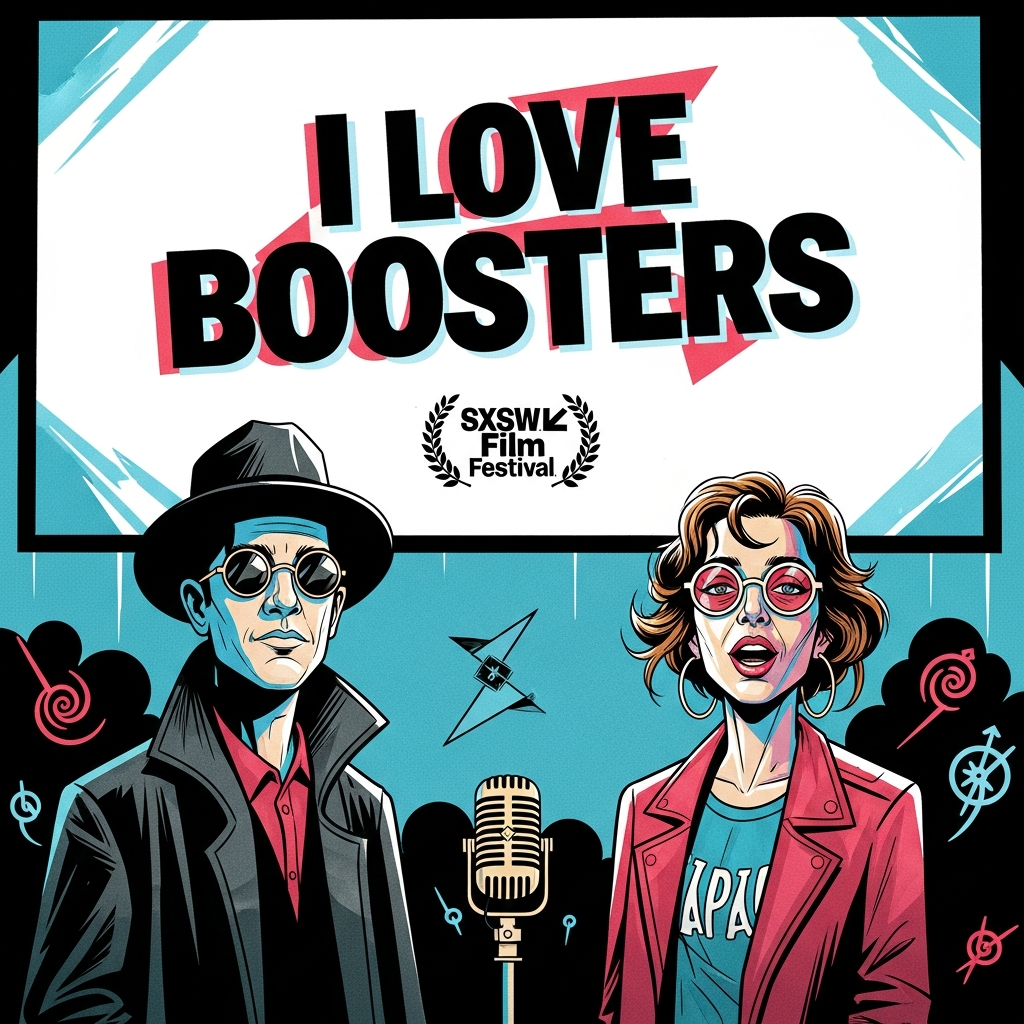
Boots Riley, the visionary filmmaker renowned for his genre-bending works like Sorry to Bother You and I’m a Virgo, returns with his latest feature, I Love Boosters. This film, which premiered as a headliner at the SXSW Film Festival, is an electrifying, surreal, and deeply insightful anti-capitalist comedy. Starring the powerhouse Keke Palmer, it plunges audiences into a heightened reality that paradoxically offers a clearer, blunter view of our own world, exposing societal absurdities with sharp wit and audacious style. Prepare for a cinematic experience that challenges perceptions and sparks genuine hope amidst the chaos.
Unpacking Boots Riley’s Distinctive Vision
Riley possesses a unique knack for crafting narratives that blend the fantastical with biting social commentary, and I Love Boosters is no exception. This film takes his signature “brash satirical style of funk surrealism” to new heights, delivering what many describe as his most “out there” and “spirited piece of fun” yet. Rather than transporting viewers to an entirely different universe, Riley’s work feels more like putting on X-ray goggles, revealing the hidden layers of frustration, despair, and ultimately, an unruly sense of joy buried beneath our everyday reality.
Set in a distorted, yet strangely familiar, version of the Bay Area, the film introduces a world where office floors tilt precariously at 45-degree angles, where a peculiar demon extracts souls, and where a teleportation device holds the tantalizing promise of revolutionizing retail shipping. These bizarre elements are not mere spectacle; they serve as potent metaphors, amplifying Riley’s simmering critique of a world consumed by unchecked capitalism and corporate machinations. The director masterfully stages events to deliberately spin out of orbit, creating a stylized yet utterly recognizable mirror of the real world.
The Spark of Rebellion: Corvette and The Velvet Gang
At the heart of I Love Boosters is Corvette, played with captivating energy by Keke Palmer. Far from a mere shoplifter, Corvette is the tenacious leader of “The Velvet Gang,” a trio of “boosters” who daringly raid upscale stores. Her comrades, the “leonine sensualist” Sade (Naomi Ackie) and the “passive, sly” Mariah (Taylour Paige), complete this formidable team. Their mission: to acquire luxury goods and resell them at discount prices, embodying a modern-day, couture-slinging Robin Hood ethos, encapsulated by their motto: “Fashion. Forward. Philanthropy.”
However, their initial drive to simply make ends meet—Corvette, despite her audacious heists, still squats in an abandoned fried chicken restaurant—soon transforms into something far more profound. Their primary target is the “monomaniacal” fashion mogul Christie Smith (Demi Moore), a grandiose billionaire with a habit of appropriating Black people’s creative ideas and passing them off as her own. Palmer’s imperious portrayal of Corvette grounds Riley’s surreal narrative, injecting a comedic jolt of energy while also providing the essential emotional depth needed to navigate the film’s increasingly wild landscape.
A Blazing Critique of Capitalist Culture
I Love Boosters serves as a “comedy of capitalist desperation,” framing the act of boosting as an “insurrection from the street up.” Riley consistently portrays control as the ultimate enemy, meticulously dissecting the pervasive influence of money culture. The film is rife with examples of how modern capitalism fosters “scams for suckers.” A guru’s advertised cure for loneliness, for instance, is quickly exposed as a thinly veiled pyramid scheme, featuring a memorably transformed Don Cheadle. Similarly, a store manager (a “delightfully unhinged” Will Poulter) wields elaborate corporate jargon to confuse and pacify his workers into complacency.
The film’s world is one seemingly comprised of grifters all the way down, and “soulless capitalists” all the way up. Even the media reflects this skewed reality, airing news segments like “Crying Black Mother Demands More Police” and “Upstanding Community Member Praises the Freedom of Lower Pay.” In these moments, I Love Boosters isn’t just a heightened reality; it’s a blunt, stripped-down portrayal of our own, with the artifice torn away. The tragic subplot involving sweatshop employees falling ill from sandblasting denim isn’t an exaggeration; it’s a stark, factual representation of real-world exploitation. Christie Smith’s cynical declaration—”Reality is unchangeable, but we can change how we perceive reality”—epitomizes the film’s overarching challenge to a passive acceptance of systemic injustice.
Escalating Absurdity and Genre-Bending Brilliance
The narrative of I Love Boosters defies easy categorization, morphing from a “Bling Ring” story into a sophisticated critique. It’s been aptly described as “The Devil Wears Prada” meets “Set It Off” meets “Ghostbusters,” and later evolves into a “hell-of-retail riff on ‘Office Space'” before entering the “reality-hopping realm of ‘Everything Everywhere All at Once.'” As the Velvet Gang infiltrates Christie’s boutiques by taking retail jobs, the plot thickens with the appearance of Violeta (Eiza González), a cashier considering unionizing, and Jianhu (Poppy Liu), a Chinese factory worker with her own deeply personal reasons for wanting to dismantle Christie’s empire.
This is where the film truly embraces its sci-fi elements. Jianhu reveals she possesses a teleportation device and a “situational accelerator” capable of clearing a store’s inventory in seconds. What began as a plan to make some cash — humorously depicted with Corvette stuffing so much loot into her sweatsuit that she resembles the Stay-Puft Marshmallow Man — spirals into something far bigger, stranger, and ultimately more rewarding. The visual language of the film is as eccentric as its plot, eschewing modern CGI for practical and old-school effects. Claymation is used for a band of fashion minions, and miniatures create a car chase sequence more outlandish than anything seen in mainstream action films, all filmed in locations like Atlanta and Louisville.
Visual Spectacle and Emotional Resonance
Despite the bleakness of its observations, I Love Boosters is infused with vibrant visual flair and an infectious, absurd humor. Sight gags abound, from shift employees crouching into starting blocks to maximize their minuscule breaks, to Corvette’s teammate Mariah (Taylour Paige) seemingly changing skin color by holding her breath. The production design by Christopher Glass and costume design by Shirley Kurata are pivotal in establishing the film’s mischievous, upbeat tone, painting this universe in vivid lime greens, banana yellows, and hot pinks. These eye-popping costumes, referencing everything from the ‘90s rave scene to the flower-power ending of Midsommar, offer a sharp counterpoint to Christie’s sneers about the boosters’ lack of creativity, emphatically proving their artistry.
While Boots Riley’s “freewheeling ambition” occasionally leads to an “overstuffed” narrative—with subplots featuring LaKeith Stanfield as a mysterious model or the unresolved tension between Corvette and Sade sometimes feeling underdeveloped—this excess is crucial to the film’s joy. It reinforces the idea that imagination should not be constrained by cynical billionaires or disingenuous politicos. Christie Smith may view humanity as mere canvases for her “wearable art,” but her skeptical assistant aptly articulates the film’s core message: “I don’t think people want to be the art. They want to be the artist.” This underlying belief in people, in their capacity for collective organizing and personal artistry, makes I Love Boosters a powerful call to action. It encourages us to pick up that brush and actively paint our own futures, asserting agency and hope in a world designed to deny them.
Frequently Asked Questions
What unique directorial style does Boots Riley bring to ‘I Love Boosters’?
Boots Riley’s “I Love Boosters” fully embraces his signature “funk surrealism” and “brash satirical style,” creating a heightened, often absurd reality to critique modern society. Unlike traditional films, Riley uses fantastical elements—like tilted office floors, a soul-sucking demon, and teleportation devices—not just for shock value, but as sharp metaphors for capitalist exploitation and consumerism. His approach is distinctive for blending various genres, from heist comedy to sci-fi and social drama, all while maintaining a visually vibrant and audaciously humorous tone, often preferring practical effects over modern CGI to amplify its unique aesthetic.
Where did ‘I Love Boosters’ premiere, and who are its main stars?
“I Love Boosters” premiered as a headliner at the prestigious SXSW Film Festival on March 10, 2026. The film features a stellar ensemble cast led by Keke Palmer, who plays Corvette, the leader of “The Velvet Gang.” She is joined by Naomi Ackie as Sade and Taylour Paige as Mariah, her two comrades. The primary antagonist, fashion mogul Christie Smith, is portrayed by Demi Moore. Other notable cast members include Poppy Liu as Jianhu, Eiza González as Violeta, LaKeith Stanfield as a mysterious model, Will Poulter as a store manager, and Don Cheadle in a memorable cameo.
What are the central anti-capitalist themes explored in ‘I Love Boosters’?
“I Love Boosters” is a powerful and explicit deconstruction of capitalism, portraying it as a system built on exploitation and consumer desperation. The film critiques everything from corporate appropriation of ideas and worker manipulation through elaborate jargon, to the harsh realities of sweatshop labor and the perpetuation of pyramid schemes. It frames the “boosting” (shoplifting) performed by the Velvet Gang as an act of “insurrection from the street up,” a defiant response to the overwhelming power of “soulless capitalists.” Ultimately, the film champions collective action and individual artistry as vital means to reclaim agency and envision alternative futures within a broken system.
A Bold Call to Artistry
I Love Boosters is not merely a film to be watched; it is an experience to be absorbed and pondered. Boots Riley, proving himself a romantic alongside his revolutionary spirit, profoundly loves these “boosters with hearts of gold” and all who strive to forge a meaningful existence for themselves and others. The film’s raw energy, combined with its profound thematic depth and vibrant artistic choices, makes it an unforgettable cinematic journey. It’s an encouragement to actively engage with the world, to question its narratives, and to find the humor and hope needed to resist.