The US-Israeli conflict with Iran escalated dramatically on Friday, March 6, as intense military operations unfolded across the Middle East. With President Trump demanding Iran’s “unconditional surrender,” the region grappled with widespread attacks, devastating civilian casualties, and significant economic fallout. This comprehensive update synthesizes military actions, political rhetoric, and humanitarian concerns, painting a grim picture of an evolving geopolitical crisis.
Relentless Strikes: A Region Engulfed in Conflict
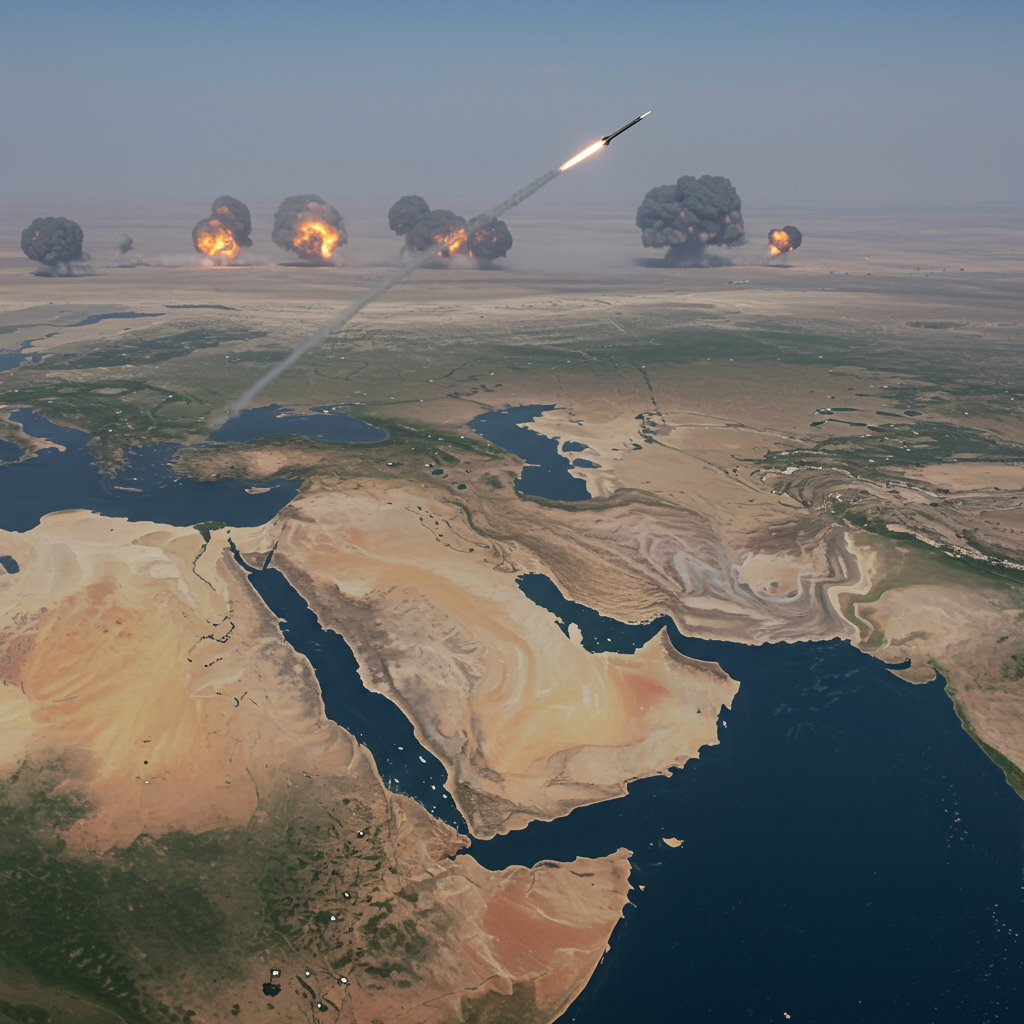
The conflict, now in its second week, has transformed into a multi-front engagement, with both US-Israeli forces and Iran executing powerful strikes. Early reports from Friday confirmed suspected Iranian missile debris ignited fires in central Israel, a testament to the ongoing tit-for-tat exchanges. However, the true scale of military action became apparent as the day progressed.
Unprecedented Air and Naval Assaults
US and Israeli forces launched heavy bombing campaigns against Iran’s capital, Tehran, and targeted locations in Lebanon. Israel deployed over 80 fighter jets, hitting key military sites including Imam Hossein University (a Revolutionary Guard training facility), ballistic missile storage, and an underground command center. A notable, yet unconfirmed, claim by Israeli forces was the destruction of the underground bunker of the late Supreme Leader Ayatollah Ali Khamenei, who reportedly died on February 28. More than 50 Iranian officials, including the defense minister and Revolutionary Guard commander, were also said to have been killed in these strikes.
“Operation Epic Fury” saw the US military actively involved, sinking an Iranian drone carrier and claiming to have damaged or destroyed 43 Iranian ships and over 20 naval vessels and a submarine within the conflict’s initial seven days. US Central Command (CENTCOM) reported hitting nearly 2,000 targets over 100 hours, significantly degrading Iran’s missile launchers, drones, and naval assets. B-2 stealth bombers deployed “dozens of 2,000-pound penetrators” against deeply buried ballistic missile launchers. Israel declared “near-complete air superiority” over Iran, claiming to have neutralized over 80% of its air defense systems. A historic first saw an Israeli F-35I fighter jet shoot down an Iranian YAK-130 over Tehran, and Israel also alleged the destruction of a secret underground nuclear facility.
Iran’s Retaliation and Regional Spread
In response, Iran unleashed volleys of missiles and numerous drones towards Israel and US allies in the Persian Gulf. Explosions were heard in Dubai and Manama, Bahrain, due to missile interceptions. Qatar intercepted nine of ten Iranian drones, while Saudi Arabia brought down three. The UAE reported intercepting nine ballistic missiles and 109 drones in one wave, highlighting the immense pressure on Gulf allies facing dwindling interceptor supplies.
Beyond the immediate conflict zones, the war spread. Iranian drones reportedly struck an airport and a school in Azerbaijan, injuring two. A British military base in Cyprus was also targeted by a drone, underscoring the conflict’s widening geographic impact. The UAE alone confirmed intercepting 186 ballistic missiles and 812 drones since the conflict began, suffering three fatalities and 68 injuries. Qatar, having intercepted 90 ballistic missiles and 24 drones, sternly warned Iran that such “blatant violations” would “not go unanswered.”
Political Declarations and Geopolitical Maneuvers
The conflict is not just a military confrontation but also a battle of political wills, with President Trump at the forefront of the US stance. His statements and policy directions have set a demanding tone for any potential resolution.
Trump’s Ultimatum and Leadership Ambitions
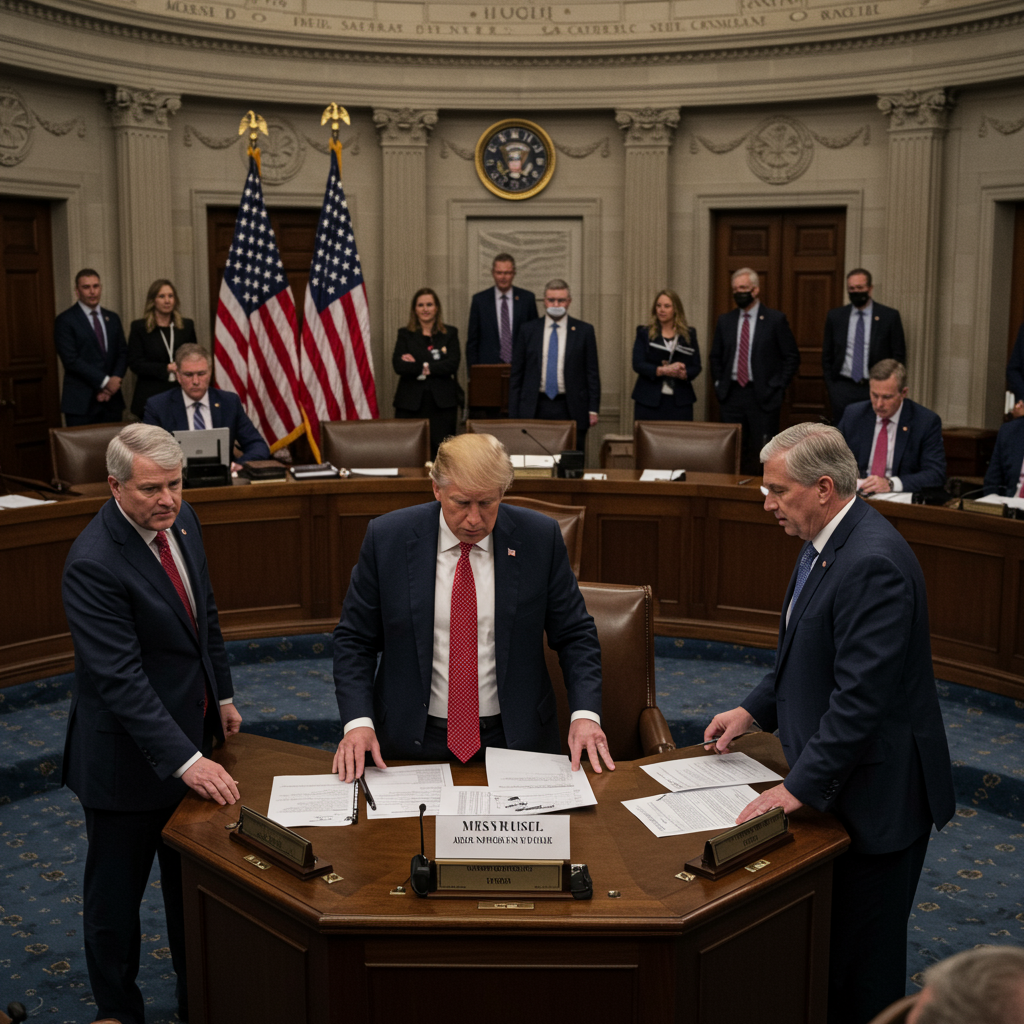
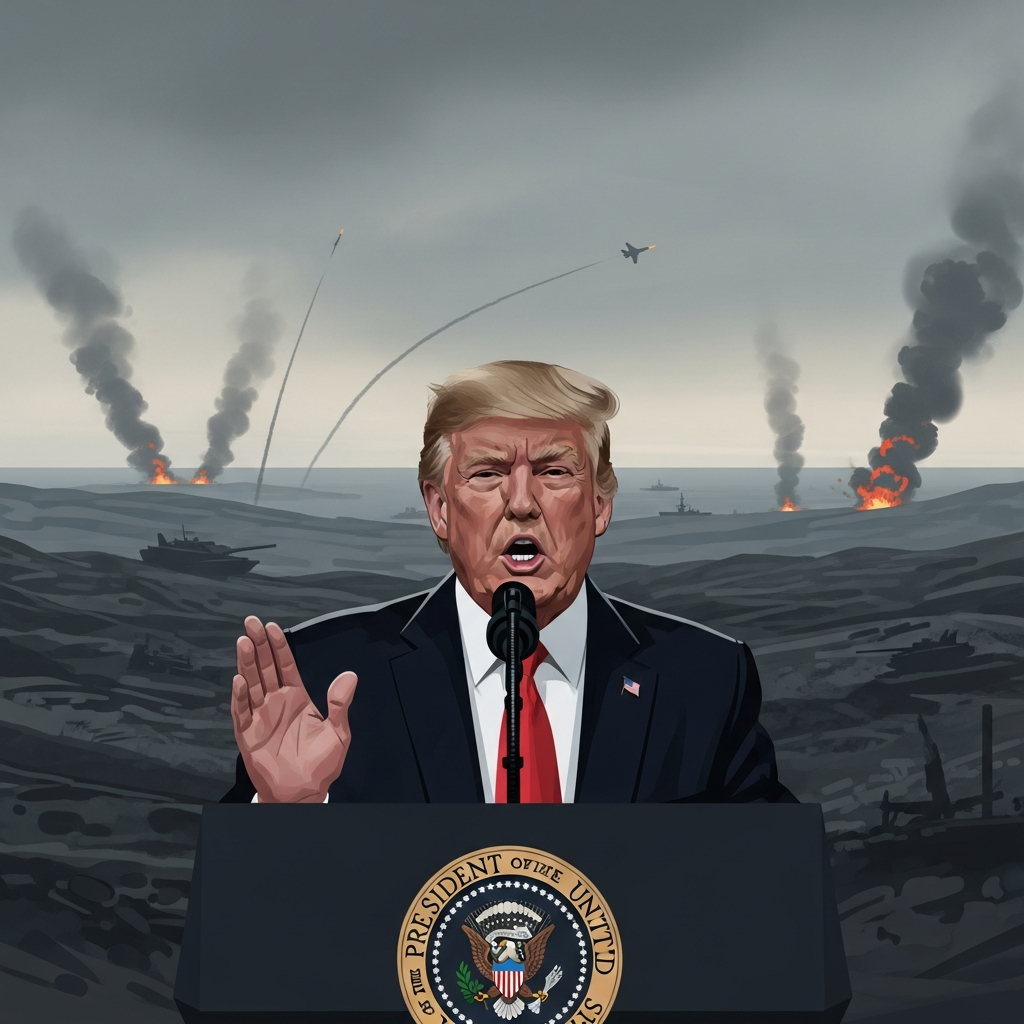
President Trump has emphatically demanded Iran’s “unconditional surrender,” clarifying this means when Iran is no longer a threat or cannot fight. He stated the US seeks to “clean out” Iran’s theocratic leadership and wants to be involved in selecting Iran’s next “great & acceptable” leader, explicitly calling the late Ayatollah Ali Khamenei’s son, Mojtaba Khamenei, an “unacceptable” successor. Trump claimed the US was performing “very well” in the war, asserting Iran’s military and communication capabilities were largely “gone.”
Defense Secretary Pete Hegseth echoed that the operation is “laser-focused” on destroying Iran’s military capabilities and preventing nuclear weapons. Trump ruled out ground troops “for now,” calling them a “waste of time,” but notably did not dismiss their future deployment. Instead, the US strategy focused on “systemically dismantling Iran’s missile production capability,” with Trump directing the military to “raze or level” the industry. He also boasted of US defense companies quadrupling production of “exquisite class” weaponry, claiming a “virtually unlimited supply” of munitions.
Shifting Alliances and International Discord
The conflict has reconfigured regional alliances. Russia has reportedly provided intelligence on US positions to Iran, signifying a deepening alliance. Russian President Vladimir Putin spoke with Iranian President Masoud Pezeshkian, calling for an “immediate cessation of hostilities” and a “swift return to diplomatic resolution.” Pezeshkian thanked Putin for his “solidarity.”
International concern is soaring. UN Secretary-General Antonio Guterres warned the situation “could spiral beyond anyone’s control.” Germany’s Chancellor Merz cautioned against a “Syrian scenario” leading to mass migration if the Iranian state collapsed. Critically, experts like Omar Rahman of the Middle East Council on Global Affairs noted that the US war with Iran had “harmed its relationships with Gulf states,” shattering their trust in US protection. Spain’s Prime Minister Pedro Sanchez notably refused to allow US planes to use Spanish bases for attacks, and China condemned the US-Israeli actions, advocating for dialogue and Iran’s right to self-defense.
Meanwhile, Iran’s Foreign Ministry spokesperson accused the US and Israel of “unprovoked acts of aggression.” Iran’s leadership sought to reassure neighboring countries that their recent strikes were defensive and aimed at US bases, not regional capitals. Despite claims of mediation efforts by some countries, Iran’s Foreign Minister stated they were “not asking for a ceasefire.”
Economic Tremors and Global Market Volatility
The escalating conflict has sent shockwaves through global markets, particularly impacting energy prices and the US economy. The ripple effects are being felt far beyond the Middle East.
Oil Prices Surge, Stock Markets Plunge
The international oil benchmark Brent crude soared to $92 a barrel, a nearly 30 percent rise since last Friday, marking its biggest weekly jump since April 2020. West Texas Intermediate (WTI) also jumped 11 percent, with gas prices in the US rising 32 cents a gallon in a single week. These surges were driven by concerns over global crude supply disruptions and potential production shutdowns by Gulf energy exporters.
The US economy experienced a “roller-coaster” ride. The S&P 500 dropped 1.3 percent on Friday, contributing to a two percent loss for the week – its worst performance in 2026. The Dow Jones Industrial Average plummeted 1,100 points. The unexpected loss of over 90,000 jobs in February placed the US Federal Reserve “between a rock and a hard place,” according to one analyst. The Fed now faces the difficult decision of whether to cut interest rates or hold them steady amidst rising oil prices, a dilemma compounded by President Trump’s repeated attacks on Federal Reserve Board Chair Jerome Powell over interest rates.
The US also temporarily lifted some sanctions to allow India to buy Russian oil, a move Trump linked to long-term US economic stability despite immediate price hikes. The US Development Finance Corporation (DFC) was ordered to provide political risk insurance for maritime trade in the Gulf, and the US Navy might escort tankers through the Strait of Hormuz to ensure oil flow.
Deepening Humanitarian Crisis
Beyond the economic and political spheres, the human cost of the conflict continues to mount, raising urgent concerns from international organizations. Civilian lives, particularly those of children, have been severely impacted.
Civilian Casualties and Mass Displacement
The UN Secretary-General urged an immediate stop to the fighting, warning of humanitarian catastrophe. UNICEF expressed deep concern for children, reporting 180 killed and many injured, calling for civilian protection. Lebanon has borne a heavy toll, with Israeli airstrikes causing at least 217 deaths and 798 injuries, displacing over 300,000 people. The UN is demanding probes into Israeli strikes and forced evacuations, fearing potential displacement of over a million.
Iran’s Foreign Ministry spokesperson cited civilian casualties in Iran, including 165 children and school staff in Minab, attributing these to US and Israeli attacks. Iran’s government reported over 1,230 deaths from US and Israeli strikes, while a human rights agency cited 1,114 civilian deaths, including 181 children. Sri Lanka found itself evacuating sailors from an Iranian ship, just days after the US sank Iran’s prized destroyer, IRIS Dena, off its coast, killing over 100 sailors.
Travel across the region has been severely disrupted. United Airlines canceled flights to Tel Aviv and Dubai, and widespread airspace closures left thousands stranded. The US State Department reported assisting nearly 13,000 Americans and facilitating the return of around 24,000 to the US. Advocates are also concerned for at least four American nationals jailed in Iran, whose whereabouts remain unknown amidst the bombing.
International Calls for Accountability
Iran’s Foreign Ministry called on the United Nations to “shoulder its legal and moral responsibilities” over what it described as an illegal war against Iran, accusing the US and Israel of war crimes. The UN Secretary-General’s office highlighted the risk to the global economy and urged a focus on civilian protection.
Frequently Asked Questions
What are the primary military actions defining the current US-Israel-Iran conflict?
The conflict is characterized by intense US-Israeli aerial bombardment of Tehran and targets in Lebanon, using over 80 fighter jets and B-2 stealth bombers to strike military sites, command centers, and missile facilities. The US Navy has also engaged in significant naval operations, sinking Iranian drone carriers and dozens of other vessels. In retaliation, Iran has launched extensive missile and drone attacks against Israel and US-allied Gulf states, leading to widespread interceptions and a severe drain on defensive resources in the region.
How has the US-Iran war impacted global energy markets and the US economy?
The war has caused significant global economic disruption. Oil prices, specifically Brent crude, surged by nearly 30 percent in a week, reaching $92 a barrel, triggering a 32-cent per gallon jump in US gas prices. This instability led to steep drops in major stock indices like the S&P 500 and Dow Jones. Domestically, the US economy faced an unexpected loss of over 90,000 jobs in February, putting the Federal Reserve in a difficult position regarding interest rates amidst rising inflation pressures from oil.
What are the key political stances from the US and Iran regarding a resolution to the conflict?
President Trump has demanded Iran’s “unconditional surrender,” aiming to dismantle its military capabilities and reshape its leadership by selecting a “great & acceptable” leader, explicitly rejecting Mojtaba Khamenei. While ruling out ground troops for now, the US prioritizes destroying Iran’s missile industry. Iran, conversely, maintains its actions are defensive, seeks to reassure neighboring countries, and its Foreign Minister stated they are not seeking a ceasefire, despite claims of some countries attempting mediation. International bodies like the UN urge an immediate cessation of hostilities and diplomatic resolution.
Conclusion: An Unfolding Crisis with Far-Reaching Implications
The events of Friday, March 6, underscore the severe escalation of the US-Israel-Iran conflict. With unprecedented military actions, unyielding political rhetoric, profound economic shocks, and a deepening humanitarian crisis, the region finds itself on a precarious precipice. The calls for “unconditional surrender” clash with assertions of defensive actions, while the global economy reels from soaring oil prices and market volatility. As international bodies appeal for de-escalation, the intricate web of geopolitical alliances and domestic pressures suggests an ongoing, unpredictable, and devastating trajectory for this critical Middle Eastern conflict. Understanding these complex dynamics is crucial as the world watches an unfolding crisis with far-reaching global implications.