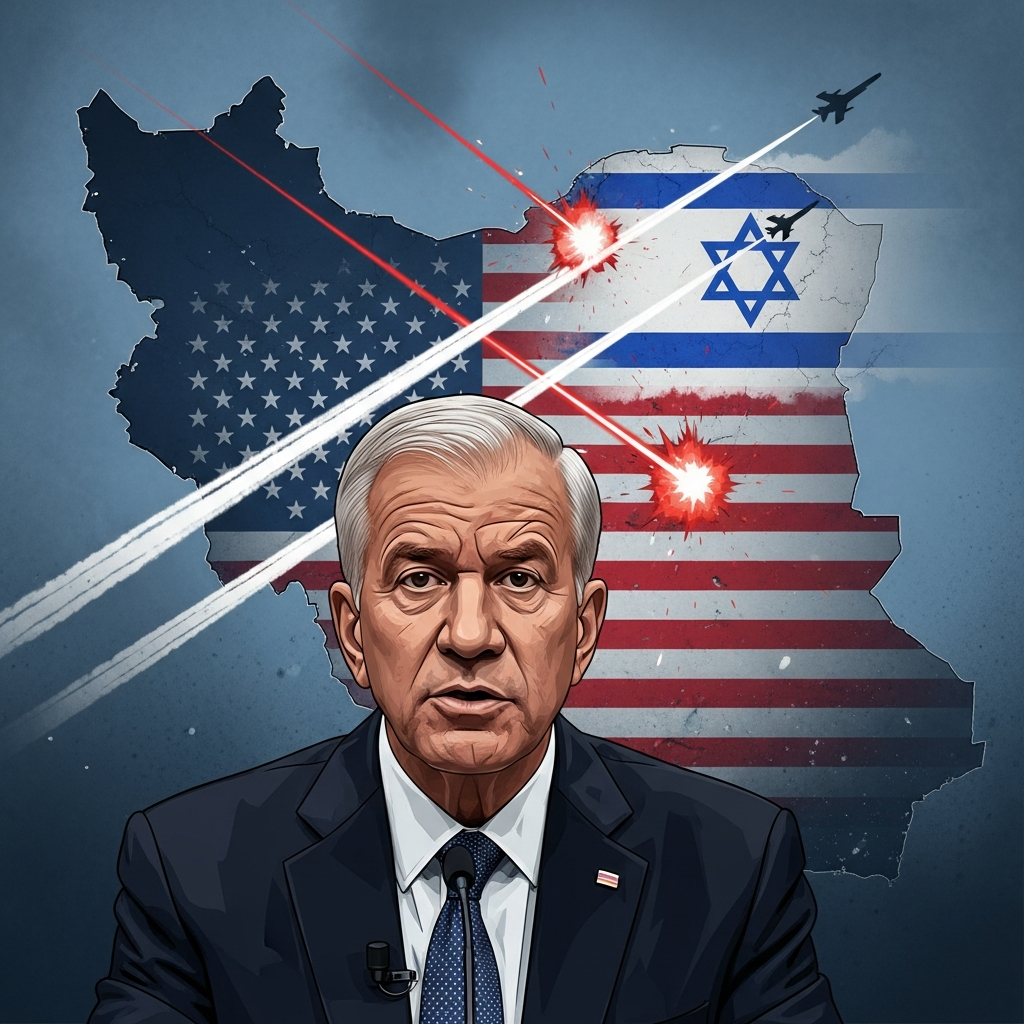
In a significant interview with CBS Evening News in early March 2026, Israeli President Isaac Herzog conveyed a stark message to Iran, declaring, “It’s about time that everybody tells Iran, ‘Guys, we’re fed up.'” His remarks came as U.S.-Israeli airstrikes against Iran entered their fifth day, with the ongoing conflict drawing global attention. This article delves into President Herzog’s stated rationale and strategic objectives behind these joint military operations, exploring the complex geopolitical landscape shaping the Middle East.
The Rationale Behind the Strikes: A “Fed Up” World Reacts
President Herzog articulated a compelling justification for the joint U.S.-Israeli military actions, asserting that both nations had “not much of a choice” but to “take action.” He cited profound concerns over Iran’s persistent efforts to expand its weapons capabilities. Israeli intelligence, he revealed, indicated Iran’s intent to dramatically increase its long-range missile arsenal from 2,000 to an alarming 20,000.
Beyond conventional weapons, a primary driver for intervention was the belief that Iran harbored “another new secret plan to rush” to develop a nuclear weapon. While neither the U.S. nor Israel has publicly provided conclusive evidence to support these specific claims, White House special envoy Steve Witkoff reportedly stated that, prior to the strikes, Iranian negotiators privately admitted possessing enough uranium to produce 11 nuclear bombs. Iran, for its part, has consistently maintained that its nuclear program is exclusively for peaceful purposes. Herzog emphasized that Iran’s extensive investment in “creating havoc” across the Middle East, even as Israel pursued peace with other Muslim countries, necessitated decisive action.
Defining Victory: “Middle East Change” Over “Regime Change”
President Herzog meticulously outlined the war’s primary objectives, emphasizing “Middle East change” rather than an explicit pursuit of “regime change.” This strategic distinction aims to:
Crippling Nuclear Ambition: Decisively hinder Iran’s capacity to develop nuclear weapons.
Dismantling Terror Sponsorship: Prevent Iran from continuing its role as a state sponsor of terror globally. This specifically targets its support for powerful proxy groups such as Gaza-based Hamas, Lebanon-based Hezbollah, and Yemen-based Houthis.
Crucially, Herzog clarified that Israel is not advocating for a ground invasion of Iran, stating unequivocally, “I’m not calling on any boots on the ground.” He further affirmed that Israel is not seeking military involvement from other Gulf nations, characterizing the conflict as “a war that the free world must fight.” While regime change is not the stated primary goal, Herzog remarked that if the actions were to lead to such an outcome, “the more the better,” signaling a welcomed, albeit secondary, objective. He stressed that sometimes, when a nation is attacked, it simply “has to fight back.”
U.S.-Israel Coordination & Trump’s Assertive Influence
The coordination between the U.S. and Israel in this conflict is “superbly close, very close,” according to Herzog, though he refrained from detailing specifics. He addressed questions about the decision-making process for the assault, dispelling notions that Israel dictated to President Trump or coerced the U.S. into war. Herzog affirmed that President Trump’s decision stemmed from “clear considerations and professional decision-making process,” acknowledging Israel’s integral role as an ally.
President Trump’s broader foreign policy approach, particularly in the Middle East, has significantly shaped the regional dynamics leading up to these strikes. His “real estate dealmaker’s sensibility,” characterized by a blend of flattery and forceful threats, has redefined traditional diplomacy. Trump’s willingness to leverage military might, exemplified by past actions like the assassination of Iranian General Qasem Soleimani and U.S. participation in Israeli strikes on Iranian facilities in spring 2025, cultivated a perception of credible threats among adversaries. This robust assertion of “America First” power, rather than isolationism, aimed to create conditions conducive to peace, deepening alliances with Saudi Arabia, Abu Dhabi, and Doha.
This approach was evident in the October 2025 ceasefire deal between Israel and Hamas, which Trump largely brokered through assertive diplomacy. He reportedly warned Netanyahu that he “can’t fight the world” and threatened to withdraw U.S. support if a deal was not reached. This demonstrated a readiness to use American influence to shape outcomes, even when allies were initially reluctant. Such interventions underscore the deep entanglement of U.S. and Israeli strategic interests, particularly concerning Iran’s regional activities and nuclear ambitions. Regarding Iranian leadership, President Trump had previously commented on potential successors following the reported killing of Iranian Supreme Leader Ayatollah Ali Khamenei, hinting at “some good candidates” while Herzog remained non-committal on Israel’s preferences.
The Unpopular War: Public Perception & Endgame Challenges
President Herzog openly acknowledged the war’s unpopularity in the United States. A CBS News poll released just days before his interview revealed that 62% of Americans felt the White House had not adequately explained its goals for the military action against Iran. Herzog attributed this sentiment to public unfamiliarity with the conflict’s “intricacies” and comparisons to previous wars, emphasizing, “This is a unique war.”
He also addressed concerns about the absence of a clear endgame, admitting that it is “always something that one needs to take into account.” However, he expressed confidence in the long-term strategy, stating, “It takes time, because these things take time, but if you look at it from a birds-eye view, and also with the data, you see, there is a constant weakening of the Iranian regime’s capabilities.” This indicates a belief that the ongoing military actions are gradually eroding Iran’s capacity, even without a definitive timeline for the conflict’s conclusion.
Broader Context: Netanyahu’s Pardon Request & Regional Dynamics
The ongoing conflict unfolds against a complex political backdrop in Israel, notably including Prime Minister Benjamin Netanyahu’s formal request for a pardon from President Herzog in late 2025 for corruption charges he faces. Former U.S. President Donald Trump publicly urged Herzog to grant this pardon, characterizing the legal proceedings as “political” and “unjustified.” Trump praised Netanyahu as a “formidable and decisive War Time Prime Minister” who was leading Israel toward peace, particularly following the U.S.-brokered Gaza ceasefire.
Netanyahu’s request aimed to unify a deeply divided nation, with his legal team arguing that the trial exacerbated internal rifts and distracted from his leadership, especially after the October 2023 Hamas attacks. While Herzog’s office acknowledged the “extraordinary” nature of the request, legal experts widely agree that a pardon cannot halt an ongoing trial, and a pre-conviction pardon is “extremely rare.” Opposition leaders and advocacy groups vehemently criticized the idea, asserting it would undermine the rule of law and democratic institutions. President Herzog’s eventual decision on this unprecedented request carries significant implications for Israel’s legal system, its democratic principles, and the broader political landscape amidst the ongoing regional hostilities.
Frequently Asked Questions
What is the primary justification for the U.S.-Israeli military actions against Iran, according to Israeli President Herzog?
President Herzog asserts that the U.S. and Israel had “not much of a choice” but to act due to Iran’s suspected plans to expand its nuclear weapons program and dramatically increase its long-range missile arsenal. He cited intelligence suggesting Iran’s secret plan to quickly develop a nuclear weapon and its alleged intent to boost its missile count from 2,000 to 20,000. Herzog also highlighted Iran’s destabilizing activities and “creating havoc” across the Middle East as key reasons for the military strikes.
How do U.S. and Israeli leaders characterize their coordination during the ongoing conflict with Iran?
According to President Herzog, coordination between the U.S. and Israel in the current conflict is “superbly close, very close.” He confirmed that President Trump’s decision to engage in the strikes stemmed from “clear considerations and professional decision-making process,” with Israel participating as a crucial ally. This close collaboration extends beyond military actions, reflecting former President Trump’s broader assertive foreign policy in the region, which has seen him deeply involved in shaping Middle Eastern outcomes.
What are the stated goals of the U.S.-Israeli strikes on Iran, and how do they differ from “regime change”?
President Herzog outlined the war’s primary objectives as “Middle East change,” rather than necessarily “regime change.” The core goals are to cripple Iran’s ability to develop nuclear weapons and prevent it from sponsoring terror organizations worldwide, specifically mentioning Hamas, Hezbollah, and the Houthis. While not explicitly seeking regime change, Herzog indicated it would be a welcome outcome if it occurred. He also clarified that Israel is not calling for a ground invasion or seeking military aid from other Gulf nations.
The ongoing U.S.-Israeli strikes against Iran represent a critical juncture in Middle East geopolitics. President Herzog’s remarks underscore a firm resolve to counter Iran’s perceived threats to regional stability and global security. While the military actions aim to achieve specific strategic goals, the path forward remains fraught with complexities, including domestic political challenges in both the U.S. and Israel, evolving public opinion, and the inherent difficulties of defining and achieving an endgame in protracted conflicts. The blend of military pressure and strategic diplomacy, heavily influenced by key figures like President Trump, continues to shape this unique and multifaceted war.