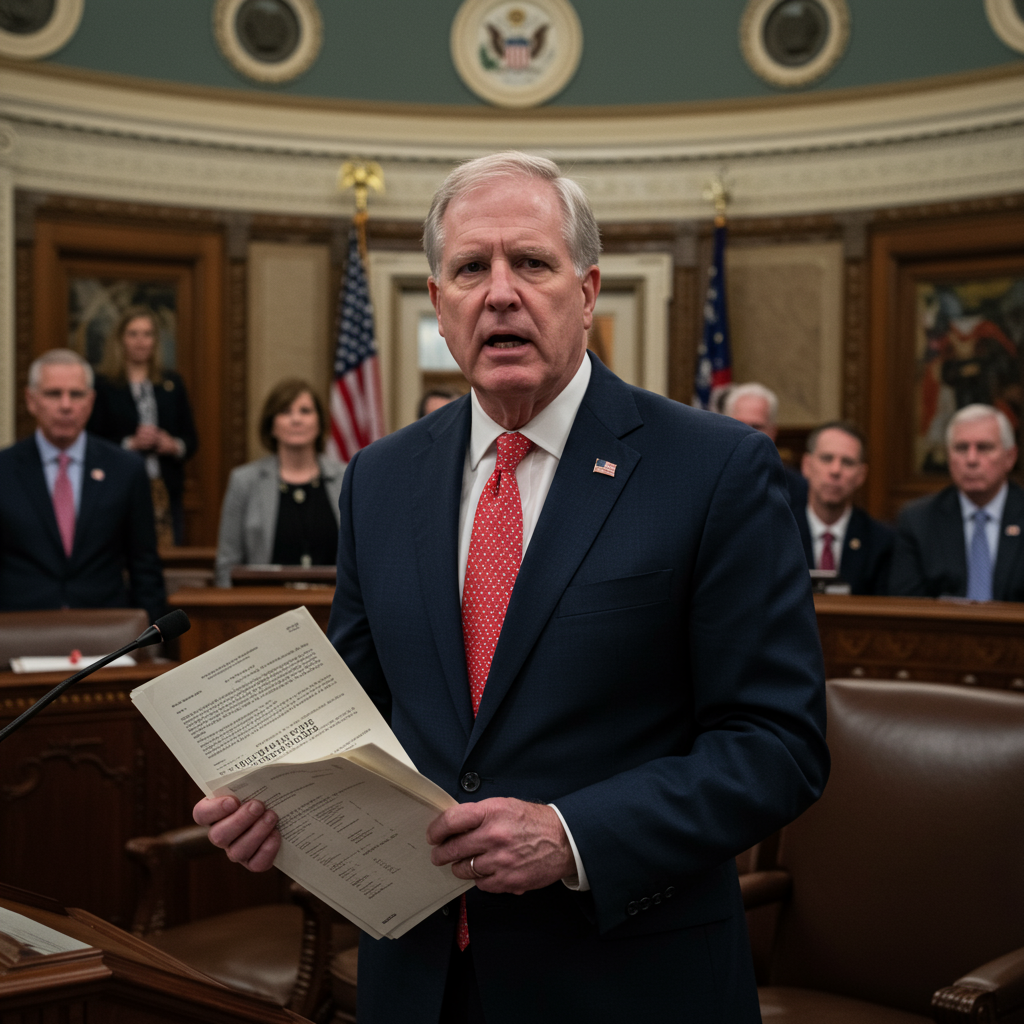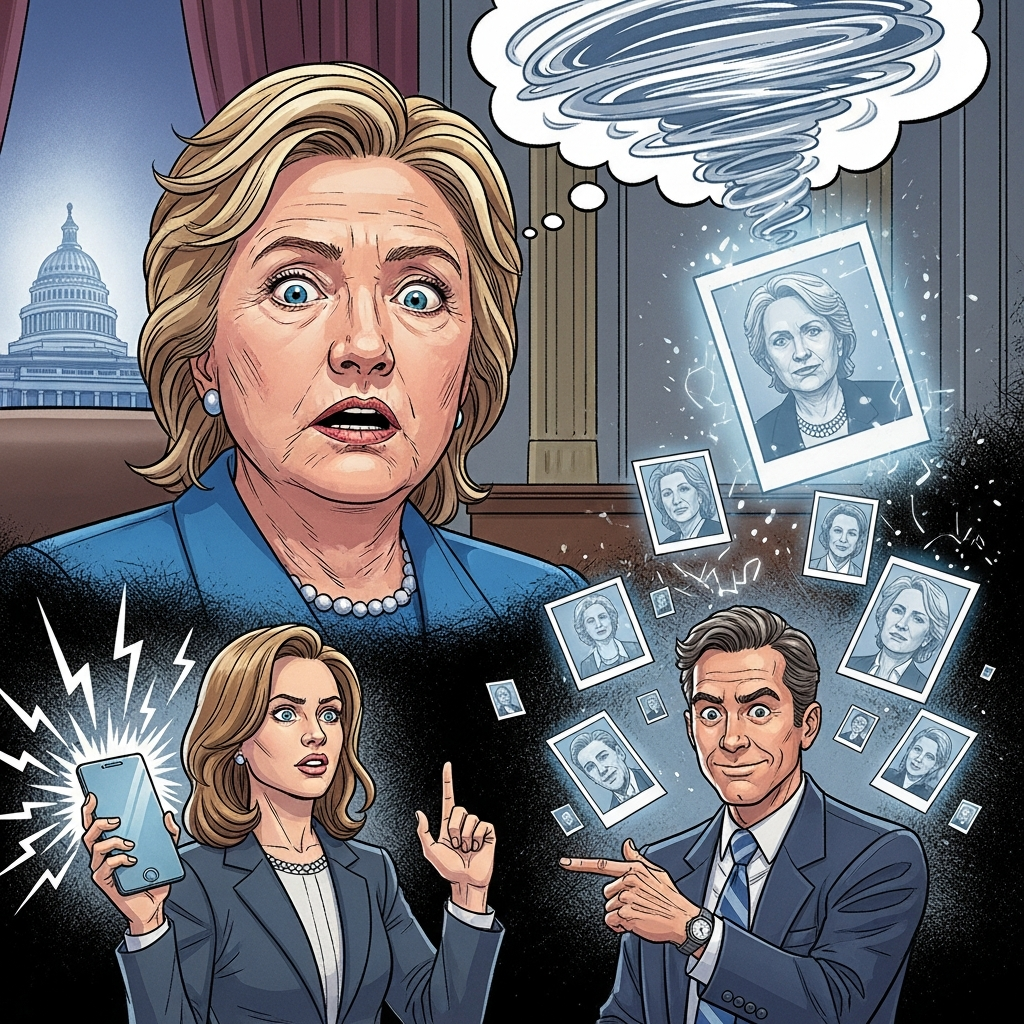
On February 26, 2026, a high-stakes congressional deposition involving former Secretary of State Hillary Clinton took an unexpected turn, causing an immediate halt to the proceedings. The House Oversight Committee’s closed-door inquiry into Hillary Clinton’s alleged links to Jeffrey Epstein was dramatically interrupted by an unauthorized photo leak. This incident, involving Representative Lauren Boebert and conservative influencer Benny Johnson, not only paused a significant Epstein testimony but also ignited a heated debate over congressional rules and the politicization of sensitive investigations. The disruption cast a shadow over what was already a contentious proceeding, highlighting the intense scrutiny surrounding the disgraced financier’s network.
Unpacking the Unauthorized Photo Leak During Clinton’s Testimony
The Hillary Clinton deposition before the House Oversight and Government Reform Committee was briefly taken “off the record” on a Thursday afternoon in 2026. The pause occurred after Colorado GOP Representative Lauren Boebert reportedly captured an image of Clinton testifying and subsequently shared it with conservative commentator Benny Johnson. Johnson then posted the photograph on social media platform X (formerly Twitter), claiming it was the first image of Clinton “testifying under oath about Jeffrey Epstein.” His post included a comment suggesting Clinton “does not look happy” and explicitly credited Rep. Boebert as the photo’s source.
This act constituted a clear House rules violation, as depositions strictly prohibit media presence and the dissemination of any photos by attendees. Clinton spokesman Nick Merrill confirmed the temporary halt, stating the investigation aimed to uncover the photo’s origin and determine if members of Congress had indeed breached procedural agreements. The incident quickly became a flashpoint, underscoring the deep partisan divides and procedural tensions inherent in the high-profile inquiry into Jeffrey Epstein’s connections. Benny Johnson had even boasted on his livestream about having “little birdies on the inside” providing live updates, foreshadowing the leak.
Clinton’s Defense: Denials and Accusations of Partisan Theater
Hillary Clinton’s appearance marked a significant moment, as it was the first time a former First Lady had faced a congressional panel under subpoena regarding the Epstein saga. During her more than six-hour Epstein testimony, Clinton vehemently denied any knowledge or information that would aid the investigation into Jeffrey Epstein or his associate Ghislaine Maxwell. She asserted that she never met Epstein, flew on his private plane, or visited his infamous island or properties. Regarding Ghislaine Maxwell’s attendance at Chelsea Clinton’s wedding, Clinton clarified Maxwell was merely a “plus-one” of an invited guest, not a direct invitee.
Clinton characterized the Republican-led inquiry as a “fishing expedition” and “partisan political theater.” She openly accused the committee of an “abdication of duty” designed to distract from former President Donald Trump’s own extensive ties to Epstein. Clinton urged Republicans to question Trump “directly under oath” about his connections, rather than focusing on her. She also expressed her dismay at the leaked photo, suggesting it reflected a broader willingness to violate agreed-upon rules, especially given her initial push for a public hearing, which the committee chairman, James Comer (R-Ky.), had rejected. Her legal team formally requested the suspension of proceedings following the leak.
Broader Context of the Jeffrey Epstein Investigation
The House Oversight Committee’s congressional hearing controversy was part of an ongoing investigation into Jeffrey Epstein’s network. This intensified after new documents were released in January 2026, prompting subpoenas for both Bill and Hillary Clinton. Chairman Comer had initially stated that “no one’s accusing the Clintons of any wrongdoing” but emphasized the public’s desire for answers about Epstein’s dealings and powerful connections. However, after Clinton’s testimony, Comer expressed dissatisfaction, noting her frequent response of “I don’t know you’ll have to ask my husband.” Rep. Scott Perry (R-Pa.) suggested specific questions about the Clinton Global Initiative or the Clintons’ relationship with Epstein and Maxwell needed to be directed to Bill Clinton.
Democrats on the committee, including top Democrat Robert Garcia, echoed Clinton’s calls for Trump and his commerce secretary, Howard Lutnick, to testify about their Epstein ties. Lutnick had previously admitted visiting Epstein’s private island. Clinton further suggested subpoenaing Elon Musk, referencing old emails, though Musk has denied visiting Epstein’s island. These calls for other high-profile individuals to testify highlighted the committee’s selective focus, according to Clinton and her Democratic allies. The former first couple had narrowly avoided being held in contempt of Congress before agreeing to appear for their depositions in Washington D.C.
Reactions, Resumption, and Lingering Questions
The interruption caused by the Lauren Boebert photo leak was resolved, and the hearing eventually resumed, continuing for several hours. Despite accusations from Clinton’s attorneys, Rep. Boebert publicly defended her actions, stating on X that “Benny (Johnson) did nothing wrong.” Johnson, in turn, claimed Clinton “stormed out” due to his post, escalating the public relations battle surrounding the event. Boebert even made light of the incident with references to past Clinton controversies like “BleachBit.”
Hillary Clinton expressed profound frustration with the questioning, describing it as “repetitive” and veering into “quite unusual” territory, including inquiries about UFOs and “Pizzagate,” a debunked conspiracy theory. This indicated her perception of the committee’s politically motivated agenda. While the hearing was closed-door, it was fully recorded. Transcripts and video recordings of both Hillary and Bill Clinton’s sessions are expected to be made public after review by their legal team, offering eventual transparency into the full proceedings. Bill Clinton was scheduled to appear the following day, with Hillary expressing “100% confidence” that he was unaware of Epstein’s criminal activities, as his association reportedly ended “several years before anything about Epstein’s criminal activities came to light.”
Frequently Asked Questions
What caused the delay in Hillary Clinton’s Epstein deposition?
The delay in Hillary Clinton’s deposition on February 26, 2026, was caused by an unauthorized photo leak. Republican Representative Lauren Boebert allegedly took a picture of Clinton during the closed-door congressional hearing and sent it to conservative influencer Benny Johnson. Johnson then posted the photo on social media, violating strict House rules that prohibit media presence and the sharing of images from such sensitive proceedings. The hearing was paused to investigate the source of the leak and address the procedural breach.
Where can one find official details about the House Oversight Committee’s Epstein investigation?
Official details regarding the House Oversight Committee’s investigation into Jeffrey Epstein, including the depositions of Hillary and Bill Clinton, are expected to be made public. While the hearings themselves were closed-door, they were fully recorded. Transcripts and video recordings are slated for release after review by legal teams. For current information and official statements, one would typically refer to the House Oversight Committee’s official website, government archives, and reputable news outlets reporting on the post-release of these documents.
What was the significance of the leaked photo incident during a high-profile congressional hearing?
The leaked photo incident during Hillary Clinton’s Epstein testimony carried significant implications. It highlighted profound partisan tensions within Congress, demonstrated a disregard for established procedural rules designed to ensure decorum and fairness in sensitive inquiries, and further fueled public debate about the politicization of investigations. The incident underscored concerns about transparency versus decorum in high-profile cases involving figures like Jeffrey Epstein, ultimately adding a layer of controversy to an already scrutinized congressional proceeding.
Conclusion: A Contentious Inquiry Amidst Procedural Breaches
The Hillary Clinton deposition concerning Jeffrey Epstein’s network was undoubtedly a tumultuous event, marked not only by high-profile testimony but also by a significant breach of congressional protocol. The unauthorized photo leak by Rep. Lauren Boebert, and its swift dissemination, underscores the intense political climate surrounding such investigations. While Hillary Clinton firmly denied any wrongdoing and criticized the inquiry as politically motivated, the incident itself diverted attention and raised questions about the conduct of members of Congress. As the full recordings await public release, the event remains a stark reminder of the challenges in balancing transparency, due process, and political grandstanding within the sensitive realm of congressional oversight. The ongoing Epstein investigation continues to draw scrutiny, demanding accountability from all involved parties and prompting a broader discussion on congressional ethics.