
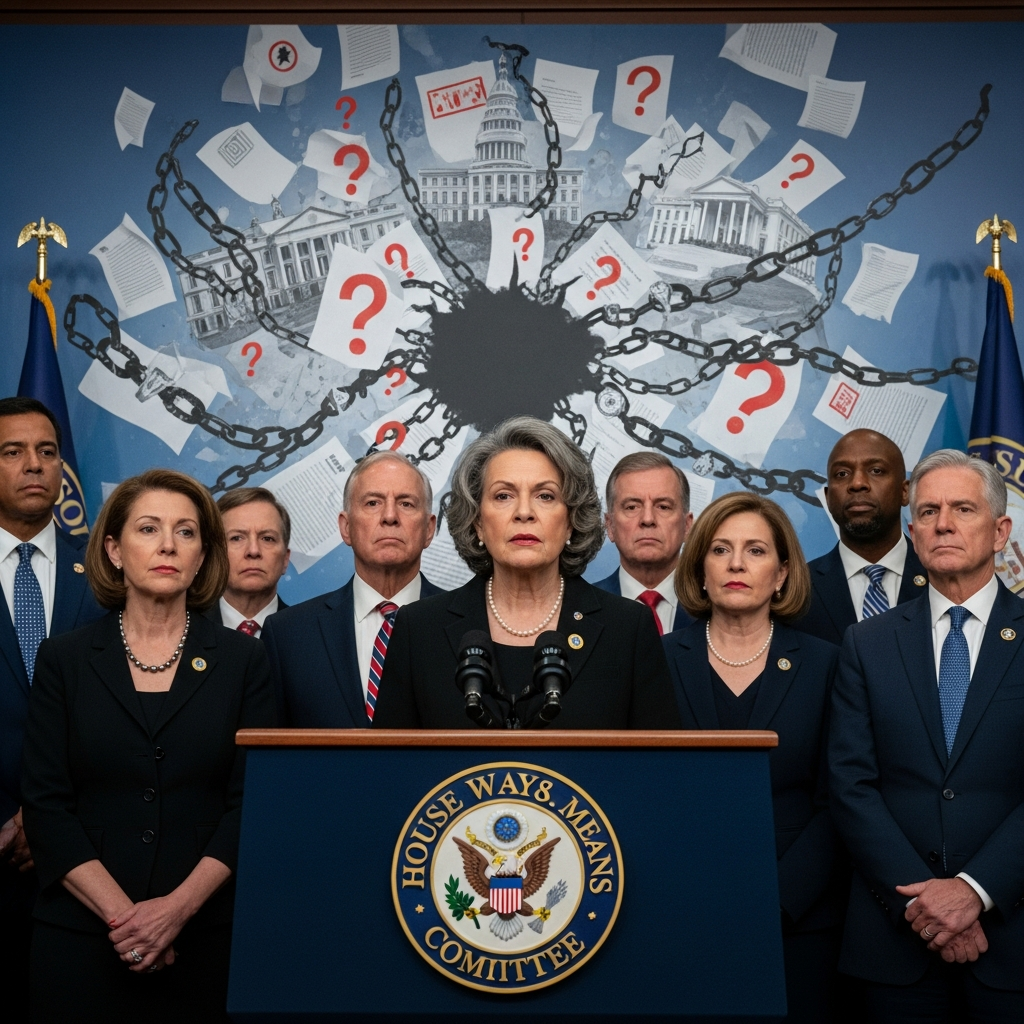
A significant controversy is erupting in Washington D.C. as top House Democrats are urgently demanding explanations from the Justice Department (DOJ) regarding dozens of missing documents connected to former President Donald Trump within the publicly released Jeffrey Epstein files. This high-stakes political development, sparked by an investigation from NPR, has intensified calls for transparency and accountability, particularly concerning serious allegations of sexual abuse. The unfolding situation highlights ongoing tensions between congressional oversight and executive department stonewalling, raising critical questions about the completeness of public records and the pursuit of justice for Epstein’s victims.
House Democrats Intensify Scrutiny Over Missing Epstein Documents
Representative Robert Garcia (D-Calif.), a prominent figure and ranking member of the House Oversight and Government Reform Committee, has taken a firm stand. In a letter first shared with NPR, Garcia formally pressed Attorney General Pam Bondi for an immediate explanation. He is specifically asking why numerous pages of interviews and interview notes, seemingly detailing sexual abuse allegations against President Trump, were conspicuously absent from the three million pages of Epstein documents recently made public. This demand underscores a deepening congressional inquiry into the DOJ’s handling of these sensitive records.
Garcia did not mince words, characterizing the situation as a “White House cover-up of serious allegations against the president by a survivor.” He demanded that Attorney General Bondi “come clean” regarding the hidden documents, comply with a “legally binding subpoena” for all relevant records, and directly inform the American people whether the president faces an active investigation for sexual assault allegations. The emphasis on a “legally binding subpoena” highlights the committee’s determination to compel disclosure.
Unearthing Disturbing Allegations: The Core of the Controversy
The demand stems from crucial prior reporting by NPR, which brought to light internal FBI and Justice Department outline documents. These documents describe a harrowing allegation from a woman who claimed that in approximately 1983, when she was around 13 years old, Jeffrey Epstein introduced her to Trump. She further alleged that Trump “subsequently forced her head down to his exposed penis which she subsequently bit,” and in response, Trump “punched her in the head and kicked her out.” This specific, graphic account forms the bedrock of the current congressional challenge.
Records indicate the FBI interviewed this woman four separate times concerning her allegations. However, only one of those interview transcripts has been made available in the Justice Department’s extensive public Epstein files database. This discrepancy is a primary point of contention for Representative Garcia, who argues it represents a deliberate act of suppression. The withholding of three out of four interviews directly contradicts the spirit of transparency the public expects.
Justice Department’s Shifting Responses Under Fire
Initially, the Justice Department refused to provide specific reasons for suppressing the materials. Their broad explanation cited that documents are withheld if they are “duplicates, privileged, or part of an ongoing federal investigation.” This generalized response, however, failed to satisfy congressional demands or public curiosity. Garcia explicitly criticized the DOJ for its refusal to address the specific reasons behind the withholding. He insists the department must clarify if an “active investigation into the sexual abuse allegations against the president” is currently underway.
The DOJ’s stance continued to evolve. A spokeswoman initially declined on-the-record comments about the specific missing files. Following NPR’s report, however, Justice Department spokeswoman Natalie Baldassarre reiterated the department’s standard position: any unpublished documents are considered privileged, duplicates, or relate to an ongoing federal investigation. Further, a Justice Department X account later stated that they were reviewing discovery documents from the criminal case against Ghislaine Maxwell. They pledged to publish any improperly tagged, responsive documents. This series of statements reflects an attempt to manage public and political pressure.
White House Rebuttal and Counter-Accusations
The White House has vehemently denied the allegations and defended President Trump. White House spokeswoman Abigail Jackson asserted that Trump “has done more for Epstein’s victims than anyone before him” and has been “totally exonerated on anything relating to Epstein.” She cited several actions by Trump to support this claim, including releasing thousands of documents, cooperating with House Oversight Committee subpoenas, signing the “Epstein Files Transparency Act,” and calling for more investigations into Epstein’s “Democrat friends.”
Jackson’s statement also included a direct counter-accusation against other prominent Democrats. She questioned why figures like Hakeem Jeffries and Stacey Plaskett had not explained alleged solicitations of money and meetings from Epstein after his conviction as a sex offender. This broadens the political scope of the controversy, attempting to shift the narrative and deflect scrutiny from the White House’s handling of the missing documents. Such political maneuvering is common in high-stakes investigations.
A History of Demands: Broader Context of Epstein File Scrutiny
This current demand from Representative Garcia isn’t an isolated incident. The Justice Department’s handling of the Epstein files, particularly those linked to powerful figures, has been a contentious issue for years. As early as July 2025, leading House Democrats, including then-Judiciary Committee ranking member Jamie Raskin, had formally demanded the DOJ release all documents from the Epstein sex-trafficking investigation that mentioned or referenced Donald Trump.
Democrats have consistently accused Attorney General Pam Bondi and the DOJ of intentionally withholding files to protect the president from potentially damaging information. Past releases of Epstein documents by the administration, sometimes distributed in “white binders” to select “Trump-world personalities,” were criticized for containing no new information. Elon Musk himself, following a public disagreement with Trump, had even claimed on X (formerly Twitter) that “Trump is in the Epstein files. That is the real reason they have not been made public,” fueling further demands for transparency.
The Path Forward: Parallel Investigations and Unanswered Questions
Democrats on the House Oversight Committee were already conducting an investigation into the Justice Department’s overall handling of the Epstein files and its compliance with legal requirements for document release. Now, in light of these new revelations, Representative Garcia has announced a “parallel investigation.” This new inquiry will specifically target these newly revealed missing documents related to President Trump, intensifying the pressure on the DOJ.
The American public, and especially the survivors of Jeffrey Epstein’s crimes, demand transparency and accountability. Garcia stated that any further delay by the department “continues to deny justice” to these survivors. The ongoing congressional scrutiny, coupled with public pressure, ensures that the issue of missing Trump-Epstein files will remain a critical point of contention in the political landscape. The outcome could have significant implications for executive power, congressional oversight, and the pursuit of justice.
Frequently Asked Questions
What specific documents are House Democrats demanding regarding Jeffrey Epstein and Donald Trump?
House Democrats, led by Representative Robert Garcia, are demanding “dozens of pages of interviews and interview notes” related to allegations of sexual abuse against President Trump within the Jeffrey Epstein files. Specifically, they are seeking records pertaining to an individual who alleged an encounter with Trump in 1983 when she was 13, including transcripts from three FBI interviews that remain unreleased, despite records showing four interviews were conducted.
Who is leading the congressional inquiry into the missing Trump-Epstein files, and what are its objectives?
The inquiry is spearheaded by Representative Robert Garcia (D-Calif.), who serves as the ranking member of the House Oversight and Government Reform Committee. His objectives are to compel Attorney General Pam Bondi and the Justice Department to explain the withholding of these documents, comply with a “legally binding subpoena” for all records, and disclose whether President Trump is currently under investigation for sexual assault allegations mentioned in the Epstein files. Garcia has announced a “parallel investigation” specifically into these missing documents.
What is the Justice Department’s official position on the missing Trump-Epstein files and any ongoing investigations?
The Justice Department maintains that any documents not publicly released are either “duplicates, privileged, or part of an ongoing federal investigation.” While initially vague, a DOJ spokeswoman reiterated this stance, and a Justice Department X account indicated they are reviewing discovery documents from the Ghislaine Maxwell case, promising to publish any improperly tagged, responsive materials. The DOJ has not explicitly confirmed or denied an active investigation into sexual abuse allegations against President Trump related to these files.