The internet thrives on heartwarming tales, but few have captivated global audiences quite like Punch, the extraordinary Japanese macaque whose journey from abandonment to online stardom, accompanied by his trusty IKEA orangutan plushie, has become a powerful symbol of resilience. This compelling narrative, originating from the Ichikawa City Zoo near Tokyo, highlights the profound impact of companionship and the universal longing for belonging, resonating with millions worldwide and sparking an unexpected boost in IKEA sales. Dive into the captivating world of Punch-kun and discover why this little monkey’s story offers such a significant lesson for us all.
The Poignant Beginning: Punch’s Challenging Start
Born in July 2025, the life of Punch-kun, a baby Japanese macaque, began under exceptionally difficult circumstances. His biological mother, a primiparous macaque, rejected him shortly after birth. This unfortunate event, potentially exacerbated by a difficult delivery during a sweltering heatwave, is not uncommon among first-time macaque mothers who often lack the experience to care for their young. The little macaque was left without the vital maternal care essential for early development and social learning.
Abandoned and Alone: Early Days at Ichikawa City Zoo
Zoo staff at Ichikawa City Zoo, including dedicated zookeepers Kosuke Shikano and Shumpei Miyakoshi, quickly intervened. They initiated hand-rearing when Punch’s health deteriorated, providing him with critical human care. For months, human interaction became Punch’s primary social contact, a crucial but atypical upbringing for a young macaque destined for a complex social structure. This early isolation underscored his deep need for comfort and companionship.
Finding Comfort: The IKEA Djungelskog Connection
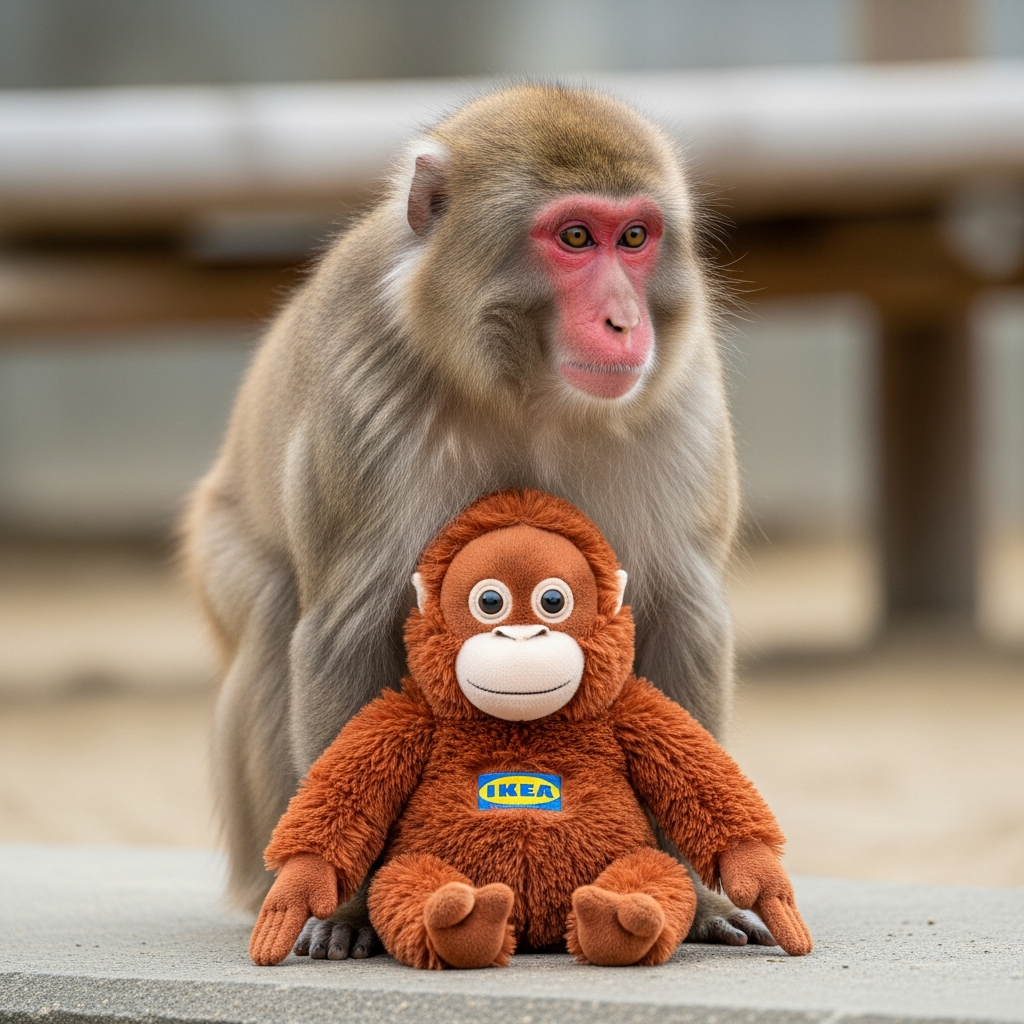
To address Punch’s innate need to cling and provide emotional warmth, zookeepers offered him various stuffed toys and rolled blankets. Among these, a bright orange IKEA “Djungelskog” orangutan plushie quickly became his most cherished companion. This particular toy was not just for emotional solace; it also served a practical purpose, helping Punch develop muscle strength as he dragged and clutched it. Affectionately nicknamed “oran-mama” by his growing fanbase, the plushie became inseparable from Punch, offering him a sense of security and a constant “friend” to hold onto, particularly when feeling nervous.
Navigating “Monkey Mountain”: Social Struggles and Resilience
By January 2026, it was time for Punch to begin the challenging process of reintegration into the macaque troop on the zoo’s “Monkey Mountain.” This step, vital for his long-term social development, proved to be far from easy. Japanese macaques live within strict, complex hierarchies, and juveniles typically learn their place through their mothers. Without this maternal guidance, Punch struggled immensely to navigate the troop’s intricate social dynamics.
The Brutal Reality of Macaque Hierarchy
Early viral videos captured Punch tentatively approaching older monkeys, seeking interaction, only to be swatted away or ignored. These poignant clips circulated widely, sparking an emotional outcry from internet users who perceived these interactions as “bullying.” Hashtags like #がんばれパンチ (“HangInTherePunch”) trended in Japan, with many netizens expressing protective instincts and forming a “Panchi-kun protection squad.” The public’s concern escalated after a video depicted an older monkey seemingly attacking Punch.
The Ichikawa City Zoo promptly addressed these concerns. Zookeepers clarified that the adult monkey’s actions were likely a protective mother signaling “don’t be mean” to Punch, who might have annoyed her infant. They emphasized that while Punch faced scolding and exclusion, he possessed “very strong mental resilience” and recovered quickly. The zoo urged viewers to “support Punch’s effort rather than feel sorry for him,” highlighting that these challenging interactions were essential parts of his learning to adapt to his natural social environment.
Perseverance Pays Off: Signs of Acceptance
Despite the initial setbacks, Punch’s perseverance began to yield positive results. More recent footage delighted fans by showing significant progress in his social integration. He was observed being groomed by a peer, an important marker of social acceptance within macaque troops. An adult monkey named Onsing was specifically noted for making efforts to help Punch adjust through grooming and hugging. Punch also started playing with younger monkeys closer to his age, indicating a gradual deepening of his interactions and a path towards finding his place within the troop. This incremental progress, though slow, is a testament to his mental strength and adaptability.
A Global Phenomenon: How Punch Captured the Internet’s Heart
Punch’s story quickly transcended the zoo walls, becoming a global internet sensation. Clips of him solemnly carrying his plushie and his early struggles garnered tens of millions of views across platforms like TikTok and Instagram, with some videos surpassing 30 million views. Fan art of Punch and “oran-mama” appeared across X and Reddit, demonstrating the depth of public affection. The phenomenon even caught the attention of mainstream media, with late-night television hosts like Stephen Colbert referencing Punch and his beloved toy, joking about the comfort the $19.99 Djungelskog might offer.
Viral Spreads and Emotional Outpourings
The internet’s response was overwhelmingly emotional. Users expressed a mix of affection, protectiveness, and empathy. Comments poured in, with sentiments like “I would adopt Punch and love him forever” and admissions of crying over his plight. This outpouring of emotion highlighted Punch’s ability to connect with people on a deeply human level, touching hearts with his vulnerability and determination. The immense interest led to an “unprecedented and unexpected crowd” of visitors at Ichikawa City Zoo, all eager to catch a glimpse of the viral macaque.
The “Punch Effect”: From IKEA Sales to Late-Night TV
Punch’s fame extended beyond social media engagement. IKEA reported a noticeable increase in sales of its Djungelskog orangutan plushie, particularly in Japan, the U.S., and South Korea. The Swedish-founded brand embraced this “Punch effect,” featuring the plushie in its advertising with the heartwarming caption: “Sometimes family is who we find along the way.” Further solidifying this bond, IKEA Japan’s president, Petra Fare, personally visited the zoo and donated multiple replacement Djungelskog plushies, ensuring Punch would always have his beloved “oran-mama” nearby. This commercial impact underscored the widespread appeal and cultural penetration of Punch’s story.
Beyond the Cuteness: What Punch Symbolizes
While Punch’s undeniable cuteness is a significant part of his appeal, his story resonates on a much deeper level. He has become a powerful symbol of resilience, hope, and the universal truth that everyone, regardless of their beginnings, deserves love and belonging. His journey reflects the struggles many face in finding their place, enduring setbacks, and ultimately picking themselves up to try again. Punch’s consistent effort to navigate a challenging social world, always returning to his plushie for comfort, offers a poignant lesson in perseverance. He reminds us that even when life is tough, and acceptance seems elusive, the courage to keep trying, often with a little help from a comforting presence, can lead to positive change. Punch-kun, the tiny monkey with a big heart and an even bigger toy, embodies the triumph of spirit against adversity.
Frequently Asked Questions
What is the story of Punch the monkey and why is he famous?
Punch-kun is a baby Japanese macaque born in July 2025 at Ichikawa City Zoo in Japan. He gained viral fame after being abandoned by his biological mother and subsequently forming an inseparable bond with an IKEA “Djungelskog” orangutan plushie. His poignant journey of struggling to integrate into his macaque troop while clinging to his comfort toy, alongside his eventual signs of acceptance, has resonated with millions online, turning him into a global symbol of resilience and the search for belonging.
Where does Punch the monkey live, and can visitors see him?
Punch the monkey resides at the Ichikawa City Zoo, located just outside Tokyo in Ichikawa, Chiba Prefecture, Japan. The zoo has experienced a significant increase in visitors specifically hoping to see Punch since his story went viral. The zoo encourages visitors to come and observe Punch’s ongoing progress as he slowly integrates with the other macaques on “Monkey Mountain.” The Ichikawa City Zoo is open to the public, charging JPY 440 for adults and JPY 110 for children, with free entry for preschoolers.
What is the significance of Punch’s IKEA orangutan plushie?
The IKEA “Djungelskog” orangutan plushie, affectionately called “oran-mama,” is a crucial comfort object for Punch. Zookeepers provided it after he was abandoned by his mother, serving as a substitute for maternal warmth and fulfilling his innate need to cling. Beyond emotional comfort, the toy also aided in Punch’s muscle development. It acts as his constant companion, offering security and a protective shield, especially during his challenging social integration. His bond with the plushie has become iconic, contributing to his viral fame and symbolizing the comfort and companionship he sought.
The Enduring Legacy of Punch the Macaque
Punch the monkey’s journey is far more than just a viral sensation; it’s a compelling narrative of survival, adaptation, and the profound power of connection. From his lonely beginnings to his gradual acceptance within his troop, all while clutching his faithful “oran-mama,” Punch has become an unexpected ambassador for empathy and the enduring human spirit. His story reminds us that even in the toughest starts, love, resilience, and a little comfort can help anyone find their place in the world. The world continues to root for Punch, celebrating every step he takes towards full integration and a life filled with warmth and belonging.