U.S. House Democrats have cast significant doubt on Ohio billionaire Leslie Wexner’s denials concerning his extensive ties to convicted sex offender Jeffrey Epstein. Following a recent deposition, lawmakers from the House Oversight Committee deemed Wexner’s testimony “bogus” and “not credible,” intensifying scrutiny on the retail magnate’s alleged role in enabling Epstein’s criminal activities. This article delves into the heated congressional questioning, the Democrats’ strong accusations, Wexner’s defense, and the broader implications of this ongoing, high-profile investigation.
Congressional Scrutiny Intensifies: Democrats Question Wexner Under Oath
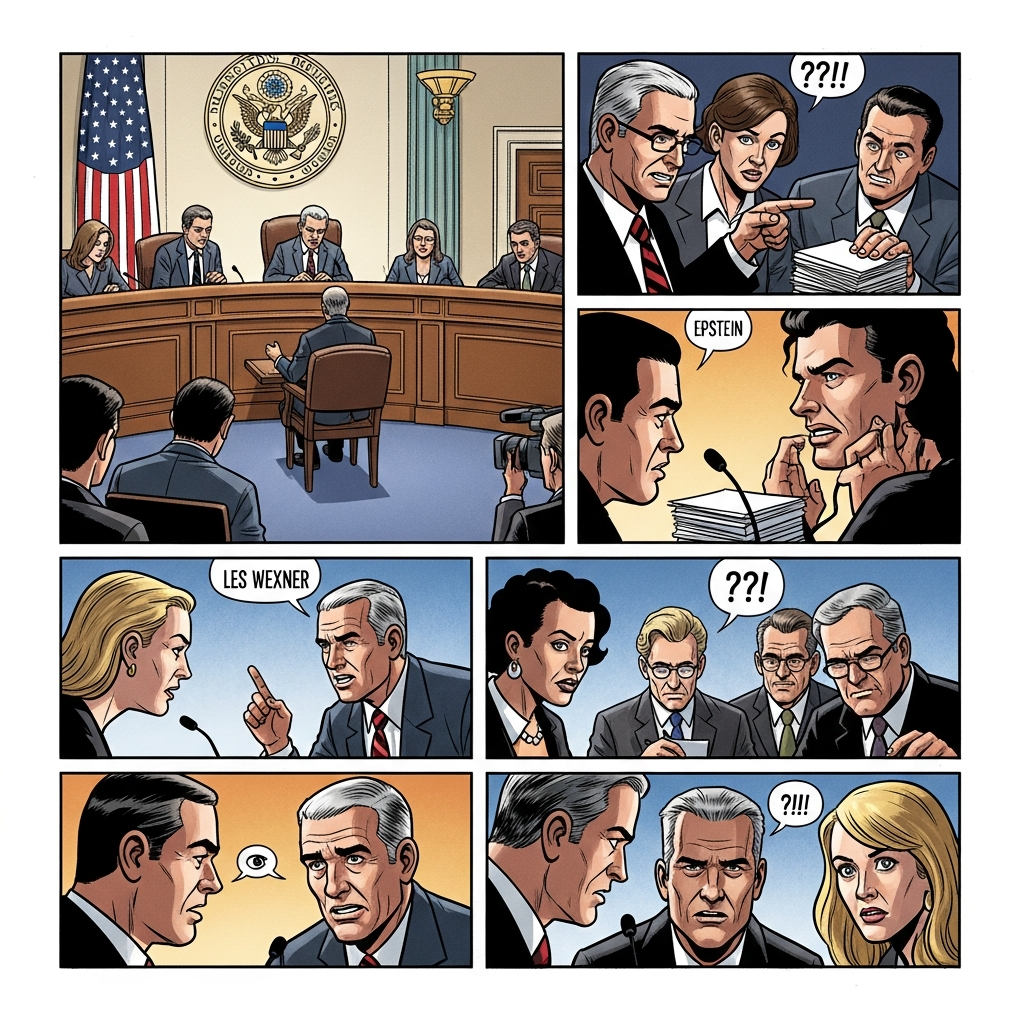
On February 18, 2026, a select group of U.S. House Democrats, including Ranking Member Robert Garcia (D-California), confronted Leslie Wexner at his New Albany, Ohio, mansion. The highly anticipated deposition, a key component of the House Oversight and Government Reform Committee’s ongoing probe, aimed to uncover the true nature of Wexner’s relationship with Epstein. Despite Wexner’s repeated claims of innocence, the Democratic contingent emerged deeply unconvinced. Reps. David Min (D-California), Stephen Lynch (D-Massachusetts), Jasmine Crockett (D-Texas), and Yassamin Ansari (D-Arizona) joined Garcia in the questioning. Notably, no Republican congressmembers were present, though Republican staff assisted in the proceedings.
The Democrats’ skepticism centered on Wexner’s assertions that he lacked a close personal relationship with Epstein and was unaware of his vast criminal enterprise. Rep. Garcia was unequivocal, labeling Wexner’s denials as “bogus.” Rep. Min echoed this sentiment, stating Wexner’s claims of “seeing no evil, hearing no evil” while frequently interacting with Epstein were “not credible.” The lawmakers emphasized that America’s principle of a single rule of law applies to everyone, regardless of wealth or power.
The Billion-Dollar Question: Financial Ties Under the Microscope
A central pillar of the Democrats’ investigation revolves around the substantial financial support Wexner allegedly provided to Epstein. Congressional investigators estimate that Wexner transferred over $1 billion to Epstein, either in cash or stock holdings. Rep. Garcia starkly articulated the committee’s belief: “there would be no Epstein Island, there’d be no Epstein plane, there’d be no money to traffic women and girls… Mr. Epstein would not be the wealthy man he was without the support of Les Wexner.” This assertion positions Wexner as a pivotal “financial benefactor” whose resources were critical to funding Epstein’s operations.
Further deepening the controversy, survivors of Epstein’s abuse have come forward with concerns about Wexner’s alleged involvement and the extensive funds he supplied. One survivor reportedly testified to the committee about being sexually assaulted at Wexner’s own New Albany home. Rep. Stephen Lynch, while questioning Wexner’s direct participation in the crimes, stated that “there is no question in my mind, given the evidence so far, that Les Wexner knew about this.” The committee is also probing “reports of payments that were made to a gynecologist at Ohio State University,” which Rep. Ansari characterized as potentially originating from Wexner but flowing through Epstein, hinting at a “vast cover-up.”
Wexner’s Defense: Naiveté and Denial of Knowledge
In an opening statement read during the deposition and shared with reporters, Wexner maintained his innocence. He asserted that he severed ties with Epstein in 2008, just before Epstein’s initial plea bargain for procuring a child for prostitution. Wexner adamantly claimed he “never witnessed or had any knowledge of Epstein’s criminal activity,” describing himself as “naive, foolish and gullible to put any trust in Jeffrey Epstein.” He admitted to hiring Epstein in the 1980s as a financial advisor and granting him power of attorney to facilitate transactions, but alleged he cut ties in 2007 after his wife, Abigail, discovered Epstein had stolen “vast sums” from their family.
Following the deposition, a spokesperson for Wexner issued another statement, reiterating that Wexner “honestly answered every question” and “has no knowledge of, and did not participate in, Epstein’s illegal conduct.” The statement affirmed Wexner “stands by that fervently.” The records, however, reveal that Epstein was granted power of attorney over Wexner’s substantial fortune and allegedly stole millions. Despite these claims of being conned, “The Epstein Files” from the U.S. Department of Justice show the FBI investigated Wexner in 2019 as a possible “co-conspirator,” although he has never been charged with a crime.
Contradictions and Lingering Doubts
Democrats expressed profound disbelief in Wexner’s explanations. Rep. Jasmine Crockett found it “almost inconceivable to be missing the amounts of money that are missing, and somehow Mr. Wexner has no idea.” Rep. Lynch, despite noting the 88-year-old Wexner appeared “lucid” and mentally competent, concluded he was “just not telling the truth.” Garcia observed that while Wexner did not invoke his Fifth Amendment rights, he frequently responded to questions by stating he couldn’t remember. This pattern further fueled the Democrats’ suspicions regarding his candor.
The questioning extended to former President Donald Trump’s connections to Epstein. Rep. Crockett noted that Wexner could not recall if Trump and Epstein had ever been in the same room. However, Wexner reportedly found Trump’s frequent presence at Victoria’s Secret runway shows “a little odd,” given Trump’s perceived lack of interest in fashion. This anecdote adds a layer to the political dimension of the Epstein saga, especially as Democrats accuse Trump of being part of a “cover-up” by downplaying the significance of the Epstein files.
Broadening the Scope: An Ongoing Investigation
Rep. Garcia made it clear that the deposition did not resolve the question of Wexner’s culpability, emphasizing it remains “a very open question.” The investigation is far from over. Democrats are committed to “following Wexner’s money” and pursuing justice for Epstein survivors. This includes plans to question other individuals connected to Wexner, such as OSU OB-GYN Mark Landon, who “The Epstein Files” indicate received money from Epstein in the early 2000s.
The committee’s probe also touches upon Wexner’s historical ties to another scandal at Ohio State University. Wexner was a significant donor and served on the Board of Trustees during a period when over 200 male students reported abuse by team physician Dr. Richard Strauss. While Wexner is not accused of wrongdoing in the Strauss case, a federal judge has ordered him to testify in a related lawsuit, underscoring his extensive reach and influence. The Democrats’ investigation into the Epstein connection appears to be a multi-faceted effort aimed at unraveling all associated threads.
Frequently Asked Questions
What specific doubts do House Democrats have about Les Wexner’s denials regarding Jeffrey Epstein?
House Democrats, particularly Ranking Member Robert Garcia, expressed profound disbelief in Les Wexner’s testimony, calling his claims “bogus” and “not credible.” They found it unbelievable that Wexner, despite his extensive financial relationship and frequent interactions with Epstein, maintained he had no knowledge of Epstein’s criminal activities or a close personal relationship with him. The committee cited the estimated $1 billion Wexner provided to Epstein as enabling his sex trafficking operation, and noted Wexner’s frequent use of “I don’t remember” as an answer during questioning.
What is the extent of Les Wexner’s alleged financial support to Jeffrey Epstein, according to congressional investigators?
Congressional investigators allege that Les Wexner was the primary “financial benefactor” for Jeffrey Epstein, providing an estimated $1 billion in cash or stock holdings. Rep. Robert Garcia explicitly stated that without Wexner’s financial support, Epstein would not have possessed the wealth to fund his illicit activities, including “Epstein Island” and the planes used in his sex trafficking ring. This substantial financial backing is a central focus of the House Oversight Committee’s investigation.
What are the next steps in the House Oversight Committee’s investigation into Les Wexner and his ties to Jeffrey Epstein?
The House Oversight Committee’s investigation is ongoing, with Ranking Member Robert Garcia confirming that the question of Wexner’s culpability remains “very open.” The committee plans to continue “following Wexner’s money” and question other individuals connected to him, including OSU OB-GYN Mark Landon, who reportedly received funds from Epstein. Democrats are committed to pursuing the investigation until Epstein survivors achieve justice, indicating a prolonged and thorough examination of all alleged ties.
Conclusion
The recent deposition of Les Wexner marks a pivotal moment in the ongoing investigation into Jeffrey Epstein’s vast sex trafficking network. House Democrats have forcefully challenged Wexner’s denials, portraying him as a crucial financial enabler whose resources were indispensable to Epstein’s criminal enterprise. While Wexner maintains his innocence, citing naiveté and a lack of awareness, the committee remains highly skeptical, promising to continue tracing the money and scrutinizing every connection. This high-stakes inquiry underscores the determination of lawmakers to hold powerful individuals accountable and bring justice to the survivors of Epstein’s heinous crimes, signaling that the full truth of Wexner’s involvement may yet emerge.