Intermittent fasting (IF) has surged in popularity, celebrated by many as a revolutionary approach to shedding pounds and boosting overall health. Advocates claim it can do everything from accelerating weight loss to enhancing cognitive function and even slowing aging. But what does the latest science truly say about this trending dietary strategy? Recent major scientific reviews offer a nuanced perspective, suggesting that while intermittent fasting can be an effective tool for weight management, it’s far from a “miracle solution” and often delivers results comparable to traditional calorie-restricted diets. Understanding the full picture requires looking beyond the headlines and into the details of the research.
Unpacking the Core Research: What the Latest Reviews Say
A landmark Cochrane analysis, considered a gold standard in scientific reviews, recently synthesized data from 22 global studies involving nearly 2,000 adults. Its initial findings suggested that intermittent fasting was no more effective for weight loss than conventional dieting approaches. However, a deeper dive into expert reactions and other comprehensive analyses reveals a more complex and encouraging picture for those considering IF. The key takeaway is that effectiveness largely depends on the specific fasting protocol, individual adherence, and comparison method.
The Cochrane Review: Similar Results to Traditional Diets
Led by Dr. Luis Garegnani, director of the Cochrane Associate Centre in Buenos Aires, the review examined various intermittent fasting methods, including alternate-day fasting, the 5:2 diet, and time-restricted eating. Researchers found that participants following IF protocols typically lost about 3% of their body weight over short-term periods (up to 12 months). Dr. Garegnani emphasized that while intermittent fasting is a viable option for weight management, it “likely yields results similar to traditional dietary approaches” and is “not a miracle solution.” The review also noted that none of the 22 studies assessed participant satisfaction, a significant limitation given IF’s impact on daily life.
Broader Perspectives: Is IF Truly No Better Than Nothing?
While the Cochrane review concluded that IF offered minimal benefits compared to not dieting at all, this claim has been met with significant expert debate. Professor Leonie Heilbronn, an obesity and metabolism expert at Adelaide University, critically pointed out that the Cochrane review’s methodology was flawed by combining diverse forms of intermittent fasting that aren’t metabolically equivalent. She also challenged the “no better than doing nothing” claim, noting that the review actually reported IF resulted in approximately 3.4% greater weight loss than control groups. According to NICE guidelines, a 3% weight loss can be considered clinically meaningful, especially when considering many “control” groups still lost some weight.
Further insights from other extensive reviews paint a more balanced picture. A comprehensive systematic review published in The BMJ in June 2025, analyzing nearly 100 randomized clinical trials, concluded that intermittent fasting is largely as effective as traditional calorie restriction for weight loss and improving cardiometabolic risk factors. This suggests IF can be a powerful, non-pharmacological tool in a personalized weight management strategy.
Diving Deeper: Different Intermittent Fasting Protocols & Their Impact
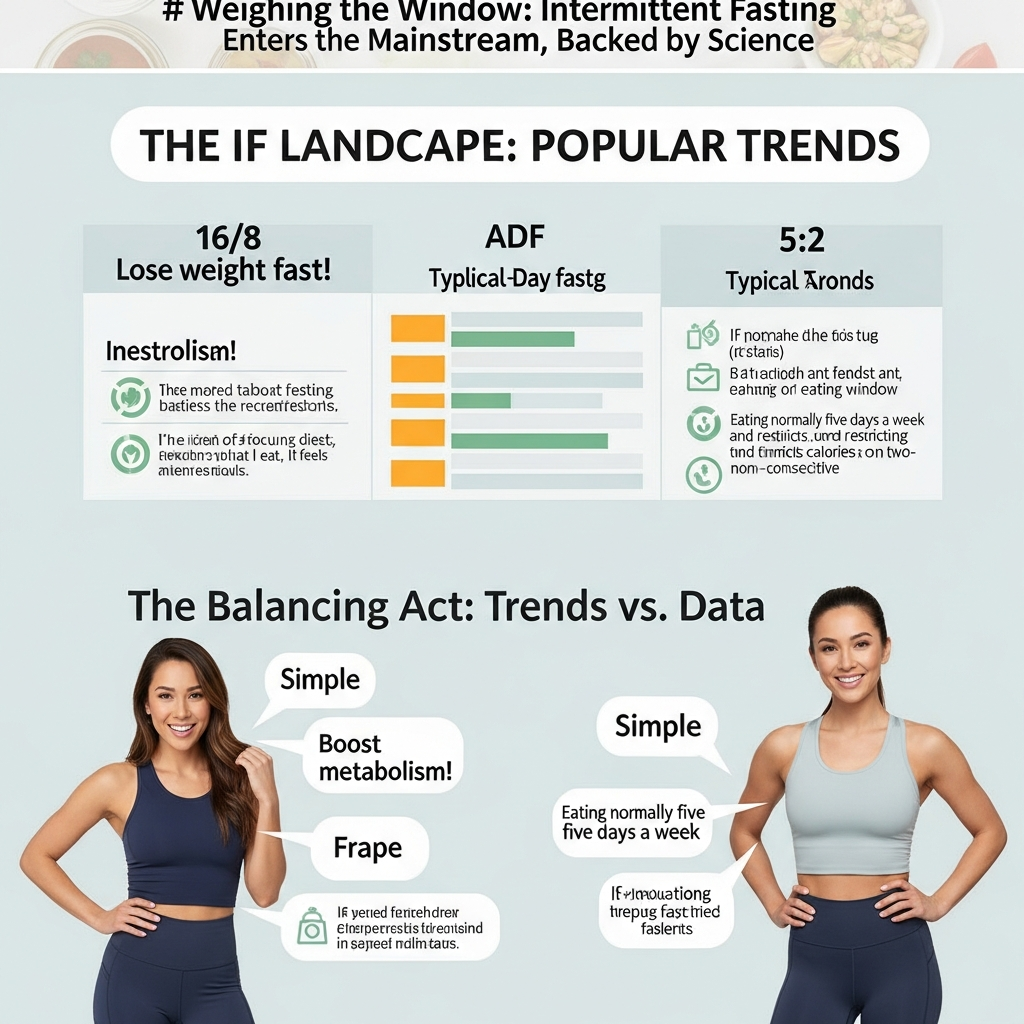
Intermittent fasting isn’t a single, uniform method. It encompasses various protocols, each with distinct eating and fasting windows. Understanding these differences is crucial for assessing their individual effectiveness:
Alternate-Day Fasting (ADF): Involves alternating between days of normal eating and days with significantly reduced calorie intake (often 75-100% restriction).
Time-Restricted Eating (TRE): Limits food intake to a specific window each day, such as an 8-hour eating window (e.g., 16:8 protocol) followed by a 16-hour fast.
Whole-Day Fasting (e.g., 5:2 diet): Restricting calories significantly (or completely) on two non-consecutive days per week, with normal eating on the other five days.
The BMJ review highlighted that all examined forms of IF, alongside traditional calorie restriction, consistently led to weight loss when compared to no dietary intervention. Interestingly, Alternate-Day Fasting (ADF) emerged as the only method showing a slightly greater short-term weight loss than traditional calorie restriction, with participants losing approximately 1.3 kg (nearly three pounds) more. While this difference was statistically significant, some experts consider it “trivial” for improving severe weight-related health issues.
Even more compelling findings emerged from a 12-month randomized clinical trial published in the Annals of Internal Medicine (April 2025). This study focused on the 4:3 intermittent fasting method, where participants restricted calories by 80% on three non-consecutive days weekly. The 4:3 IF group lost an average of 7.6% of their body weight, significantly more than the 5% lost by a daily calorie restriction group. Moreover, the IF group showed more favorable changes in systolic blood pressure, total and LDL cholesterol, and fasting glucose levels. This suggests that certain structured IF protocols, particularly when combined with behavioral support, can indeed offer modestly superior weight loss and cardiometabolic benefits over standard daily calorie restriction.
Beyond Weight Loss: Metabolic Health and Circadian Rhythms
The potential benefits of intermittent fasting may extend beyond just weight loss. Dr. Zhila Semnani-Azad, a post-doctoral fellow at Harvard T.H. Chan School of Public Health, suggests that the timing of eating could be critical due to the body’s deeply connected circadian rhythms and metabolism. Animal studies indicate that fasting may improve insulin sensitivity—a vital factor for managing conditions like diabetes—and reduce inflammation and oxidative stress. There’s also evidence to suggest IF could promote autophagy, the body’s cellular recycling mechanism, potentially contributing to anti-aging and longevity benefits.
However, Dr. Semnani-Azad also points out a significant hurdle: the lack of a universal definition for intermittent fasting, making consistent research and interpretation challenging. Professor Maik Pietzner of the Berlin Institute of Health also notes that very short periods of fasting (up to two days) often have little significant impact, with more widespread physiological changes, such as alterations to blood proteins, typically occurring only after three days or more of continuous fasting. This indicates that the duration and intensity of fasting play a crucial role in triggering deeper metabolic shifts.
The Real Challenge: Adherence and Individualization
While the scientific literature offers varied but generally positive views on IF’s effectiveness for weight loss and metabolic health, the ultimate success factor remains adherence. Studies consistently show that compliance rates drop significantly in longer trials. What works for one person may not work for another, underscoring the importance of a personalized approach to weight management.
Experts like Professor John Sievenpiper from the University of Toronto emphasize that current clinical practice guidelines are moving away from a “one-size-fits-all” mentality. Instead, they prioritize individual values, preferences, and long-term treatment goals. Intermittent fasting, alongside traditional calorie restriction, simply provides another evidence-based option for individuals seeking sustainable weight loss strategies. The “best” diet is ultimately the one an individual can consistently maintain over time, integrating healthy eating habits and regular physical activity into their lifestyle.
Who Should Exercise Caution with Intermittent Fasting?
Despite its potential benefits, intermittent fasting is not suitable for everyone. Certain individuals should approach IF with extreme caution or avoid it entirely without strict medical supervision:
Individuals with diabetes: Especially those taking insulin or other blood sugar-lowering medications, as IF can cause dangerous drops in blood glucose.
Pregnant or nursing individuals: Nutritional needs are elevated during these periods, and fasting could impact fetal development or milk supply.
People over age 65: They may be more susceptible to nutrient deficiencies or muscle loss.
Those with a history of disordered eating: IF can exacerbate unhealthy eating patterns.
Individuals with low blood pressure: Fasting can further lower blood pressure.
Always consult a Registered Dietitian Nutritionist (RDN) or a healthcare professional before starting any new dietary regimen, especially if you have underlying health conditions or are taking medications.
Making an Informed Choice: Your Path to Sustainable Weight Management
The bottom line is clear: intermittent fasting is a legitimate and often effective dietary approach for weight loss and improving certain cardiometabolic risk factors. However, it’s not a magical cure. Rather, it stands as a proven alternative or complement to traditional calorie restriction, offering similar outcomes for many people. The key is finding a sustainable method that aligns with your lifestyle, preferences, and health needs.
Whether you choose time-restricted eating, alternate-day fasting, or a more conventional approach, success hinges on consistency, mindful food choices on non-fasting days, and a holistic view of health that includes physical activity and adequate sleep. Empower yourself with knowledge, seek professional guidance, and choose a path that you can truly stick with for long-term well-being.
Frequently Asked Questions
What is the primary conclusion of recent studies on intermittent fasting for weight loss?
Recent comprehensive reviews offer a nuanced conclusion: Intermittent fasting (IF) is generally as effective for weight loss as traditional continuous calorie restriction (CR) and demonstrably better than no dietary intervention. While a major Cochrane review initially suggested IF was not significantly better than traditional diets, other systematic analyses in The BMJ found IF protocols, particularly alternate-day fasting (ADF), delivered comparable or even modestly superior weight loss and cardiometabolic improvements (like blood pressure and cholesterol) compared to CR. The effectiveness varies by specific IF type and individual adherence.
Which type of intermittent fasting, if any, might offer a slight edge for weight loss?
Among the various intermittent fasting protocols, Alternate-Day Fasting (ADF) has shown some promising results. A BMJ review noted that ADF protocols led to slightly greater short-term weight loss (approximately 1.3 kg or three pounds more) than traditional calorie restriction. Additionally, a 12-month study published in the Annals of Internal Medicine found that a 4:3 intermittent fasting method (80% calorie restriction on three non-consecutive days) resulted in a 7.6% body weight loss, which was modestly superior to the 5% achieved by a daily calorie restriction group. These suggest ADF and similar structured periodic fasting might offer a slight advantage for some individuals.
Who should be cautious or avoid intermittent fasting without medical guidance?
Certain individuals should exercise extreme caution or completely avoid intermittent fasting unless under the strict supervision of a healthcare professional or Registered Dietitian Nutritionist. These groups include people with diabetes (especially those on insulin), pregnant or nursing individuals, individuals over the age of 65, anyone with a history of disordered eating, and those with low blood pressure. Fasting can exacerbate existing conditions or create new health risks for these populations, making personalized medical advice essential before considering IF.
—