Is intermittent fasting (IF) the ultimate secret to shedding pounds, or is its effectiveness overstated? A comprehensive new review of scientific evidence suggests that for many, the popular eating pattern may not deliver superior weight loss results compared to traditional diets or even making no dietary changes. This groundbreaking analysis cuts through the online hype, offering crucial insights for anyone considering intermittent fasting for weight management. Discover what the experts are saying and how to approach your health goals based on the latest research.
The Core Revelation: Intermittent Fasting’s Modest Impact on Weight Loss
A major scientific review, published in the esteemed Cochrane Database of Systematic Reviews, has cast a critical eye on the efficacy of intermittent fasting for weight loss. Researchers meticulously analyzed data from 22 randomized clinical trials. These studies collectively involved nearly 2,000 adults, all of whom were overweight or living with obesity. Participants came from diverse regions, spanning North America, Europe, China, Australia, and South America.
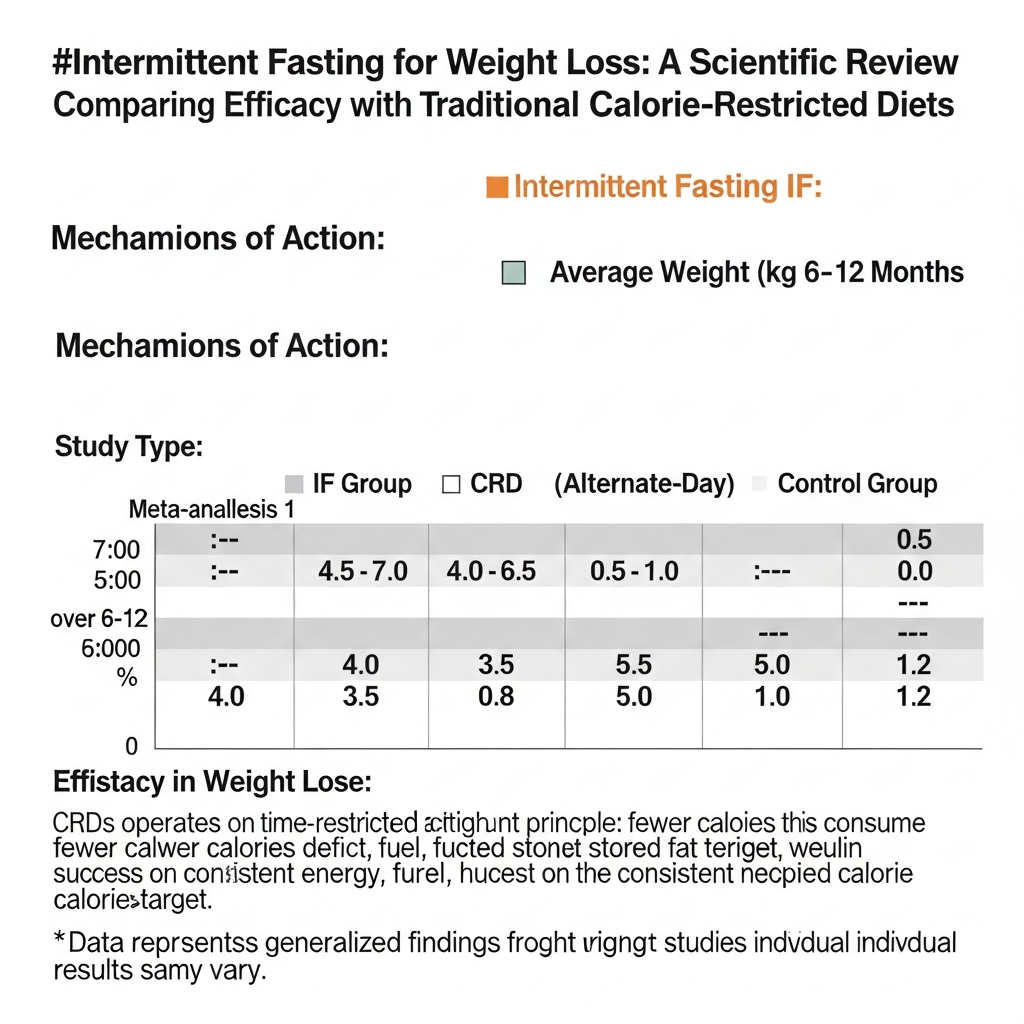
The overarching finding was clear: intermittent fasting, despite its surging popularity, offered no significant advantage for weight loss. Individuals following IF regimens, such as the 5:2 diet or time-restricted eating, lost similar amounts of weight to those who adhered to conventional dietary advice. Even when compared to control groups that followed no specific dietary intervention, IF generally failed to produce superior results. The average weight loss attributed to intermittent fasting in these studies was a modest 3% of body weight. This figure falls below the 5% threshold that doctors typically consider clinically meaningful for health improvements.
Dr. Luis Garegnani, the lead author of this extensive review, articulated the findings directly. He stated that intermittent fasting “just doesn’t seem to work for overweight or obese adults trying to lose weight.” He cautioned against viewing IF as a “miracle solution” for shedding pounds. The studies examined were also predominantly short-term, observing improvements over a maximum duration of 12 months. This limitation prevents definitive conclusions about the long-term sustainability or effects of intermittent fasting.
Unpacking the Methods: What is Intermittent Fasting?
Intermittent fasting isn’t a single diet but an umbrella term for various eating patterns. These patterns cycle between periods of normal eating and periods of minimal or no food consumption. The focus shifts from what to eat to when to eat. Common methods include:
16:8 Method: Fasting for 16 hours daily and consuming all meals within an 8-hour window.
5:2 Diet: Eating normally on five days of the week, then restricting calorie intake to 500-600 calories on the remaining two non-consecutive days.
Alternate-Day Fasting: Fasting completely or consuming very few calories every other day.
Eat-Stop-Eat: Performing a 24-hour fast once or twice weekly.
The underlying theory is that limiting the eating window naturally reduces overall calorie intake. This reduction, in turn, leads to weight loss.
Beyond Weight Loss: Other Claimed Benefits and Conflicting Evidence
While the Cochrane review primarily focused on weight loss, intermittent fasting is often promoted with a broader array of health benefits. Proponents suggest that during fasting, the body undergoes several physiological changes. These include increased human growth hormone (HGH) levels, improved insulin sensitivity, and the initiation of cellular repair processes like autophagy. Autophagy is the body’s cellular recycling mechanism. Some studies also hint at changes in gene function related to longevity and disease prevention.
However, the evidence supporting these broader claims, especially in humans, is often less robust or directly contradictory. The Cochrane review found no strong evidence that intermittent fasting improved people’s quality of life more than other diets. Other experts acknowledge potential benefits but emphasize the need for more research. Dr. Zhila Semnani-Azad noted that animal studies suggest IF can alter fat reserve usage, enhance insulin sensitivity, and reduce inflammation. Yet, she highlighted the lack of a universal definition for intermittent fasting, which complicates understanding its precise effects.
Some research suggests that IF can potentially boost brain and heart health. It may also reduce symptoms and inflammation in conditions like Crohn’s disease. Lower blood sugar and improved sleep quality by aligning with circadian rhythms are also cited. Ultimately, while IF can help some individuals regulate eating habits, particularly by curbing late-night snacking, direct, conclusive evidence for its superiority in these areas, especially compared to other healthy lifestyle changes, remains limited and was not the focus of this major review.
Expert Perspectives: Nuances, Critiques, and What We Still Don’t Know
The review’s findings have sparked considerable discussion among the scientific community. While many experts agree with the core conclusion regarding IF’s modest weight loss effects, some offer important nuances and critiques.
Satchidananda Panda of the Salk Institute for Biological Studies raised a significant concern. He pointed out that many studies included in the review did not adequately measure participants’ adherence to intermittent fasting protocols. He likened synthesizing such data to “building a cathedral on quicksand.” This highlights a challenge in drawing firm conclusions when compliance with the intervention is unknown.
Professor Leonie Heilbronn from the University of Adelaide, an expert in obesity and metabolism, generally concurred that IF produces weight losses similar to other moderate calorie restriction interventions. She suggested that IF, particularly alternate-day fasting, is a “proven alternative” to continuous calorie restriction, both typically yielding around 7% weight loss over 6–12 months with dietary support. However, she offered a critique of the review’s methodology. Heilbronn suggested that combining various forms of intermittent fasting, which are not equivalent in their impact, was a “mistake.” She differentiated:
Time-Restricted Eating (TRE): A milder intervention, often leading to modest weight loss (around 2-3 kg). It might offer health benefits through circadian rhythm alignment.
Intermittent Fasting (Alternate-Day Fasting): Involves more significant energy restriction. This usually shows similar weight losses (5-7%) and metabolic improvements compared to continuous calorie restriction.
Professor Heilbronn also challenged the review’s assertion of “no clinically meaningful effect on weight loss” compared to “doing nothing.” She noted that IF resulted in approximately 3.4% greater weight loss than control groups. Some guidelines consider this clinically meaningful.
Professor Luigi Fontana from the University of Sydney, whose research includes similar dietary approaches, acknowledged that IF can lead to some weight loss. However, his work indicates that this weight loss with IF did not consistently translate into broader metabolic benefits. These include improved blood pressure, glycemic control, or reduced inflammation. He stressed that sustainable results come from consistent adherence to an overall nutritional pattern and balancing calorie intake with energy output.
The review itself highlighted several limitations in existing research. Many trials had small sample sizes and were limited to white populations in high-income countries. This restricts the generalizability of the findings to diverse demographics. Most studies also lasted fewer than 12 months, making it difficult to assess long-term efficacy or potential side effects.
Navigating Your Weight Loss Journey: Practical Takeaways
Given these findings, what should individuals seeking weight management do? Experts consistently agree that the most crucial factor for weight loss is adopting a sustainable lifestyle change. While intermittent fasting can be an option for some, it is not a universally superior method. Here are some actionable recommendations:
Consult a Healthcare Professional: Always speak with your doctor or a registered dietitian before starting any new diet, especially if you have underlying health conditions.
Focus on a Calorie Deficit: Weight loss fundamentally occurs when you consistently consume fewer calories than your body burns. IF can help some people achieve this by simplifying meal timing and reducing late-night eating, but it’s the calorie deficit that drives results, not the fasting itself.
Prioritize Nutritional Quality: Regardless of when you eat, what you eat matters immensely. Emphasize whole, unprocessed foods like lean proteins, plenty of vegetables, and healthy fats. Minimize refined carbohydrates, added sugars, and highly processed foods.
Integrate Exercise: Physical activity is a cornerstone of both weight loss and long-term weight management. Combine regular endurance exercise with resistance training to preserve lean muscle mass and boost metabolism.
Seek Sustainability: The “best” diet is one you can adhere to consistently over the long term. If intermittent fasting feels sustainable and works for you, it can be a valid approach. However, if it leads to excessive hunger, disordered eating, or doesn’t fit your lifestyle, other methods may be more effective.
Consider Broader Strategies: For some, significant weight loss may require additional support, such as pharmacotherapy (weight loss medications) or bariatric surgery. These interventions, however, should always complement a foundation of healthy eating and regular physical activity.
Frequently Asked Questions
What is the main finding of the latest review on intermittent fasting and weight loss?
A major Cochrane review, analyzing 22 randomized clinical trials, found that intermittent fasting (IF) is no more effective for weight loss in overweight or obese adults than traditional dietary advice or making no specific dietary changes. On average, IF led to about 3% body weight loss, which falls below the 5% threshold generally considered clinically meaningful by doctors. The review concluded that IF is not a “miracle solution” for shedding pounds.
Where does intermittent fasting stand compared to traditional diets for long-term weight management?
The review found “little to no difference” in weight loss outcomes when comparing intermittent fasting to traditional dietary recommendations or no intervention. Most studies were short-term (up to 12 months), meaning the review could not draw firm conclusions about long-term sustainability. Experts emphasize that long-term weight management success, regardless of method, hinges on consistent adherence to a healthy, sustainable nutritional pattern combined with regular exercise.
Should I consider intermittent fasting for weight loss based on current evidence?
While intermittent fasting can be one option for weight management, the current evidence, particularly from the Cochrane review, suggests it offers no superior benefits over other dietary approaches. Experts advise that if you find IF sustainable and it helps you achieve a calorie deficit, it can be a valid choice. However, it is crucial to prioritize overall nutritional quality, integrate regular exercise, and consult a doctor to ensure it’s appropriate for your individual health needs. Focusing on a sustainable lifestyle change is paramount for lasting success.
Conclusion: Making Informed Choices for Your Health
The latest evidence suggests that while intermittent fasting can be a viable option for some, it is not a universally superior strategy for weight loss. The widespread online enthusiasm often outpaces the scientific evidence, particularly regarding its unique benefits for shedding pounds. Instead of seeking a “miracle solution,” individuals should prioritize a sustainable, balanced approach that incorporates healthy eating habits, consistent physical activity, and personalized medical guidance. Understanding that a calorie deficit, achieved through any method you can maintain, remains the fundamental driver of weight management will empower you to make informed decisions for your long-term health and well-being.