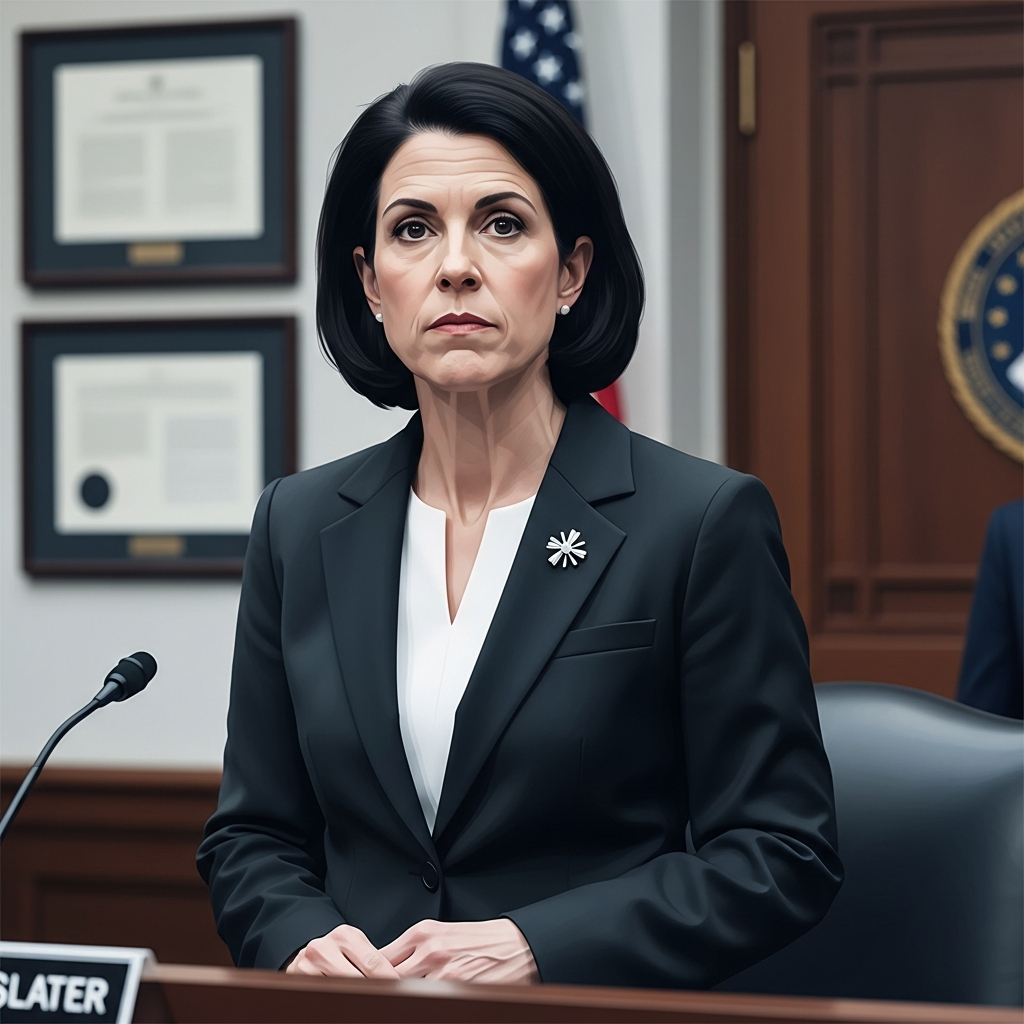
The Justice Department’s Antitrust Division is facing a leadership vacuum. Abigail “Gail” Slater, the Assistant Attorney General for Antitrust, abruptly announced her departure on Thursday, February 12, 2026. While Slater’s public statement on X expressed “great sadness and abiding hope,” multiple reports quickly revealed a more contentious story. Top Trump administration officials reportedly forced her out. Her exit marks a turbulent period for corporate merger reviews and antitrust enforcement in the United States.
Slater’s brief tenure, lasting less than a year, was plagued by escalating tensions. She faced “irreconcilable differences” with Attorney General Pam Bondi and Deputy Attorney General Todd Blanche. These senior officials believed new leadership was essential to advance the President’s agenda. This revelation contradicts Slater’s own dignified farewell, painting a picture of significant internal conflict. It raises serious questions about political interference in the historically independent division.
A Strained Relationship: The Seeds of Slater’s Ouster
Gail Slater’s removal stemmed from a series of disputes and a perceived loss of trust. Central to these conflicts was her steadfast, “antitrust purist” stance on a major corporate merger. This position often clashed with the administration’s business-friendly leanings. Senator JD Vance, once a key ally and senior adviser to Slater, eventually withdrew his support. This erosion of backing from influential figures proved pivotal.
The Hewlett Packard Enterprise Merger Controversy
A primary point of contention involved Slater’s attempt to block a massive $14 billion merger. This deal proposed combining Hewlett Packard Enterprise (HPE) with Juniper Networks. Slater argued the merger would create a duopoly in crucial cloud-computing and wireless-networking systems. She believed this would harm competition and consumers. Her stance put her directly at odds with Attorney General Pam Bondi.
A critical turning point occurred when Slater allegedly misinformed Bondi. She claimed the US intelligence community had no national security concerns about blocking the deal. However, CIA Director John Ratcliffe directly contradicted this. He stated that blocking the merger would pose national security risks and expressed surprise at not being consulted. This incident led Bondi to believe Slater had been dishonest. The Justice Department ultimately dropped its challenge, negotiating a settlement with HPE instead. This decision sparked outrage among critics.
Beyond Mergers: Allegations of Insubordination and Retaliation
The HPE/Juniper dispute was not an isolated incident. Tensions between Slater and Bondi extended to other matters, including departmental protocol and travel. Last year, Bondi denied Slater’s request to attend a critical international conference in Paris, citing cost concerns. Such attendance was customary for her predecessors and reportedly required under a treaty. Despite the denial, Slater attended the conference.
Bondi’s response was swift and retaliatory: she canceled Slater’s government credit cards. This act underscored the profound breakdown in their working relationship. Vice President JD Vance was reportedly aware of these “fraught dynamics” within the agency. These events highlight a pattern of insubordination allegations against Slater by senior Justice Department officials. They claimed she undermined pending cases and disobeyed requests.
Mass Exodus and Public Condemnation
Slater’s departure was not an isolated event. Her deputy in the Antitrust Division, Mark Hamer, also announced his exit this week, planning a return to private practice. Hamer, however, praised Slater as “a leader of exceptional wisdom, strength and integrity.” Earlier, the division saw the ousting of two other top officials, Roger Alford and Bill Rinner, amidst the HPE/Juniper dispute.
Roger Alford, a former official from the first Trump administration and Slater’s top deputy, openly criticized the situation. He labeled it a “battle” within the Justice Department. Alford specifically named Chad Mizelle and Stanley Woodward, accusing them of “perverting justice” in the HPE/Juniper merger. Chad Mizelle, a former DOJ chief of staff, later posted on X that “No one is entitled to work at DOJ. You must be willing to put aside personal agendas and vendettas to advance the President’s priorities.” This implicitly endorsed Slater’s removal.
Antitrust at a Crossroads: High-Stakes Cases in Limbo
Gail Slater’s exit comes at a truly critical moment for antitrust enforcement. The Antitrust Division is actively engaged in several high-profile cases and reviews that impact major industries. Her departure injects significant uncertainty into these ongoing legal battles and investigations.
One immediate focus is the intense bidding war for Warner Bros. Discovery. Media giants Netflix and Paramount Skydance are battling for control. President Donald Trump had initially indicated an uncommon intention to get involved in reviewing the deal. However, he later softened his stance, stating he would let the Justice Department handle it, despite meeting with executives from both bidders.
Another major challenge for the Justice Department is its looming court battle against Live Nation. This lawsuit aims to challenge the concert venue manager’s ownership of Ticketmaster, alleging monopolization of the live events business. Notably, shares of Live Nation jumped as much as 5.8% after Slater announced her departure, though the rally later abated. This market reaction suggests some investors may perceive her absence as a positive development for Live Nation, potentially impacting the outlook for the antitrust trial scheduled for next month.
Political Fallout and Future Uncertainties
The ousting of Gail Slater has triggered strong reactions from lawmakers and legal experts, sparking allegations of political corruption. Senator Elizabeth Warren (D-MA) led the charge, labeling the situation as looking “like corruption.” She highlighted Slater’s prior bipartisan support during her Senate confirmation (78 votes in favor) as evidence of her integrity. Warren further alleged that “a small army of MAGA-aligned lawyers and lobbyists” were attempting to “sell off merger approvals.”
Other Democratic Senators, including Cory Booker and Amy Klobuchar, echoed these concerns. They called Slater’s exit a “major loss” and part of “an ongoing pattern of corruption,” demanding congressional investigations. California Attorney General Rob Bonta pledged his state would continue its consumer protection efforts, even if the federal government “abdicated its responsibility.”
Legal scholars also weighed in, expressing alarm. John Newman, a law professor at the University of Memphis, warned of the broader implications. He stated that such “regulatory uncertainty” could complicate matters for legitimate businesses seeking mergers. Conversely, it might inadvertently benefit companies less concerned with legal compliance. This, he suggested, creates a “worst-case scenario” for fair market competition. Omeed Assefi, currently a deputy assistant attorney general, is expected to step in as interim head of the division.
Frequently Asked Questions
What specific controversies led to Gail Slater’s ouster from the DOJ Antitrust Division?
Gail Slater’s departure was prompted by “irreconcilable differences” with Attorney General Pam Bondi and Deputy Attorney General Todd Blanche. A key controversy involved her strong opposition to the $14 billion Hewlett Packard Enterprise (HPE) acquisition of Juniper Networks. Slater’s claims that blocking the merger posed no national security risks were directly contradicted by CIA Director John Ratcliffe. This led Bondi to believe Slater had misrepresented facts. Further tensions arose from Slater attending an international conference in Paris despite Bondi’s denial of her travel request, resulting in the cancellation of Slater’s government credit cards. These incidents collectively led to a loss of trust and her eventual removal.
How does the departure of the DOJ Antitrust Chief impact ongoing high-profile cases like Live Nation/Ticketmaster?
The immediate impact of Gail Slater’s ouster on ongoing high-profile cases, such as the Live Nation/Ticketmaster lawsuit and the Warner Bros. Discovery merger review, introduces significant uncertainty. Slater was seen by many as an “antitrust purist” committed to aggressive enforcement. Her exit could signal a shift towards a more lenient stance on corporate consolidation. Following her announcement, Live Nation’s shares notably jumped, suggesting investors perceived her departure as potentially favorable for the company ahead of its antitrust trial. Omeed Assefi will serve as the interim head, but the change in leadership at a critical juncture could lead to delays or a re-evaluation of legal strategies in these major cases.
What are the broader implications of this leadership change for businesses involved in corporate mergers?
The leadership change within the Justice Department’s Antitrust Division, particularly the alleged forced ouster of Gail Slater, carries significant implications for businesses involved in corporate mergers. It has fueled concerns about increased political influence over antitrust enforcement, potentially leading to less stringent scrutiny of certain deals. Legal experts warn of “regulatory uncertainty,” making it harder for businesses to understand the rules of engagement for mergers and acquisitions. This environment could deter legitimate companies from pursuing beneficial consolidations while potentially benefiting those willing to navigate a more politically charged regulatory landscape. Democratic lawmakers have called for investigations, citing fears of “corruption” and a shift away from consumer protection.
The abrupt and controversial exit of Gail Slater from her pivotal role as DOJ Antitrust Chief marks a profound moment for American antitrust enforcement. It highlights a deep chasm between the division’s traditional mission of protecting competition and the political directives of the administration. With ongoing high-stakes merger reviews and major lawsuits against corporate giants, the leadership transition casts a long shadow over the future of market competition. The ensuing political fallout and concerns from legal experts underscore a period of unprecedented uncertainty, potentially reshaping the landscape for businesses and consumers across the nation.