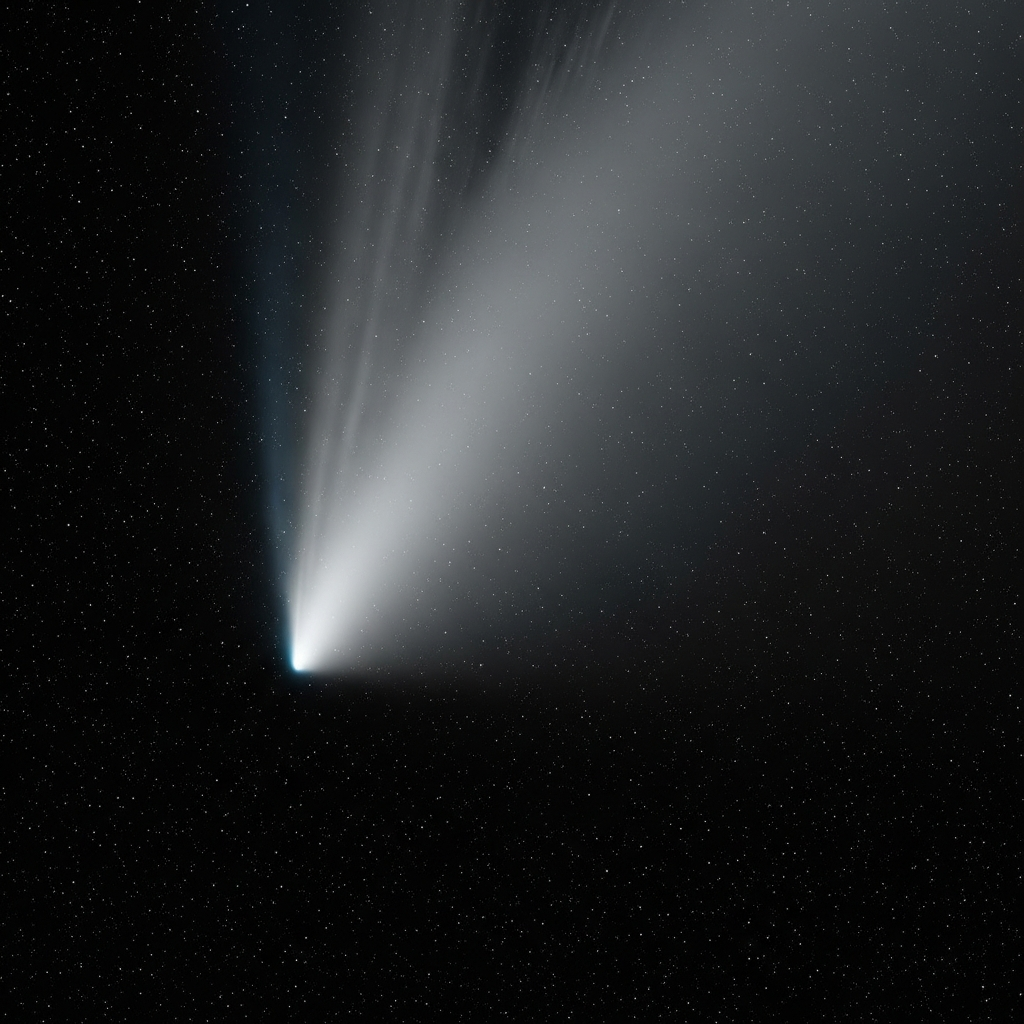
Imagine a cosmic message in a bottle, drifting through the dark expanse of space for untold ages, finally reaching our solar system. This summer, humanity intercepted such a message: interstellar comet 3I/ATLAS. Only the third confirmed visitor from beyond our stellar neighborhood, 3I/ATLAS arrived with a spectacular secret, now fully revealed: it’s actively shedding vast quantities of water, behaving in ways that challenge our understanding of comets and planetary systems across the galaxy. This remarkable discovery, made possible by NASA’s Neil Gehrels Swift Observatory and detailed in The Astrophysical Journal Letters, offers unprecedented insights into the ingredients that build distant worlds, potentially even those harboring life.
A Mysterious Visitor: Interstellar Comet 3I/ATLAS Arrives
For eons, this small celestial body, a blend of ice and dust, journeyed through the vast, empty stretches between stars. Discovered on July 1, 2025, it quickly captivated astronomers worldwide. Unlike comets born within our own solar system, 3I/ATLAS originates from another star system entirely. Its arrival presents a rare opportunity to study firsthand the building blocks of alien worlds, offering a snapshot of cosmic chemistry far from home. Early observations quickly highlighted its uniqueness, setting the stage for even more profound revelations about its composition and behavior. Experts believe it may have originated from the Milky Way’s center, possibly billions of years older than our own Sun, having been gravitationally ejected from its home star system long ago.
The Shocking Water Discovery: A Chemical Fingerprint
The pivotal moment arrived when researchers from Auburn University, led by professor of physics Dennis Bodewits and postdoctoral researcher Zexi Xing, turned NASA’s Neil Gehrels Swift Observatory towards this new arrival. In July and August 2025, Swift detected a faint ultraviolet (UV) glow emanating from the comet. This wasn’t just any light; it was the distinct chemical signature of hydroxyl (OH) gas, a direct byproduct of water molecules breaking apart in sunlight. This detection marked the first definitive evidence of water escaping from an interstellar object, a breakthrough in our quest to understand these cosmic wanderers.
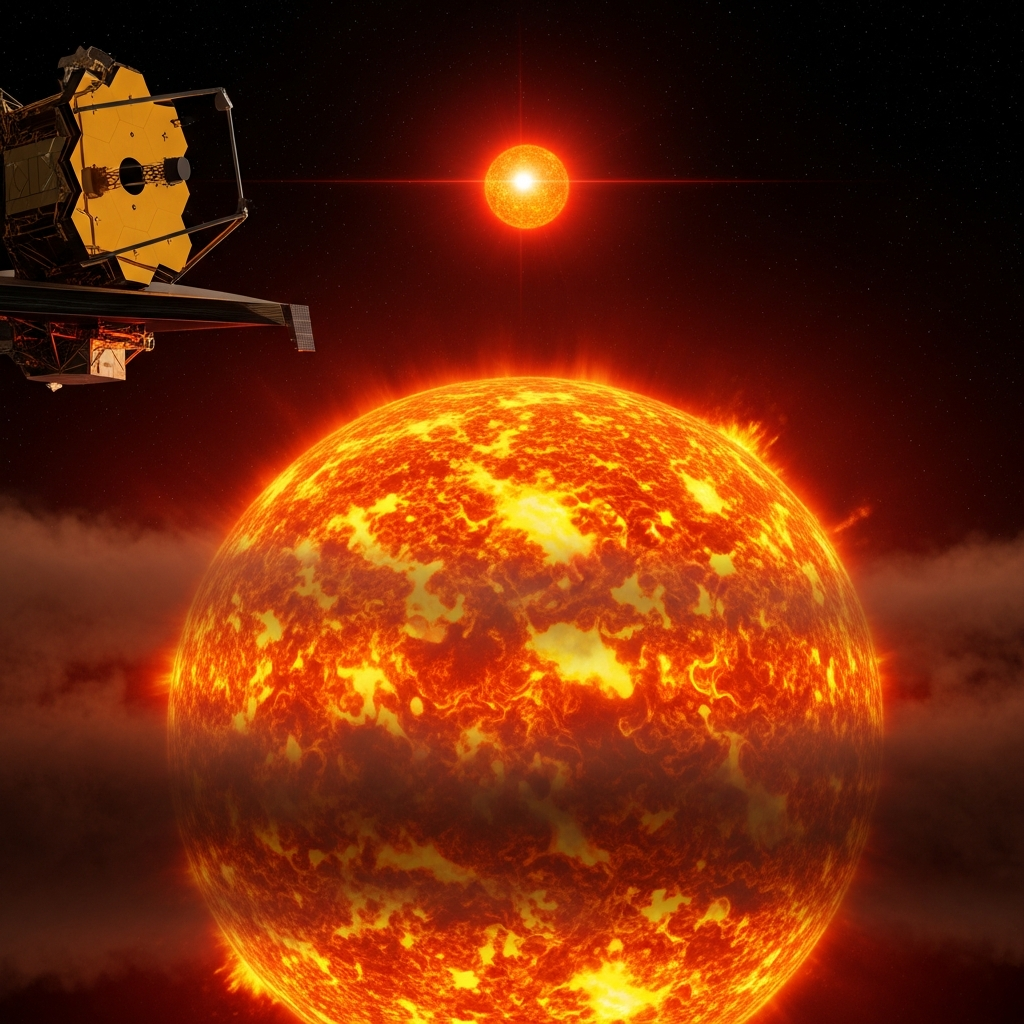
Swift’s success was a testament to technological prowess. While carrying a relatively modest 30-centimeter telescope, its orbital perch above Earth’s atmosphere proved invaluable. From this vantage point, Swift’s Ultraviolet/Optical Telescope (UVOT) could capture UV wavelengths that ground-based telescopes cannot see, as they are mostly absorbed by our atmosphere. This allowed Swift to achieve a sensitivity comparable to a 4-meter class ground telescope, free from atmospheric interference. Its rapid-targeting capability further allowed the Auburn team to observe 3I/ATLAS promptly, crucial before the comet faded or moved too close to the Sun for safe space-based viewing.
A Deluge from Afar: Unprecedented Water Release
What made this water detection truly astonishing was the distance at which it occurred. Swift observed hydroxyl when interstellar comet 3I/ATLAS was nearly three times farther from the Sun than Earth is, approximately 2.9 astronomical units (AU). This region is typically too far for surface ice on most comets to sublimate directly into vapor. Yet, despite this great distance, the comet was losing water at an incredible rate of roughly 40 kilograms (88 pounds) per second. To put this into perspective, it was expelling water like a fully opened fire hose running at full blast.
This level of activity is unusually high for a comet so far from the Sun. Most comets native to our solar system remain relatively dormant at such distances. The research team estimated that at least 8% of 3I/ATLAS’s surface was actively releasing water, a significantly larger fraction than the typical 3% to 5% active surface area found on local comets. This immediate, vigorous water production hinted at unusual internal processes at play, sparking new scientific hypotheses about its unique makeup.
Decoding the Mystery: Why So Much Water So Far Out?
The strong ultraviolet signal and the comet’s sustained activity, even at such a vast distance, suggest unique mechanisms are driving this phenomenon. One leading hypothesis proposes that sunlight is warming tiny icy particles and debris that have broken away from the comet’s main nucleus. These smaller grains, once heated, could then release vapor into the surrounding gas cloud, acting like “miniature steam vents in space.” This concept of “extended sources” of water has only been observed in a handful of distant comets, indicating the presence of complex, perhaps layered, ices within 3I/ATLAS.
Further observations by NASA’s SPHEREx space observatory in December 2025 added another layer to the enigma. Roughly two months after 3I/ATLAS had made its closest approach to the Sun in October, SPHEREx recorded a massive spike in its brightness. Astrophysicist Carey Lisse, lead author of a subsequent study, described the comet as “full-on erupting into space.” This significant sublimation was primarily driven by water ice, accounting for about one-third of a comet’s bulk. This delayed eruption, occurring well after peak solar radiation, is attributed to the comet’s ancient origins. Having traversed interstellar space for eons, it likely developed a radiation-processed crust. Once the Sun’s energy finally permeated this protective layer, pristine ices deep within began to warm and erupt, releasing a rich “cocktail of chemicals” shielded for billions of years.
3I/ATLAS: A Window into Other Star Systems
Each interstellar comet observed so far has unveiled distinct clues about the chemistry of other planetary systems. The first known visitor, ‘Oumuamua, proved remarkably dry. The second, Borisov, was rich in carbon monoxide. Now, 3I/ATLAS presents a new surprise by releasing water unexpectedly far from the Sun. These diverse characteristics highlight that the fundamental building blocks of comets – and the volatile ices within them – can vary dramatically from one star system to another. Such variations offer critical insights into how temperature, radiation, and chemical makeup shape the materials that eventually form planets.
As Professor Bodewits eloquently stated, “When we detect water — or even its faint ultraviolet echo, OH — from an interstellar comet, we’re reading a note from another planetary system.” He added, “It tells us that the ingredients for life’s chemistry are not unique to our own.” This profound statement underscores the potential implications for exoplanet research and the search for extraterrestrial life. The findings from 3I/ATLAS also confirm that these interstellar visitors are constantly “rewriting what we thought we knew about how planets and comets form around stars,” as Zexi Xing explained. Its composition, potentially originating from the Milky Way’s center and being billions of years older than our Sun, offers a unique ancient snapshot of galactic chemistry.
The December 2025 Eruption: A Wealth of Organic Molecules
The late-year eruption detected by SPHEREx was more than just a brightness spike. It allowed researchers to extensively catalog a wider range of 3I/ATLAS’s organic molecules. Earlier SPHEREx observations in August 2025 had detected a coma composed largely of carbon dioxide, alongside smaller quantities of carbon monoxide and water. However, by December, the “full-on eruption” released a more diverse mix, including newly identified organic molecules like cyanide, methane, and methanol, in addition to rocky debris. This release of fresh, carbon-rich material from deep within the comet’s interior provides an invaluable glimpse into its pristine composition, untouched by millennia of cosmic radiation.
The Future of 3I/ATLAS Observations
Although interstellar comet 3I/ATLAS has since dimmed and is currently departing our solar system, its journey is not over. It is expected to become observable again after mid-November. This return will provide scientists with another crucial opportunity to monitor its activity as it moves closer to the Sun. Several space agencies are already planning further investigations. The European Space Agency’s Mars orbiters have already glimpsed the comet, and its Jupiter Icy Moons Explorer (JUICE) mission is slated to observe 3I/ATLAS in November, just after its closest approach to the Sun. Scientists anticipate receiving this valuable JUICE data in February 2026, offering even more detailed insights into this exceptional cosmic messenger. These continued observations will help piece together the full story of this extraordinary object and refine our understanding of comet formation across the universe.
Frequently Asked Questions
What makes 3I/ATLAS unique among interstellar objects discovered so far?
Interstellar comet 3I/ATLAS stands out as the first interstellar object confirmed to be actively shedding water, specifically detected via hydroxyl (OH) gas, at an unexpectedly great distance from the Sun (nearly three times farther than Earth). While ‘Oumuamua was dry and Borisov was rich in carbon monoxide, 3I/ATLAS demonstrates a different chemical profile, indicating a wider diversity in the volatile ices and compositions of comets formed in other star systems. Its later, unexpected eruption of organic molecules in December 2025, after its closest approach to the Sun, further highlighted its unique, layered structure and ancient origins.
Which telescopes and observatories were key to studying 3I/ATLAS?
NASA’s Neil Gehrels Swift Observatory played a crucial role, particularly its Ultraviolet/Optical Telescope (UVOT), which detected the initial hydroxyl gas signal in July and August 2025. Swift’s ability to observe ultraviolet wavelengths from orbit, above Earth’s atmosphere, was essential for this discovery. Later observations by NASA’s SPHEREx space observatory in December 2025 detected a massive brightness spike and cataloged additional organic molecules. Furthermore, the European Space Agency’s Mars orbiters have glimpsed 3I/ATLAS, and its Jupiter Icy Moons Explorer (JUICE) is set to observe the comet in November, with data expected in February 2026.
Why is studying 3I/ATLAS important for understanding life in the universe?
Studying interstellar comet 3I/ATLAS is profoundly important because its water detection confirms that the fundamental chemical ingredients for life, particularly water and various organic molecules, are not unique to our solar system. By comparing its composition and behavior to both local and other interstellar comets, scientists gain insights into the diverse environments where planets form around other stars. This helps us understand how common the conditions for planetary habitability might be across the galaxy, reinforcing the idea that the “ingredients for life’s chemistry are not unique to our own” planetary system.
The Cosmic Messenger’s Legacy
The journey of interstellar comet 3I/ATLAS through our solar system has been nothing short of extraordinary. From its initial detection of unexpected water activity to its dramatic, delayed eruption of complex organic molecules, this cosmic visitor has provided a wealth of new information. It challenges existing comet formation theories and offers an invaluable “note from another planetary system,” as Dennis Bodewits put it. Each observation of 3I/ATLAS rewrites a small part of our cosmic story, deepening our understanding of the universe’s incredible diversity and the fundamental elements that build worlds. As we await its return to view and the data from future missions, the secrets held within this ancient traveler continue to inspire our exploration of the cosmos and the profound question of life beyond Earth.