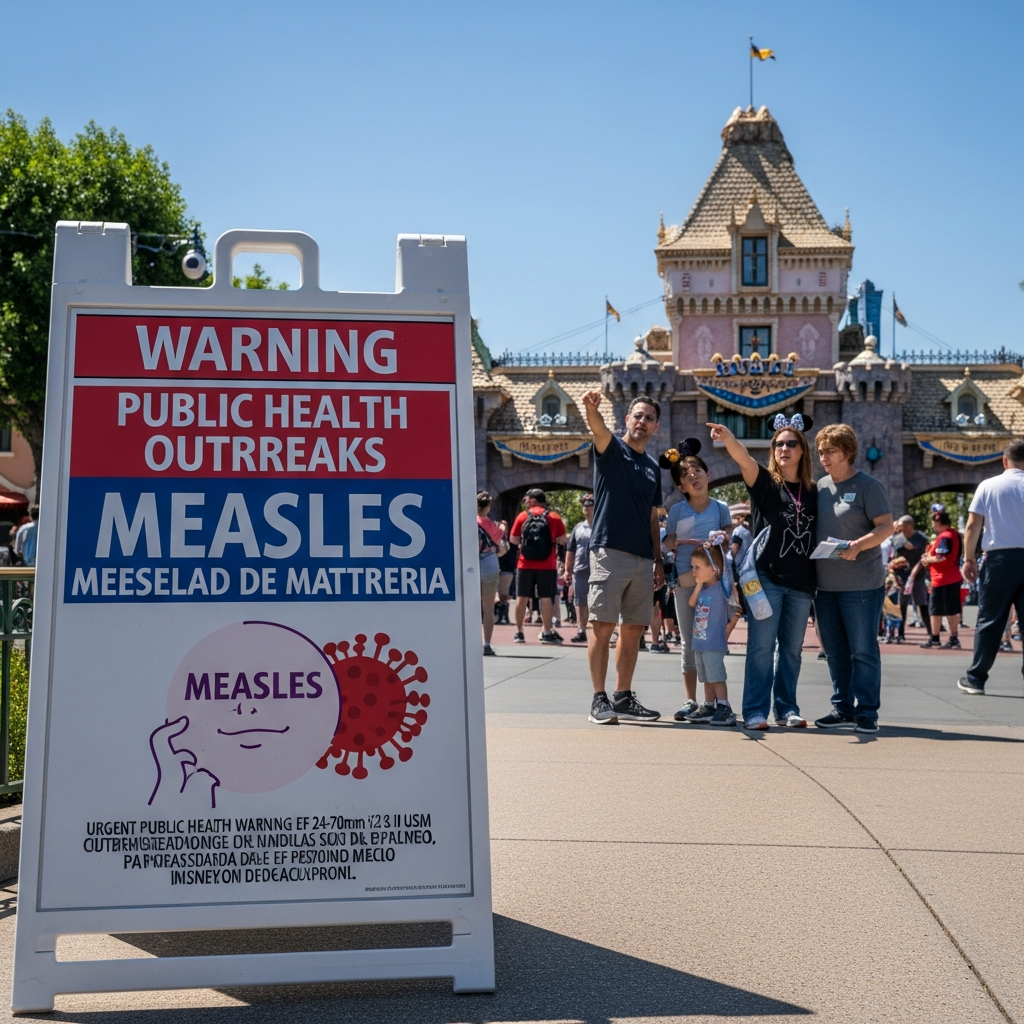
Orange County health officials have issued a critical public health alert following the confirmation of a second measles case linked to a recent visitor at Disneyland Resort. This new development, reported on February 7, 2026, comes just one week after the initial case and underscores a growing concern about measles transmission in the region. Authorities are urging park guests and local residents to take immediate precautions to protect themselves and the wider community from this highly contagious viral illness.
Urgent Health Alert: Second Measles Case at Disneyland
The recent measles confirmation highlights a concerning trend in Southern California, with multiple cases emerging in both Orange and Los Angeles Counties. This second identified case involves an individual who was infectious while visiting two popular Disney parks in January 2026. Public health advisories are now in effect, providing crucial guidance for anyone who may have been exposed.
What We Know: The Latest Confirmation
Orange County health officials confirmed the second measles case in a person who visited Disneyland Park and Disney California Adventure Park on January 22, 2026. This announcement, made by the OC Health Care Agency (HCA), marks the third measles case reported in Orange County this year. Los Angeles County has also reported three distinct measles cases, emphasizing a broader regional challenge. The individual linked to this second Orange County case was present at Disneyland Park from 8 a.m. to 4 p.m., and subsequently at Disney California Adventure Park from 3 p.m. until closing time on the specified date.
Key Exposure Locations and Times
Health officials emphasize that individuals who were at these specific locations during the outlined dates and times may be at risk. Measles has an incubation period of 7 to 21 days, meaning symptoms can appear weeks after exposure. The known exposure windows are:
Disneyland Park: January 22, 2026, between 8 a.m. and 4 p.m.
Disney California Adventure Park: January 22, 2026, between 3 p.m. and closing.
In a separate, earlier report, another international traveler with measles visited Goofy’s Kitchen at the Disneyland Hotel on the morning of January 28, followed by Disneyland Park and Disney California Adventure Park from 12:30 p.m. until closing. These overlapping incidents highlight the potential for widespread exposure within the popular resort.
Understanding the Broader Measles Resurgence
The confirmed cases in Southern California are not isolated incidents but rather reflect a concerning national trend. The United States has recently experienced a significant resurgence of measles, with cases reaching a 30-year high in 2025. This increase is primarily attributed to declining vaccination rates and heightened international travel, bringing the virus from areas where it is more common.
A National Concern: Cases at a 30-Year High
Across the U.S., 588 measles cases were reported in January 2026 alone, with outbreaks in 17 states. These numbers challenge the nation’s “eliminated” status, a designation received in 2000. Many new cases are linked to international travelers, as seen with the recent Los Angeles County confirmations. One international traveler, who arrived at LAX on January 26, visited Disneyland Resort on January 28, and also a Dunkin’ Donuts in Woodland Hills on January 30. Another LA County resident, also an international traveler, exposed others at a Mardi Gras Tuesday restaurant in Sherman Oaks on January 24. Even Northern California’s Shasta County reported its first case since 2019, further indicating the widespread nature of the current challenge.
The Highly Contagious Nature of Measles
Measles is an incredibly contagious viral illness, far more transmissible than many other common diseases. It spreads through the air when an infected person breathes, coughs, or sneezes. The virus can remain airborne or on surfaces for up to two hours after an infected person has left the area. Disturbingly, one infected individual can transmit measles to an astounding 90% of nearby unvaccinated people. This rapid spread underscores why high vaccination rates are essential for community immunity, protecting not only vaccinated individuals but also vulnerable populations who cannot receive the vaccine.
Protecting Yourself and Your Loved Ones: Health Officials’ Urgent Advice
Given the high transmissibility and potential for severe complications, health officials are strongly advising individuals who may have been exposed to take immediate action. Vigilance and proactive measures are key to preventing further spread.
Immediate Steps for Potential Exposure
The OC Health Care Agency has issued critical recommendations for anyone who may have been exposed to measles:
Check Immunity Status: Promptly consult your healthcare provider to verify your immunity status regarding the Measles, Mumps, and Rubella (MMR) vaccine. Ensure you are fully protected with two doses.
Consider Post-Exposure Prevention: If exposure occurred less than seven days ago, discuss options for vaccination or immune globulin with your healthcare provider. Immune globulin is particularly recommended for vulnerable groups, including infants under 12 months, pregnant individuals without immunity, and those with weakened immune systems.
Monitor for Symptoms: Watch vigilantly for symptoms such as fever or an unexplained rash within 7 to 21 days following the exposure date.
Contact Your Provider IMMEDIATELY if Symptoms Develop: If you suspect measles symptoms, call your healthcare provider immediately before visiting any clinic or hospital. This crucial step helps prevent potential exposure to others in waiting rooms or medical facilities.
Self-Isolate if Not Immune: For non-immune individuals exposed more than seven days prior, it is advised to stay home and significantly limit interactions with others for 21 days post-exposure.
The Power of Vaccination: Your Best Defense
Dr. Anissa Davis, HCA’s Deputy County Health Officer, emphasized, “The best way to protect yourself and others is to get vaccinated before exposure occurs.” She highlighted that measles can spread quickly, even among those who haven’t traveled, and poses significant risks to individuals unable to receive the vaccine due to age, health conditions, or allergies.
The MMR vaccine is highly effective. Two doses provide approximately 97% protection against measles, while one dose offers about 93% protection. This protection is generally lifelong. Children can also receive the MMRV vaccine, which includes protection against chickenpox. Adults who were vaccinated before the 1990s should consult their healthcare provider about potentially needing a second dose, as older vaccine protocols might not provide full, lasting immunity. Individuals born before 1957 are generally considered immune. High vaccination rates are paramount to maintaining community immunity and safeguarding the most vulnerable among us.
Recognizing Measles Symptoms: What to Watch For
Knowing the signs of measles is crucial for early detection and preventing further transmission. Symptoms typically appear 7 to 14 days after exposure.
Early Signs and Progression
The initial symptoms of measles often resemble a common cold, but they rapidly worsen:
High Fever: Can reach 104°F (40°C) or higher.
Cough: Persistent, dry cough.
Runny Nose: Often severe.
Red, Watery Eyes: Conjunctivitis, also known as pinkeye.
Koplik Spots: Small white spots with bluish-white centers, typically appearing inside the mouth on the inner lining of the cheek two to three days after initial symptoms.
Characteristic Rash: A red, blotchy rash usually begins 3 to 5 days after the initial symptoms. It starts on the face and behind the ears, then spreads downwards to the neck, trunk, arms, and legs. The rash can last for 5 to 6 days.
While rare, measles can lead to severe complications such as pneumonia, encephalitis (brain swelling), and even death. Though vaccinated individuals can still contract a milder form of measles, serious complications are far less likely. The vast majority of U.S. measles cases occur in unvaccinated or undervaccinated individuals.
Frequently Asked Questions
What are the specific dates and times of potential measles exposure at Disneyland?
According to Orange County health officials, an infectious individual visited Disneyland Park from 8 a.m. to 4 p.m. and Disney California Adventure Park from 3 p.m. until closing on January 22, 2026. This is the second confirmed case. An earlier case involved an international traveler at Goofy’s Kitchen (Disneyland Hotel) from 10:30 a.m. to 1:30 p.m. and both theme parks from 12:30 p.m. until closing on January 28, 2026. Anyone present at these locations during these times may be at risk of developing measles 7 to 21 days post-exposure.
How can I check my immunity status or get vaccinated for measles in Orange County?
To check your immunity status or receive the MMR vaccine, you should contact your primary healthcare provider. They can access your vaccination records or perform a blood test to determine if you have sufficient protection. For those without a provider or needing resources, the Orange County Health Care Agency (OCHCA) website or phone line (1-800-564-8448 during business hours) can provide guidance on local clinics offering vaccination services and public health information.
Should I still visit Disneyland if there are active measles cases?
Health officials have not issued a blanket advisory against visiting Disneyland Resort. However, they strongly recommend that all individuals, especially those planning a visit, ensure they are fully vaccinated with two doses of the MMR vaccine before* traveling. If you are unvaccinated, unsure of your immunity, or belong to a vulnerable group (infants, pregnant, immunocompromised), you should consult with a healthcare provider to assess your personal risk and consider delaying your visit until you are fully protected.
Stay Informed, Stay Safe: Prioritizing Public Health
The confirmed measles cases linked to Disneyland visitors serve as a vital reminder of the ongoing importance of vaccination and public health vigilance. As measles cases resurge nationally, driven by international travel and lower vaccination rates, protecting ourselves and our communities is paramount. By understanding the risks, recognizing symptoms, and promptly following health official recommendations—especially regarding the MMR vaccine—we can collectively mitigate the spread of this highly contagious disease. Stay informed, confirm your immunity, and prioritize your health and the well-being of those around you.