Humanity is embarking on an unprecedented journey back to the Moon, and NASA’s Artemis 2 mission stands as a pivotal next step. This ambitious undertaking will send a crew of four astronauts on a historic lunar flyby, pushing the boundaries of deep-space exploration further than ever before. While the mission targets a spectacular return to the Moon’s vicinity after over 50 years, it has faced critical technical challenges and subsequent launch delays. Understanding the nuances of Artemis 2 – from its dedicated crew to the rigorous testing and meticulous planning – is essential to grasp the future of space exploration.
A New Era of Lunar Exploration: What is Artemis 2?
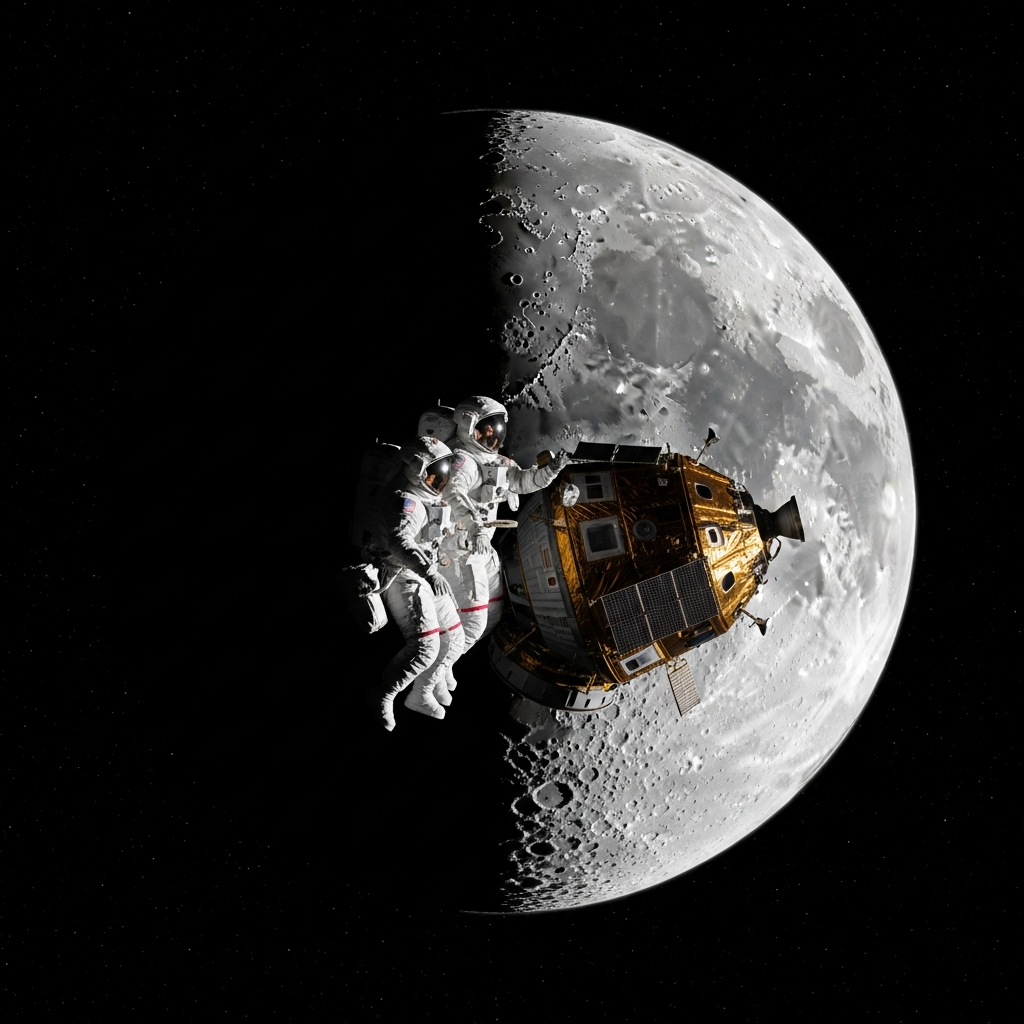
The Artemis 2 mission marks a significant milestone in NASA’s broader Artemis program, which aims to return humans to the Moon for sustained presence and, ultimately, to prepare for crewed missions to Mars. Unlike the Apollo missions which landed on the lunar surface, Artemis 2 is a crucial 10-day crewed flight test. Its primary objective is to evaluate the Orion spacecraft and its deep-space exploration systems under real operational conditions with humans aboard. This mission will not involve a landing on the lunar surface but rather a complex “free-return” trajectory, carrying the astronauts more than 5,000 nautical miles (approximately 9,260 km) beyond the Moon before looping back to Earth. This daring path will take the crew farther from Earth than any human has traveled previously.
The foundation for this integrated system flight was laid by Artemis 1, an uncrewed test flight that successfully sent the Orion spacecraft into lunar orbit and back in November 2022. Artemis 2 builds directly upon this success, acting as an indispensable precursor to Artemis 3, which aims for a historic human landing on the lunar South Pole.
The Historic Crew: Leading Humanity Back to the Moon
The four astronauts selected for the groundbreaking Artemis 2 mission represent a blend of seasoned experience and pioneering spirit. This international crew comprises three NASA astronauts and one from the Canadian Space Agency (CSA):
Reid Wiseman (Commander): A veteran astronaut, Wiseman will lead this complex mission, drawing on his extensive experience in space.
Victor Glover (Pilot): Glover, who has previously flown to the International Space Station (ISS), will serve as the pilot, responsible for critical flight operations.
Christina Koch (Mission Specialist): Known for her record-breaking spacewalks, Koch brings invaluable expertise as a mission specialist.
Jeremy Hansen (Mission Specialist – CSA): Representing Canada, Hansen’s inclusion highlights the international collaboration integral to modern space exploration.
These individuals will launch aboard NASA’s powerful Space Launch System (SLS) rocket from the iconic Kennedy Space Center in Florida. Their journey will begin with an initial orbit around Earth, a vital phase for meticulously checking life support systems and other critical functionalities before Orion embarks on its lunar journey. This meticulous preparation underscores the mission’s focus on astronaut safety and operational readiness.
Navigating Delays: Ensuring Mission Success and Astronaut Safety
While initially targeted for an earlier launch, the Artemis 2 mission has experienced significant postponements, now rescheduled for early 2026. This decision reflects NASA’s unwavering commitment to safety and the rigorous testing required for human spaceflight. The earliest possible liftoff is slated for February 5, 2026, with subsequent five-day launch windows in March and April 2026, extending to April 26, 2026.
One of the primary factors contributing to the 2026 rescheduling stems from issues encountered during the uncrewed Artemis 1 mission. Engineers observed that Orion’s heat shield experienced more intense burning than anticipated during its re-entry into Earth’s atmosphere. To guarantee astronaut safety for Artemis 2, detailed analyses and trajectory adjustments have been implemented to avoid conditions that caused the higher heat shield stress.
Addressing Technical Hurdles and Wet Dress Rehearsal Leaks
Beyond the Artemis 1 heat shield concerns, earlier delays also highlighted the complex technical challenges inherent in such a mission. The Artemis 2 mission was initially slated for launch in February 2024 but was pushed to March. This initial postponement was primarily due to the detection of a significant liquid hydrogen leak during a critical two-day fuelling test, known as a wet dress rehearsal, conducted at the Kennedy Space Center. The leak was identified at the interface of the tail service mast umbilical, a point that had shown high concentrations of liquid hydrogen previously. Engineers spent hours attempting to resolve the leak without success, eventually leading to a halt in the countdown.
In addition to the hydrogen leak, a valve associated with the Orion crew module hatch pressurization also required re-torquing after a recent replacement, further complicating closeout operations. These incidents underscore the immense complexity of the Space Launch System and Orion spacecraft. NASA officials confirmed that modifications to the launchpad and fuelling process have since been implemented to mitigate the risk of such hydrogen leaks, which were also observed during Artemis 1 operations. Lakiesha Hawkins, NASA’s acting deputy associate administrator for exploration systems development, emphasized that while NASA aims for the earliest window, crew safety requirements are paramount and could potentially extend the timeline.
The Road Ahead: Artemis III and Beyond
Artemis 2 is not just a mission in itself; it’s a vital stepping stone towards grander ambitions. Its successful completion will pave the way for Artemis 3, currently scheduled for launch in 2027. Artemis 3 aims to achieve the historic milestone of landing humans on the lunar South Pole, a region believed to harbor water ice in permanently shadowed craters, offering crucial resources for future sustained lunar presence. This long-term goal involves establishing a continuous human presence on the Moon.
The broader Artemis campaign is strategically designed for a combination of scientific discovery, economic benefits, and to lay essential groundwork for future crewed missions to Mars. By returning humans to the Moon, NASA aims to develop and test technologies and procedures that will be vital for extended journeys into deep space.
Reflecting on the progress, it’s worth noting the historical context. The last time humans landed on the Moon was during the Apollo 17 mission in December 1972, over 50 years ago. The iconic Apollo 11 mission, launched on July 16, 1969, saw Neil Armstrong and Buzz Aldrin make their “one small step” onto the lunar surface on July 20, 1969, collecting samples and deploying scientific instruments before their safe return to Earth on July 24, 1969. Artemis represents a new generation of lunar exploration, leveraging advanced technology and international partnerships.
While Raja Chari, an accomplished American astronaut with a background in military service and aerospace engineering, was named one of 18 astronauts chosen for the Artemis program in 2020, it’s important to clarify that he is part of the broader Artemis astronaut corps rather than a member of the specific Artemis 2 crew. His previous spaceflight experience as commander of the SpaceX Crew-3 Dragon mission to the ISS and subsequent spacewalks highlight the caliber of individuals contributing to NASA’s deep-space ambitions.
Hardware for the Artemis 2 mission is rapidly nearing completion. The Boeing-built SLS rocket is already housed in NASA’s Kennedy Space Center Vehicle Assembly Building, with its Northrop Grumman solid rocket boosters attached. The Orion capsule and its adapter are expected to be finished within weeks, with NASA planning to unveil the fully assembled rocket in the near future. Officials underscore that despite being crewed, Artemis 2 remains a critical test flight. Its success hinges not only on the safe return of the crew but also on the successful execution of the lunar flyby and the collection of invaluable data for future missions.
Frequently Asked Questions
When is NASA’s Artemis 2 mission now scheduled to launch, and what caused the delays?
NASA’s Artemis 2 mission is currently scheduled for launch in early 2026, with potential windows from February 5 to April 26, 2026. The primary reasons for this significant postponement from its original 2024 target include critical issues identified during the uncrewed Artemis 1 mission, specifically more intense burning than anticipated on the Orion spacecraft’s heat shield during re-entry. Additionally, earlier delays in 2024 were attributed to a liquid hydrogen leak detected during a crucial wet dress rehearsal (fuelling test) at the Kennedy Space Center, alongside issues with an Orion crew module hatch pressurization valve. These delays are part of NASA’s stringent safety protocols.
Who are the four astronauts assigned to the Artemis 2 crew?
The four astronauts assigned to the historic Artemis 2 mission are Commander Reid Wiseman, Pilot Victor Glover, and Mission Specialist Christina Koch, all from NASA. They are joined by Mission Specialist Jeremy Hansen, representing the Canadian Space Agency (CSA). This international crew will be the first humans to journey to the vicinity of the Moon in over 50 years, undertaking a vital flight test of the Orion spacecraft and Space Launch System (SLS) rocket.
What is the primary objective of the Artemis 2 mission, and how does it differ from a lunar landing?
The primary objective of the Artemis 2 mission is to conduct a crewed flight test of the Orion spacecraft and its deep-space exploration systems in a real operational environment. This 10-day mission will perform a lunar flyby using a “free-return” trajectory, taking the astronauts thousands of miles beyond the Moon before returning to Earth. Crucially, Artemis 2 will not involve a landing on the lunar surface. This differentiates it from the historic Apollo missions and the future Artemis 3 mission, which aims to land humans on the Moon’s South Pole. Artemis 2 is a foundational step, validating systems and procedures necessary for subsequent lunar landings and deeper space exploration.
Conclusion: A Giant Leap Towards Our Cosmic Future
The Artemis 2 mission represents far more than a simple test flight; it is a profound testament to humanity’s enduring drive to explore. Despite technical challenges and necessary delays, the meticulous preparation and focus on astronaut safety underscore the gravity of this endeavor. As the crew of Reid Wiseman, Victor Glover, Christina Koch, and Jeremy Hansen prepare for their monumental journey in early 2026, they will carry the hopes and aspirations of a world eager to witness a new chapter in lunar exploration. Their mission will provide invaluable data, refine crucial technologies, and lay essential groundwork for Artemis 3’s historic Moon landing and ultimately, the audacious goal of sending humans to Mars. The countdown to a new era of space discovery continues, promising a future where humanity’s presence extends far beyond Earth’s orbit.