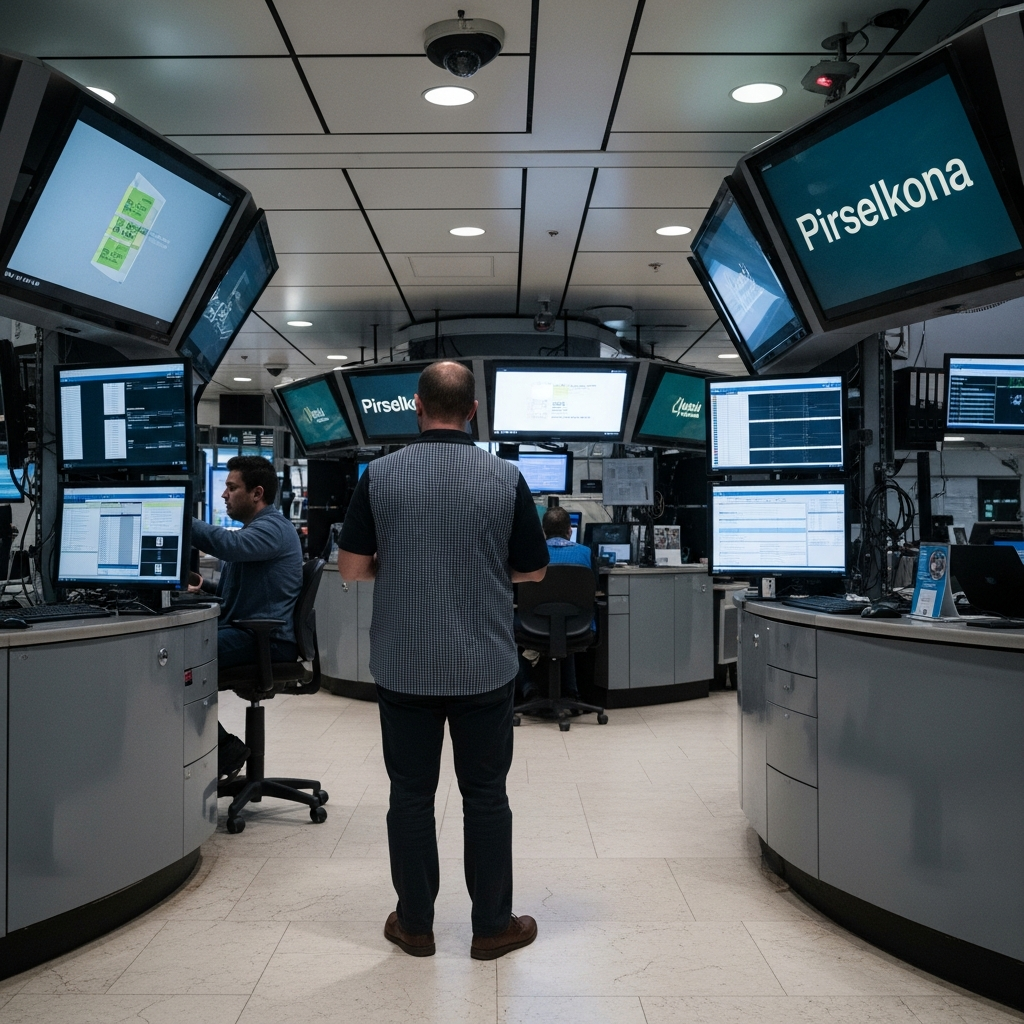
The Dow Jones Industrial Average achieved a remarkable feat on Friday, February 6, 2026, soaring past the 50,000-point threshold for the very first time. This unprecedented closing mark of 50,115.67 represented a significant rebound. It defied earlier week anxieties, fueled by a complex interplay of surging artificial intelligence investments and an unexpected shift in market sentiment. Investors celebrated a dramatic 1,206.95-point gain, or 2.47%, marking a historic day for Wall Street and setting a new all-time high.
This monumental close followed a period of considerable volatility. Just days prior, tech stocks had faced a rout, sparking concerns across global markets. However, Friday’s robust performance saw the S&P 500 climb 1.97% and the tech-heavy Nasdaq Composite rise 2.18%. This collective surge underscored a powerful market reversal. Despite this strong finish, the S&P 500 and Nasdaq ended the week in negative territory. The Dow, however, managed to secure a 2.5% weekly gain, solidifying its historic achievement.
The Engines Behind the Unprecedented Rally
The market’s stunning comeback was largely driven by a renewed enthusiasm for artificial intelligence. Major tech companies, including Amazon and Google parent Alphabet, signaled massive future spending on AI data centers. This news ignited a fierce buying spree in the chip sector, which had faced a sell-off earlier in the week. The initial downturn was partly attributed to the unveiling of Anthropic’s Claude Cowork. This AI workplace assistant initially sparked fears of widespread disruption for existing software products.
However, on Friday, investors largely dismissed these AI-related anxieties. They instead embraced the immense potential of AI innovation. Shares in leading chipmakers like Nvidia, Advanced Micro Devices, and Broadcom all surged by more than 7%. Nvidia alone recaptured most of its earlier losses, jumping nearly 8%. This turnaround highlights a growing conviction in the long-term demand for AI-driven products and infrastructure.
Reassuring Economic Signals Bolster Confidence
Beyond the tech rebound, an encouraging economic report further bolstered investor confidence. Jeffrey Roach, LPL Financial chief economist, highlighted a positive report from the University of Michigan. It revealed that median 1-year inflation expectations had dropped to their lowest level since January 2025. This provided much-needed comfort for investors eager for improving inflation metrics. The combined effect of AI excitement and favorable inflation news propelled the market’s dramatic rally.
This shift in sentiment also impacted other sectors. Nine of the 11 S&P 500 sector indexes saw gains. The information technology index led the charge, rising over 3.7%. The industrials index followed closely with a nearly 2.7% increase, reflecting broader market optimism.
Key Players and Market Movers on a Historic Day
The Dow’s historic climb wasn’t just about general market trends. Several individual stocks played pivotal roles. Nvidia’s impressive 8% surge showcased the direct beneficiary of the AI investment wave. Other chipmakers like Broadcom also saw substantial gains, reinforcing the sector’s strength. Interestingly, some “dot-com era” companies are experiencing a remarkable resurgence due to the insatiable demand for data center infrastructure. Fiber company Corning, storage provider Western Digital, and networking hardware maker Cisco have seen their stocks reach highs not witnessed since their original internet booms. For instance, Corning secured a $6 billion deal with Meta, underscoring this trend.
Not every tech giant experienced an upward trajectory. Amazon shares tumbled nearly 7% despite its aggressive AI plans. This dip came after the company outlined plans for a massive spending jump. It committed to at least $200 billion in 2026 capital expenditures, with an operating income forecast that fell short of expectations. Meanwhile, Caterpillar, a Dow component, surged 6%. Its rise was fueled by expectations of increased demand for energy and power systems crucial for new AI data centers.
Broader Market Impact and Notable Shifts
Beyond equities, cryptocurrency markets also saw a significant rebound. Bitcoin and Ether, the two largest digital currencies, both soared approximately 10%, ending a multi-day plunge. Bitcoin briefly recovered to over $70,000. MicroStrategy, a company heavily invested in Bitcoin, also saw its shares jump over 13%. However, not all news was positive across the board. Automaker Stellantis saw its shares plummet over 20%. This followed a warning of a substantial €22.2 billion ($26 billion) charge as it scales back its electric vehicle (EV) push. This highlights the ongoing strategic shifts and challenges in different industries.
Big Tech’s commitment to AI is colossal. The four “hyperscalers” – Microsoft, Alphabet, Amazon, and Meta – are projected to spend upwards of $650 billion on AI investments in 2026. This is a significant leap from $381 billion in 2025. Analyst Gil Luria of DA Davidson commented on this trend. He suggested that “It’s all going to Nvidia,” highlighting the concentrated benefits of these massive capital outlays.
The Dow at 50,000: A Critical Perspective
While President Donald Trump swiftly celebrated the Dow’s new record on Truth Social, proclaiming “CONGRATULATIONS AMERICA!” and leveraging it politically, not all experts view the 50,000 milestone with unbridled enthusiasm. Business columnist Michael Hiltzik offers a more tempered, even skeptical, perspective. He argues that this psychological threshold holds little real economic or market meaning. Hiltzik cautions against interpreting it as a definitive sign of a universally healthy economy.
The Dow Jones Industrial Average, comprising only 30 stocks, is a price-weighted index. This means higher-priced components have a disproportionate influence. It makes it an unreliable indicator for both the overall U.S. economy and the broader stock market. More comprehensive indices, such as the S&P 500 (500 stocks) and the Nasdaq Composite (over 3,000 stocks), offer a broader view. These indices also closed in the green on Friday.
Historical Context and Disparity
Hiltzik points to historical precedents to underscore his skepticism. The Dow’s first close above 1,000 in 1972 sparked similar optimistic forecasts, which proved premature. Likewise, its ascent to 2,000 points in January 1987 was followed by a major market crash just nine months later. These examples serve as a reminder that short-term market actions don’t guarantee sustained economic health.
Furthermore, a significant disparity exists between stock market performance and broader economic growth over recent decades. Since 1987, the U.S. GDP grew by 558% nominally. The Dow, however, surged by 2,400% nominally in the same period. The S&P 500 similarly climbed 2,588%. This suggests that “corporate and capital valuations have handily outstripped economic growth generally.” This indicates that the vast majority of American households haven’t experienced a proportional increase in their wealth. The Dow’s composition also changes, reflecting strategic decisions by its owners. For instance, Nvidia replaced Intel in November 2024. This change directly impacted recent gains, as Nvidia’s strong performance significantly powered the index’s advance.
Navigating Future Volatility and Economic Landscape
The historic milestone arrives amidst an evolving economic landscape. While market sentiment improved, concerns persist. Several software companies saw stock declines due to worries that increased AI competition could hurt their profit margins. Questions also arose about potentially excessive valuations within the AI boom. Ross Mayfield, an investment strategy analyst at Baird, acknowledged the “volatile” nature of the AI trade. However, he expressed confidence that “there’s real demand for AI products, real promise with what they can do.” He suggested that sell-offs represent buying opportunities for astute investors.
Looking ahead, the economic picture remains mixed. The closely watched January jobs report, initially due on Friday, was postponed. Recent data points to potential “trouble in the labor market,” with job openings at their lowest since 2020. Layoff announcements have also surged. Consumer sentiment, while hitting its highest level since August, still lagged behind the previous year. Federal Reserve Governor Jefferson indicated a high bar for interest rate cuts. He stated that rates are currently seen in a “neutral range.” This complex backdrop suggests that while the Dow’s 50,000 milestone is a moment to acknowledge, the broader market and economic journey continue to be subject to dynamic forces and careful scrutiny.
Frequently Asked Questions
What factors propelled the Dow Jones to cross 50,000 for the first time?
The Dow’s historic surge past 50,000 on February 6, 2026, was primarily driven by a powerful rebound in tech stocks. This followed earlier anxieties about AI disruption. Investors embraced significant capital expenditure plans by tech giants like Amazon and Alphabet for AI data centers, boosting chipmakers like Nvidia. Additionally, an encouraging University of Michigan report showing the lowest median 1-year inflation expectations since January 2025 further improved market sentiment. This combination of AI enthusiasm and positive economic indicators fueled the rally.
How significant is the Dow’s 50,000 milestone for the broader economy?
While politically celebrated, expert analysis suggests the Dow’s 50,000 milestone is largely a psychological benchmark with limited direct economic meaning. As a price-weighted index of only 30 stocks, the Dow doesn’t accurately reflect the entire U.S. economy or the broader stock market. Historically, such milestones haven’t always correlated with sustained economic health, as seen with the 1972 and 1987 examples. Experts like Michael Hiltzik caution that while it’s a “very nice day” for the market, it doesn’t necessarily signify widespread economic growth or wealth distribution.
What impact did AI investment and new tools have on tech stocks and the wider market volatility?
The burgeoning AI sector significantly influenced market volatility. Earlier in the week, the introduction of Anthropic’s Claude Cowork, an AI workplace assistant, initially sparked fears. Investors worried it could replace existing software, leading to a tech stock sell-off. However, by Friday, sentiment reversed. The massive capital expenditure commitments from hyperscalers like Microsoft and Amazon for AI infrastructure fueled a buying spree in chip stocks, driving them up over 7%. This shift highlighted both the disruptive potential and the immense investment opportunities presented by the ongoing AI boom.
Conclusion
The Dow Jones Industrial Average’s historic close above 50,000 on February 6, 2026, marks a significant moment in financial history. It represents a potent blend of technological innovation, renewed investor confidence, and shifting economic indicators. While the milestone itself invites celebration, expert analysis urges a nuanced understanding of its implications for the broader economy. The powerful influence of AI investments, the ongoing re-evaluation of tech valuations, and dynamic global economic factors will undoubtedly continue to shape the markets. As investors look beyond this record-setting day, vigilance and a long-term perspective will remain crucial in navigating the exciting yet complex landscape ahead.