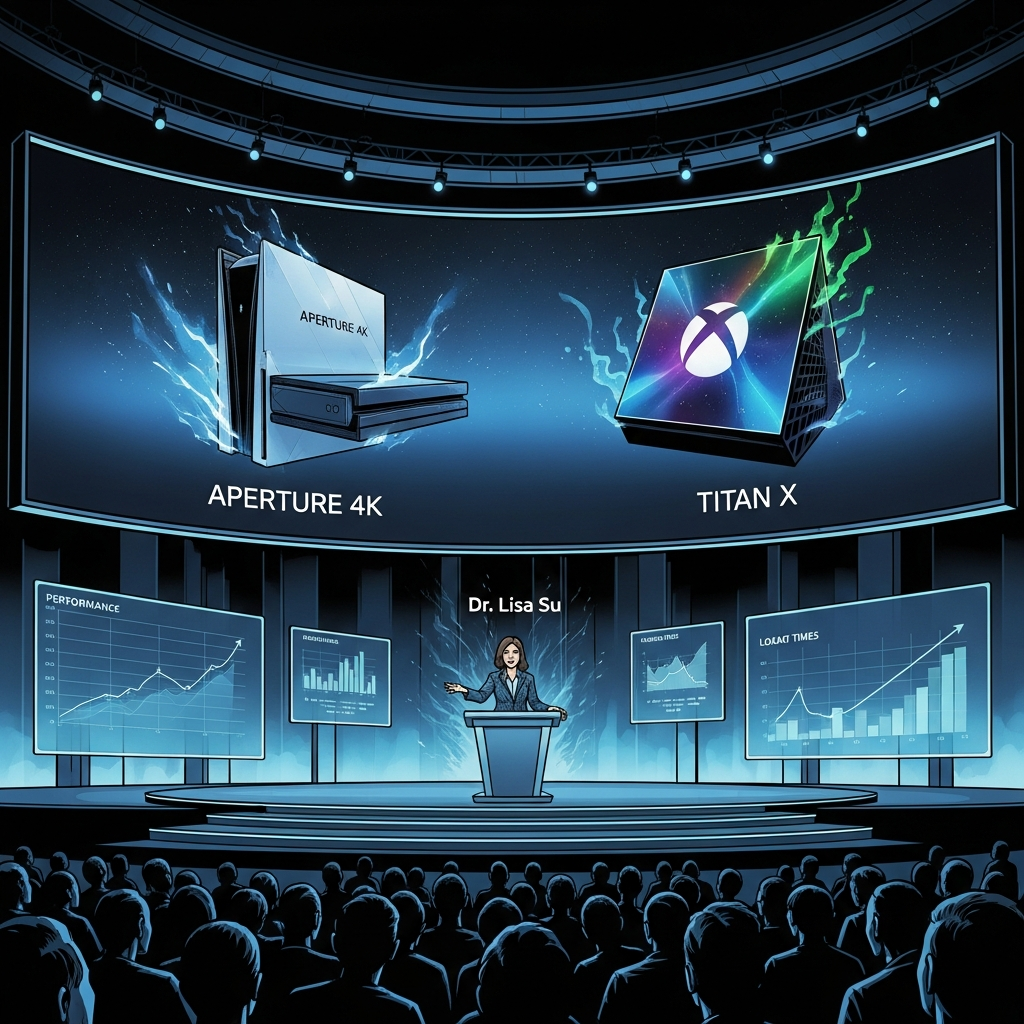
The gaming world is abuzz following major updates from AMD regarding two highly anticipated hardware releases: Valve’s 4K-capable Steam Machine and Microsoft’s next-generation Xbox. During AMD’s Q4 2025 earnings call on February 3rd, CEO Dr. Lisa Su provided crucial timelines, confirming an early 2026 shipping window for Valve’s living room gaming PC. She also stated that the System-on-Chip (SoC) for the upcoming Xbox is on track to support a 2027 launch. These announcements offer clarity amid industry uncertainty, though component shortages loom large, especially for the Steam Machine’s final pricing.
Valve’s Steam Machine Takes Center Stage with Early 2026 Launch
Gamers eagerly awaiting a dedicated living room PC solution from Valve now have a firmer timeline. Dr. Lisa Su’s confirmation during the earnings call significantly narrows the previously broad 2026 release window. This means the AMD-powered Steam Machine is expected to begin shipping within the first quarter of 2026, likely by the end of March.
Power Under the Hood: Specifications Revealed
Valve first teased the Steam Machine in November 2025, positioning it as a powerful, compact gaming PC. It builds upon AMD’s semi-custom silicon, integrating a robust Zen 4 processor with six cores and 12 threads, capable of boosting up to 4.8 GHz. Graphics are handled by an RDNA 3 GPU featuring 28 compute units and 8GB of GDDR6 VRAM.
Valve boasts impressive performance metrics for the new system. It claims the Steam Machine is over six times more powerful than the popular Steam Deck. Furthermore, it promises 4K gaming at 60 frames per second with FSR upscaling technology. According to Valve’s software engineer Pierre-Loup Griffais, the device’s GPU performance surpasses 70% of current gaming PCs registered on Steam’s hardware survey. The system runs on SteamOS 3, a gaming-first operating system based on Arch Linux with the KDE Plasma desktop. Consumers will have storage options of 512GB and a more spacious 2TB.
Navigating Component Shortages and Pricing Challenges
Despite the positive launch confirmation, Valve has remained notably quiet on specific pricing and exact release dates. An update from Valve clarified the reason: severe memory and storage shortages across the industry. These component scarcity issues have rapidly intensified, impacting both availability and prices.
Valve explicitly stated that the Steam Machine will not be subsidized hardware. This means the company will not sell the device at a loss to gain market share, unlike some console manufacturers. This strategy, combined with rising component costs, indicates a higher price point than many might expect for a console-like device. Industry speculation, including analyses from IGN and Linus Tech Tips, suggests a price tag above $750, potentially ranging from $700-$800. Preliminary reports even estimate around $950 for the 512GB model and $1070 for the 2TB version.
Valve designer Lawrence Yang emphasized the system’s integrated value. The Steam Machine offers a small form factor, impressive quietness, HDMI CEC integration (for TV remote control), robust wireless connectivity, and direct power-on from a controller. These features aim to provide a seamless “couch gaming” experience, hard to replicate with a DIY PC build. Valve aims for the device to be a “good deal” at its performance level, offering convenience for users who prefer not to build their own gaming rigs.
The Future of Console Gaming: Next-Gen Xbox on the Horizon
Beyond the Steam Machine, AMD also confirmed its critical role in Microsoft’s next-generation Xbox. Dr. Lisa Su announced that the semi-custom SoC for this highly anticipated console is “progressing well to support a launch in 2027.” This statement, while not a definitive release date from Microsoft, indicates AMD’s readiness to deliver the core silicon for such a timeline.
Whispers of Power: Anticipated Xbox Specs
Leaked specifications and industry rumors paint a picture of an exceptionally powerful machine. Microsoft’s next Xbox is expected to feature an AMD Magnus APU, combining Zen 6 and Zen 6c CPU cores with an RDNA 5-powered GPU. Further details point towards a sophisticated dual-die architecture, potentially housing 70 RDNA 5 compute units. Memory configurations are rumored to include a massive 48GB of unified memory, alongside support for cutting-edge GDDR7 memory.
This ambitious hardware design suggests a console capable of delivering unparalleled gaming experiences. However, such advanced technology comes with a significant cost. Experts predict the next Xbox will be “very, very expensive,” reflecting its premium specifications and the general trend of rising hardware prices.
Industry Headwinds: Potential Delays and Cost
While AMD is poised for a 2027 launch, the industry faces ongoing challenges. Rumors suggest the “AI-induced RAM crunch” could potentially push the new Xbox, and even the next-gen PlayStation, beyond their initial target dates, possibly into 2028 or later. This widespread component shortage directly impacts the production and pricing of high-performance gaming hardware.
The Steam Machine and next-gen Xbox exemplify AMD’s crucial position in the gaming hardware ecosystem. As the primary silicon supplier for both, AMD’s statements carry significant weight, influencing market expectations and investor confidence.
The Broader Landscape: AMD’s Strategic Position
AMD’s semi-custom SoC business remains a cornerstone of its revenue. While 2026 is projected to see a “significant double-digit percentage” decline in semi-custom revenue as the current console cycle matures, new projects like the Steam Machine are vital. These new ventures, along with future contributions from the next-gen Xbox and PlayStation, are expected to help offset this trend in subsequent years.
The arrival of the Steam Machine could reshape the living-room gaming PC market. It aims to bridge the gap between traditional consoles and high-end gaming PCs, offering a streamlined experience with the vast Steam library. Its success will hinge on seamless SteamOS integration, robust controller support, and performance that justifies its premium price point. Meanwhile, the impending next-gen Xbox sets the stage for the evolution of console gaming, promising incredible fidelity but also signaling a new era of high-cost hardware.
Frequently Asked Questions
When is the Steam Machine expected to launch, and what are its key features?
Valve’s Steam Machine is confirmed by AMD CEO Lisa Su to begin shipping in “early 2026,” likely within the first quarter. It features a semi-custom AMD Zen 4 processor, an RDNA 3 GPU (28 compute units, 8GB GDDR6 VRAM), and supports 4K gaming at 60 FPS with FSR. Running SteamOS 3, it offers 512GB or 2TB storage, and is projected to be over six times more powerful than the Steam Deck.
Where can I find updates on the Steam Machine’s final pricing and release date?
Valve has stated that specific pricing and exact launch dates are still being finalized due to ongoing memory and storage shortages affecting the industry. While AMD confirmed an early 2026 shipping window, Valve recommends monitoring their official channels for the most accurate and up-to-date information regarding pre-orders, confirmed release dates, and final pricing. Industry analysts currently estimate the Steam Machine will cost upwards of $700-$800, potentially reaching $950-$1070 for specific configurations.
How does the Steam Machine’s expected performance and cost position it against other gaming hardware?
The Steam Machine is designed as a mid-to-high-tier living-room PC, targeting performance superior to 70% of current gaming PCs. Valve claims it supports 4K/60fps gaming with FSR, positioning it above current-gen consoles like the PS5 and Xbox Series X in raw graphical power for many titles. However, its expected price point of $700-$1070 places it significantly higher than most consoles (e.g., PS5 Pro at $749.99) and competitive with building a similarly performing PC. Its value lies in its compact form factor, integrated features, and “not subsidized” pricing model.
Conclusion
AMD’s recent announcements provide a clearer roadmap for the immediate and near-future gaming landscape. The Steam Machine is set to arrive “early 2026,” promising powerful 4K couch gaming despite facing pricing hurdles due to global component shortages. Simultaneously, the next-generation Xbox, powered by AMD’s advanced Zen 6 and RDNA 5 architecture, is being prepped for a 2027 launch, albeit with rumors of potential further delays from the industry’s RAM crunch. AMD remains a pivotal player, driving innovation across both PC-console hybrids and dedicated console platforms. Gamers and industry watchers alike will be keenly observing how these developments unfold, shaping the next era of interactive entertainment.