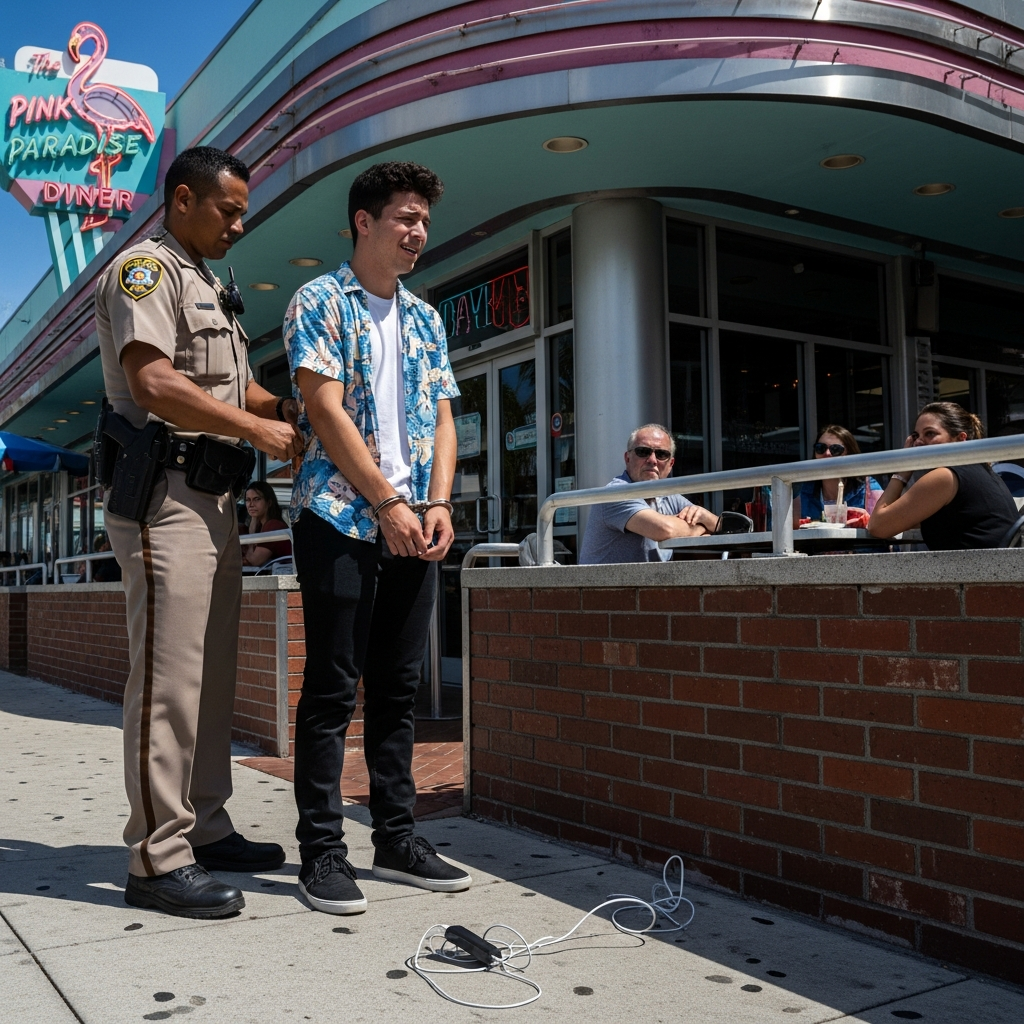
In an incident that blurs the line between alleged fraud and an everyday oversight, a 23-year-old man found himself in handcuffs after purportedly walking out on a bar tab at a Florida restaurant, only to return the next day for a forgotten phone charger. This unusual turn of events highlights the unexpected consequences of an unpaid bill and the legal complexities surrounding “intent to defraud.”
The Bizarre Case of the Forgotten Charger
The saga began on a Sunday night at Largo Whiskey Wings in Largo, Florida. Benjamin Rakel, 23, reportedly ordered a meal and drinks, accumulating a bar tab totaling $64.18. When confronted about the outstanding amount, Rakel allegedly informed restaurant employees he lacked the funds to settle the bill. As a supposed measure of good faith, he offered debit and credit cards, which, according to a subsequent affidavit, were found to have no available balance. Rakel then promised staff he would return the following day to cover his debt.
However, Rakel’s return to the establishment was not for the promised payment. Instead, late Monday night, he reappeared at Largo Whiskey Wings with a singular objective: to retrieve a forgotten phone charger he had left behind during his initial visit. This peculiar motivation for returning to the scene of the alleged crime quickly drew the attention of law enforcement. Largo police were contacted, and Rakel was arrested around 12:20 a.m. on Tuesday.
Charges and Legal Proceedings
Following his arrest, Rakel was read his Miranda rights. He reportedly told officers he possessed a Cash App debit card, which he had not offered to the restaurant employees during the initial payment dispute. The affidavit, however, did not clarify whether this Cash App card contained sufficient funds to cover the food and alcohol he had consumed.
Benjamin Rakel has since been charged with obtaining food with intent to defraud, a serious accusation that centers on the allegation that he ordered and consumed food and drinks without a genuine intention to pay. He remains incarcerated in Pinellas County Jail, awaiting further legal proceedings. This case serves as a stark reminder that even seemingly minor financial disputes can escalate into criminal charges, particularly when “intent” is called into question.
Understanding “Intent to Defraud” in Hospitality
The charge of “obtaining food with intent to defraud” is a specific legal accusation that extends beyond simply failing to pay a bill. It implies that the individual knowingly consumed goods or services with the deliberate intention of not compensating the establishment. This distinguishes it from an honest mistake or a genuine inability to pay where an immediate effort to rectify the situation is made.
What Constitutes Intent?
Proving “intent to defraud” often involves examining several factors:
Prior knowledge: Did the individual know they lacked the funds before ordering?
False promises: Were promises made to pay later without genuine intent to follow through?
Evasion: Did the individual attempt to leave without paying?
Lack of alternative payment: Were all available payment methods exhausted or withheld?
In Rakel’s case, offering cards with no funds and then returning for a personal item rather than to settle the debt could be interpreted as evidence supporting the “intent to defraud” charge.
Beyond the Tab: A Look at Other Incidents at Bars
While Rakel’s situation centers on alleged fraud, bars and restaurants can unfortunately be the backdrop for a wide spectrum of incidents, from simple disputes to serious violent crimes. These locations, often associated with social gatherings and alcohol consumption, sometimes become flashpoints for conflict.
Violent Altercations: The Greeley Stabbing
In a much graver incident highlighting the potential for violence near bars, Jose Mejia, 37, was arrested in Greeley following the stabbing of a stranger. Early one Sunday morning, a victim walking home from downtown bars noticed Mejia following him aggressively. A physical scuffle ensued, during which the victim disarmed Mejia of a knife. The victim later discovered he had been stabbed in the chest and leg. Mejia, found three blocks away with blood on his hands and clothing, was charged with felony menacing and first-degree assault. His extensive criminal history, including previous convictions for attempted manslaughter and illegal discharge of a firearm, paints a picture of recurrent violent behavior. This incident stands in stark contrast to Rakel’s alleged fraud, demonstrating the perilous situations that can unexpectedly arise around nightlife venues.
Tragic Outcomes: The Bessemer Bar Shooting
Even more tragically, a murder trial is underway for David Martinez, 63, in connection with a fatal shooting at Veterans Tavern in Bessemer. Elaine Masias was fatally shot in the chest, and another individual was injured. According to police affidavits, shots were fired from an alley over a property wall. Surveillance footage crucially captured Martinez’s truck approaching and leaving the scene. A potential motive emerged when investigators learned Martinez’s ex-girlfriend, who had recently ended a two-and-a-half-year relationship with him, was a patron at the bar that night. A .45 caliber handgun, consistent with shell casings found at the scene, was recovered from Martinez’s vehicle, and he reportedly admitted to being the sole possessor of the truck. This case underscores the devastating potential for personal disputes to erupt into fatal violence in and around public establishments.
High-Profile Scuffles: Mark Sanchez’s Bar Fight
Even public figures are not immune to altercations near bars. Former NFL quarterback and Fox Sports analyst Mark Sanchez, 38, faced felony battery charges after being stabbed multiple times following a drunken fight in an alleyway near Loughmiller’s Pub & Eatery in Indianapolis. Sanchez allegedly initiated the attack on a 69-year-old grease truck driver over a blocked loading dock. The driver, fearing for his life, resorted to pepper spray and then a knife in self-defense, causing significant injuries to Sanchez. Surveillance footage captured a bloody Sanchez staggering away from the scene. The incident, which left both individuals injured, emphasizes that even seemingly minor disagreements, exacerbated by alcohol, can quickly escalate into serious physical confrontations with severe legal consequences.
Tips for Patrons and Establishments
Navigating the environment of bars and restaurants responsibly is crucial for both customers and business owners.
For Patrons:
Monitor Spending: Keep track of your bar tab to avoid surprises.
Ensure Payment Means: Always confirm you have sufficient funds or working payment methods before ordering.
Communicate Issues: If an honest mistake occurs and you cannot pay, immediately inform staff and discuss solutions. Do not attempt to leave without resolution.
Responsible Consumption: Moderate alcohol intake to maintain good judgment and reduce the likelihood of regrettable decisions or altercations.
Situational Awareness: Be aware of your surroundings and avoid engaging with aggressive individuals.
For Establishments:
Clear Policies: Implement clear policies for handling unpaid tabs, including when to involve law enforcement.
Payment Verification: Consider measures like pre-authorization for large tabs or holding a payment method.
Staff Training: Train staff to de-escalate conflicts and identify patrons who may be over-served or intent on defrauding.
- Security Measures: Utilize surveillance cameras and adequate staffing, especially during peak hours, to deter criminal activity.
- www.yahoo.com
- www.greeleytribune.com
- www.chieftain.com
- www.indystar.com
- nypost.com
Frequently Asked Questions
What exactly is “obtaining food with intent to defraud”?
“Obtaining food with intent to defraud” is a criminal charge alleging that an individual consumed food or beverages from an establishment with the deliberate intention of not paying for them. This goes beyond simply forgetting a wallet or a genuine inability to pay. Evidence of intent often includes providing invalid payment methods, making false promises to return and pay, or actively attempting to leave without settling the bill, as highlighted in the Benjamin Rakel case.
What should someone do if they realize they can’t pay their bar tab?
If you genuinely realize you cannot pay your bar tab, the best course of action is to immediately and honestly communicate the situation to the establishment’s management or staff. Do not attempt to leave discreetly or make false promises. Discuss options such as leaving a form of collateral (if acceptable), arranging to pay later with clear terms, or making arrangements to have a friend or family member bring payment. Attempting to resolve the issue transparently can often prevent legal trouble.
How common are serious incidents like stabbings or shootings near bars?
While not an everyday occurrence for most establishments, serious incidents like stabbings or shootings near bars are unfortunately reported across various locations. As seen in the Greeley stabbing and Bessemer bar shooting cases, alcohol, existing personal disputes, or random acts of violence can escalate quickly in these environments. These incidents are less common than petty fraud but represent the most severe end of the spectrum of risks associated with nightlife venues, prompting increased calls for security and responsible management.
Conclusion
The peculiar case of Benjamin Rakel and his forgotten phone charger after allegedly skipping a bar tab serves as a fascinating, if unfortunate, example of how seemingly minor incidents can lead to criminal charges. While his alleged actions represent a specific type of fraud, the broader context of bar-related incidents reveals a range of challenges, from disputes over bills to serious violent crimes like stabbings and shootings. Understanding the legal implications of “intent to defraud” and prioritizing responsible behavior, both as patrons and establishment owners, remains paramount for fostering safer and more enjoyable environments for everyone.