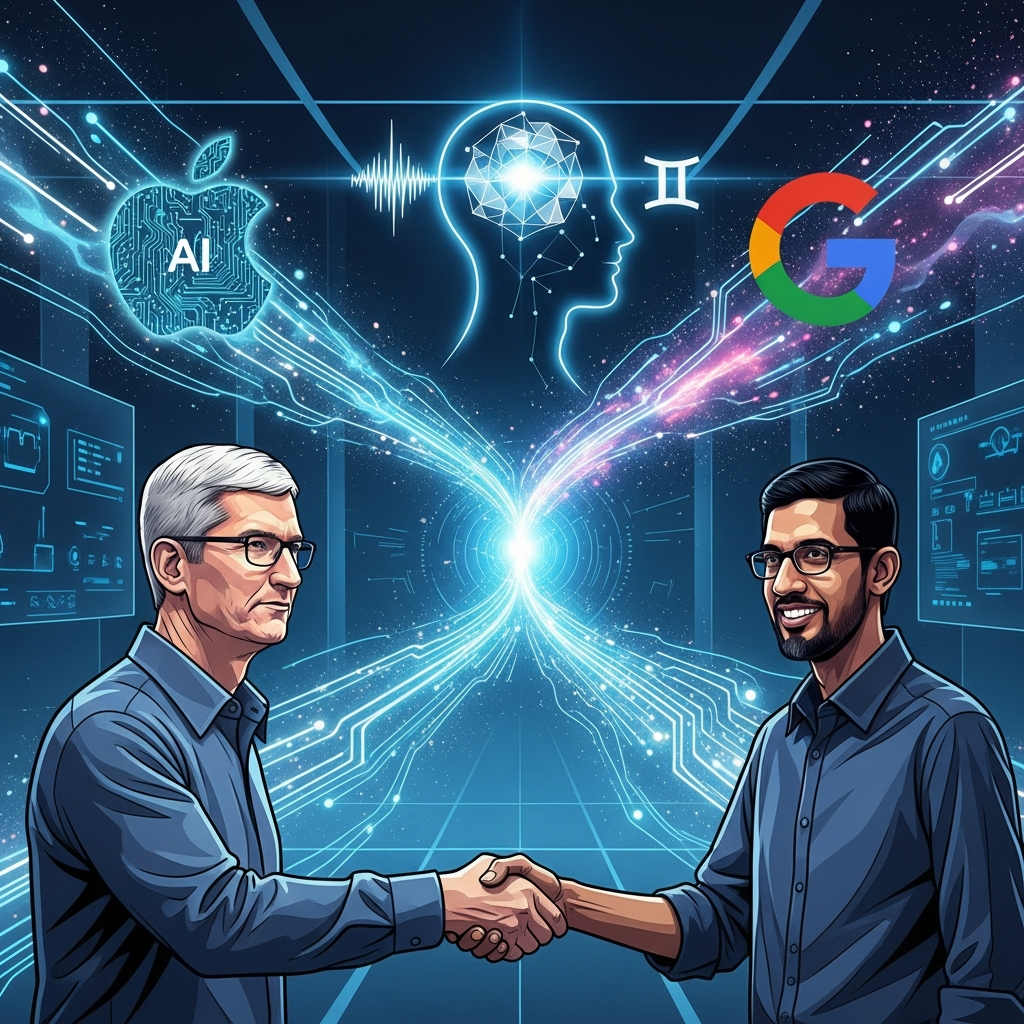
Apple is on the cusp of a revolutionary transformation for its ubiquitous digital assistant, Siri. Forget the command-and-response interactions of the past; later this year, Siri is set to evolve into a sophisticated artificial intelligence (AI) chatbot. This monumental shift, largely fueled by a strategic partnership with Google’s formidable Gemini AI, promises to redefine how users interact with their iPhones, iPads, and Macs. Get ready for a deeply integrated, highly intelligent assistant capable of understanding context, generating content, and engaging in natural, back-and-forth conversations. This isn’t just an update; it’s Apple’s bold statement in the rapidly accelerating generative AI race, poised to unlock unprecedented user experiences across its entire ecosystem.
Beyond Commands: The New Siri Experience Unveiled
The forthcoming Apple Siri AI chatbot will transcend its current capabilities, offering a far more dynamic and intuitive user experience. No longer merely a voice assistant that executes simple commands, Siri will transform into a conversational powerhouse. Users will activate the new Siri much like before, either by voice command (“Siri”) or by holding down the side button on their smartphone or tablet. However, the subsequent interaction will feel fundamentally different.
What Can the Upgraded Siri Do?
The enhancements are extensive and designed to bring Siri into direct competition with leading AI models like ChatGPT. Here’s a glimpse of the powerful new features:
Advanced Web Searching: Siri will perform more intelligent and nuanced web searches, providing comprehensive answers rather than just links.
Content Generation: From drafting emails and messages to summarizing documents, Siri will assist in creating various forms of textual content.
Image Creation: Users will be able to generate images directly through Siri’s interface, adding a creative dimension to the assistant.
File Analysis: Uploaded files can be analyzed by Siri, allowing for quick insights and information extraction.
Contextual Understanding: With “onscreen awareness,” Siri will understand what’s on your screen, providing relevant assistance based on the app or content you’re viewing.
“World Knowledge Answers”: Expect Siri to deliver more comprehensive and accurate answers to general knowledge queries, similar to a robust “answer engine.”
Natural Conversations: Engage in fluid, multi-turn dialogues, where Siri remembers context and responds intelligently to follow-up questions.
On-Device Data Analysis: Siri will be able to analyze personal data stored on your device (with strict privacy controls) to answer queries like “find photos of my last trip to the mountains” even with vague descriptions.
Multimodal Input: Interact with Siri using both voice and text inputs, offering greater flexibility depending on the situation.
This sophisticated iteration of Siri will be deeply integrated across Apple’s core operating systems (iOS, iPadOS, macOS) and native applications like Mail, Music, and Photos.
A Phased Rollout: iOS 26.4 and Project Campos (iOS 27)
Apple’s ambitious plan for its Apple Siri AI chatbot isn’t a single, monolithic launch. Instead, it involves a strategic, two-tier rollout designed to incrementally introduce and refine its generative AI capabilities throughout the year. This phased approach allows Apple to integrate new features progressively, ensuring a robust and stable experience for its vast user base.
Decoding Apple’s AI Roadmap
The journey to the fully transformed Siri begins earlier than many anticipate, with a significant update expected in spring 2026, followed by an even more advanced iteration later in the year:
iOS 26.4 (Spring 2026): This initial major improvement is slated for June. It will introduce a foundational Google Gemini-powered chatbot interface. This update focuses on performance enhancements and bug fixes, but crucially, it will bring those previously promised contextual tools like “onscreen awareness” and an “answer engine” capable of providing “World Knowledge Answers.” This marks the first public-facing step towards a truly conversational Siri.
iOS 27 – Project Campos (Later 2026): The second and more advanced phase, internally codenamed “Project Campos,” is the culmination of this transformation. Expected to ship with iOS 27 (and corresponding updates for iPadOS and macOS), this iteration will deliver the most sophisticated AI-powered Siri experience. Project Campos envisions a voice and type interface seamlessly integrated within the operating system. It will possess advanced functionalities, allowing users to run apps, change settings, and, where appropriate, utilize personal data. This version is poised to be the “primary new addition” to the upcoming OS releases, solidifying Siri’s role as a central AI hub.
By the end of 2026, Apple aims to offer AI tools that stand shoulder-to-shoulder with any leading AI technology in the industry, making these services an integral part of the Apple user experience.
The Strategic Alliance: Apple, Google, and Gemini
The decision to power its next-generation Apple Siri AI chatbot with Google’s Gemini model marks a pivotal moment for Apple. While the Cupertino giant is renowned for its in-house innovations, this strategic partnership underscores the immense capabilities of Google Gemini and Apple’s pragmatic approach to accelerating its presence in the generative AI landscape.
Why Google Gemini? Apple’s AI Strategy Unpacked
On January 12th, Apple and Google officially announced their collaboration, confirming that the next iteration of Apple’s Foundation Models, integral to its Apple Intelligence AI system, would leverage Google’s Gemini and cloud technology. This move wasn’t taken lightly. As per their announcement, Apple conducted a “careful evaluation” and concluded that Google’s AI technology offered the “most capable foundation” for its Foundation Models. This partnership promises to unlock innovative new experiences for Apple users, delivering a competitive AI assistant that might have taken Apple years longer to develop entirely in-house.
Importantly, Apple has reaffirmed its unwavering commitment to user privacy amidst this external collaboration. The company explicitly stated that Apple Intelligence will continue to run on Apple devices and its Private Cloud Compute. This architectural choice, combined with strict data handling protocols, aims to uphold Apple’s “industry-leading privacy standards,” even as its AI models integrate third-party technology. This balance of leveraging external power while maintaining core privacy principles is central to Apple’s AI strategy.
Addressing Past Hurdles and Future Ambitions
Apple’s journey into the generative AI space has been characterized by both ambition and significant challenges. While the upcoming Apple Siri AI chatbot powered by Google Gemini signifies a powerful leap forward, it also acknowledges past delays and an evolving internal strategy. This decisive move positions Apple to overcome its relatively late entry into the current AI boom, ensuring it remains a formidable player in the tech landscape.
The Road to AI: Apple’s Challenges and Long-Term Vision
Reports from previous years highlighted Apple’s struggles to meet its own ambitious timelines for an AI-powered Siri, including failing to meet an original goal of fall 2024. The current spring/later 2026 rollout for a significantly upgraded Siri reflects these internal hurdles, which reportedly involved team changes and direct oversight from software chief Craig Federighi. Federighi himself had expressed skepticism about “bolt-on chatbots,” suggesting a preference for deeply integrated solutions—a vision that the “Project Campos” iteration of Siri aims to realize.
Despite adopting Google Gemini for immediate competitive advantage, Apple is not abandoning its own on-device AI development. The company continues to invest heavily in creating proprietary AI models optimized for running computations directly on the device, a strategy known as “edge AI.” This approach is crucial for several reasons: it reduces reliance on costly cloud infrastructure, enhances privacy by processing data locally, and enables a wider range of AI-augmented products. Apple is actively exploring acquiring smaller AI firms to deliver optimized, compressed AI models and collaborating with third parties to adapt their models for Apple hardware, underlining its long-term vision for self-sufficiency in core AI capabilities.
Looking further ahead, speculative reports suggest that Apple’s advancements in AI could influence future product categories. Concepts like an AirTag-sized smart AI device equipped with cameras and microphones for situational awareness are being explored for potential release around 2027. While such “ambient AI” products raise valid consumer privacy concerns, they illustrate the depth of Apple’s long-term AI ambitions. This renewed momentum in generative AI signals Apple’s determination to prove skeptics wrong and solidify its position at the forefront of technological innovation.
Implications for Developers and the Ecosystem
The transformation of Siri into an Apple Siri AI chatbot powered by Google Gemini holds profound implications for Apple’s vast developer community and the broader digital ecosystem. Historically, Apple has maintained tight control over its integrations, prioritizing a curated and secure user experience. The degree to which this new, powerful AI is opened up to third-party developers will be a crucial determinant of its widespread impact.
Expanding the Apple Ecosystem: Developer Access and Beyond
For industries like travel, real-time booking, and complex service integrations, the level of Siri’s openness will be paramount. If Apple continues its historically restrictive approach, the advanced conversational capabilities of the new Siri might be limited to Apple’s own services or carefully selected partners. This could hinder its potential to facilitate complex tasks, such as directly booking flights or hotels through natural language, compared to more open AI platforms.
Key questions arise:
How will Apple balance its “walled garden” philosophy with the need for a rich, integrated AI experience that leverages external services?
Will developers gain more sophisticated APIs to integrate their apps’ functionalities directly into Siri’s conversational flow?
What new opportunities will this open for innovative app development that harnesses Siri’s newfound intelligence and contextual awareness?
The potential for the Apple Siri AI chatbot to act as a more powerful conduit to various apps and services is immense. A more open strategy could catalyze a new wave of innovation, allowing developers to create deeply integrated and intuitive AI-powered features within their own applications, accessible directly through Siri. Conversely, a closed approach might limit Siri’s utility, preventing it from reaching its full potential as a universal assistant that truly connects users with the broader digital world. The success of this AI overhaul will not only depend on its technical prowess but also on Apple’s strategic decisions regarding ecosystem accessibility.
Frequently Asked Questions
What new features will the Apple Siri AI chatbot offer?
The upgraded Apple Siri AI chatbot, powered by Google Gemini, will introduce a suite of advanced features. Users can expect enhanced web searching capabilities, the ability to generate various forms of content (text, images), and analyze user-uploaded files. Crucially, Siri will gain “onscreen awareness” for contextual understanding and an “answer engine” for comprehensive “World Knowledge Answers.” It will also support natural, multi-turn conversations and leverage on-device data (with privacy safeguards) to respond to complex natural-language queries.
When can users expect the full AI chatbot version of Siri to launch?
Apple plans a two-phase rollout for its new AI-powered Siri. An initial Google Gemini-powered chatbot interface, with contextual tools like “onscreen awareness,” is expected to launch with iOS 26.4 in spring 2026. The more sophisticated and deeply integrated AI chatbot version, internally codenamed “Project Campos,” is slated to arrive later in 2026 with iOS 27 and corresponding updates for iPadOS and macOS. The goal is to provide industry-leading AI tools by the end of the year.
How will Apple’s partnership with Google Gemini impact user privacy?
Despite leveraging Google’s Gemini AI technology for its Foundation Models, Apple has unequivocally committed to maintaining its “industry-leading privacy standards.” The company explicitly states that its Apple Intelligence system, which underpins the new Siri, will continue to run on Apple devices and use its Private Cloud Compute. This architecture ensures that user data is processed with Apple’s stringent privacy protocols in place, minimizing the direct exposure of personal information to third-party systems, even while utilizing Google’s powerful AI models.
The Future is Conversational: Siri’s AI Revolution
The impending transformation of Siri into an advanced Apple Siri AI chatbot marks a monumental chapter in Apple’s history. By embracing a strategic partnership with Google Gemini and committing to a phased, deeply integrated rollout, Apple is not just catching up in the generative AI race; it’s redefining the role of a digital assistant within its iconic ecosystem. From personalized conversations and creative assistance to seamless integration across devices and apps, the new Siri promises an unprecedented level of intelligence and utility. While challenges remain, particularly around developer access and the long-term balance of proprietary versus external AI, one thing is clear: the future of interaction with Apple devices will be profoundly more conversational, intelligent, and intuitive than ever before. Get ready to experience Siri reborn.