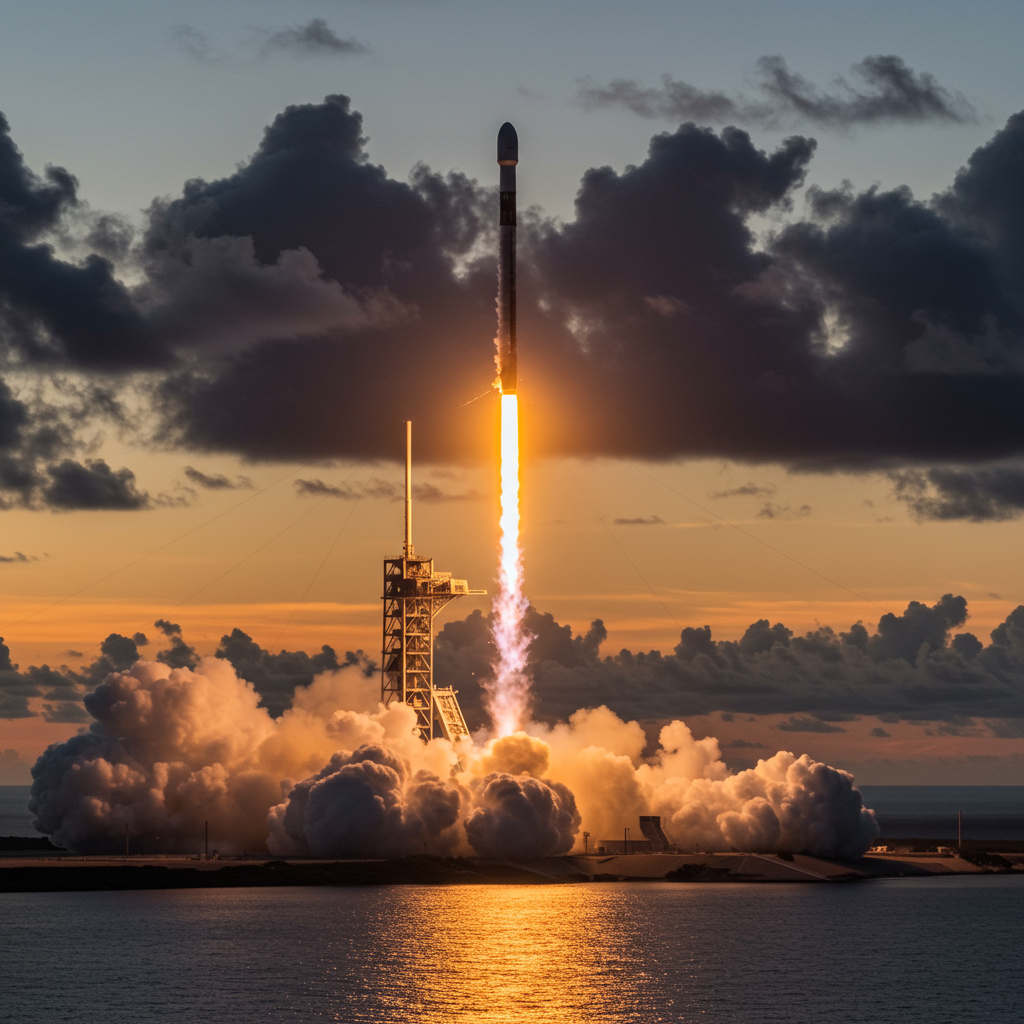
Humanity is on the cusp of a groundbreaking new chapter in space exploration. NASA’s Artemis II mission, slated for early 2026, represents a monumental leap back to the Moon, marking the first time humans will journey beyond low Earth orbit in over five decades. This isn’t just a flight; it’s a critical testbed, a scientific expedition, and a foundational step toward establishing a sustained human presence on the Moon and ultimately, venturing to Mars. Prepare for an unprecedented journey that combines cutting-edge engineering with vital human health research, setting the stage for the next generation of deep space endeavors.
A New Era of Lunar Exploration Begins
The excitement is palpable as NASA gears up for Artemis II, a mission poised to reignite our collective imagination for space travel. This crewed lunar flyby is more than a revisit; it’s a strategic move designed to gather invaluable data and test crucial systems, propelling humanity further into the cosmos than ever before.
The Long-Awaited Return to Deep Space
It’s been over 50 years since Apollo 17, in December 1972, last carried humans to the Moon. Artemis II will break this half-century hiatus, sending its four-member crew on a ten-day journey around our celestial neighbor. Crucially, this mission will orbit the Moon but will not attempt a lunar landing. Instead, its purpose is to thoroughly vet the Orion spacecraft and its deep-space exploration systems under real flight conditions, a vital prerequisite for future lunar landings and eventual Martian missions. This methodical approach ensures that every subsequent mission is built on a foundation of proven technology and robust safety protocols.
Meet the Pioneering Artemis II Crew
The crew for this historic mission embodies international collaboration and diverse expertise. NASA astronauts Reid Wiseman (Commander), Victor Glover (Pilot), and Christina Koch (Mission Specialist) will be joined by the Canadian Space Agency’s (CSA) Jeremy Hansen (Mission Specialist). Their diverse backgrounds and extensive training are paramount, as they will not only pilot the Orion spacecraft but also serve as researchers and test subjects, gathering vital data on human resilience in deep space. This multinational team underscores the global effort and shared scientific ambition driving modern space exploration.
Mission Objectives: Testing the Limits of Deep Space Travel
Artemis II is fundamentally a test flight, albeit one with humans on board. Its success hinges on the flawless execution of its primary objectives, which are centered around pushing the boundaries of our current deep space capabilities.
Rigorous Testing of Orion and SLS
At the heart of the Artemis program are the Orion spacecraft and the powerful Space Launch System (SLS) rocket. For Artemis II, the goal is to rigorously test these integrated systems far beyond Earth’s protective magnetosphere. The mission will begin with an initial orbit around Earth, meticulously checking life support, communication, and navigation systems before Orion and the SLS rocket propel the crew towards the Moon. This careful, step-by-step validation ensures that every component performs as expected in the unforgiving environment of deep space.
The Free-Return Trajectory Explained
The Artemis II flight path will follow a “free-return” trajectory, carrying the crew more than 9,200 kilometers (over 5,000 nautical miles) beyond the Moon. This specific path uses the Moon’s gravity to naturally slingshot the spacecraft back towards Earth without requiring a propulsive burn to initiate the return. While not entering lunar orbit or attempting a landing, this trajectory is crucial for refining future Moon landing procedures. It provides an invaluable opportunity to observe Earth from a distance greater than any human has seen in decades, offering unique perspectives and critical operational experience.
Artemis II: Astronauts as Scientific Pioneers and Test Subjects
Beyond its role as a technological demonstration, Artemis II is a pivotal scientific platform. For the first time in over 50 years, humans will venture beyond low Earth orbit, with the crew playing a dual role as both active researchers and volunteer test subjects.
Unprecedented Human Health Studies
A primary objective of Artemis II is to conduct unprecedented in-flight human health studies. These investigations are designed to gather critical findings that will directly inform NASA’s preparations for future extended missions, first to the Moon and eventually to Mars. A core aim is the development of effective countermeasures necessary to safeguard astronauts’ health during prolonged stays in deep space, where missions could last for years. Understanding how the human body and mind adapt to this extreme environment is paramount for long-duration spaceflight.
Key Research Areas and Studies
The research agenda for Artemis II is comprehensive, focusing on seven primary areas. These investigations span a broad spectrum, from monitoring astronauts’ radiation exposure – a significant concern for deep space travel – to observational studies of the lunar surface itself.
One key component is the ARCHeR study, meticulously designed to assess various psychological and cognitive factors among the crew. This includes monitoring sleep patterns, cognitive performance, stress levels, and the dynamics of teamwork – all crucial elements for the success of long-duration missions.
Another significant investigation, known as AVATAR, delves into the physiological impacts of space on the human body at a cellular level. Specifically, it examines how bone marrow produces blood cells – a process vital for overall health and particularly for fracture healing – and concurrently investigates the intricate ways radiation affects the body. This study leverages advanced “organ-on-chip” technology to gain deeper, more precise insights into these complex biological processes in a microgravity and radiation environment.
Complementing these specific studies, the mission will also incorporate continuous immune biomarker sampling to monitor stress-related immune responses in real-time. Standard medical tests will track astronauts’ nutrition, balance capabilities, and cardiovascular health. Collectively, these diverse studies are designed to build a holistic understanding of human physiological and psychological adaptation to prolonged exposure at lunar distances. Beyond their roles as test subjects, the Artemis II astronauts will actively participate in scientific experiments, including using advanced radiation sensors, observing the lunar surface, and deploying CubeSats for independent investigations.
From Artemis I to Artemis III: Paving the Way for a Sustainable Future
Artemis II is not an isolated mission; it’s a crucial link in a carefully orchestrated series of endeavors aimed at reshaping humanity’s presence in space.
Building on Artemis I’s Success
The upcoming mission builds directly upon the success of Artemis I, an uncrewed integrated flight test of NASA’s Deep Space Exploration Systems, including the Orion spacecraft and SLS rocket, conducted in August 2022. Artemis I proved the fundamental capabilities of the hardware, paving the way for a crewed mission. The data gleaned from Artemis I was instrumental in identifying areas for improvement and refining the systems for crew safety.
The Road to Artemis III and Beyond
Artemis II is a critical stepping stone for Artemis III, which is projected for launch in 2027. Artemis III’s ambitious goal is to achieve the first human landing on the lunar South Pole and to establish a long-term human presence there. NASA Administrator Jared Isaacman highlighted the profound importance of Artemis II, calling it a “momentous step forward for human spaceflight” that will send humans “farther from Earth than ever before.” The broader Artemis campaign aims to return humans to the Moon for several key reasons: to reap economic benefits, advance scientific discovery, and serve as a preparatory phase for future crewed missions to Mars.
Addressing Challenges: Why the Artemis II Launch Was Delayed
The journey to deep space is inherently complex and demands an uncompromising commitment to safety. This philosophy led to the rescheduling of Artemis II.
Prioritizing Crew Safety
Originally targeted for 2024, the Artemis II mission was rescheduled for early 2026. This delay was a direct result of safety concerns that arose from the uncrewed Artemis I mission in November 2022. During Artemis I’s re-entry, its heat shield experienced more intense burning than anticipated, an issue that required thorough investigation and resolution before risking human lives. Additionally, issues related to hydrogen leaks during Artemis I’s fueling process also needed to be fully addressed. NASA officials, including Lakiesha Hawkins, acting deputy associate administrator for exploration systems development, emphasized that crew safety requirements are paramount and will continue to dictate the timeline.
Engineering Solutions and Preparedness
In response to the identified challenges, engineers have conducted detailed analyses, adjusted the trajectory for Artemis II to avoid conditions causing high heat shield stress, and implemented modifications to the launchpad and fueling process to mitigate the risk of hydrogen leaks. Hardware preparation is nearing completion; the Boeing-built SLS rocket, with Northrop Grumman’s solid rocket boosters attached, is already housed in NASA’s Kennedy Space Center Vehicle Assembly Building. The Orion capsule and its adapter are expected to be finished in the coming months, with the fully assembled rocket anticipated for rollout in late 2025. NASA is currently looking at several five-day launch windows in February, March, and April 2026, with the earliest possible liftoff slated for February 5, 2026.
The Global Race to the Moon: A Broader Context
While Artemis II leads NASA’s charge, it’s important to recognize the vibrant, collaborative, and competitive landscape of lunar exploration globally. Nations around the world are contributing to our understanding of the Moon, each mission adding critical pieces to a complex puzzle.
India’s Chandrayaan Program and Lunar Water
A prime example of global lunar commitment is India’s Chandrayaan program, developed by the Indian Space Research Organisation (ISRO). This series of “moon craft” missions has made significant contributions to the search for water on the Moon. Chandrayaan-1, launched in 2008, famously detected small amounts of water near the lunar south pole, a discovery significantly aided by international instruments, including NASA’s Moon Mineralogy Mapper (M3). Following an unsuccessful landing attempt by Chandrayaan-2 in 2019, Chandrayaan-3 achieved a historic success on August 23, 2023, by becoming the first spacecraft to successfully touch down in the Moon’s south polar region. This region is of particular scientific interest due to the potential presence of water ice beneath the surface, a resource critical for future long-duration human missions, which aligns with Artemis III’s ultimate goal. India’s achievement underscores the global push towards understanding and utilizing lunar resources, complementing NASA’s Artemis vision.
Frequently Asked Questions
What is the primary goal of the Artemis II mission?
The primary goal of the Artemis II mission is to rigorously test the Orion spacecraft and its deep-space exploration systems under real flight conditions, with a human crew onboard. It serves as a critical dress rehearsal for future lunar landings, particularly for Artemis III. The mission will send four astronauts on a 10-day journey around the Moon, gathering vital data on spacecraft performance and human health beyond low Earth orbit. It’s a foundational step towards establishing a sustainable human presence on the Moon and preparing for missions to Mars.
Who are the astronauts flying on Artemis II, and what are their roles?
The Artemis II crew consists of four highly experienced astronauts. NASA astronauts include Commander Reid Wiseman, Pilot Victor Glover, and Mission Specialist Christina Koch. They are joined by Canadian Space Agency (CSA) astronaut Jeremy Hansen, also serving as a Mission Specialist. Beyond their roles in operating the spacecraft, these pioneering individuals will serve as both active researchers and volunteer test subjects, participating in crucial human health studies to understand the effects of deep space on the body and mind.
Why was the Artemis II launch delayed to 2026?
The Artemis II mission was initially targeted for 2024 but was rescheduled to early 2026 primarily due to safety concerns identified during the uncrewed Artemis I mission. Engineers discovered that Orion’s heat shield experienced more burning than anticipated upon re-entry. Additionally, issues with hydrogen leaks during the Artemis I fueling process needed to be addressed. To ensure crew safety, NASA initiated detailed analyses, adjusted the mission trajectory, and implemented modifications to both the launchpad and fueling procedures, leading to the necessary delay.
Conclusion
Artemis II is more than just another space mission; it is a profound testament to humanity’s enduring spirit of exploration and scientific curiosity. With its comprehensive testing objectives, groundbreaking human health studies, and role as a crucial stepping stone for future lunar and Martian endeavors, Artemis II represents a bold leap forward. The updated launch window in early 2026, driven by an unwavering commitment to crew safety, only amplifies the anticipation for this historic event. As the Orion spacecraft prepares to carry its international crew farther than any human has gone in half a century, we stand on the precipice of a new era, ready to unlock the secrets of deep space and extend humanity’s footprint across the cosmos. Stay tuned as we count down to this monumental return to the Moon!