An unprecedented diplomatic storm is engulfing transatlantic relations as former U.S. President Donald Trump has explicitly linked his assertive push to acquire Greenland to his perceived snub for the Nobel Peace Prize. This extraordinary connection, revealed in a text message to Norway’s Prime Minister, has ignited fierce condemnation across Europe, threatening to unravel critical trade agreements and strain the long-standing NATO alliance. As the situation escalates, European leaders are preparing for an emergency summit, considering retaliatory measures against looming U.S. tariffs.
The Core Conflict: Nobel Snub Fuels Greenland Demands
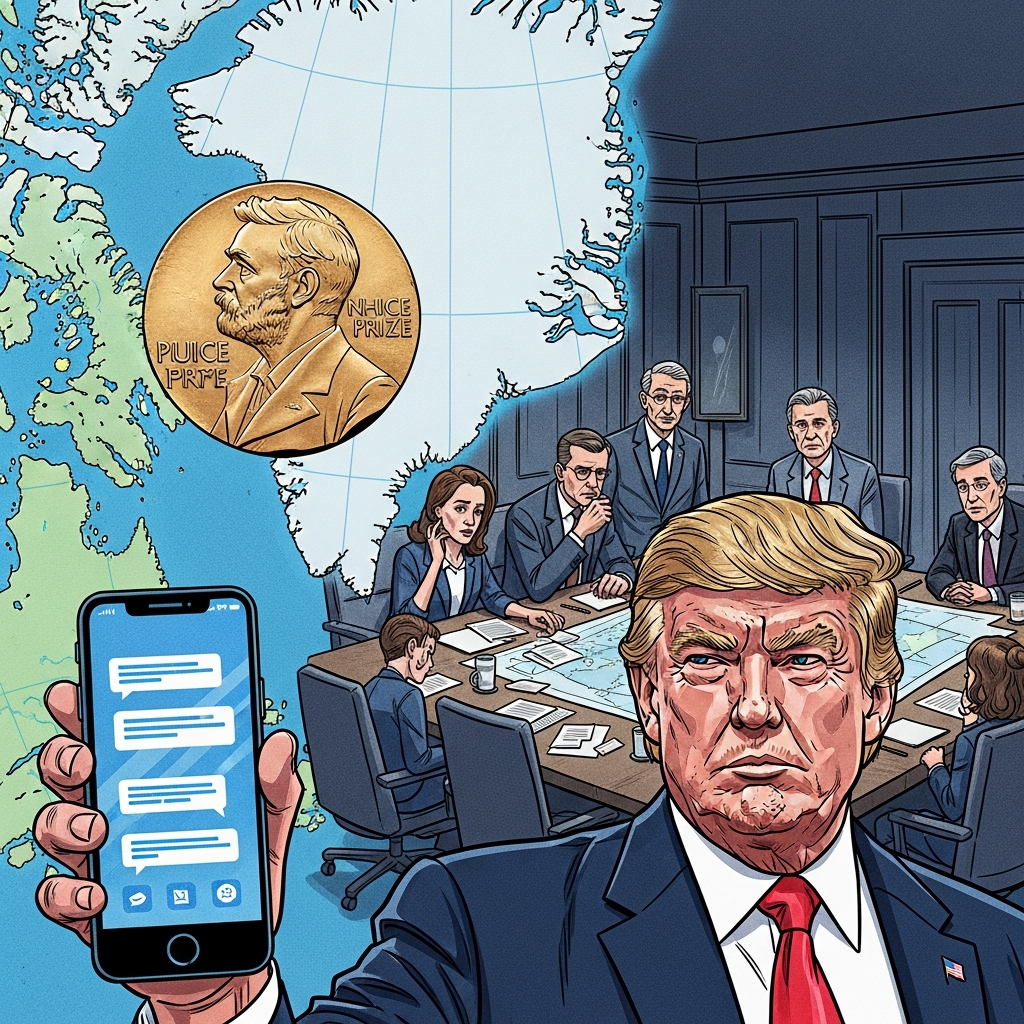
In a stunning revelation, Donald Trump informed Norwegian Prime Minister Jonas Gahr Støre that his failure to secure the Nobel Peace Prize had liberated him from the “obligation to think purely of Peace.” This declaration came in a direct text message, where Trump asserted the U.S. needed “complete and total control” of Greenland, a self-governing territory of Denmark. He emphasized that after reportedly stopping “8 Wars PLUS,” he felt his country, Norway, had failed to recognize his efforts, leading him to prioritize “what is good and proper for the United States of America.” This highly personalized approach to foreign policy has caught international observers off guard.
Trump’s demand for Greenland, a strategically vital and mineral-rich Arctic island, has intensified significantly in recent weeks. He has consistently stated the U.S. would take control “one way or the other,” proclaiming, “Now it is time, and it will be done!!!” Despite the U.S. already maintaining a military base on the island and a bilateral agreement with Denmark allowing for expanded presence, Trump justifies his pursuit on “national security” grounds. He questions Denmark’s historical claim, dismissing it as lacking “written documents” beyond an ancient boat landing, and argues Denmark cannot adequately protect Greenland from rising threats posed by Russia or China. The former president also believes that having “done more for Nato than anyone else,” the alliance should now support his initiative, deeming U.S. control essential for global security.
Military Force: A Looming Question
Compounding the tensions, Trump has pointedly refused to rule out military force to seize the island. When pressed by NBC News on whether he would use force, he simply responded with “No comment,” while simultaneously vowing to “100%” push ahead with his tariff plans. This ambiguity has sent ripples of concern through Europe, where Greenland is covered by the protections of both Denmark’s membership in the EU and NATO.
Threats and Tariffs: Europe Under Pressure
To enforce his demands, Trump announced punitive tariffs. Beginning February 1st, a 10% tariff would be imposed on imports from eight European nations – Denmark, Norway, Sweden, France, Germany, the UK, the Netherlands, and Finland – escalating to 25% by June, unless they drop their objections to his Greenland plan. This sweeping economic threat covers all exports from these countries.
This aggressive move has plunged trade relations between the EU and the U.S. into fresh chaos. European leaders swiftly denounced the tariff threats as “blackmail” and “unacceptable” tactics between allies. German Vice-Chancellor Lars Klingbeil sharply stated that “Blackmail between allies of 250 years, blackmail between friends, is obviously unacceptable,” a sentiment echoed by French Finance Minister Roland Lescure.
International Outcry: Sovereignty and Alliance Strain
The international reaction has been one of strong condemnation, with European allies presenting a unified front. Danish Foreign Minister Lars Løkke Rasmussen stressed the importance of upholding international law and firmly resisting Trump’s pressure. Greenland’s Prime Minister, Jens-Frederik Nielsen, unequivocally stated that Greenland is a democratic society that must determine its own future, declaring, “We will not be pressured” and stands firm on dialogue, respect, and international law.
UK Prime Minister Keir Starmer also called Trump’s tariff plans “completely wrong” but adopted a pragmatic stance, urging “calm discussion between allies” and cautioning against a “tariff war.” French President Emmanuel Macron and EU Commission President Ursula von der Leyen reiterated that “any decision on Greenland belongs to the people of Greenland and Denmark alone,” underscoring respect for territorial integrity.
NATO’s Delicate Balance
The dispute also risks unraveling the NATO transatlantic alliance, a cornerstone of Western security for decades. Denmark’s Defence Minister, Troels Lund Poulsen, and Greenlandic Foreign Minister, Vivian Motzfeldt, discussed with NATO Secretary General Mark Rutte the possibility of a NATO mission in Greenland and the Arctic. This initiative aims to strengthen the alliance’s presence in the High North, a suggestion welcomed by Sweden’s Defence Minister Pål Jonson. However, the core issue highlights a profound challenge to established international norms and alliances, driven by a highly personalized and aggressive foreign policy.
Behind the Diplomatic Veil: Misunderstandings and Motives
A significant insight emerging from diplomatic circles points to potential misinterpretations fueling the crisis. Some diplomats suggest Trump may have viewed the recent deployment of troops from the eight NATO countries now targeted by his tariffs as a “warning shot” to the U.S. However, these missions were reportedly reconnaissance efforts, aligned with existing U.S. concerns about Russian activity in the Arctic, and the U.S. was even invited to participate. This points to a troubling breakdown of trust, with one Western diplomat noting that “Trump makes his decisions based on wild speculation on US TV, and not from his diplomatic allies.”
The Nobel Committee Clarification
Adding to the complexity, Norwegian Prime Minister Støre clarified that the Nobel Peace Prize is awarded by the independent Norwegian Nobel Committee, not the Norwegian government. He emphasized he had repeatedly explained this to Trump. The previous year’s prize winner, Venezuelan opposition leader María Corina Machado, did dedicate her medal to Trump and presented it to him, but the Nobel Committee confirmed the prize cannot be symbolically transferred. U.S. Treasury Secretary Scott Bessent attempted to downplay the Nobel link, calling it a “canard” and asserting Trump views Greenland purely as a “strategic asset.”
Europe’s Response: Retaliation and Resilience
The European Union is not standing idly by. EU leaders are convening an emergency summit in Brussels to formulate a robust response. Potential retaliatory measures include reactivating a package of tariffs on €93bn (£80bn) of U.S. imports, which had been suspended following a trade deal last year.
Emergency Summits and Economic Tools
Another powerful option on the table is the EU’s “anti-coercion instrument” (ACI), an unprecedented “bazooka” mechanism designed to counter threats to the bloc’s sovereignty. This tool, never before used, could limit U.S. access to public tenders, investments, or banking activities, and restrict trade in services, including digital services. German Chancellor Friedrich Merz, while expressing a desire to avoid escalation, affirmed that Europe would protect its interests if confronted with “unreasonable” tariffs.
Davos: A Diplomatic Showdown
The World Economic Forum in Davos, Switzerland, is expected to become a critical stage for diplomatic exchanges. Norwegian Prime Minister Støre and German Chancellor Merz have both indicated their intention to confront Trump there. Støre revealed that Trump’s aggressive text followed his own attempt to de-escalate the situation and propose a phone call with the Finnish president. These meetings underscore the urgency for direct engagement amidst the escalating tensions.
Global Ripple Effects and Diverse Perspectives
The Greenland crisis is reverberating globally, drawing diverse reactions.
Beyond Europe: While the UK’s Prime Minister called for calm, some UK MPs have suggested boycotting the World Cup or canceling a state visit to “embarrass” Trump. Hungary’s Foreign Minister Peter Szijjarto notably stated that Greenland is a bilateral issue between the U.S. and Denmark, not an EU concern, signaling non-support for a joint EU statement, aligning with Prime Minister Viktor Orbán’s known alliance with Trump. China, meanwhile, urged the U.S. to cease using the “so-called ‘China threat'” as a pretext for tariffs.
US Perspectives: Three prominent U.S. Catholic cardinals issued a joint statement warning against military action for “narrow national interests,” citing Greenland, Venezuela, and Ukraine. U.S. Treasury Secretary Scott Bessent defended Trump’s actions as using “economic might…to avoid a hot war.”
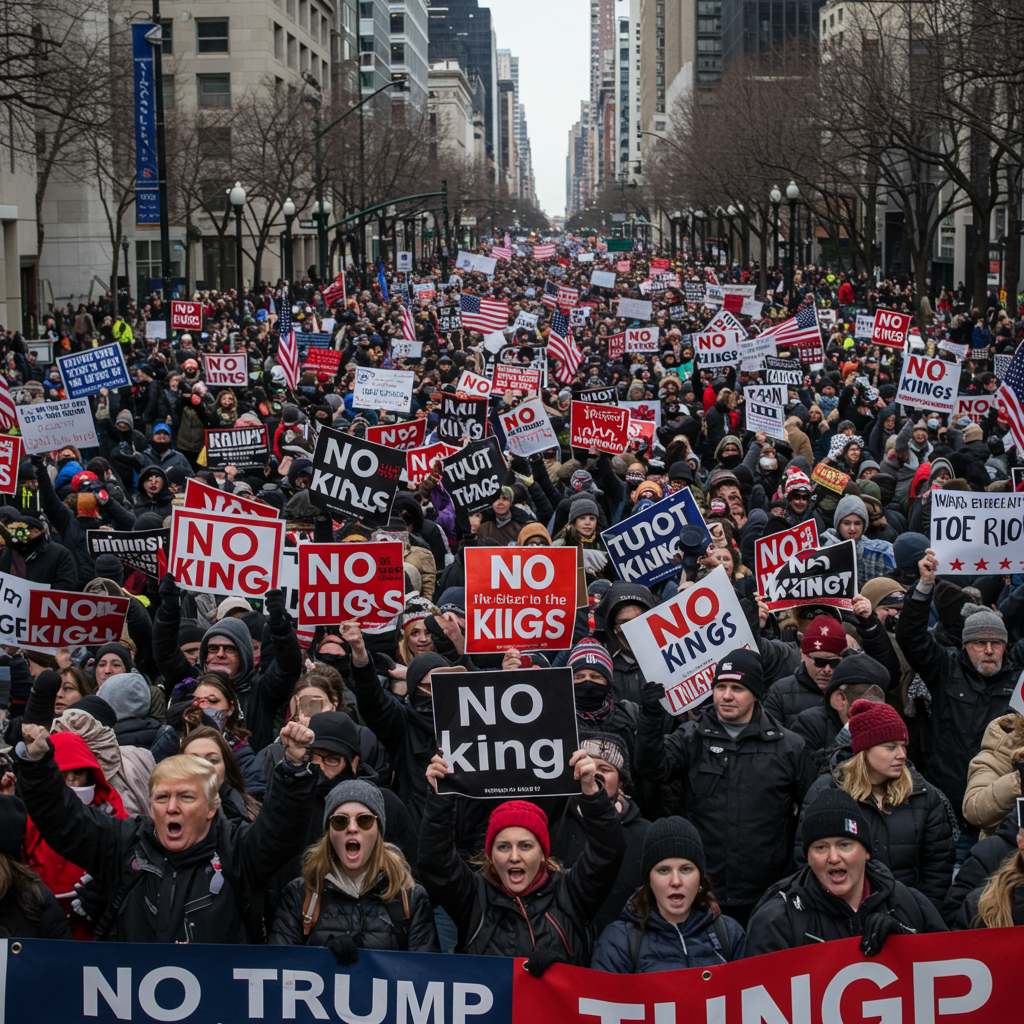
- Public Discontent: Protests have erupted in Copenhagen, where participants donned “Make America Go Away” parody baseball caps, symbolizing widespread public opposition to Trump’s demands.
- www.theguardian.com
- www.theguardian.com
- www.nbcnews.com
- www.forbes.com
- www.abc.net.au
The current dispute is viewed by some geopolitical and historical experts as the lowest point in transatlantic relations since the 1956 Suez Crisis, highlighting the severity of the deteriorating alliance.
Frequently Asked Questions
What is Donald Trump’s primary justification for seeking control of Greenland?
Donald Trump primarily justifies his pursuit of Greenland on “national security” grounds, arguing that Denmark cannot adequately protect the strategically vital, mineral-rich island from rising threats posed by Russia and China. He also questions Denmark’s historical claim to the territory, dismissing its ownership based on a lack of “written documents” beyond ancient landings. Crucially, Trump has explicitly linked his demands to a personal grievance, stating that after being denied the Nobel Peace Prize, he no longer felt obliged to think “purely of peace” and could prioritize U.S. interests.
How is the European Union responding to Trump’s tariff threats over Greenland?
The European Union is strongly condemning Trump’s tariff threats, with leaders describing them as “blackmail” and “unacceptable.” The EU is convening an emergency summit to discuss a unified response, which could include reactivating a package of tariffs on €93bn (£80bn) of U.S. imports. Additionally, the bloc is considering using its “anti-coercion instrument” (ACI), a powerful mechanism that could restrict U.S. access to public tenders, investments, banking activities, and digital services, signaling its readiness to protect its economic interests.
What are the potential long-term impacts of this Greenland dispute on transatlantic alliances?
The Greenland dispute poses a significant threat to long-standing transatlantic alliances, particularly NATO and EU-U.S. trade relations. The aggressive rhetoric, tariff threats, and refusal to rule out military force risk unraveling decades of Western security cooperation. It highlights a breakdown of trust and communication, where diplomatic efforts are being overshadowed by highly personalized grievances. The situation could lead to a lasting rift in alliances, forcing Europe to re-evaluate its reliance on the U.S. and potentially leading to a more fractured global geopolitical landscape.
Conclusion
The escalating Greenland crisis, fueled by Donald Trump’s unprecedented linkage of territorial ambition to a personal grievance, represents a critical juncture for transatlantic relations. With the threat of a full-blown trade war looming and the very fabric of NATO under strain, the international community faces profound challenges. As European leaders unite against perceived blackmail and prepare for robust responses, the coming weeks, particularly during the World Economic Forum, will determine whether dialogue can de-escalate tensions or if established alliances will suffer irreversible damage, ushering in a new, uncertain era of global politics.