Life aboard the International Space Station (ISS) is a testament to human ingenuity, collaboration, and sheer courage. From daring spacewalks to complex crew rotations, every mission phase demands meticulous planning and unwavering dedication. Recently, the world watched as a crucial spacewalk was postponed, highlighting the delicate balance of human health and ambitious orbital objectives, even as other Space Station astronauts finally concluded an unexpectedly extended mission. This dynamic environment continuously pushes the boundaries of human endurance and technological innovation, defining the future of space exploration.
Unpacking the Postponed Spacewalk: A Critical Power Upgrade
The first spacewalk of 2026, initially slated for Thursday, January 8, faced an unexpected delay, as NASA confirmed its postponement due to a “medical concern” involving one of its Space Station astronauts. Citing medical privacy, the U.S. space agency has not disclosed specific details about the issue or the astronaut’s identity, assuring the public that the situation is “stable.” A new date for this critical Extravehicular Activity (EVA) will be announced later.
This particular spacewalk held significant importance. It was planned for Expedition 74 NASA astronauts Mike Fincke, the Station Commander, and Flight Engineer Zena Cardman. For Cardman, a 38-year-old geobiologist selected for the astronaut corps in 2017, this would have marked her inaugural EVA, a momentous step in any astronaut’s career.
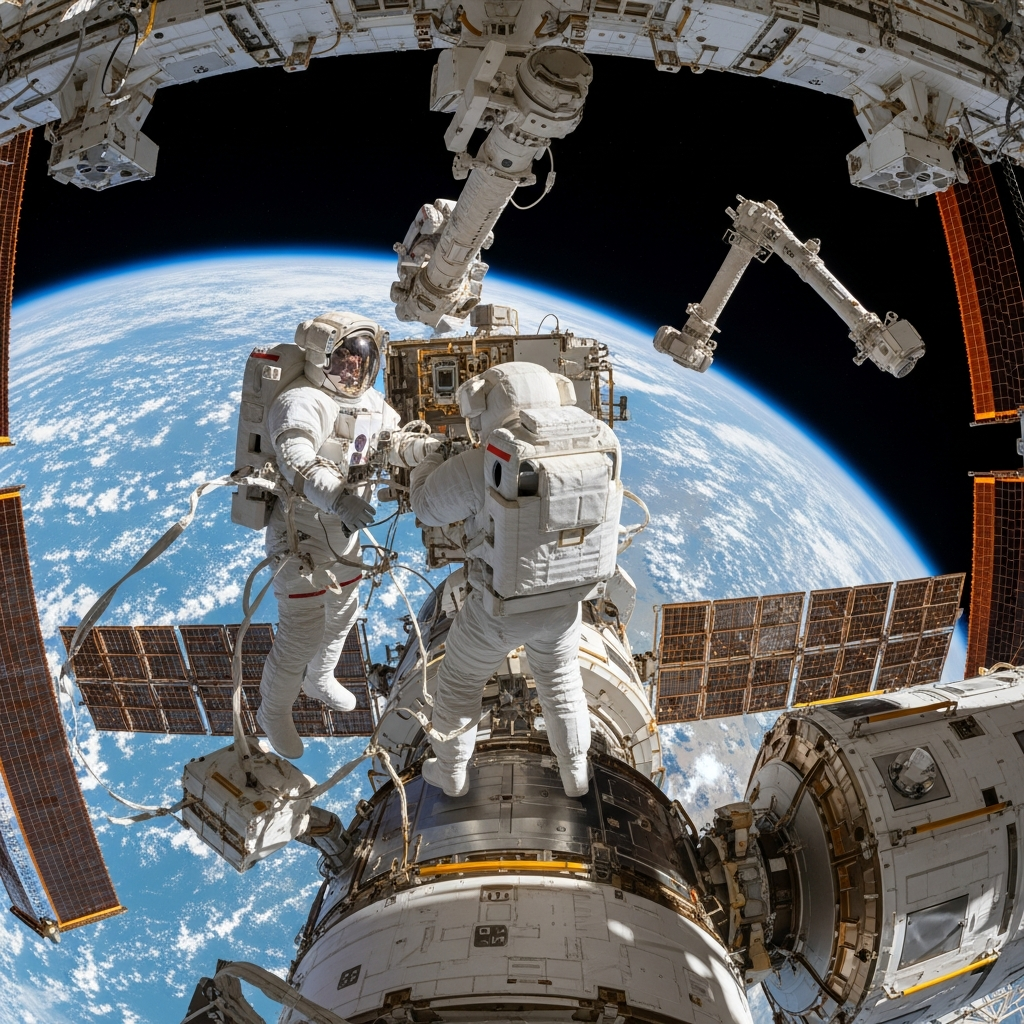
The primary goal of the six-and-a-half-hour spacewalk was to perform vital power upgrade work. This included installing a modification kit and routing essential cables in preparation for a future roll-out solar array – a key enhancement for the International Space Station. Additionally, the duo was tasked with installing jumper cables, photographing hardware, and collecting microorganism samples from the station’s exterior, contributing to scientific research.
Meticulous Preparations for an Orbital Ballet
Spacewalks are complex, high-stakes operations that require exhaustive preparation. Ahead of the postponement, Fincke and Cardman had already completed extensive training and organization. On Wednesday, they painstakingly arranged all necessary tools and supplies within the Quest airlock, the designated exit point for spacewalkers from the orbital outpost. They also finalized the configuration of their spacesuits, meticulously checking life support systems and emergency components.
Their readiness culminated in a comprehensive spacewalk procedures review and a final conference with mission controllers on the ground. This review included support from Flight Engineers Chris Williams of NASA and Kimiya Yui of JAXA (Japan Aerospace Exploration Agency). Williams and Yui were assigned crucial supporting roles, which involved assisting the spacewalkers with their suits, managing the pressurization and depressurization of the Quest airlock, and continuously monitoring Fincke and Cardman during their work outside the orbiting laboratory. This intricate dance of coordination highlights the collaborative nature of human spaceflight.
The Perilous Journey Home: Astronauts’ Unexpectedly Extended Stay Concludes
While one mission was put on hold, another long-awaited journey recently concluded. NASA astronauts Butch Wilmore and Suni Williams finally returned to Earth after an unexpected nine-month stay aboard the International Space Station. Their mission, initially planned for a mere week, was dramatically prolonged by a series of technical issues with their Boeing Starliner capsule, part of Boeing’s inaugural astronaut flight. These issues forced NASA to send the Starliner back to Earth empty, temporarily leaving Wilmore and Williams without a dedicated return vehicle.
Their replacements, a multinational group of four newcomers from the United States, Japan, and Russia, arrived safely at the ISS on a SpaceX crew capsule. This new capsule successfully docked with the station just over a day after its launch, marking a crucial rotation of personnel. Before Wilmore and Williams departed, the new arrivals spent time familiarizing themselves with the station’s intricate operations, ensuring a smooth transition of responsibilities.
Wilmore and Williams, alongside fellow astronauts Nick Hague and Russian cosmonaut Aleksandr Gorbunov, departed early on a Tuesday, concluding their unexpectedly lengthy mission. They returned aboard a SpaceX capsule that had been docked at the International Space Station since the previous year. Their splashdown was anticipated off Florida’s coast later that Tuesday evening, contingent on favorable weather conditions. The welcoming scene on the ISS was one of warmth and relief, with handshakes, hugs, and even a humorous alien mask worn by Russian cosmonaut Ivan Vagner to greet the new crew members.
The Dynamics of Spaceflight: Launch, Orbit, and Return
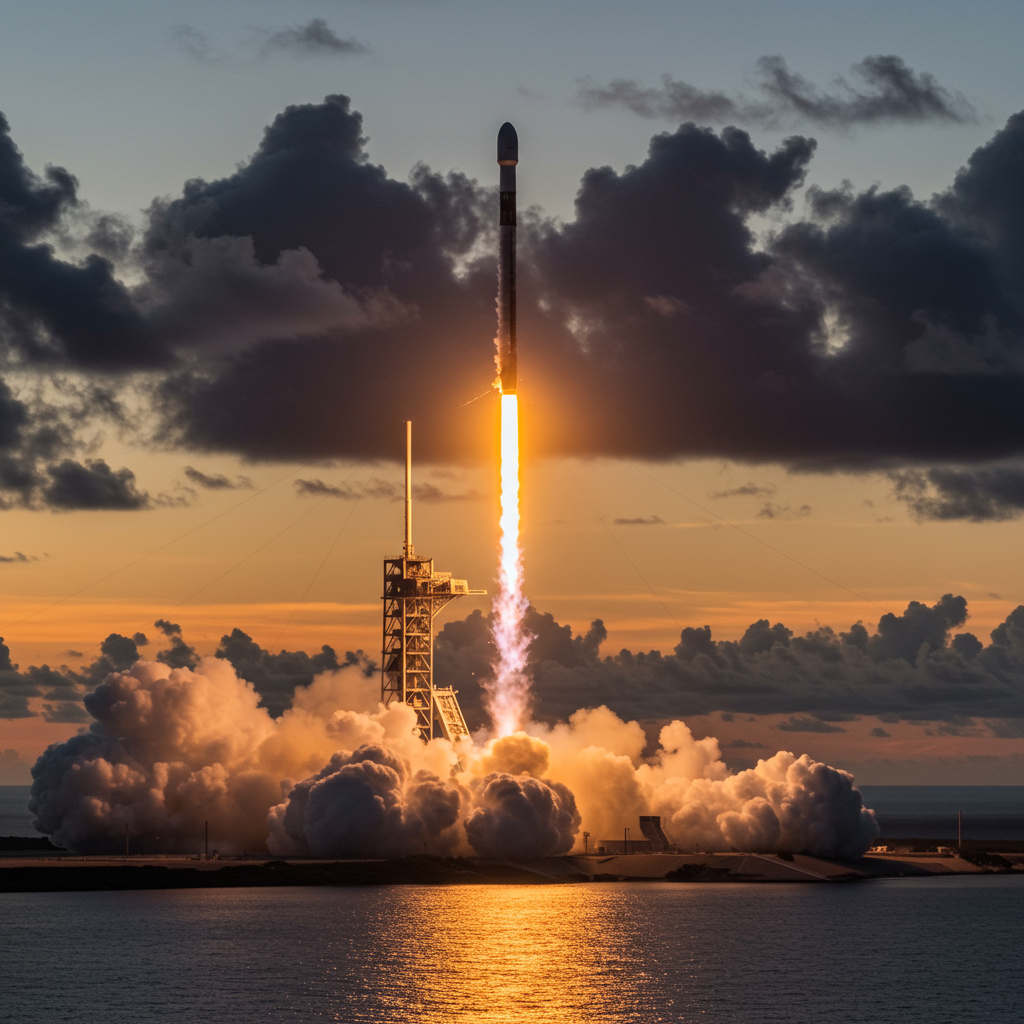
The journey of Space Station astronauts, whether departing or arriving, exemplifies the complex mechanics of spaceflight. Every aspect, from launch to orbit to reentry, is a delicate balance of physics and engineering. Launching into space involves overcoming Earth’s powerful gravitational pull through immense rocket thrust. For a successful liftoff, thrust must exceed the vehicle’s weight; as propellant burns, the rocket lightens, increasing acceleration.
To achieve orbit, a vehicle launched vertically must precisely tilt its trajectory, becoming parallel to Earth’s surface. It must reach a phenomenal orbital velocity, around 29,000 km/h at an altitude of 200 km, where centrifugal acceleration perfectly balances Earth’s gravity. The high velocities required often necessitate “staging,” where multiple rocket systems are sequentially ignited and discarded to reduce weight and increase efficiency.
Reentry is equally demanding, as the spacecraft plunges back into Earth’s atmosphere. The atmosphere acts as a formidable braking force through aerodynamic drag, generating extreme heating due to air compression. Heat shields, made from advanced ablative or refractory materials, are crucial for protecting the spacecraft. Precise control of the reentry angle is paramount; too shallow, and the craft risks bouncing back into space; too steep, and it cannot withstand the intense heat and deceleration forces. After reentry, many spacecraft deploy parachutes for soft landings, while others, like the Space Shuttle of the past, glided to runway landings.
High Stakes: A History of Spaceflight Challenges and Accidents
The history of human spaceflight is punctuated by moments of both triumph and tragedy, underscoring the inherent dangers. From minor malfunctions to catastrophic failures, the extreme conditions, high velocities, and unique environment of microgravity demand constant vigilance. Astronaut missions are meticulously planned, yet unforeseen challenges can arise, as seen with the postponed spacewalk or the stranded crew.
One vivid example of a spacewalk mishap occurred during ISS Expedition 36 in 2013, when Italian astronaut Luca Parmitano experienced his helmet unexpectedly filling with liquid. Originating from a leak in a liquid coolant system, not his drinking bag, the fluid impaired his hearing and speech. Fortunately, Parmitano returned safely to the ISS, though the spacewalk was cut short. This incident highlighted the critical importance of every component in an astronaut’s suit.
Catastrophic events, though rare, serve as stark reminders of the risks. The Space Shuttle Challenger disaster in 1986 saw the shuttle break apart just over a minute after liftoff due to a critical O-ring failure in cold weather, killing all seven astronauts. The Space Shuttle Columbia disaster in 2003 occurred during reentry, caused by a piece of insulating foam damaging a wing during liftoff, leading to the shuttle’s disintegration. Both incidents led to temporary suspensions of the space shuttle program and extensive investigations, forever shaping safety protocols for future Space Station astronauts and missions.
Earlier, the Soyuz 1 mission in 1967 tragically resulted in the death of cosmonaut Vladimir Komarov, the first person to journey into outer space twice. Design issues led to a solar panel failure, crippling power and control, followed by parachute malfunctions during reentry, causing the spacecraft to crash. These events underscore the continuous evolution of spacecraft safety and the lessons learned through immense sacrifice.
The Horizon of Human Spaceflight: Expanding Capabilities and Global Collaboration
Despite the challenges, the future of human spaceflight is brighter than ever, with new nations and technologies contributing to our understanding of the cosmos. The United Arab Emirates, for instance, has rapidly become a significant player in space, transitioning from satellite design to launching its own Space Station astronauts and contributing to international projects like NASA’s lunar Gateway station. Pioneers like Major Hazzaa Al Mansoori, the first Emirati and Arab astronaut on the ISS, and Dr. Sultan Al Neyadi, who completed the longest Arab space mission and performed the first Arab spacewalk, exemplify this progress.
Nora Al Matrooshi, the first Arab woman astronaut, who completed her NASA training in 2024, embodies the expanding diversity and global aspirations of space exploration. Inspired by her grandmother and mother, and a kindergarten activity simulating a lunar mission, Al Matrooshi emphasizes resilience, adaptability, and teamwork as essential qualities for astronauts. She highlights the UAE’s commitment to gender equality, with women comprising over 50% of the Mohammed bin Rashid Space Centre (MBRSC) workforce.
Al Matrooshi envisions Artificial Intelligence (AI) revolutionizing astronaut missions by monitoring life-support systems, handling routine tasks, and freeing up astronauts to focus on scientific experiments and mission planning. AI, she suggests, will become an “intelligent partner,” predicting and preventing technical failures, assisting with autonomous spacecraft navigation, and supporting decision-making, ultimately making missions safer and more efficient. Her message to aspiring young astronauts is powerful: “the Moon is as close as the strength of your imagination and determination,” pointing to the opportunities available in nations like the UAE, which is contributing to the Crew and Science Airlock on the Gateway lunar space station as part of the Artemis Accords.
Frequently Asked Questions
What are the primary objectives of an ISS spacewalk (EVA)?
ISS spacewalks, or Extravehicular Activities (EVAs), serve critical purposes for maintaining and upgrading the International Space Station. Primary objectives often include installing new equipment like solar arrays or modification kits to enhance power systems, routing essential cables, performing repairs to external components, and collecting scientific samples from the station’s exterior. These tasks are crucial for extending the ISS’s operational lifespan and supporting ongoing research.
How do astronauts meticulously prepare for a complex spacewalk outside the ISS?
Preparation for an ISS spacewalk is an intensive, multi-stage process. Space Station astronauts spend countless hours in training, often in underwater facilities that simulate microgravity. Prior to an actual EVA, they meticulously organize all necessary tools and supplies within the Quest airlock, the spacewalk’s egress point. Spacesuits are rigorously configured and checked, including life support and emergency components. This is followed by comprehensive procedures reviews and conferences with ground controllers, ensuring every detail is understood and accounted for to minimize risks.
What critical safety measures are in place to mitigate risks during astronaut missions?
Safety is paramount in all astronaut missions. Measures include redundant systems in spacecraft and spacesuits, rigorous pre-flight training and simulations, and continuous monitoring by mission control. Lessons learned from historical incidents, such as the Challenger and Columbia disasters, have led to enhanced inspection techniques, improved materials, and stringent launch weather criteria. In-flight anomalies, like Luca Parmitano’s helmet leak, prompt immediate protocol adjustments and investigations to further refine safety procedures for future Space Station astronauts.
Conclusion: The Enduring Spirit of Space Exploration
From the meticulously planned, yet occasionally postponed, spacewalks that keep the International Space Station operational, to the dramatic returns of crews completing extended missions, the world of Space Station astronauts is one of constant challenge and profound discovery. It’s a realm where human courage meets cutting-edge technology, pushing the boundaries of what’s possible. As we look to the future, with AI poised to transform operations and nations like the UAE inspiring new generations, the spirit of space exploration continues to burn brightly, inviting us to imagine and reach for new frontiers.