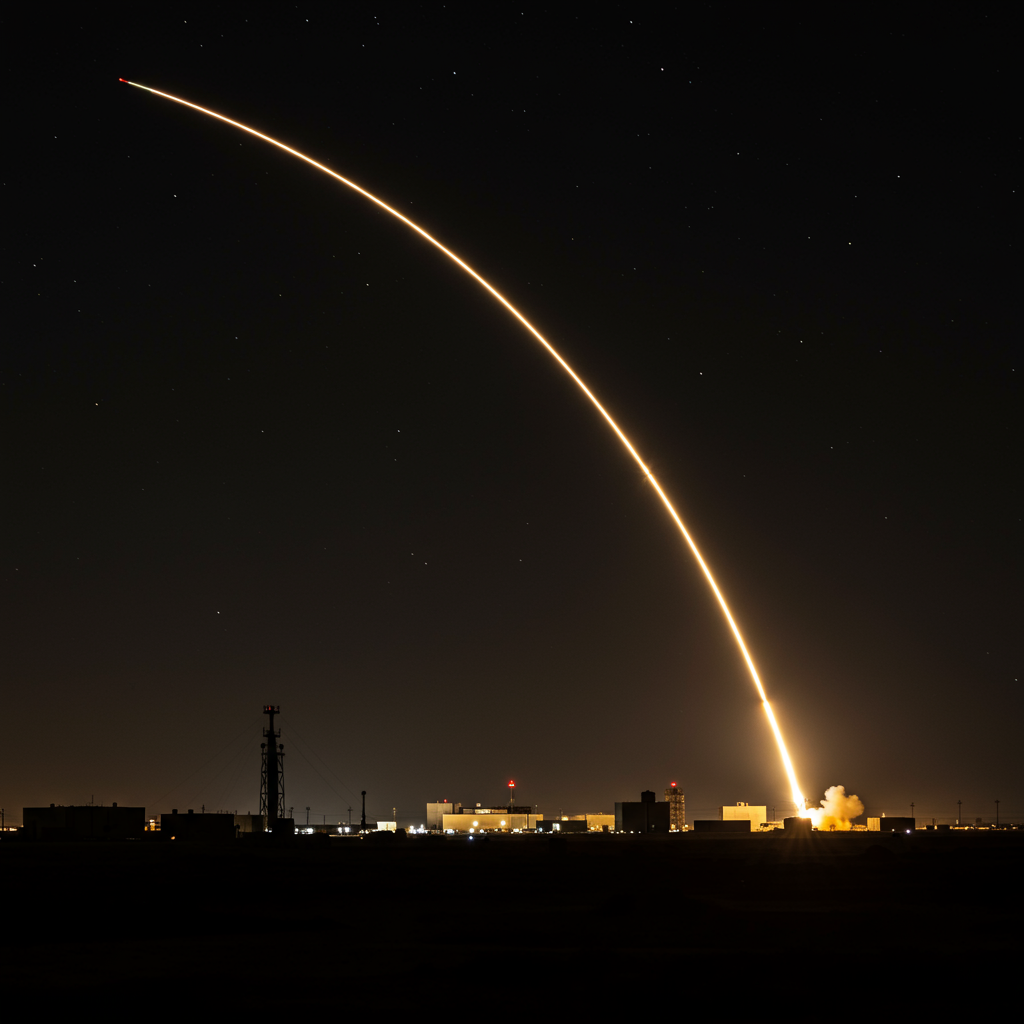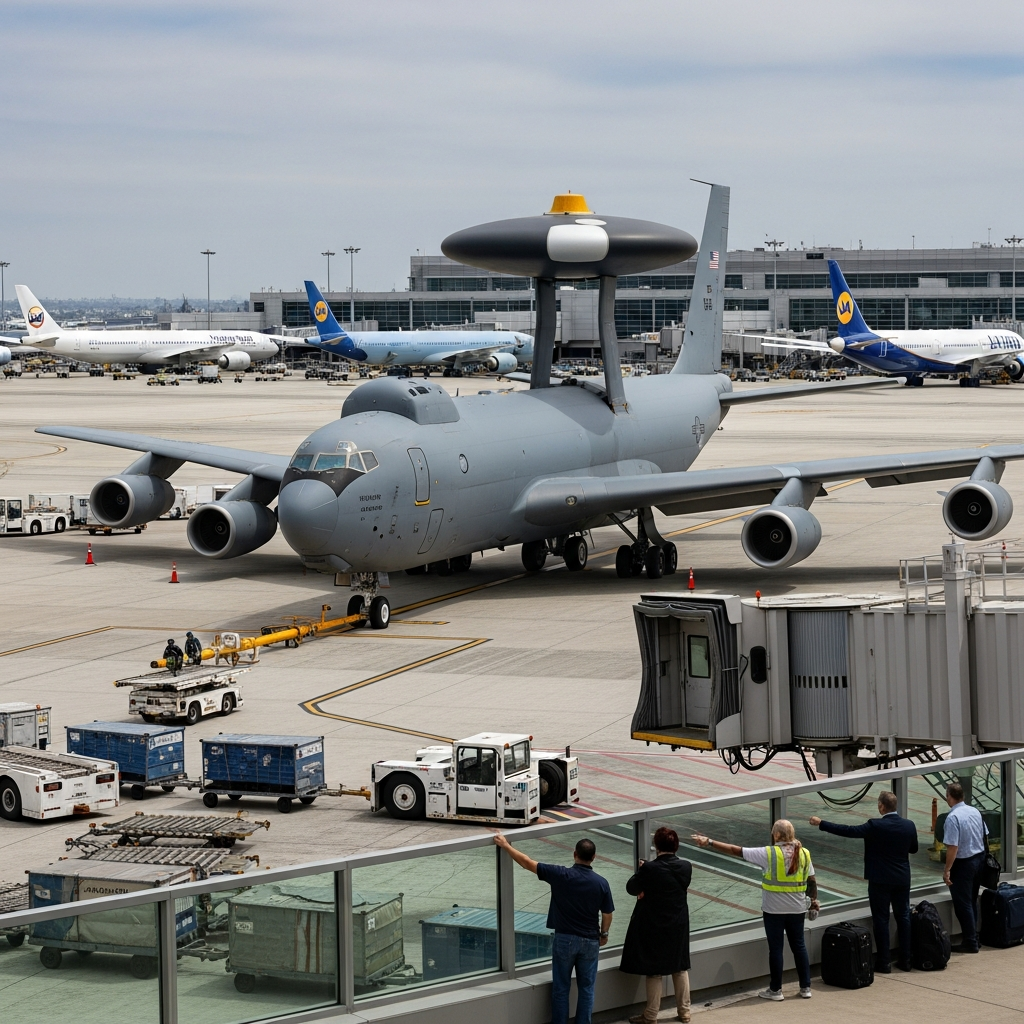
The unexpected arrival of the U.S. military’s Boeing E-4B Nightwatch, famously dubbed the “Doomsday Plane,” at Los Angeles International Airport (LAX) in January 2026 sent a ripple of concern and intense online speculation across social media. This rare public sighting of such a specialized military asset at a bustling commercial hub sparked immediate fears of impending global crises. While internet users debated “WAR IMMINENT?” the true purpose of the aircraft’s visit was far less ominous, yet equally significant, as it transported Defense Secretary Pete Hegseth for a strategic national tour.
Understanding the “Doomsday Plane”: The E-4B Nightwatch Explained
At its core, the E-4B Nightwatch is not merely a transport aircraft; it’s a highly sophisticated, mobile command center designed for the gravest national emergencies. Officially designated by the U.S. Air Force as a “highly survivable command, control and communications center,” this heavily modified Boeing 747-200 aircraft serves as the National Airborne Operations Center (NAOC). Its primary mission is to ensure the continuity of the U.S. government, providing an airborne headquarters for the President, the Defense Secretary, and the Joint Chiefs of Staff, even if ground-based command centers are destroyed or incapacitated by a catastrophic event, such as a nuclear attack.
Built during the Cold War era, the E-4B boasts unparalleled resilience. It’s engineered to withstand extreme conditions, including electromagnetic pulses (EMPs) and the intense heat associated with nuclear blasts. Its robust design features advanced shielding, an improved technical control facility, and an upgraded air-conditioning system to protect sensitive electrical components. This “mobile Pentagon in the sky” can remain airborne for approximately 12 hours without refueling, and with mid-air refueling capabilities, its mission endurance can be extended indefinitely, maintaining critical global communications for senior leadership.
Why LAX? A Rare Glimpse of National Security in Action
The landing of an E-4B Nightwatch at LAX on January 9, 2026, marked a particularly unusual event, possibly its first-ever appearance at this specific commercial airport in its 51-year operational history. Typically based out of Offutt Air Force Base in Nebraska, the E-4B’s presence at such a high-profile civilian location immediately drew the attention of aviation enthusiasts and subsequently broader public scrutiny. The suddenness of its arrival, without prior public announcement, naturally fueled an immediate “flurry of online speculation” and conspiracy theories, linking it to various perceived geopolitical tensions.
Social media platforms, especially X, became hotbeds of anxious commentary. Users questioned the timing, with some speculating about a connection to ongoing international events, such as Russia’s conflict in Ukraine or recent U.S. actions like the capture of Venezuelan leader Nicolas Maduro and warnings to Iran. This immediate leap to crisis scenarios highlights the potent symbolism of the aircraft and the public’s heightened sensitivity to global instability. The lack of an immediate, widely disseminated official explanation only intensified these rumors.
Secretary Hegseth’s “Arsenal of Freedom” Tour: The True Purpose
Despite the widespread public alarm, the E-4B’s visit to Southern California was part of a planned, high-level itinerary rather than an emergency deployment. The aircraft was transporting Defense Secretary Pete Hegseth as he embarked on his monthlong “Arsenal of Freedom” tour. This strategic tour aimed to engage with various U.S. industrial defense companies, showcasing the nation’s defense industrial base and bolstering military recruitment efforts.
During his time in the region, Secretary Hegseth made a notable stop at Rocket Lab, a manufacturing plant in Long Beach, where he delivered a speech. This visit was the second destination on his comprehensive tour. The Department of Defense further highlighted his engagements by sharing images of the Secretary participating in a workout session with the Reserve Officers’ Training Corps (ROTC) at UCLA. Adding to the public visibility of the trip, several media and political figures, including far-right activist Laura Loomer, Breitbart News reporter Olivia Rondeau, and media personality L. Todd Wood, accompanied Hegseth and shared photographs of themselves with the distinctive E-4B Nightwatch online. These activities firmly established the operational rationale for the plane’s presence, dispelling the initial fears of imminent conflict.
The E-4B’s Operational Role: More Than Just a Plane
The E-4B Nightwatch operates under the command of the Joint Chiefs of Staff, supported by U.S. Strategic Command, with Air Force Global Strike Command overseeing its aircrew, maintenance, and security. Its internal configuration is designed for extensive operations, featuring six distinct sections: briefing rooms, command centers, communications hubs, and rest areas, accommodating up to 111 personnel. This capacity includes senior defense leaders, intelligence teams, and communications experts, ensuring that a full administrative staff can operate effectively from the air.
Unlike Air Force One, which primarily serves as the President’s secure transport, the E-4B functions as a mobile headquarters for the entire U.S. administration. It ensures that the President and cabinet secretaries can continue to direct U.S. forces, execute emergency war orders, and coordinate civil authorities in a national emergency. The U.S. Air Force maintains a fleet of four E-4B aircraft, with at least one kept on round-the-clock alert, ready for immediate deployment anywhere in the world. Its highly classified missions mean public sightings are infrequent, making the LAX event particularly significant. Historically, the aircraft has only been activated once during a real crisis – immediately following the September 11, 2001, terrorist attacks, underscoring its role in truly extreme scenarios.
Separating Fact from Fear: Navigating Public Perception
The incident at LAX provides a vivid illustration of the gap that can emerge between public perception and operational reality, especially concerning specialized military assets. The aircraft’s ominous nickname, “Doomsday Plane,” combined with its crucial mission of ensuring national leadership during catastrophic events, naturally ignites anxiety. When such a powerful symbol appears unannounced at a civilian airport amidst a backdrop of global geopolitical tensions, speculative narratives quickly proliferate.
It highlights how easily highly specialized military assets, even when performing routine transport duties for high-ranking officials, can elicit significant public reaction due to their symbolic weight and association with critical national security functions. Clear, timely communication from official sources can play a crucial role in mitigating unnecessary public concern. Ultimately, the E-4B Nightwatch’s stop at LAX was a logistical element of a defense secretary’s tour, aimed at strengthening the nation’s defense industrial base, rather than a harbinger of global conflict.
Frequently Asked Questions
What is the E-4B Nightwatch and why is it known as the “Doomsday Plane”?
The E-4B Nightwatch is a highly modified Boeing 747-200 aircraft operated by the U.S. Air Force, serving as the National Airborne Operations Center (NAOC). It’s nicknamed the “Doomsday Plane” because its primary mission is to provide an airborne command, control, and communications center for the President, Defense Secretary, and Joint Chiefs of Staff during national emergencies, particularly those that could incapacitate ground command centers, like a nuclear attack. It’s built to withstand electromagnetic pulses (EMPs) and nuclear blast effects.
Why did the E-4B Nightwatch land at LAX in January 2026?
The E-4B Nightwatch landed at Los Angeles International Airport (LAX) on January 9, 2026, to transport Defense Secretary Pete Hegseth. He was in Southern California as part of his monthlong “Arsenal of Freedom” tour, which involved visiting various U.S. industrial defense companies. During his visit, Secretary Hegseth spoke at Rocket Lab in Long Beach and engaged with the Reserve Officers’ Training Corps (ROTC) at UCLA. The landing was part of his planned itinerary, not a response to an emergency.
How does the “Doomsday Plane” ensure government continuity during emergencies?
The E-4B Nightwatch ensures government continuity by providing a survivable, mobile headquarters capable of extended airborne operations. It is equipped with advanced secure communication systems, an electrical system hardened against extreme conditions, and can be refueled mid-air indefinitely. This allows senior leaders to direct U.S. forces, execute emergency war orders, and coordinate civil authorities from the air, even if terrestrial networks are disabled. It can carry up to 111 personnel, including critical administrative and intelligence teams, maintaining full governmental function.
Conclusion
The appearance of the “Doomsday Plane” at Los Angeles International Airport was a powerful reminder of both the critical infrastructure supporting U.S. national security and the immediate impact such events can have on public perception. While the E-4B Nightwatch stands ready for the most extreme scenarios, its visit to LAX in January 2026 served a different, though equally vital, purpose: facilitating Defense Secretary Pete Hegseth’s “Arsenal of Freedom” tour. This event underscores the delicate balance between operational necessity and public understanding, illustrating how an aircraft designed for ultimate crisis can, in its routine duties, still spark significant dialogue and concern. Understanding the distinction between its symbolic weight and its practical use is key to navigating the complex landscape of national defense and public information.