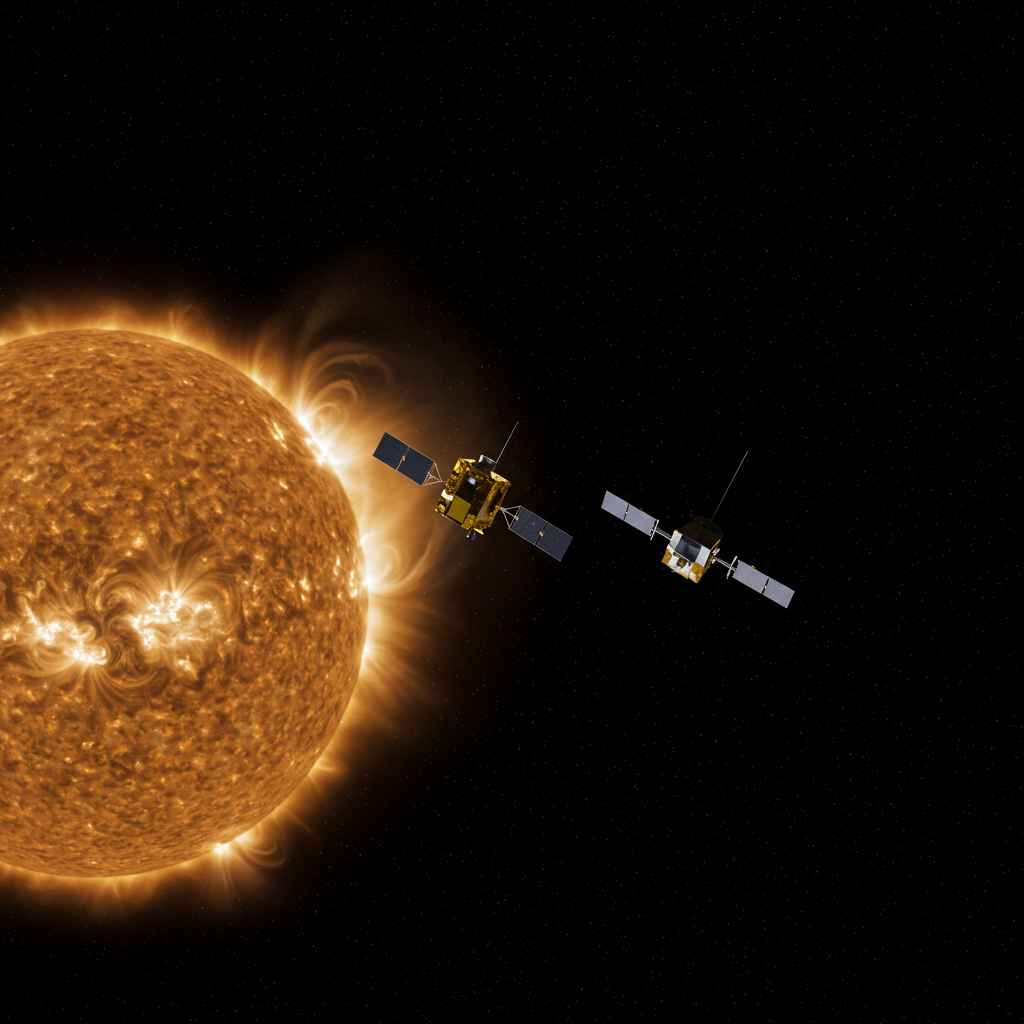
SpaceX has kicked off 2026 with a significant milestone, successfully launching its first Starlink satellite mission of the year. This crucial Starlink launch, designated Group 6-88, deployed 29 advanced broadband internet relay units into low Earth orbit. The mission showcased not only SpaceX’s relentless drive but also its resilience, following a recent in-orbit satellite anomaly that had raised concerns. This successful deployment underscores the company’s commitment to expanding global internet access and rapidly advancing its satellite constellation.
The event, which occurred on January 4, 2026, marks a pivotal moment for the burgeoning Starlink network. It demonstrates SpaceX’s operational expertise in maintaining an aggressive launch cadence, even while addressing complex technical challenges. For millions around the globe, Starlink continues to offer a vital connection, bridging the digital divide in areas traditionally underserved by conventional infrastructure.
A Flawless Start to the New Year’s Orbital Missions
The Starlink Group 6-88 mission roared to life on January 4, 2026, at precisely 1:48 a.m. EST (0648 GMT). A brand-new Falcon 9 rocket, specifically booster B1101, propelled the 29 satellites skyward from Space Launch Complex 40 at Cape Canaveral Space Force Station in Florida. This marked SpaceX’s second overall launch for 2026, setting an ambitious tone for the year.
Approximately nine minutes after the thunderous liftoff, the satellites reached their intended orbit. SpaceX later confirmed their successful deployment about an hour later via social media, affirming another precision delivery. A hallmark of SpaceX’s operations, rocket reusability, was once again flawlessly demonstrated. The Falcon 9’s first stage executed a perfect return, touching down on the autonomous drone ship “Just Read the Instructions,” strategically positioned in the Atlantic Ocean. This impressive landing was the first for this particular booster, B1101, highlighting the continued expansion and robustness of SpaceX’s reusable fleet.
Expanding Global Reach: Starlink in Venezuela
A notable development accompanying this launch was the expansion of Starlink service. SpaceX announced the availability of its broadband internet in Venezuela. To ensure continued connectivity during a period of geopolitical sensitivity, the company is providing free service to the Venezuelan people through February 3. This initiative underscores Starlink’s mission to deliver reliable internet access, particularly in regions where it is scarce or severely lacking. The burgeoning constellation now approaches an incredible 9,500 active satellites, continuously bolstering its global coverage.
Navigating Orbital Challenges: The December Anomaly
This January 4th Starlink mission carried particular significance, being the first deployment since an in-orbit incident on December 17, 2025. This prior event saw Starlink satellite number 35956 rendered inoperable. Launched just weeks earlier on November 23, 2025, the satellite suffered an anomaly at an altitude of 418 kilometers. SpaceX reported a loss of contact, leading to the venting of its propulsion tank and a rapid orbital decay of about 4 kilometers.
The incident also resulted in the release of a small number of trackable, low-velocity objects. SpaceX stated they were taking the situation “very seriously,” with engineers working rapidly to identify the root cause. Their focus was on mitigating the issue and deploying software updates to enhance protections against similar future events. Independent verification from LeoLabs, founded by former astronaut Ed Lu, indicated radar detection of “hundreds of objects” spreading over 6,000 kilometers along the orbital track. The Starlink 6-88 mission itself was initially slated for December 19, but was wisely delayed for presumed modifications to its satellites. This incident underscores the complexities of operating a vast satellite constellation in a dynamic orbital environment.
Proactive Measures for Orbital Safety
In a strategic move to enhance orbital safety and sustainability, SpaceX’s Vice President of Starlink Engineering, Michael Nicolls, announced an important upcoming adjustment. Approximately 4,400 existing Starlink satellites, currently orbiting at 550 kilometers, will be lowered to 480 kilometers. This decision, coordinated with U.S. Space Command and other operators, aims to significantly reduce ballistic decay time. As atmospheric density naturally decreases during the solar minimum, this altitude change will shorten decay from over four years to just a few months.
Operating below 500 kilometers dramatically decreases the aggregate likelihood of collisions. This is because fewer debris objects and planned constellations exist in this lower band. This proactive measure reflects SpaceX’s commitment to responsible space operations. It directly addresses previous concerns regarding close approaches between satellites, which Nicolls attributed in one instance to a lack of coordination following a recent Chinese launch.
Starlink’s Explosive Growth and Future Vision
The Starlink division experienced phenomenal growth throughout 2025. According to their annual progress report, SpaceX concluded the year with over nine million global customers. The company activated services in over 35 new markets, adding an impressive 4.6 million customers during the year. This rapid expansion was fueled by a relentless launch schedule, with SpaceX launching 122 Falcon 9 rockets in 2025. These missions collectively deployed 3,168 Starlink satellites, including 286 specifically supporting the innovative Direct to Cell (DTC) component.
Significant enhancements to the V2 Mini satellite design contributed to over 270 terabits per second (Tbps) of added capacity to the constellation. SpaceX attributes its high launch cadence to its vertically integrated manufacturing process for satellite production. Furthermore, its unwavering commitment to reusing Falcon 9 boosters and payload fairings remains a cornerstone of its operational efficiency and cost-effectiveness.
Revolutionizing Mobile Connectivity with Direct to Cell
SpaceX also highlighted the successful rollout of its groundbreaking Direct to Cell service. This innovative offering is already operational across 22 countries, serving over six million monthly customers. The first generation of this unique network was fully completed with the Starlink 12-26 mission in mid-June. Operating at a distinct altitude of 360 kilometers, lower than other constellations, Direct to Cell is optimized to forge a robust link between unmodified cell phones and satellites. SpaceX proudly claims it as the largest and most reliable in-space communications provider for standard cellular devices actively serving customers. This service aims to eliminate cellular dead zones, offering truly ubiquitous mobile connectivity.
Looking further ahead, SpaceX plans to introduce the next generation of Starlink Version 3 satellites in 2026. These advanced satellites are slated for launch aboard the formidable Starship-Super Heavy vehicle. The Version 3 satellites promise a dramatic leap in performance, offering over 1 Tbps of downlink and 200 Gbps of uplink capacity. This represents a more than tenfold increase in downlink and a staggering 24-fold increase in uplink compared to the second-generation satellites. SpaceX has already conducted simulated satellite deployment during Starship suborbital test flights in 2025, with an orbital launch expected after a successful Starship V3 debut. Currently, the Starlink megaconstellation boasts over 9,300 satellites in orbit, according to orbital tracker Jonathan McDowell.
Unprecedented Cadence and Reusability: SpaceX’s Operational Prowess
SpaceX’s operational tempo is nothing short of remarkable. The company achieved a significant milestone in 2025 by breaking its own launch pad turnaround record. A Falcon 9 rocket launched from pad 40 at Cape Canaveral Space Force Station after a mere two days, two hours, 44 minutes, and 55 seconds following the preceding NROL-77 mission. This feat, involving Falcon 9 booster B1083 on its 16th flight, showcased an unparalleled level of efficiency in ground operations and launch readiness. This specific mission, Starlink 6-90, was the company’s 161st orbital launch of 2025, and its 118th flight dedicated to Starlink satellites.
Furthermore, SpaceX successfully launched its 100th Falcon 9 rocket from Florida in 2025 on December 15. This Starlink 6-82 mission, deploying another 29 V2 Mini satellites, occurred under challenging, extremely windy conditions. Despite adverse weather forecasts, SpaceX’s meticulous operational policies, which consider the integrated rocket and erector system’s response to wind, ensured a safe launch. Of these 100 launches, 71 were specifically dedicated to Starlink. Such consistent activity and reliability in space launches and recovery efforts are foundational to SpaceX’s business model.
Frequently Asked Questions
What was significant about the January 4, 2026 Starlink launch?
The January 4, 2026 launch was SpaceX’s first Starlink mission of the year, deploying 29 broadband satellites. It was particularly significant as it marked a return to Starlink deployments following an in-orbit anomaly with another satellite in December 2025. The mission utilized a brand-new Falcon 9 booster (B1101), which successfully returned and landed, showcasing SpaceX’s continued commitment to reusability and its rapid operational cadence in expanding global internet connectivity.
How is SpaceX addressing concerns about satellite incidents and space debris?
SpaceX is actively addressing concerns about satellite incidents and space debris. Following a December 2025 anomaly with Starlink satellite #35956, the company is conducting thorough investigations, implementing software updates, and taking the issue “very seriously.” Furthermore, SpaceX plans to proactively lower 4,400 existing Starlink satellites from 550 kilometers to 480 kilometers in 2026. This strategic move is expected to significantly reduce orbital decay time and decrease the aggregate likelihood of collisions by operating in a less congested orbital band.
What new services and future developments can Starlink users expect from SpaceX?
Starlink users can expect continuous innovation and expanded services. SpaceX has successfully rolled out its groundbreaking Direct to Cell service, now operating in 22 countries and serving over six million monthly customers. This service provides mobile connectivity to unmodified cellular devices, even in remote areas. Looking ahead, SpaceX plans to introduce Starlink Version 3 satellites in 2026, launched via Starship. These next-generation satellites promise vastly increased downlink (over 1 Tbps) and uplink (200 Gbps) capacities, further enhancing the speed and reliability of the global broadband internet network.
The Future of Global Connectivity from the Stars
The successful January 4, 2026 SpaceX Starlink launch is more than just another mission; it represents a testament to innovation, resilience, and an unwavering commitment to a connected future. From navigating complex orbital incidents to setting new standards for launch cadence and reusability, SpaceX continues to push the boundaries of what’s possible in space. With the rapid expansion of its Starlink network, the rollout of transformative services like Direct to Cell, and ambitious plans for next-generation satellites aboard Starship, SpaceX is actively shaping the landscape of global communication. The company’s vision of universal, high-speed internet access is not just a dream, but an evolving reality, bringing the world closer together, one satellite at a time.