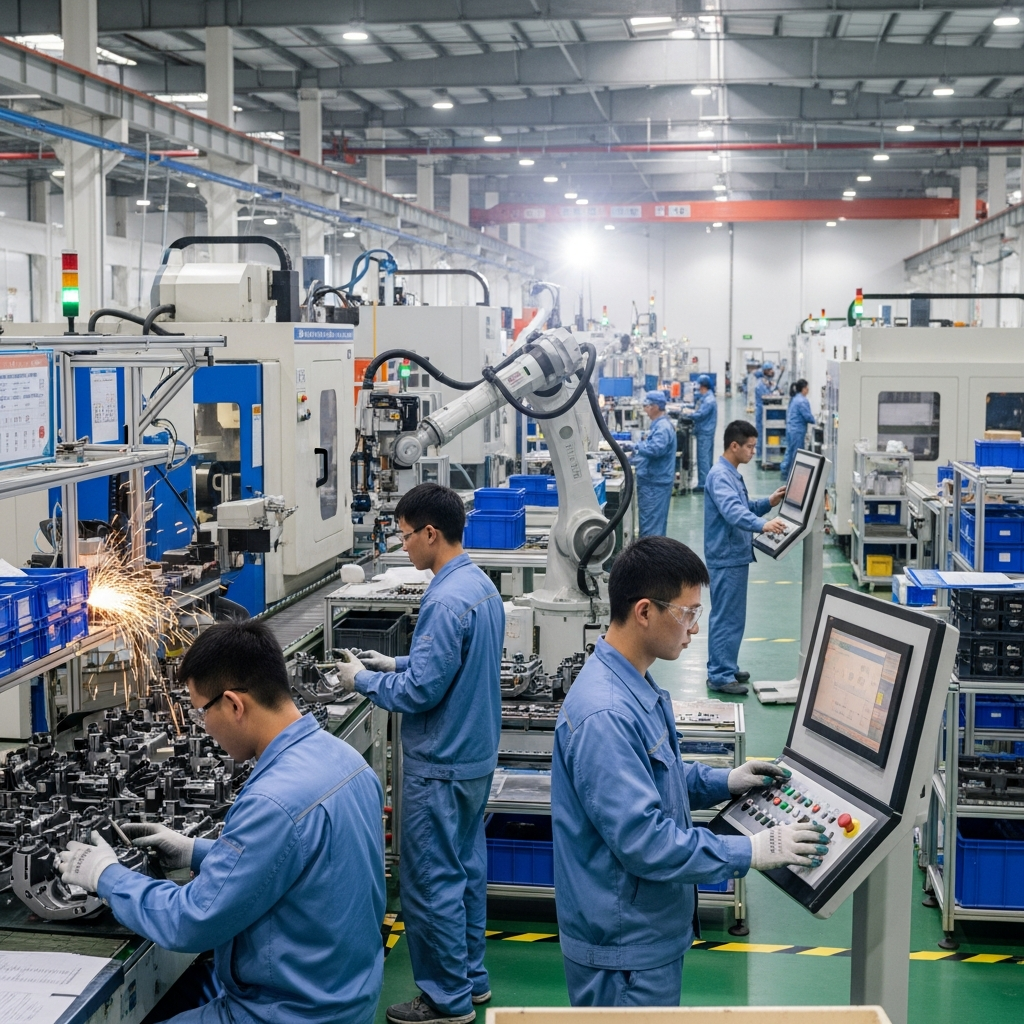
China’s manufacturing sector delivered a surprising jolt of optimism in December, with factory activity expanding for the first time in eight months. This unexpected rebound marks the end of the longest period of contraction on record, fueling hopes for a more robust start to the new year for the world’s second-largest economy. However, an expert analysis reveals that while the headline figures offer a welcome respite, underlying vulnerabilities suggest a complex path ahead for sustained economic recovery.
The Unexpected Surge: Decoding China’s Manufacturing Rebound
After a challenging year marked by fluctuating demand and trade headwinds, China’s official Purchasing Managers’ Index (PMI) for manufacturing surged to 50.1 in December. This figure represents a significant leap from November’s 49.2, decisively crossing the critical 50-point threshold that separates expansion from contraction. The shift defied economists’ predictions of continued weakness, signaling a crucial turnaround in industrial sentiment and activity.
Key Metrics: PMI Crosses the Expansion Threshold
The jump to 50.1 effectively broke an eight-month streak of decline, bringing a positive close to 2025. This momentum was not limited to the official survey; a separate private manufacturing poll independently corroborated the expansion, also registering above the 50-mark. Ms. Huo Lihui, a statistician at the National Bureau of Statistics, highlighted the broad-based nature of the improvement, noting that “Production and demand have both expanded significantly.” Notably, 16 out of 21 surveyed industries showed improvement, with the high-tech manufacturing PMI particularly impressive, jumping to 52.5. Furthermore, expectations for future production and business activities soared to their highest levels since March 2024. This collective data suggests a tangible, albeit nascent, improvement in manufacturing output and order books across the nation.
Broader Industrial Uplift: Beyond Manufacturing
The positive trend extended beyond the factory floor. China’s official non-manufacturing index, which tracks activity in the services and construction sectors, also showed robust growth. It climbed to 50.2 in December from 49.5 in the previous month, surpassing forecasts. This is particularly significant given that the non-manufacturing sector had contracted in November for the first time in nearly three years. Combining these two indicators, the National Bureau of Statistics’ composite PMI, encompassing both manufacturing and non-manufacturing activities, also registered a healthy improvement, rising to 50.7 in December from 49.7 in November. This comprehensive uplift offers a more encouraging snapshot of China’s overall economic health as the year concluded.
Beneath the Surface: Persistent Economic Headwinds
Despite the promising manufacturing data, a deeper dive reveals that the broader economic landscape remains “fragile.” While production might be picking up, several indicators from recent months highlight persistent weaknesses that could temper enthusiasm for a full-scale recovery. Understanding these underlying challenges is crucial for a realistic assessment of China’s economic trajectory.
Domestic Demand: A Critical Weakness
One of the most significant impediments to sustained growth in China is weak domestic demand. Consumer spending growth experienced a sharp slowdown in November, with Chinese consumers remaining hesitant to open their wallets. This reluctance stems from an uncertain employment outlook and the ongoing property crisis, which has eroded household wealth and confidence. Policymakers in Beijing are increasingly aware of this “contradiction between strong supply and weak demand” domestically, signaling a strategic pivot towards fostering consumption as a key economic driver.
The Lingering Shadow of the Property Crisis
The property sector, a traditional engine of China’s economy, continued to deteriorate in November. This sustained downturn has far-reaching consequences, impacting not just developers and investors but also individual households. The erosion of wealth linked to property values directly contributes to consumer hesitancy and overall economic caution. Addressing this structural challenge remains a paramount concern for Beijing as it seeks to stabilize and rebalance the economy.
Industrial Profits and Export Challenges
Adding to the complexity, recent data indicated that Chinese industrial firms experienced a steep 13.1% year-on-year drop in profits in November. This marked the steepest decline in over a year, largely attributed to sluggish global demand impacting China’s export-oriented economy. Despite a better-than-forecast export performance in the preceding month and an improvement in new export orders (rising to 49.0 from 47.6), the overall global trade environment continues to present headwinds. Such external pressures, combined with domestic vulnerabilities, underscore the delicate balance China’s economy currently navigates.
Beijing’s Balanced Approach: Policy and Priorities
In light of this mixed economic picture, Beijing’s policymakers appear to be adopting a cautious yet strategic approach. There has been little indication of significant new policy support, with authorities seemingly in no rush to implement immediate, large-scale stimulus measures. This stance is partly influenced by the expectation that China’s 2025 growth target is likely to be met, providing policymakers with some breathing room.
A Shift Towards Quality Over Speed
President Xi Jinping’s recent statements provide insight into the government’s evolving economic philosophy. He has signaled a tolerance for slower growth in some regions, emphasizing a focus on “quality, rather than pace,” of economic development. Xi has also called for a crackdown on “reckless” projects, suggesting a move away from unfettered expansion towards more sustainable and high-quality growth. This strategic shift aims to prune production in certain sectors and intensify “anti-involution” efforts, fostering a more balanced and sustainable economic environment for the long term.
The Consumption Rebalancing Act
Beijing is acutely aware of the need to rebalance the economy, shifting away from its long-standing production-driven model towards one fueled by domestic consumption. President Xi Jinping, in a significant statement published in the flagship party magazine Qiushi Journal, acknowledged “overall capacity excess” and emphasized that “ultimately consumption is the sustainable driver of economic growth.” This marks a notable shift from Beijing’s previous stance, where it rejected “overcapacity” as unfair criticism from Western governments. The commitment to cracking down on price wars and fostering robust domestic demand is central to this rebalancing act, particularly as tensions with key export markets persist.
Market Reactions and Future Outlook
The surprising economic data had an immediate, tangible impact on financial markets. Investor sentiment reacted swiftly to the news of factory expansion.
Investor Sentiment and Bond Market Shifts
Following the release of the positive PMI data, China’s 30-year bond futures experienced a notable decline, sinking 0.7 percent. Concurrently, yields climbed in the cash market. This reaction suggests that investors began shifting away from perceived haven assets, reflecting a renewed, albeit cautious, optimism about China’s economic prospects. The market’s response underscores the significance of these indicators in shaping global financial sentiment.
What Lies Ahead for the Chinese Economy?
While the December manufacturing rebound offers a much-needed morale boost, experts advise caution. The end of the longest factory slump is certainly a positive development, but the path to a robust, sustained recovery in China remains fraught with challenges. The interplay between improving industrial activity, persistent weak domestic demand, and Beijing’s strategic rebalancing efforts will define the economic trajectory in the coming months. Policymakers will need to skillfully navigate these complexities, potentially deferring any significant new stimulus until early 2026 while continuing to prioritize structural reforms and quality growth over sheer expansion. The global economy will be watching closely to see if this glimmer of hope can translate into a lasting turnaround for the world’s economic powerhouse.
—
Frequently Asked Questions
What does China’s latest factory activity report indicate?
China’s latest factory activity report indicates an unexpected recovery in December, with the official manufacturing Purchasing Managers’ Index (PMI) rising to 50.1. This figure, up from 49.2 in November, crosses the 50-point threshold, signaling expansion after an eight-month period of contraction—the longest on record. The report suggests an uplift in production, demand, and future business expectations, particularly in high-tech manufacturing, offering a positive signal for the new year’s economic start.
How are China’s policymakers addressing the country’s economic challenges?
Policymakers in Beijing are adopting a balanced approach, prioritizing “quality over pace” in economic growth and emphasizing a shift towards a consumption-driven model. President Xi Jinping has signaled tolerance for slower growth and called for cracking down on “reckless” projects and price wars to combat “overall capacity excess.” While no significant new stimulus measures have been indicated immediately, the focus is on rebalancing the economy, addressing weak domestic demand, and fostering sustainable growth, potentially deferring major policy changes until early 2026.
Despite the rebound, is China’s economy truly recovering, and what are the main risks?
While the factory activity rebound is a positive development, indicating an end to a prolonged slump, the broader Chinese economy faces significant fragilities. The recovery is not yet a definitive sign of a full economic rebound. Main risks include persistent weak domestic demand due to hesitant consumer spending and an uncertain employment outlook, the ongoing deterioration of the property sector eroding household wealth, and a steep decline in industrial profits coupled with sluggish global demand for exports. These underlying challenges suggest a complex and potentially fragile recovery path ahead.
—