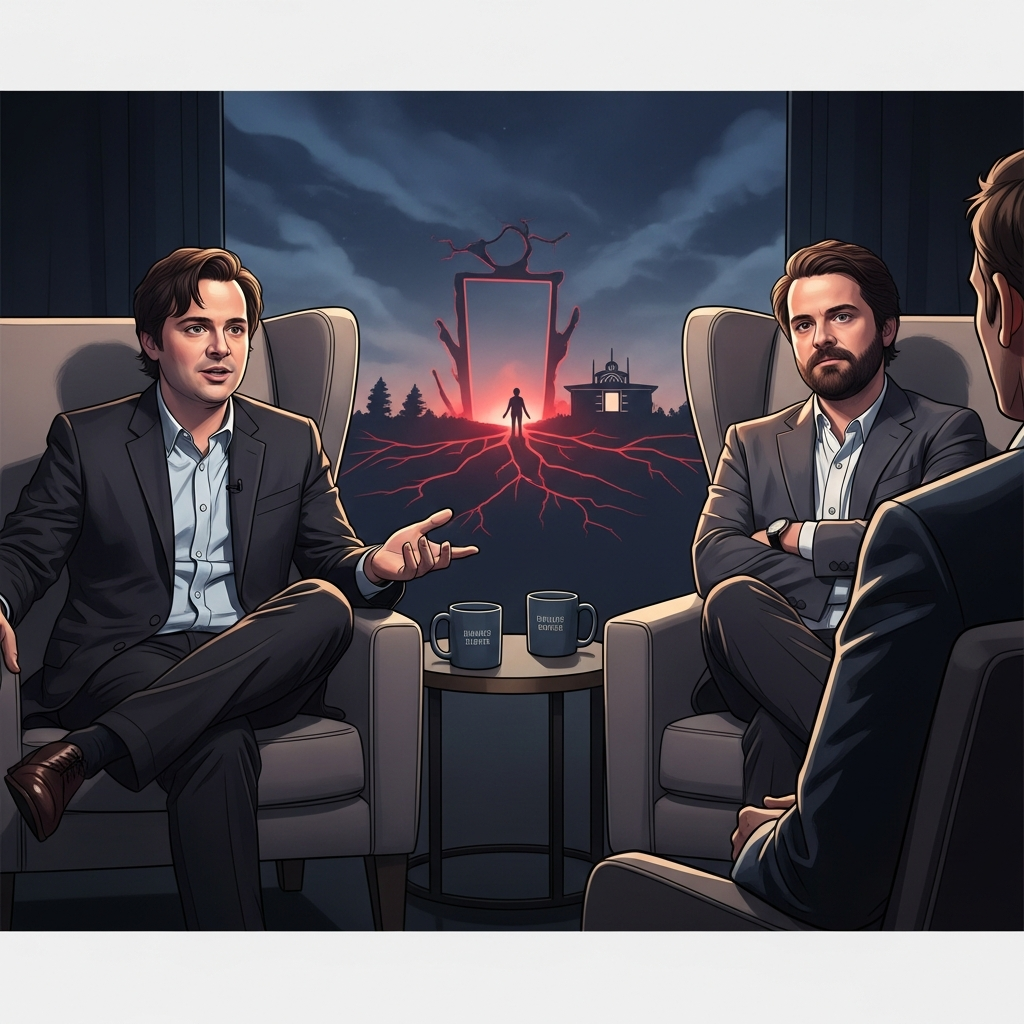
The highly anticipated Stranger Things series finale has officially concluded its epic five-season journey, leaving fans with a complex mix of triumph, ambiguity, and debate. Titled “The Rightside Up,” this final chapter offered a “closed door” conclusion, as envisioned by creators the Duffer Brothers, signaling the end of the beloved characters’ childhoods and the battle for Hawkins. While the ending aimed for bittersweet closure, its reception has been as layered as the Upside Down itself, sparking polarized reactions across the globe.
Many viewers grappled with its narrative choices, balancing the long-awaited character resolutions against lingering questions and structural critiques. From the emotional arcs of cherished friendships to the ultimate fate of Eleven, the finale delivered an experience that was, for many, both satisfying in its finality and perplexing in its execution. Dive into a comprehensive breakdown of the series’ concluding moments, the creative intentions behind them, and how fans worldwide reacted to the last stand in Hawkins.
The Duffer Brothers’ Vision: A Farewell to Childhood
From its inception, the Duffer Brothers planned a definitive end for Stranger Things. The finale, “The Rightside Up,” was conceptualized as a literal “closed door,” symbolizing the young heroes leaving their childhood behind. This emotional transition culminates in the iconic scene where Mike, Max, Lucas, Dustin, and Will complete their final Dungeons & Dragons campaign in the Wheelers’ basement, with Mike symbolically shutting the door.
Matt Duffer explained that each character’s departure from this foundational space represents a step away from their youth. Finn Wolfhard’s portrayal of Mike beautifully captures a journey from grief to a “bittersweet happiness,” as he recognizes it’s time to “pass the torch” to the next generation, notably his younger sister Holly and her friends. Ross Duffer reinforced this, stating, “our story is over once [Mike] shuts that door,” highlighting a full-circle narrative mirroring the series’ Season 1 beginning.
Pivotal Character Arcs and Emotional Crossroads
The finale deeply explored the growth of its core characters. A powerful narrative choice involved mirroring speeches between Hopper and Eleven. Hopper’s emotional plea for Eleven to fight reflected the writers’ deep concern for her difficult journey. Eleven’s subsequent monologue, asserting her right to make her own choices, marked her crucial coming-of-age moment. Matt Duffer emphasized that this finale encapsulates the end of a long coming-of-age story, where Eleven finally reaches adulthood, and Hopper, despite his overprotectiveness, learns to let go.
The resolution of long-standing tensions was also key. Steve’s near-fatal fall from the radio tower, saved by Jonathan, wasn’t just for suspense. It forced the rivals to confront their feelings about Nancy, resolving their conflict and allowing the group to unite cohesively against Vecna. Dustin’s rebellious valedictorian speech, infused with Eddie Munson’s spirit, articulated a core theme of the show: the triumph of outsiders and their ability to embrace “otherness” to combat evil. This showcased how characters like Steve, initially a “douchebag jock,” and Eddie, a misjudged outcast, revealed genuine hearts, subverting preconceived notions.
Character Fates: Where Did Everyone End Up?
The Duffer Brothers, often collaborating with the actors, outlined distinct paths for the main characters:
Dustin Henderson: Continues his pursuit of knowledge, maintaining his strong “bromance” with Steve.
Mike Wheeler: Embraces his natural storytelling ability, becoming a writer.
Will Byers: Finds acceptance and happiness in a larger city, away from Hawkins.
Max Mayfield & Lucas Sinclair: Finally go on their long-awaited movie date to see Ghost.
Jim Hopper & Joyce Byers: Achieve a “Dickensian ending,” with Hopper proposing at Enzo’s and the couple planning a move to Montauk, a nod to the show’s original concept.
Steve Harrington: Stays in Hawkins, becoming a little-league coach, a path hinting at future fatherhood.
Nancy Wheeler: Rejects the “obvious path,” dropping out of Emerson College to work at The Herald in Boston, underscoring her fierce independence.
Robin Buckley: Attends Smith College, a detail suggested by actress Maya Hawke.
Jonathan Byers: Fulfills a Season 1 dream, becoming a filmmaker at NYU, working on an anti-capitalist cannibal movie—an idea developed with Charlie Heaton.
Supporting Characters: Murray and Mr. Clarke bond, with Murray continuing his “weird stuff.” Mr. Clarke remains dedicated to educating kids, and Erica is confidently headed for valedictorian.
The Ambiguity of Eleven’s Farewell
Eleven’s ending was deliberately left open to interpretation. The episode depicts Mike’s hopeful fantasy of her escaping the Upside Down to a small village, a “happy ending” the group chooses to believe. The Duffer Brothers clarified that this confronts the harsh reality of her post-conflict situation and the impossibility of a “normal life.” Mike, the group’s optimist, believes in this happier, albeit unconfirmed, future. Ross Duffer explained they never envisioned Eleven remaining with the group, as she “represents magic in a lot of ways and the magic of childhood.” For the narrative of Hawkins to properly conclude, Eleven “had to go away,” making it more “beautiful” for characters to hold onto belief rather than actual contact.
The Final Battle: Triumph, Twists, and Criticisms
The climax of the finale featured an “epic final fight” where all characters collaborated to defeat Vecna and the Mind Flayer, preventing the merging of worlds. However, the path to victory was not without its controversies. The USA Today review, for instance, characterized the finale as “more of a whimper than a bang,” expressing disappointment over logical fallacies, plot holes, and “silly” twists.
A central critique focused on the true identity of the villain. While Vecna was initially believed to be the ultimate antagonist, it was revealed that a glowing stone merging with young Henry Creel’s body connected him to a “big blob of smoke and evil”—essentially a solid, spider-monster version of the Mind Flayer. This reveal was labeled a “cop-out” by some, arguing it reduced Vecna from a “visceral, human baddie” to a “comically large” amorphous entity, a choice attributed to the show’s “money-making juggernaut” status. The Duffer Brothers confirmed Vecna was “too far gone” for redemption, emphasizing his “choice” in aligning with the Mind Flayer.
The final confrontation involved Eleven physically battling the gigantic monster, Nancy wielding a machine gun, and Will controlling Vecna through their hive mind connection. After what appeared to be Vecna’s demise, the episode transitioned into an extended “coda” period, fast-forwarding 18 months.
Fan Reactions: Polarized and Passionate
The Stranger Things finale elicited “wildly polarized reactions” from its global fanbase. Many critics and viewers on social media platforms expressed disappointment. Common complaints included Vecna’s perceived premature elimination (occurring halfway through the episode), the lack of significant character deaths among the main cast, and unresolved narrative elements like a deeper Henry Creel origin story. The short 18-month time jump and the episode’s pacing, with a substantial “epilogue” section, also drew criticism, with some wishing for more extended and impactful fight scenes.
Despite the negativity, a significant portion of the audience found the ending satisfying. Many appreciated the “happy ending for everyone” vibe, the emotional resolution of character arcs, and the bittersweet, open-ended nature of Eleven’s fate. The communal viewing experiences at cinema screenings, where fans dressed as characters and shared theories, highlighted the show’s massive cultural impact and the intense emotional investment of its audience. The decision to use David Bowie’s “Heroes” for the finale credits, suggested by Joe Keery, was widely praised as a “fitting” anthem.
Unanswered Questions and Lingering Thoughts
Even with a comprehensive wrap-up for most characters, the finale left “certainly holes in the story that weren’t fully explained.” Viewers pointed to a “million unanswered questions,” such as the ultimate fate of supporting characters like Dr. Kay or Vickie, the precise origin of the Mind Flayer stone, and the notable absence of demogorgons in the final battle. The lack of detailed explanations regarding the military’s easy treatment of the Hawkins group post-apocalypse also puzzled some.
The “passing of the torch” moment, where younger kids take over the D&D table, while poignant, was criticized by some as overly symbolic and heavy-handed. Ultimately, the show’s immense cultural magnitude made delivering a universally satisfying ending a formidable, perhaps impossible, task. For some, characters like Lucas, Max, Dustin, Will, and Mike were reduced to “archetypes” from a role-playing game rather than fully developed individuals in the final stretch.
Frequently Asked Questions
What was the Duffer Brothers’ original intention for the Stranger Things series finale?
The Duffer Brothers conceived the finale, “The Rightside Up,” as a “closed door” moment, signifying the end of the main characters’ childhoods. This vision culminated in the final scene where the core group completes their last Dungeons & Dragons campaign in the Wheelers’ basement, with Mike symbolically closing the door. They aimed to convey a bittersweet transition from youth to adulthood, emphasizing that the story of Hawkins and the Upside Down would conclude with a sense of finality for this particular cast.
How did fans react to Eleven’s ambiguous fate in the Stranger Things ending?
Eleven’s ultimate fate received polarized reactions. Initially, the narrative suggests she sacrifices herself in the Upside Down. However, a later scene features Mike proposing she faked her death using Kali’s illusion powers, escaping to a dreamed-of land. The Duffer Brothers deliberately left her ending open, stating she represents “the magic of childhood” and needed to “go away” for the main story to resolve. While some fans found this ambiguous resolution emotionally satisfying, others were disappointed by the lack of a concrete conclusion for such a pivotal character.
What were some common criticisms regarding the narrative and pacing of the Stranger Things finale?
Critics and fans widely discussed several issues with the finale’s narrative and pacing. Many felt that the main villain, Vecna, was defeated too early in the episode, with a substantial portion dedicated to an “epilogue” spanning 18 months. There was disappointment over the lack of significant main character deaths, and some found the reveal of the Mind Flayer as the ultimate “spider-monster” villain to be a “cop-out,” diminishing Vecna’s human villainy. Plot holes, unanswered questions, and a perceived reduction of characters to D&D archetypes also fueled dissatisfaction.
The Legacy of Hawkins: A Saga Concluded
The Stranger Things series finale marks the definitive end of an era for Netflix’s beloved sci-fi horror phenomenon. While the journey concluded with “a happy ending for everyone” in its epilogue, depicting engagements, university aspirations, and budding careers, it underscored the enduring power of friendship and the triumph of the outsider. The use of David Bowie’s “Heroes” in the credits fittingly summarized the spirit of the show and its unlikely protagonists.
Despite the debates, the finale ensured that the characters of Hawkins would live on, albeit with their futures now imagined beyond the Upside Down. The Duffer Brothers delivered a conclusion true to their original vision, albeit one that resonated differently with various segments of its massive global audience. The Stranger Things saga has closed its door, but its cultural impact and the memories of its vibrant characters will undoubtedly continue to resonate for years to come.