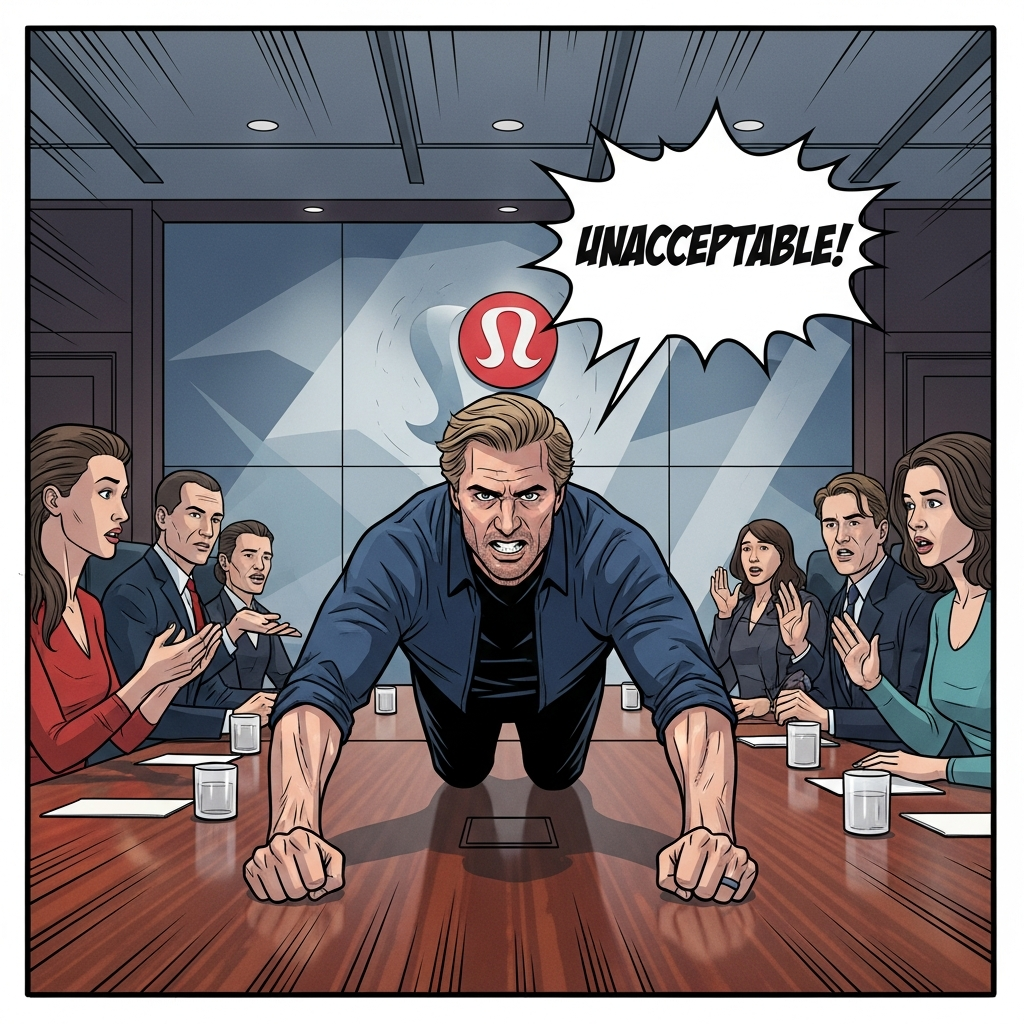
The iconic athleisure brand Lululemon is currently embroiled in a high-stakes corporate drama. Its outspoken founder, Chip Wilson, is spearheading a significant Lululemon leadership shakeup, actively challenging the company’s direction and board. This comes as Lululemon navigates a turbulent period marked by executive departures, intense competition, and a notable dip in its stock performance. Investors and loyal customers alike are closely watching whether this internal battle will redefine the future of the premium sportswear giant.
The Founder’s Return: Chip Wilson’s Bold Move
Chip Wilson, who remains Lululemon’s second-largest shareholder, isn’t shy about his dissatisfaction. On Monday, he escalated his long-standing criticism by officially nominating three new directors to the board. His proposed slate includes experienced executives from diverse fields: former leaders from ESPN and Activision, alongside a former co-CEO from On, one of Lululemon’s increasingly formidable rivals. This bold move, initially reported by The Wall Street Journal, signifies a full-blown proxy fight, a direct challenge to the current corporate governance.
Wilson’s motivations are clear. In a recent press release, he asserted that Lululemon desperately “needs visionary creative leadership to thrive.” He believes the existing board members “lack these skills,” and his nominated leaders are “needed to redefine Lululemon and begin this company’s next chapter of success.” This isn’t Wilson’s first foray into challenging the company he founded. He notoriously stepped down from the board in 2015 and has since routinely attacked Lululemon’s strategic decisions, even criticizing its diversity and inclusion efforts last year. His current campaign, however, appears to be his most direct and organized effort to regain influence over the company’s trajectory.
A Multi-Front Battle for Control
The pressure on Lululemon’s board isn’t confined to Wilson’s campaign alone. The company is facing scrutiny from another powerful entity: Elliott Investment Management. This prominent activist investment firm has quietly amassed a substantial $1 billion stake in Lululemon. According to The Wall Street Journal, Elliott is also advocating for significant changes, including pushing for former Ralph Lauren executive Jane Nielsen to take the helm as the next CEO. This dual attack from major shareholders underscores the widespread concern regarding Lululemon’s current strategic direction and leadership stability.
The timing of these challenges is particularly sensitive. Just weeks prior to Wilson’s nominations, Lululemon announced the departure of its CEO, Calvin McDonald, concluding a tumultuous seven-year tenure. Wilson himself did not mince words, calling the CEO change announcement a “total failure of board oversight with no clear succession plan in place.” He believes this demonstrates that shareholders have “lost faith in the current board.” The lack of a clear succession plan leaves a void at the top, intensifying the urgency of the ongoing Lululemon leadership shakeup.
Navigating a Shifting Athleisure Landscape
Lululemon’s internal struggles are unfolding against a backdrop of significant external challenges. The once-dominant athleisure brand has struggled to maintain its pace against a surging tide of competitors. This softening market for premium activewear is forcing Lululemon to re-evaluate its strategy.
Market Headwinds and Intense Rivalry
According to Neil Saunders, managing director and retail analyst at GlobalData, Lululemon is “hurting” due to several factors. Growing competition, particularly from agile brands like On, is chipping away at its market share, especially in its crucial North American home market. The broader athleisure market, which Lululemon once defined, has become saturated and less dynamic. This means consumers have more choices than ever before, making brand loyalty harder to secure.
The “Junkification” Critique
Perhaps most damaging is the perception that Lululemon’s clothing designs have become “dated.” Saunders offers a sharp critique, suggesting that current collections “do not feel all that well differentiated.” He further elaborates that where the company has attempted to pivot, it “seems to be going into junkification territory with heavily branded hoodies and tops that simply do not speak to the traditional finesse and quality of the Lululemon brand.” This observation points to a potential erosion of Lululemon’s core brand identity, an issue that Wilson himself has repeatedly highlighted as a lack of “creative leadership.”
Lululemon’s Financial Performance Under Scrutiny
The financial indicators paint a mixed picture, reflecting the company’s struggles. Lululemon’s stock has shed over 40% of its value in 2025 alone. This significant downturn is directly attributed to market concerns over slower revenue growth and the intense competitive pressures within the apparel industry. This performance, coupled with the executive changes, has certainly fueled Wilson’s campaign for a Lululemon leadership shakeup.
However, some analysts see a different story unfolding beneath the surface. While the company’s recent performance has been underwhelming, its fundamental business quality remains robust for some.
An Investment Opportunity Amidst Turmoil?
Despite the headline-grabbing internal conflicts and stock depreciation, a contrarian perspective suggests Lululemon Athletica (LULU) might be an attractive investment opportunity. Neil Patel, in a November 2025 article, argues that the current low valuation presents a compelling case for optimism for value investors.
The Bull Case: Strong Fundamentals and Growth
Lululemon stock was trading a remarkable 68% below its peak in December 2023 and was down an alarming 57% year-to-date as of mid-November. This significant discount, however, is what makes it appealing to some. The company’s price-to-earnings (P/E) ratio stood at a low 11.2, a substantial discount compared to the S&P 500’s P/E multiple of 25.7, signaling that the stock could be “dirt cheap.”
Beyond the valuation metrics, Lululemon possesses foundational strengths as a “high-quality business”:
Strong Brand and Pricing Power: The brand is renowned for its premium, high-grade merchandise, allowing it significant pricing power in the market.
High Profitability: Evidence of this pricing power is clear in its “superb gross margin” of 58.5% reported in the fiscal 2025 second quarter.
Continued Expansion: Despite overall market concerns, the business continues to expand, with “huge gains coming in China” as a significant growth driver.
Impressive Earnings Power: Over the past five years, Lululemon’s net income has grown at a compound annual rate of 33.7%, demonstrating robust and consistent financial performance.
Value Investor Appeal
This combination of a strong brand, high profitability, strategic growth, and an attractive valuation suggests that its current discount may not fully reflect its underlying quality. For investors seeking long-term value, the current Lululemon leadership shakeup and market challenges could be seen as a temporary dip in a fundamentally strong company.
The Path Forward: Leadership, Brand, and Strategy
The outcome of this proxy fight will undoubtedly shape Lululemon’s immediate future. Whether Wilson’s slate of directors is approved, or Elliott’s preferred CEO candidate is installed, the company is on the brink of significant change. The challenge for Lululemon’s leadership, whoever that may be, will be multifaceted: restoring creative vision, reinvigorating brand appeal, sharpening its competitive edge, and effectively communicating its strategy to regain shareholder and consumer confidence. The long-term success of the brand hinges on finding the right balance between honoring its heritage and innovating for the future.
Frequently Asked Questions
What is driving the current Lululemon leadership shakeup?
The current leadership shakeup at Lululemon is primarily driven by founder Chip Wilson’s dissatisfaction with the company’s strategic direction and board oversight. He is initiating a proxy fight to nominate new directors, citing a need for “visionary creative leadership.” This comes amid Lululemon’s struggles with increasing competition, a softening athleisure market, and its stock losing over 40% of its value in 2025. Additionally, the recent departure of CEO Calvin McDonald and a lack of a clear succession plan have intensified shareholder concerns.
Who are the key players involved in the Lululemon proxy fight?
The primary key player is Lululemon founder Chip Wilson, who is the company’s second-largest shareholder and is actively nominating three new directors to the board. These nominees include former executives from ESPN, Activision, and On. Another significant player is Elliott Investment Management, an activist investment firm with a $1 billion stake, which is also pressuring the company to appoint former Ralph Lauren executive Jane Nielsen as the next CEO. The current Lululemon board and management are the targets of these shareholder actions.
Is Lululemon stock a good investment despite recent challenges?
Despite a significant downturn in 2025 (down 57% year-to-date in November), some financial analysts view Lululemon (LULU) stock as a potentially attractive investment. This perspective is based on its current low price-to-earnings (P/E) ratio of 11.2, which is considerably lower than the S&P 500’s P/E of 25.7, suggesting it may be undervalued. Proponents highlight Lululemon’s “high-quality business” fundamentals, including a strong brand, significant pricing power, a superb gross margin of 58.5% in Q2 2025, continued expansion (especially in China), and an impressive 33.7% compound annual growth rate in net income over the past five years.
Conclusion
Lululemon stands at a critical juncture, facing challenges both externally in a fiercely competitive market and internally from its influential founder and activist investors. The outcome of this Lululemon leadership shakeup will be pivotal. It’s a testament to the brand’s enduring power that, even amidst controversy, some see a robust underlying business poised for a rebound. The coming months will reveal whether new leadership can navigate these pressures, revitalize the brand’s creative vision, and reclaim its leading position in the global athleisure market.