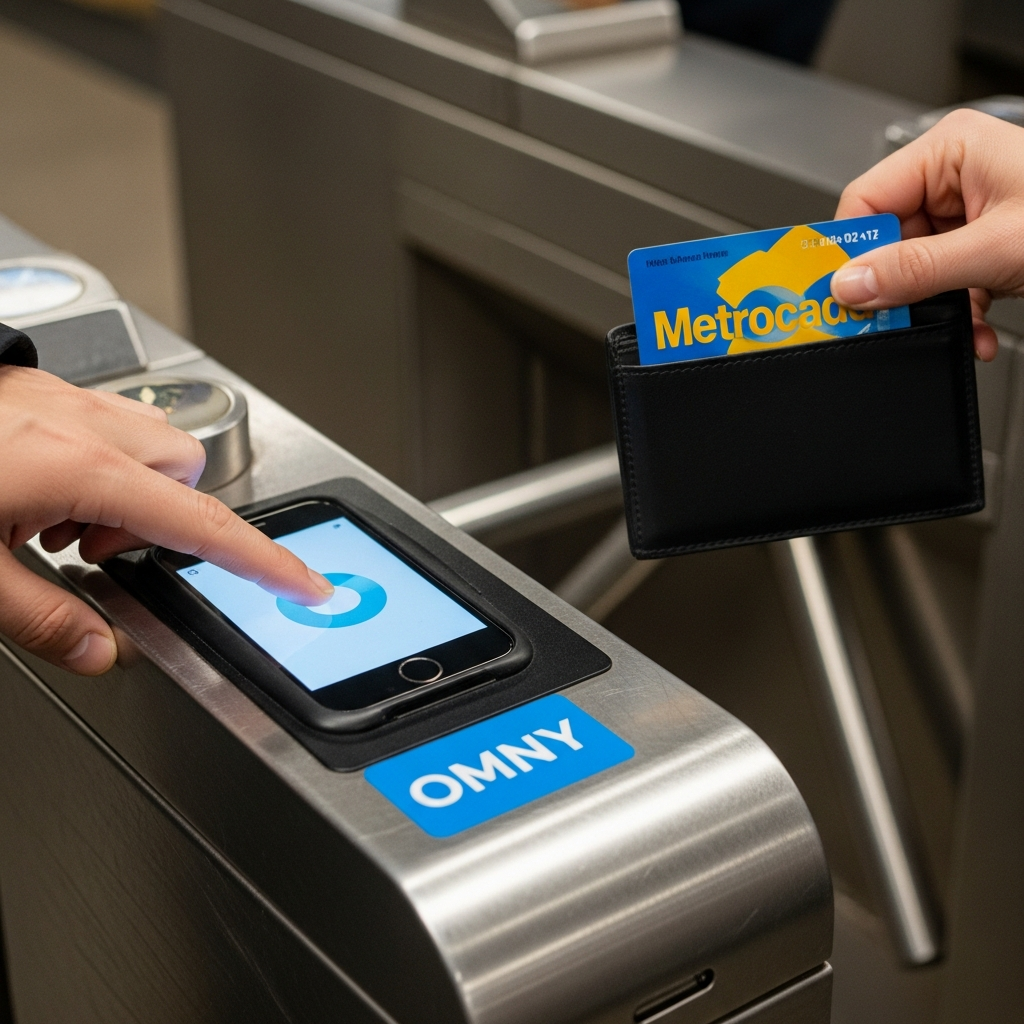
New York City stands on the cusp of a significant transit transformation. After three decades as a symbol of urban life, the beloved MetroCard is making its final stop. Beginning January 1, the Metropolitan Transit Authority (MTA) will cease selling the iconic blue and yellow plastic cards, ushering in an era of seamless, tap-and-go fare payment with OMNY. This pivotal shift marks more than just a technological upgrade; it signals the end of an era for millions of New Yorkers and visitors alike, many of whom have shared both the triumphs and frustrations of the classic swipe.
For years, the distinct “thud” of a rejected MetroCard at the turnstile was a universal experience. Swiping too fast, too slow, or facing the wrong way often led to awkward moments. Mike Glenwick, 37, a lifelong resident and avid MetroCard collector, candidly shared, “It’s embarrassing. You feel like you’re not an authentic New Yorker if you’re not swiping your MetroCard the right way.” This familiar ritual, once a rite of passage, will soon become a distant memory as the city embraces its digital future.
Farewell to a New York Icon: The MetroCard’s Last Ride
The MTA’s transition to OMNY (One Metro New York) represents a significant leap forward in NYC transit modernization. While existing MetroCards will still be accepted for an unspecified period, the official halt to new card sales on January 1, 2025, signals the system’s irreversible move. This change isn’t merely about convenience; it reflects a broader initiative to streamline operations and enhance the rider experience. MTA chief customer officer Shanifah Rieara highlighted the benefits, stating that tap-and-go fare payment saves riders the “guessing game” of fare packages and simplifies travel. This move is projected to save the agency approximately $20 million annually in production, distribution, and maintenance costs.
The shift to OMNY, which allows payment via smartphones, smartwatches, credit cards, or dedicated OMNY cards, is part of a larger overhaul of New York City’s public transportation infrastructure. This systemic modernization extends beyond just fare collection; it’s also evident in the MTA’s multi-billion dollar plan to replace aging subway cars, like the distinctive R46 and R86 models with their warm orange and yellow seating. These older trains, celebrated for their appearances in pop culture, are being phased out for newer, more reliable models featuring modern designs and open “gangways” between cars. This parallel evolution demonstrates the MTA’s commitment to upgrading all facets of the public transportation system.
A Legacy of Evolution: From Tokens to the MetroCard
The story of NYC fare payment is one of continuous adaptation. Before the MetroCard, New Yorkers relied on subway tokens, first introduced in 1953. These small, coin-like discs, often featuring an engraved “NYC,” were straightforward to use: simply drop them into the turnstile. For the MTA, tokens offered a practical solution, allowing fare increases without redesigning coin collection systems. However, they were clunky to carry and lacked flexibility.
The vision for a more modern system emerged in 1983, when MTA Commissioner Richard Ravitch proposed a magnetic stripe card with stored value. Drawing inspiration from other modern cosmopolitan cities, his idea quickly gained traction. Jodi Shapiro, curator of the FAREwell MetroCard exhibit at the New York Transit Museum, notes how this initially aimed to keep pace with global trends. While early ideas, like integrating MetroCards with pay phones, didn’t materialize, the potential for innovation was clear.
The MetroCard, launched in 1994, brought revolutionary changes. It offered free transfers between buses and subways, a massive perk that tokens couldn’t match. Flexible fare options, including discounts for seniors, disabled people, and students, along with unlimited monthly passes, significantly improved accessibility and affordability for many commuters. However, the MetroCard wasn’t a silver bullet for all transit woes. While the MTA hoped it would curb fare evasion, sociology professor Noah McClain observed that “fare evasion certainly endured, albeit often in different forms,” citing infamous “swipers” who fraudulently bypassed turnstiles.
More Than a Ticket: The MetroCard as a Cultural Icon
Beyond its functional role, the MetroCard quickly cemented its place in New York City’s cultural landscape. Much like the tokens before it, the MetroCard became a collectible item, and this was largely by design. Since its inaugural limited edition in 1994, the MTA has issued around 400 commemorative MetroCards. These special editions, featuring advertisements or celebrating historic events like the Grand Central centennial or the Yankees-Mets “Subway Series,” became highly sought after.
Memorable limited-edition releases, such as those featuring David Bowie or Notorious B.I.G. for museum exhibits and birthdays, drew hours-long lines at stations. Mike Glenwick, whose collection numbers nearly 100, recalls his first card featuring the New York Rangers after their 1994 Stanley Cup win. He explained the appeal: “It was something that was accessible to collect. I didn’t spend extra money because we used the MetroCards anyway.” This accessibility made it a unique souvenir and a piece of shared city history.
The MetroCard also found its way into the art world, becoming an unexpected medium for creative expression. Artist Thomas McKean, for instance, transforms discarded MetroCards into intricate mosaics and sculptures. What began as an idle experiment on a subway ride evolved into a passion, leading to exhibitions and commissions. McKean’s art, featured in Time Out New York and upcoming Transit Museum exhibits, demonstrates the profound aesthetic and material appeal of the cards, even attracting admirers from outside New York. For many, the MetroCard represents a tangible piece of New York life, much like the city’s celebrated landmarks and cultural institutions.
Embracing the Future: OMNY and Beyond
The introduction of OMNY signifies a permanent shift towards a more efficient and integrated fare payment system. This new technology facilitates quicker entry through turnstiles, minimizing the frustrating “swipe gone wrong” scenarios that were once commonplace. The benefits for riders include the ease of using existing credit cards or mobile wallets, eliminating the need to purchase physical cards or calculate optimal fare packages. The system even offers unlimited rides after 12 taps within a week, a modern take on the unlimited pass.
Despite the clear technological advantages, the transition to a largely cashless system raises important questions. While OMNY cards can still be purchased with cash at vending machines and retailers, concerns persist about the potential exclusion of unbanked individuals or those without credit/debit cards. This aspect of the transition highlights the ongoing challenge of ensuring equitable access to public services in an increasingly digital world. As New York City continues its evolution, embracing new technologies while honoring its diverse population remains a critical balancing act.
The phasing out of the MetroCard isn’t just an administrative change; it’s an emotional departure for many. Mike Glenwick encapsulates this sentiment: “I feel like part of my childhood is disappearing… I don’t want to let it go until I have to.” This blend of nostalgia and progression is a hallmark of New York City, a place constantly reinventing itself while preserving its unique spirit. The MetroCard may soon be a relic, but its legacy as an iconic New York City symbol will undoubtedly endure.
Frequently Asked Questions
What is the main reason the MetroCard is being phased out, and what is OMNY?
The MetroCard is being phased out primarily to modernize New York City’s public transportation system and improve efficiency. Its replacement, OMNY (One Metro New York), is a contactless fare payment system designed for quicker, easier transactions. OMNY allows riders to tap their credit card, debit card, smartphone, smartwatch, or a dedicated OMNY card at turnstiles. The shift aims to reduce operational costs, streamline fare collection, and enhance the overall rider experience by eliminating common issues associated with the MetroCard’s magnetic stripe technology.
How can I pay for NYC transit services after MetroCard sales officially end?
After MetroCard sales cease on January 1, 2025, riders will primarily use the OMNY system. You can pay your NYC transit fare by tapping any contactless credit or debit card directly on the OMNY reader at turnstiles. Alternatively, you can use a digital wallet on your smartphone or smartwatch, such as Apple Pay or Google Pay. For those who prefer a physical card or wish to pay with cash, dedicated OMNY cards are available for purchase at vending machines in subway stations and at various retailers across the city.
What will happen to existing MetroCards, and what are the concerns surrounding the new OMNY system?
Existing MetroCards will continue to be accepted at terminals for an unannounced period after new card sales end. The MTA plans to announce a final acceptance date at a later time. While OMNY offers significant convenience, concerns have been raised regarding its potential impact on unbanked individuals or those without credit/debit cards, who may find it harder to access the public transportation system if cash options become limited. Though OMNY cards can be purchased with cash, some fear a future where the system leans entirely cashless, potentially excluding a segment of the population.
Conclusion
The sunset of the MetroCard marks a poignant moment in New York City’s vibrant history. From the frustrating swipes to the cherished commemorative editions, this little blue and yellow card became a tangible part of millions of daily commutes and countless tourist adventures. As NYC transit embraces the streamlined, tap-and-go future of OMNY, the city moves forward, yet the legacy of the MetroCard — its evolution from tokens, its cultural impact as both art and collectible, and the shared experiences it facilitated — will forever remain embedded in the fabric of the Big Apple. While nostalgia for the past is natural, the promise of a more efficient, modern public transportation system beckons.