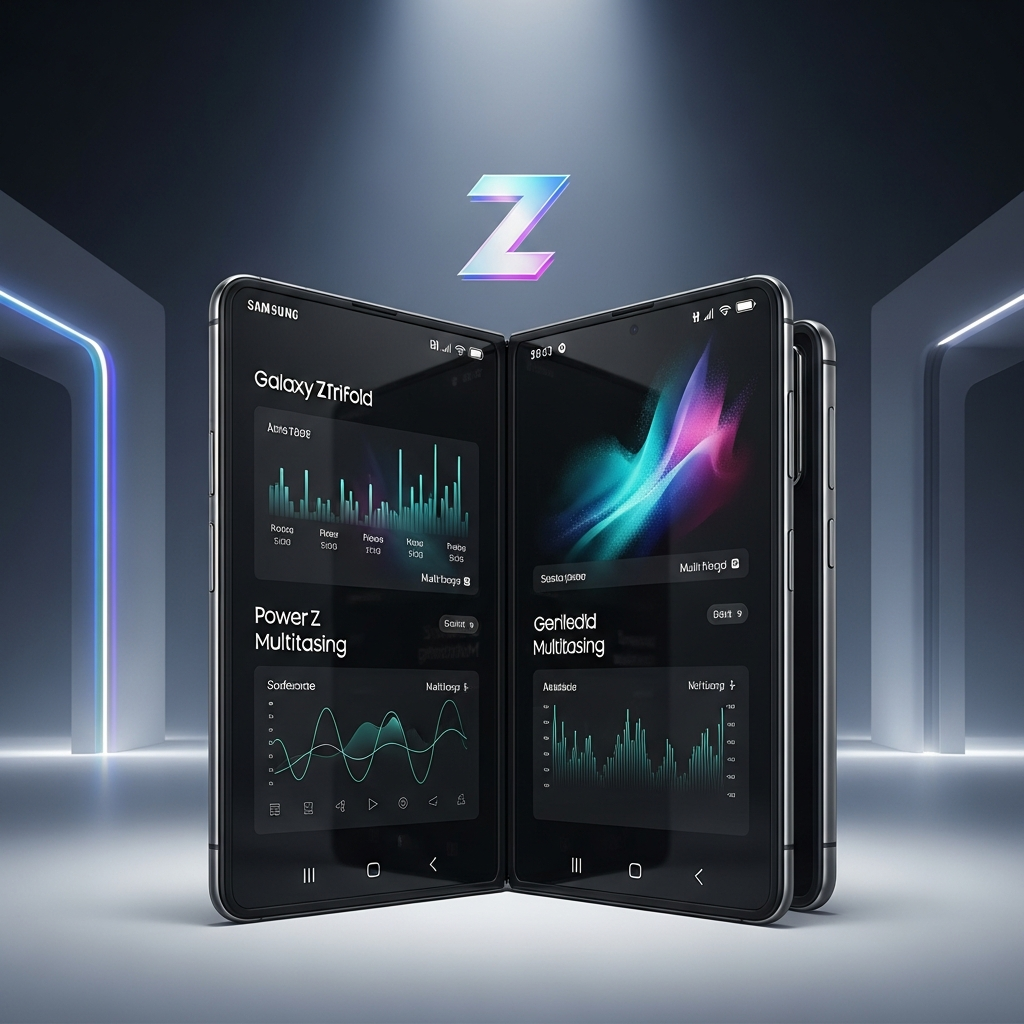
The Samsung Galaxy Z TriFold has captured global attention, not for its widespread availability, but for its profound scarcity. Despite selling out within minutes of its South Korean launch, this cutting-edge device remains largely unattainable. This isn’t a supply chain misstep; it’s a deliberate, strategic maneuver by Samsung. This article delves into why the tech giant is intentionally limiting the TriFold’s volume, positioning it as a powerful statement of innovation rather than a mass-market product.
The Allure of the Unattainable: TriFold’s Rapid Sell-Outs
Since its debut in South Korea on December 12, 2025, the Galaxy Z TriFold has vanished from shelves almost instantaneously. Priced at a premium 3,590,400 won ($2,466), this groundbreaking device sold out its initial batch in mere five minutes. A subsequent online restock on December 17 met a similar fate, disappearing in roughly two minutes. As of late December 2025, the TriFold remains unavailable in Korea until at least January, fueling consumer demand and speculation.
This pattern, however, reveals more about Samsung’s strategy than overwhelming sales volume. Industry estimates point to an unusually small supply: just 3,000 to 4,000 units sold domestically so far, with global shipments projected at a mere 20,000 to 30,000 units. This scale is negligible when compared to Samsung’s established foldable lineup, like the Galaxy Z Fold7 and Z Flip7, which collectively garnered over 1.04 million preorders earlier the same year. The TriFold is clearly playing a different game, emphasizing exclusivity over accessibility.
A Strategic Masterstroke: Why Scarcity is Deliberate
Samsung’s approach to the Galaxy Z TriFold is a sharp departure from typical flagship launches. There were no widespread review units distributed to media outlets or content creators. Industry insiders describe the device as a tightly controlled, special-edition product. Its primary purpose? To demonstrate market leadership and engineering capability, not to drive high sales volumes or generate immediate profits. This strategic positioning is rooted in several critical factors.
Engineering an Edge: The Cost of Cutting-Edge Innovation
Developing a tri-fold smartphone like the Galaxy Z TriFold is an immense engineering feat, pushing the boundaries of current mobile technology. The device boasts a large 10-inch tablet-like screen that folds down into a compact 6.5-inch smartphone. This transformative design allows users to seamlessly switch between productivity, immersive viewing, and everyday use. However, this advanced functionality comes with significant manufacturing challenges.
A tri-fold phone requires not one, but two complex hinges, alongside multiple high-end OLED panels. The assembly process demands far tighter tolerances than conventional book-style foldables. Expanding production rapidly would significantly increase the risk of defects, compromising quality and pushing manufacturing costs even higher. Samsung utilizes advanced high-speed CT testing to meticulously verify internal alignment and bonding quality, recognizing that a single flaw can render the entire multi-fold assembly unusable.
The Profitability Puzzle: Thin Margins for a Breakthrough Product
Profitability serves as another crucial limiting factor in the TriFold’s supply strategy. The custom OLED panels used in the device are considerably more expensive than those found in standard foldables. Furthermore, memory semiconductor prices have seen sharp increases in recent months, adding to the overall bill of materials.
Korean tech analysts initially anticipated a price tag exceeding 4 million won. However, Samsung deliberately priced the TriFold lower, at 3,590,400 won. This unusually precise figure suggests a conscious effort to keep the price as low as possible for consumers. Lim Sung-taek, Vice President and head of Samsung Electronics Korea, revealed that the price was “a figure we arrived at only after cutting and cutting again.” Multiple industry sources suggest Samsung is likely operating on extremely thin margins, or even incurring losses, on each unit sold. This underscores the strategic focus on innovation and market positioning over immediate financial gains for this particular device.
Prioritizing Durability: A Contrast in Foldable Philosophy
Samsung’s strategic decisions for the Galaxy Z TriFold also highlight a distinct philosophy regarding durability and user experience, especially when compared to rivals like Huawei. The TriFold features a dual inward-folding design that fully conceals and protects its main 10-inch display when closed. This contrasts sharply with Huawei’s first-generation Mate XT, launched in late 2024. Huawei’s device employed an outward-folding Z-style mechanism, which left a portion of its screen exposed.
While Samsung’s design results in a slightly thicker and heavier device, analysts and reviewers generally regard it as more reliable and robust. This prioritization of screen protection and long-term durability reinforces Samsung’s commitment to building trust in the nascent, yet rapidly evolving, foldable smartphone market. Huawei, in contrast, aimed for higher volume with its Mate XT, selling an estimated 470,000 units by Q2 2025 at a similar or even higher price point ($2,845-$3,660). This illustrates a clear divergence in strategy: Huawei pursuing scale, Samsung emphasizing engineering prowess and perceived longevity.
Samsung’s Broader Vision: The TriFold in a Diverse Portfolio
The limited, strategic launch of the Galaxy Z TriFold must be viewed within the context of Samsung’s broader, ambitious mobile strategy for 2026. While the TriFold showcases extreme innovation, Samsung is simultaneously targeting massive sales volumes for its mainstream devices. The company aims for a record annual revenue of $90.7 billion for its mobile division, planning to sell a combined 240 million phones and 27 million tablets next year.
A cornerstone of this strategy is the upcoming Galaxy S26 series, which Samsung hopes will achieve 35 million unit sales. The S26 launch is anticipated to be “AI-centric,” focusing on advanced “agentic AI experiences” powered by its proprietary Galaxy AI platform and innovative hardware like the Exynos 2600 chip. This demonstrates Samsung’s commitment to driving mainstream demand through compelling upgrades and artificial intelligence, rather than relying on price hikes. The company also expects strong contributions from the next generation of its conventional foldables, the Galaxy Z Fold8 and Flip8, to reach these targets.
This multi-faceted approach shows Samsung’s diverse product strategy: from a bleeding-edge, exclusivity-driven device like the TriFold, designed to push technological boundaries and establish market leadership, to high-volume flagships like the S26 series, which will leverage AI and hardware improvements to capture a broad consumer base. Even popular lifestyle products, such as ‘The Frame’ TVs or various Black Friday deals on watches, tablets, and appliances, highlight Samsung’s ability to cater to different market segments with tailored value propositions. The TriFold, therefore, serves as a halo product, reinforcing Samsung’s image as an innovator, while other lines focus on market penetration and revenue.
The Future is Folding: Positioning for Growth
The timing of the Galaxy Z TriFold’s strategic launch is also highly significant for the future of the foldable market. Industry analysts, including IDC, forecast substantial growth, with foldable shipments expected to increase by nearly 30 percent year-on-year in 2026. A major catalyst for this growth is the highly anticipated entry of Apple into the foldable space, reportedly with a device priced around $2,400.
Nabila Popal, Senior Research Director at IDC, commented on this evolving landscape: “Samsung will kick start 2026 with the Galaxy Z Trifold, introducing tri-fold innovation to mainstream global consumers. But the real game-changer for the category comes at year-end when Apple enters the foldable space.” By launching the TriFold, Samsung asserts its pioneering role and demonstrates its advanced capabilities, preemptively staking its claim as the leader in multi-fold technology before new competitors arrive. It’s a clear signal that Samsung intends to define the cutting edge of foldable devices.
Frequently Asked Questions
Why is the Samsung Galaxy Z TriFold so difficult to buy?
The Samsung Galaxy Z TriFold is deliberately kept in limited supply due to a strategic decision by Samsung, not production issues. Its extreme scarcity is a result of high manufacturing costs, the complexity of producing a tri-fold device (requiring two hinges and multiple OLED panels), and Samsung’s aim to position it as a demonstration of market leadership and engineering capability rather than a mass-market product. The company is likely accepting very thin margins, or even losses, on each unit, prioritizing innovation showcase over volume sales.
How does the Galaxy Z TriFold compare to other Samsung foldables or competitors?
The Galaxy Z TriFold features a unique dual inward-folding design, creating a 10-inch tablet that folds into a 6.5-inch smartphone. This design prioritizes durability by fully protecting the main display when closed, contrasting with some competitor models like Huawei’s Mate XT, which had an outward-folding screen. Unlike mainstream Samsung foldables such as the Galaxy Z Fold7 or Z Flip7, which aim for high sales volumes, the TriFold is a special-edition device focused on showcasing advanced technology and establishing leadership in the nascent multi-fold category.
What does the Galaxy Z TriFold’s strategy mean for the future of foldable phones?
The Galaxy Z TriFold’s launch signifies Samsung’s commitment to pushing the boundaries of foldable technology and maintaining its position as a pioneer in the market. By demonstrating advanced multi-fold innovation, Samsung is setting a high bar and signaling its long-term vision for the category, especially ahead of anticipated market growth and new entrants like Apple in 2026. This strategy highlights that the foldable market will likely segment, with some devices serving as technological showcases while others target broader consumer adoption.
Conclusion
The Samsung Galaxy Z TriFold is far more than just another smartphone; it’s a meticulously crafted statement. Its scarcity isn’t a failure, but a calculated success in strategic product positioning. By deliberately limiting supply, navigating high production costs, and accepting thin margins, Samsung is cementing its reputation as the undisputed leader in foldable innovation. This groundbreaking device serves as a powerful testament to the company’s engineering prowess, laying the groundwork for future advancements while simultaneously making a bold declaration ahead of intense competition. The TriFold signals a future where foldable technology isn’t just about convenience, but about groundbreaking design and enduring reliability, with Samsung firmly at the helm.