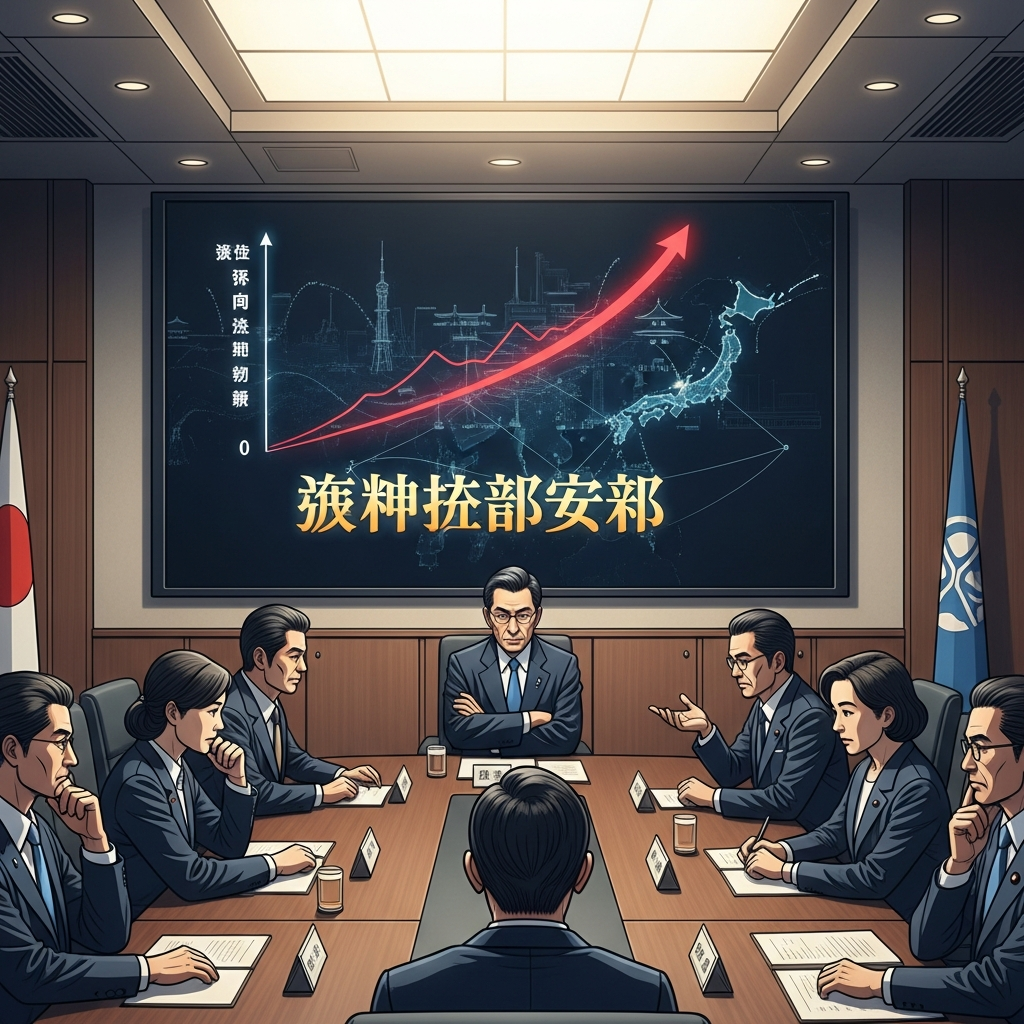
Japan’s cabinet has approved an unprecedented defense budget, signaling a monumental strategic shift in the nation’s post-World War II security posture. With a proposed allocation exceeding ¥9 trillion (approximately $58 billion) for the upcoming fiscal year, this record spending marks a 9.4% increase and accelerates Japan’s ambition to double its annual arms expenditure to 2% of its Gross Domestic Product. Driven by escalating regional tensions, particularly with an assertive China and concerns over Taiwan’s security, this move redefines Japan’s role in the Indo-Pacific, positioning it as a major military power with expanded capabilities and a more proactive defense strategy.
Japan’s Historic Defense Spending Surge
The newly approved budget for fiscal year 2026, which commences in April, is a cornerstone of Japan’s ambitious five-year defense buildup program. It represents the first time the country’s defense spending will surpass the ¥9 trillion mark. This substantial increase is embedded within a broader national budget of ¥122.3 trillion (roughly $782 billion) and aims to achieve the 2% GDP defense spending target two years ahead of schedule, by March. This trajectory is set to elevate Japan to the world’s third-largest defense spender, trailing only the United States and China.
Why the Accelerated Buildup?
Tokyo explicitly states that its current security landscape is the “most severe and complex security environment” since the end of the Second World War. This assessment is largely a direct response to China’s rapid military modernization and its increasing assertiveness across the Indo-Pacific. A significant factor is also pressure from key ally, the United States, to bolster regional deterrence. Japan’s security strategy, revised in 2022, formally identifies China as its “foremost strategic challenge,” necessitating a fundamental strengthening of its defense capabilities. Funding for this historic expansion will come, in part, from planned corporate and tobacco tax hikes, with an income tax increase slated for 2027.
Key Investments: Capabilities and Technology
The record budget prioritizes several critical areas designed to enhance Japan’s “strike-back capability” and fortify its coastal defenses. This represents a considerable departure from Japan’s traditional post-WWII stance, which strictly limited the use of force to self-defense. The focus is on acquiring advanced weaponry and developing new technologies that can counter diverse and complex threats.
Strike-Back Missiles and Standoff Capabilities
A significant portion of the new budget, over ¥970 billion ($6.2 billion), is allocated to enhancing Japan’s standoff defense capabilities. This includes a ¥177 billion ($1.13 billion) investment in upgrading and purchasing domestically developed Type-12 surface-to-ship missiles, which boast an impressive range of approximately 1,000 kilometers (620 miles). The first batch of these crucial missiles is slated for deployment in Kumamoto prefecture by March, accelerating Japan’s missile buildup in the strategically vital southwestern region. Furthermore, around $192 million is earmarked for acquiring scramjet-powered hypersonic weapons, capable of flying over Mach 5, making them incredibly difficult to intercept.
The Rise of Unmanned Systems
Recognizing the challenges posed by an aging and declining population and difficulties in military recruitment, Japan is making substantial investments in unmanned weaponry. A dedicated ¥100 billion ($640 million) will fund the deployment of a “massive” fleet of unmanned air, sea-surface, and underwater drones. This ambitious system, dubbed “SHIELD,” is planned to be operational by March 2028, significantly enhancing surveillance and defense capabilities along Japan’s extensive coasts. To expedite deployment, Japan initially plans to rely on imports for these advanced drones, potentially sourcing them from allied nations like Turkey or Israel. This strategic shift towards automation underscores a modern approach to warfare.
Strengthening Domestic Industry and Alliances
Beyond direct procurement, Japan is actively revitalizing its domestic defense industry and fostering international collaborations. The budget allocates over ¥160 billion ($1 billion) for the joint development of a next-generation fighter jet with Britain and Italy, aiming for deployment by 2035. This cutting-edge project also includes research into AI-operated drones designed to accompany the manned aircraft, highlighting a commitment to future-proof defense. Nearly ¥10 billion ($64 million) is set aside to support the defense industrial base and facilitate arms sales, following recent relaxations of arms export restrictions. The budget also addresses critical projects associated with U.S. Forces Japan, allocating approximately $3.73 billion for initiatives like the relocation of Marines on Okinawa and airfield completion at Mageshima, reinforcing the Japan-U.S. alliance’s deterrence capabilities.
The China Factor: Regional Tensions and Taiwan
The driving force behind Japan’s accelerated military buildup is the marked deterioration in relations with Beijing and the looming threat to Taiwan. Chinese military assertiveness in the East China Sea and the broader Pacific has intensified, creating an environment of heightened concern for Tokyo.
Escalating Incidents and Beijing’s Response
Tensions spiked following remarks by Japanese Prime Minister Sanae Takaichi, who indicated that Japan would likely become militarily involved if China were to attack Taiwan, which Beijing considers a renegade province. These comments provoked a strong backlash from Beijing, leading to diplomatic and economic retaliatory measures. Recent incidents, such as Chinese aircraft carrier drills near southwestern Japan and Chinese aircraft reportedly locking their radar onto Japanese jets – a highly threatening act – have further fueled Tokyo’s concerns. In response, Japan’s Defense Ministry plans to establish a new office specifically dedicated to studying China’s Pacific activities and countermeasures. Beijing, for its part, has consistently criticized Japan’s strengthening defensive posture and condemned its space technology developments, accusing Tokyo of “accelerating the weaponisation and militarisation of space” and “fuelling a space arms race.”
A Post-War Policy Shift
Japan’s post-war constitution prohibits the use of force to settle international disputes. However, a 2015 amendment, passed under former Prime Minister Shinzo Abe, permits the exercise of collective self-defense in specific situations, even if Japan itself is not directly under attack. This new defense budget, coupled with the explicit identification of China as its foremost strategic challenge, signifies a profound shift. Japan is moving towards a more assertive role in its security cooperations with the United States, indicating a departure from its traditionally passive defense policy and embracing a more proactive stance in regional security.
Challenges and Future Outlook
While Japan’s defense buildup is rapid and significant, it faces internal challenges and carries substantial regional implications. The sustained growth in military spending at such a pace will require careful management and continuous strategic adaptation.
Personnel and Alliance Burden Sharing
Internally, the Ministry of Defense is grappling with recruiting difficulties due to Japan’s aging and shrinking population. To address this, approximately $3.73 billion is allocated to improve benefits, facilities, and living conditions for self-defense personnel. This investment aims to make military service more attractive and ensure the readiness of Japan’s forces. Externally, the close collaboration with the United States remains paramount. Projects associated with U.S. Forces Japan are framed as essential for strengthening the deterrence and response capabilities of the Japan-U.S. alliance, while also addressing local community burdens.
Upon completion of the five-year defense buildup program, Japan’s annual defense spending is projected to reach around ¥10 trillion ($64 billion). This ambitious rearmament, driven by complex geopolitical dynamics, will undoubtedly reshape regional power balances and necessitate continuous dialogue and strategic adjustments among all Indo-Pacific stakeholders. The long-term prospects for sustained growth in defense spending and its precise impact on regional peace and stability will remain a critical focus for international observers.
Frequently Asked Questions
Why is Japan drastically increasing its defense budget now?
Japan is significantly increasing its defense budget due to a confluence of factors, primarily driven by its assessment of the “most severe and complex security environment” since World War II. The primary catalyst is China’s escalating military modernization and assertive actions in the Indo-Pacific. Concerns over a potential Chinese military action against Taiwan have intensified, prompting Japan to bolster its “strike-back” capabilities and coastal defenses. Additionally, pressure from its key ally, the United States, has accelerated Japan’s goal to double its defense spending to 2% of its GDP, a target now aimed for two years ahead of schedule. This marks a profound shift from Japan’s post-war pacifist stance towards a more proactive security role.
What are the key areas of investment in Japan’s new record defense plan?
Japan’s record defense budget allocates substantial funds to critical capabilities designed to enhance deterrence and response. Key investments include over ¥970 billion ($6.2 billion) for “standoff” missile capabilities, specifically the procurement of upgraded Type-12 surface-to-ship missiles (with a 1,000 km range) and the acquisition of scramjet-powered hypersonic weapons. The plan also dedicates ¥100 billion ($640 million) to developing “massive” unmanned air, sea-surface, and underwater drones under the “SHIELD” system, addressing personnel challenges. Furthermore, significant funding supports strengthening the domestic defense industry through international joint development (e.g., a next-generation fighter jet with the UK and Italy) and projects for U.S. Forces Japan, reinforcing the crucial Japan-U.S. alliance.
What are the long-term implications of Japan’s defense buildup for regional stability?
Japan’s historic defense buildup carries significant long-term implications for regional stability in the Indo-Pacific. It is expected to further heighten tensions with China, which has already responded with criticism and retaliatory measures. While intended to deter aggression, particularly concerning Taiwan, the rapid rearmament could contribute to an arms race in the region. The move also solidifies Japan’s redefinition of its global security role, cementing its alliance with the U.S. and potentially leading to more active participation in regional security operations. Becoming the world’s third-largest defense spender will grant Japan greater influence but also increased scrutiny, fundamentally altering the geopolitical landscape and power dynamics in East Asia.