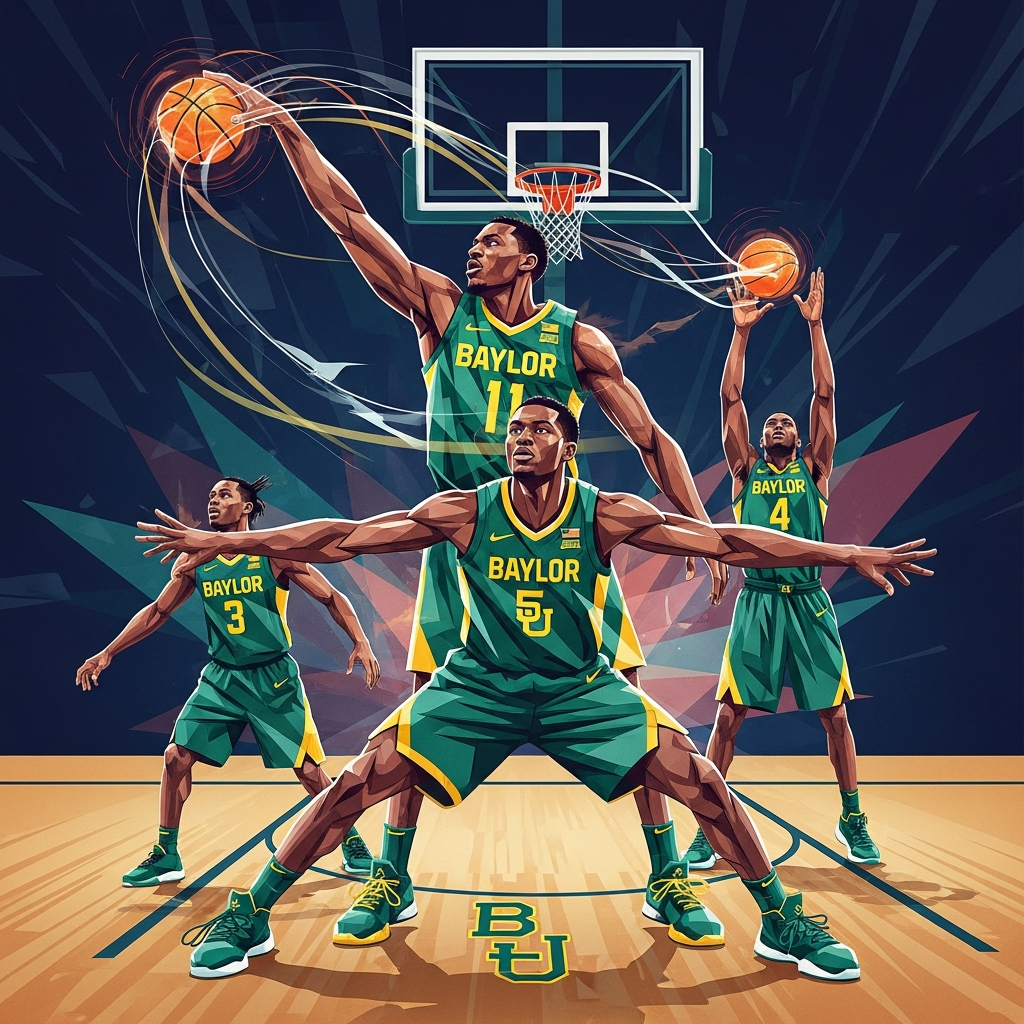
In an unprecedented turn of events shaking the foundations of college basketball, James Nnaji, a 2023 NBA Draft pick whose rights were held by the New York Knicks, has committed to play for Baylor University. The 21-year-old Nigerian center, once slated for a professional career, will now don a Bears uniform, immediately eligible to provide a crucial mid-season boost to a Baylor squad battling injuries. This extraordinary commitment highlights a rapidly evolving landscape where the lines between amateur and professional status are increasingly blurred, sparking both excitement and controversy across the sports world.
The Unprecedented Journey: From NBA Draft Pick to NCAA Court
James Nnaji’s path to Baylor is anything but typical. Drafted 31st overall in the 2023 NBA Draft by the Detroit Pistons, his rights were swiftly traded to the Charlotte Hornets and later became part of a blockbuster 2024 deal sending Karl-Anthony Towns to the New York Knicks. Despite this journey through the NBA system, Nnaji crucially never signed an official NBA contract nor appeared in a G League regular-season game. This unique technicality is the cornerstone of his NCAA eligibility, allowing him to retain his amateur status despite being a high-profile draft selection.
Nnaji’s Professional Path and Eligibility Loophole
Since being drafted, Nnaji pursued a professional career overseas, showcasing his talents with teams like FC Barcelona, Girona in Spain, and Yukatel Merkezefendi in Turkey. During the 2024-25 season, he averaged 6.1 points, 4.1 rebounds, and one block across 22 games in these international leagues. He also participated in NBA Summer League games, playing six for the Hornets after his draft and five for the Knicks in 2025, where he averaged 3.2 points and 3.6 rebounds.
His agent, Gerard Raventos, had previously voiced optimism about Nnaji joining the Knicks after a strong Summer League performance. However, when the Knicks ultimately did not sign him to an NBA roster, it opened an unexpected door for Nnaji to pivot. The NCAA’s revised eligibility guidelines, influenced by the changing amateurism rules and the Name, Image, and Likeness (NIL) era, permit athletes with prior professional experience—especially international players who haven’t signed NBA contracts—to compete collegiately. Nnaji’s situation perfectly leverages this evolving framework.
Baylor’s Urgent Need: A Timely Frontcourt Boost
For the Baylor Bears, Nnaji’s arrival is a godsend. Head coach Scott Drew’s team, currently holding a 9-2 record, has been severely hampered by injuries in their frontcourt this season. Key players, including forward Maikcol Perez and center Juslin Bodo Bodo, have been sidelined for the entire year, leaving a significant void in their rotation.
Nnaji, a dominant 7-foot center, brings immediate size, athleticism, and professional experience to a team in desperate need of depth. He is expected to be available for Baylor’s upcoming Big 12 opener on January 3 at TCU, potentially providing an instant impact to a squad looking to contend in a formidable conference. Coach Drew acknowledged the process of integrating a mid-season addition but expressed confidence in Nnaji’s commitment and potential for a seamless transition.
A Shifting Landscape: The Controversial Trend of “Former Pros” in College Basketball
James Nnaji’s commitment is not an isolated incident but rather the latest, and perhaps most high-profile, example of a controversial new trend sweeping college basketball. The influx of players with professional experience into NCAA programs has ignited a firestorm of debate among coaches, administrators, and fans.
High-Profile Examples and Coaching Outrage
Nnaji joins a growing list of players benefiting from these new interpretations of eligibility rules. Thierry Darlan, a guard who committed to Santa Clara in September after two years in the G League, was granted two years of NCAA eligibility. He was widely recognized as the first professional athlete to obtain NCAA eligibility under these new circumstances. London Johnson followed suit, committing to Louisville in October after playing professionally since 2022, including two seasons with the G League Ignite.
This emerging pattern has elicited strong and often visceral reactions from veteran college coaches. Michigan State’s Tom Izzo, a staunch critic, vehemently expressed his “outrage” following London Johnson’s commitment. “I do not know anything about it. I cannot believe this was sprung on us,” Izzo exclaimed, lamenting the lack of communication from the NCAA. He added, “This just goes to show you how ridiculous people that are in power make decisions. I’m not real excited about the NCAA or who’s making these decisions without talking to us.” Purdue’s Matt Painter and Connecticut’s Dan Hurley have also voiced their criticisms, with Hurley’s reaction famously being described as “NSFW,” underscoring the widespread frustration and confusion.
NCAA’s Evolving Rules and the Future of Amateurism
The shift in NCAA eligibility guidelines reflects a broader evolution in the definition of amateurism in college sports. Fueled by legal challenges and the rise of NIL opportunities, the NCAA has been compelled to adapt its stance, particularly concerning international players or those who have played professionally but not within specific NCAA-prohibiting parameters (like signing an NBA contract). While designed to offer more flexibility to athletes, these changes have inadvertently created a complex and often bewildering environment for coaches trying to navigate recruiting and roster management. This situation underscores the significant ongoing debate about what “amateurism” truly means in the modern era of collegiate athletics.
What James Nnaji Brings to Baylor: A Scout’s Perspective
Nnaji’s skillset and physical attributes make him a compelling addition to any basketball program, especially one in the competitive Big 12. At 7-foot, he possesses impressive size and length, combined with exceptional leaping ability that allows him to finish above the rim and protect the paint.
Player Profile and Immediate Impact Potential
Scouts have long viewed Nnaji as a high-potential “project” – a player with raw talent and significant physical gifts, but needing refinement. CBS Sports’ Kyle Boone described Nnaji as a “big leaper who can finish above the rim,” highlighting his immediate defensive presence and rebounding prowess. His professional experience overseas, even without official NBA games, will have exposed him to a high level of competition, potentially accelerating his adjustment to the intensity of NCAA Division I play.
For Baylor, Nnaji provides:
Rim Protection: His shot-blocking and defensive presence will be critical for a team that has been thin in the paint.
Rebounding: His size and athleticism will immediately bolster Baylor’s efforts on the boards.
Interior Scoring: While still developing offensively, his ability to finish strong around the rim will add a new dimension to the Bears’ attack.
Depth: Crucially, he offers vital depth, easing the burden on other players and providing much-needed relief in the frontcourt rotation.
Coach Drew expressed enthusiasm for Nnaji, calling him “a really talented young player with a ton of potential.” He also acknowledged the “process” required to acclimate Nnaji mid-season but is confident in the young center’s dedication.
The Road Ahead: Nnaji’s Immediate Impact and Long-Term Implications
James Nnaji’s commitment to Baylor is poised to have immediate ramifications for the Bears’ 2025-26 season and ripple effects throughout college basketball. His debut in the Big 12 opener against TCU will be highly anticipated, as fans and analysts alike watch to see how quickly he integrates into Coach Drew’s system.
This “wild twist” also raises intriguing questions about Nnaji’s future professional aspirations. While his NBA draft rights remain with the New York Knicks (or whoever holds them after future trades), his decision to play college basketball presents a unique scenario. Could Nnaji improve his draft stock? Would he re-enter the NBA Draft, or would the Knicks still have exclusive rights to him if he were to turn pro again? This situation adds an unprecedented layer of complexity to player development and professional pathways, potentially influencing how NBA teams approach drafting international prospects in the future. Nnaji’s collegiate journey will undoubtedly be one of the most closely watched stories in the upcoming college basketball season.
Frequently Asked Questions
How is James Nnaji, an NBA Draft pick, eligible to play college basketball for Baylor?
James Nnaji is eligible to play for Baylor because he never signed an official NBA contract and never appeared in a regular-season NBA or G League game after being drafted. While his draft rights were traded multiple times, he maintained his “amateur status” for NCAA purposes by playing professionally overseas. The NCAA’s evolving eligibility guidelines, influenced by legal changes and the NIL era, now permit athletes with prior professional experience to compete collegiately under specific conditions, which Nnaji met.
What immediate impact is James Nnaji expected to have on the Baylor Bears’ season?
James Nnaji is expected to provide an immediate and much-needed boost to Baylor’s frontcourt. The Bears have been “decimated by injuries” this season, with key players like Maikcol Perez and Juslin Bodo Bodo out for the entire year. Nnaji, a 7-foot center, brings significant size, rim protection, and rebounding prowess, which are critical needs for the team. He is expected to be available for Baylor’s Big 12 opener on January 3, offering instant depth and an athletic presence in the paint.
Why is James Nnaji’s commitment to Baylor considered so controversial by college coaches?
Nnaji’s commitment is controversial because it represents a new and “unprecedented” trend of players with professional experience, including NBA Draft picks, gaining NCAA eligibility. Coaches like Tom Izzo, Matt Painter, and Dan Hurley have expressed outrage, citing a lack of communication from the NCAA regarding these policy changes. They are concerned about the fairness of these rules, the competitive balance in college basketball, and the blurring lines between amateur and professional athletics, feeling that such significant developments were “sprung on them.”