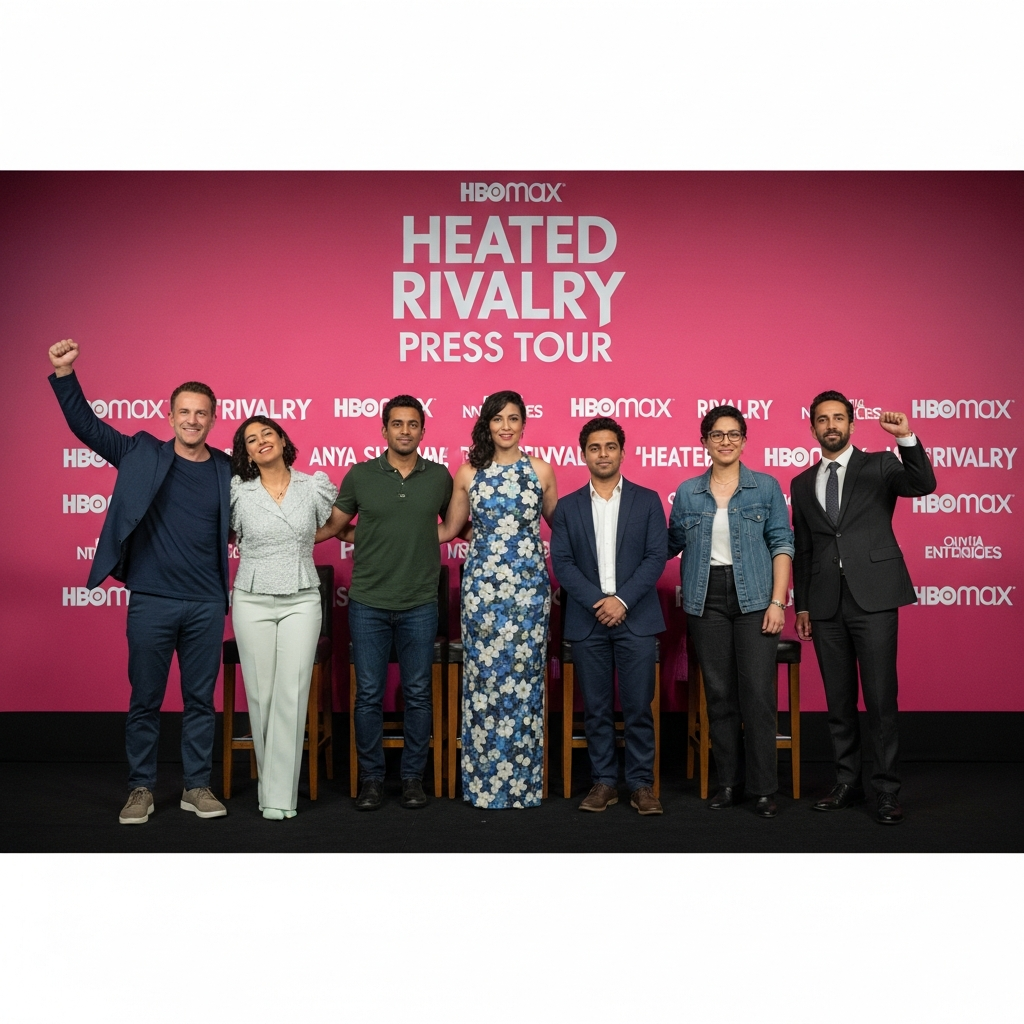
In an entertainment landscape often saturated with calculated celebrity appearances, the press tour for HBO Max’s groundbreaking series, Heated Rivalry, has become a refreshing anomaly. It’s a genuine phenomenon of authentic connection and unfiltered queer joy, echoing the very heart of the show it promotes. This isn’t just a marketing campaign; it’s a cultural moment. The series, which debuted on HBO Max and Crave, centers on the secret romance between closeted hockey rivals Shane Hollander (Hudson Williams) and Ilya Rozanov (Connor Storrie), captivating audiences and critics alike.
From Toronto’s TIFF Lightbox premiere to viral online interviews, stars Hudson Williams (24) and Connor Storrie (25) have redefined what a successful press tour can be. Their undeniable off-screen chemistry and unscripted enthusiasm have resonated globally, creating a buzz rarely seen. This phenomenon proves that genuine value, delivered through authentic representation, is key to captivating a modern audience.
Unleashing Authentic Joy: The Heated Rivalry Phenomenon
It’s exceptionally rare for a press tour to radiate as much joy and chemistry as the project it’s publicizing. Yet, this is exactly what viewers witness with Heated Rivalry. The series, based on Rachel Reid’s best-selling book series, swiftly transformed into HBO Max’s top-rated live-action acquisition. Its six-episode first season, which made its U.S. debut in late November, has since flooded the internet with countless GIFs, memes, and impassioned discussions.
Creator/director Jacob Tierney intentionally steered the show away from “queer trauma,” opting instead to “traffic in queer joy” with a happily-ever-after love story. This bold approach struck a chord with audiences craving uplifting narratives amidst a challenging global news cycle. The original book series soared onto the New York Times best-seller list, and the critically acclaimed show was quickly renewed for a second season.
The Unstoppable Chemistry of Storrie and Williams
The core of Heated Rivalry‘s success, both on and off-screen, lies in the magnetic connection between Connor Storrie and Hudson Williams. Their ease with each other, evident from their very first chemistry read, has been a driving force. Williams famously told Tierney after his read with Storrie, “Connor felt like he was going to pin me down and f–k me.” This immediate, raw spark translated directly into their performances and their public interactions.
Williams, who playfully admits to being “uncoachable” with media training, and the equally charming Storrie offer a delightful antidote to the often-stilted nature of celebrity interviews. They are genuinely excited about their moment in the spotlight, a refreshing contrast to the jaded attitudes sometimes seen in established stars. They’re not blasé or embarrassed by the “premium smut” they’re promoting. In fact, when discussing the show’s explicit sex scenes, both actors consistently provide honest, tender responses. Storrie, notably, has said filming those scenes with Williams, his “best friend,” didn’t “feel spicy at all.” This level of comfort and genuine affection is what fuels the Connor Storrie Hudson Williams fan fervor.
Their journey to stardom is also incredibly relatable. Storrie was a struggling waiter at Laurel Grill, admitting he was “a fucking bad job” server, even learning Russian for his role as Ilya. Williams was likewise living “paycheck to paycheck” as a waiter at The Old Spaghetti Factory before landing the part of Shane. Their “overnight success” story, combined with their down-to-earth personalities, makes them incredibly endearing.
Beyond the Screen: A Cultural Movement
The Heated Rivalry press tour has transcended mere promotion, becoming a cultural touchstone. Fans eagerly consume every interview, article, and social media post, captivated by the pair laughing, teasing, dancing, and openly declaring their deep bond. Storrie describes them as “pretty tactile people” in terms of expressing affection, a quality that shines through every interaction. They’ve even acquired matching “sex sells” tattoos post-filming, proudly displaying them in interviews. Williams candidly shared about crashing with Storrie in L.A., remarking, “If only one fan had access [to us getting ready], God forbid. But yeah, we just love each other very dearly.”
This unbridled enthusiasm has created a massive, passionate fanbase. While many would love to see their on-screen romance mirrored in real life, both actors have maintained privacy about their personal sexualities. François Arnaud, who portrays Hunter on the show and is openly bisexual, fiercely defends their right to privacy. He stressed that actors are not obligated to share their private lives, especially when navigating newfound fame. This stance directly counters criticism from figures like Jordan Firstman, who faced severe backlash for suggesting the duo weren’t “gay enough” or for not coming out publicly. Arnaud’s powerful message underscores the importance of protecting young actors from being “bullied into coming out,” a sentiment echoed by Kit Connor’s experience with Heartstopper.
The Ripple Effect: Music, Books, and Representation
The influence of Heated Rivalry extends far beyond its narrative. The series has powerfully demonstrated the impact of strategic music placement (“needle drops”) on streaming numbers and fan engagement, particularly among Gen Z. T.A.T.u.’s 2002 hit “All The Things She Said,” featured prominently in episode four, saw its U.S. Spotify streams more than double by 135 percent, with discoveries jumping 200 percent, 60 percent of which were Gen Z listeners. British artist Harrison’s remix of the song experienced an astounding 139,000 percent global stream increase on Spotify.
Similarly, Wolf Parade’s “I’ll Believe in Anything” became an unofficial anthem for the show’s secondary couple, Scott Hunter and Kip Grady. After its emotional use in episode five, featuring Scott’s public coming-out kiss, its global Spotify listens surged by 2,650 percent. Even the audiobook for Rachel Reid’s novel, Heated Rivalry, saw a 1,500 percent jump in listenership on Spotify, highlighting the show’s broad cultural and commercial reach. This synergy between the show, its music, and its source material is a testament to its widespread appeal.
The “Game Changer” Story: Scott Hunter and Kip Grady
While Shane and Ilya’s romance forms the core of Heated Rivalry, the series brilliantly weaves in the story of Scott Hunter (François Arnaud) and Kip Grady (Robbie G.K.), protagonists from Rachel Reid’s first novel, Game Changer. Episode three, titled “Hunter,” delves into their complex relationship. Scott, a closeted hockey captain, finds solace and love with the openly gay Kip. Their journey serves as a poignant “haunting warning” for Shane and Ilya, illustrating the immense personal sacrifice required for athletes to stay closeted.
Arnaud, deeply connected to Scott’s character, views Scott’s story as the “heart of the show” and a “tragic flash forward” for the main couple. He recalls the powerful emotional climax in episode five, where Scott, after leading his team to a Stanley Cup victory, publicly kisses Kip on the ice, becoming the first openly gay professional hockey player to do so. This “cataclysmic moment,” set to Wolf Parade’s iconic track, signifies a monumental shift. However, as the article from Out.com points out, Scott’s coming out happens as he retires, a luxury not afforded to active players like Shane and Ilya, whose careers still hang in the balance. This nuance underscores the ongoing challenges for LGBTQ+ athletes in professional sports.
Looking Ahead: The Future of Queer Representation
Heated Rivalry has not just broken records; it has redefined expectations for LGBTQ+ romance series. With Season 2 confirmed to adapt “The Long Game,” the sixth and final book in Rachel Reid’s series, fans anticipate a definitive happy ending for Shane and Ilya. The show’s success, with viewership increasing by nearly 400% since its premiere, signals a clear demand for authentic, joyous queer narratives that prioritize love over trauma. This HBO Max success story highlights the power of compelling storytelling combined with genuine human connection. The future looks bright for this groundbreaking series and the expanding universe of queer hockey romance.
Frequently Asked Questions
What makes the ‘Heated Rivalry’ press tour unique in promoting queer joy?
The ‘Heated Rivalry’ press tour stands out due to the genuine, unscripted chemistry and enthusiasm of its lead actors, Connor Storrie and Hudson Williams. Unlike typical promotional events, their interactions reflect the “queer joy” ethos of the show itself. They are openly affectionate, share personal anecdotes, and show authentic excitement, creating viral moments that resonate deeply with fans. This sincerity, combined with their relatable “rags-to-riches” backstories, builds a connection that feels refreshingly real and less like a contractual obligation.
How has ‘Heated Rivalry’ influenced music streaming and its original book series?
‘Heated Rivalry’ has had a significant impact on streaming platforms, demonstrating the power of “needle drops” in TV. For example, T.A.T.u.’s “All The Things She Said” saw its U.S. Spotify streams more than double, with discoveries by Gen Z listeners increasing by 200%. Similarly, Wolf Parade’s “I’ll Believe in Anything” experienced a 2,650% surge in global Spotify listens after its pivotal use in episode five. The audiobook for Rachel Reid’s original novel also saw a massive 1,500% increase in listenership, showcasing the show’s ability to drive engagement across various media.
What lessons does ‘Heated Rivalry’ offer regarding authentic representation and actor privacy?
‘Heated Rivalry’ champions authentic queer representation by focusing on a joyful love story, while also subtly navigating the complexities of actor privacy. The show features a secondary storyline where Scott Hunter’s public coming out as a hockey player is a “game-changer,” yet it also highlights the difficulties for active athletes like Shane and Ilya. Off-screen, actors Hudson Williams and Connor Storrie maintain privacy about their personal sexualities, a stance fiercely defended by co-star François Arnaud. This situation emphasizes that while representation is vital, actors are not obligated to share their private lives, especially when newly famous, protecting them from external pressures and “groupthink” about how queer identities should be publicly performed.