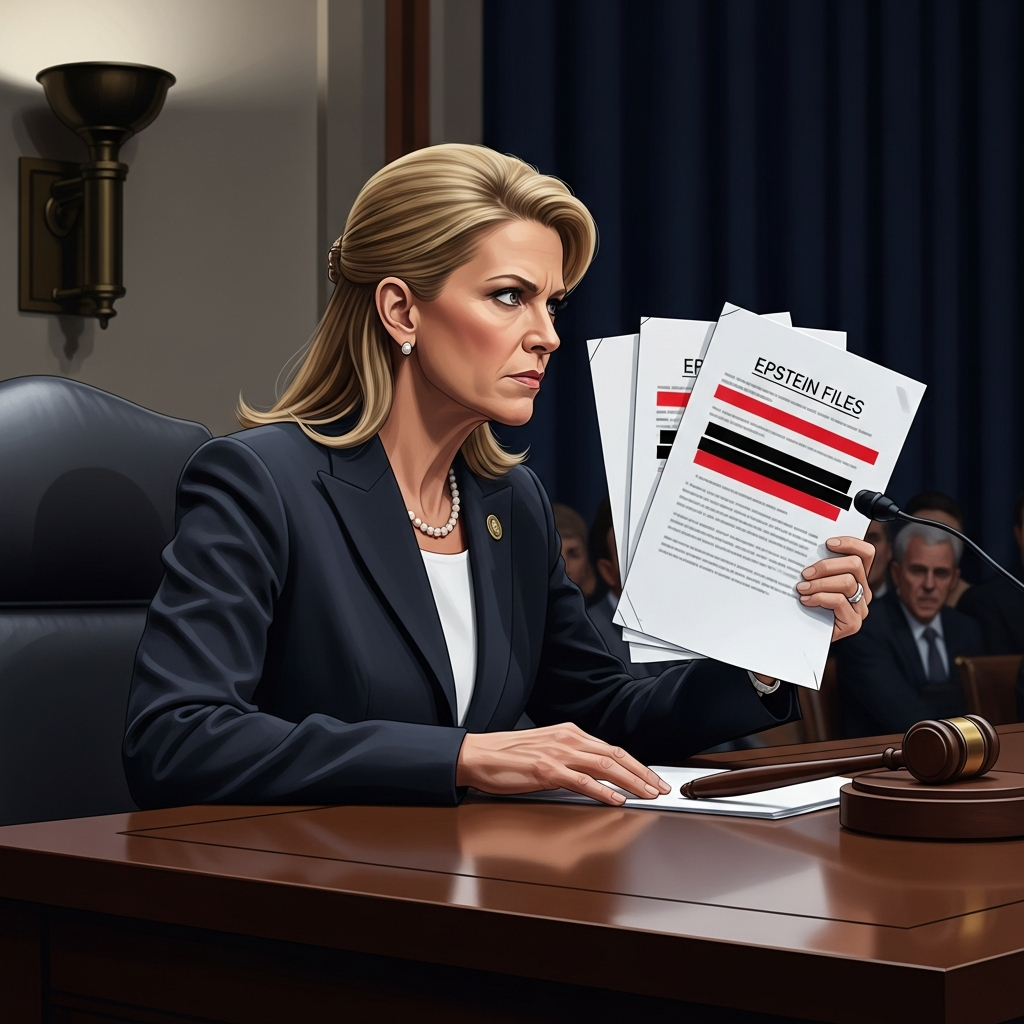
The murky depths of the Jeffrey Epstein scandal continue to stir, with Attorney General Pam Bondi now at the epicenter of a ferocious political and legal storm. Lawmakers are demanding full transparency on the infamous “Epstein Files,” but the Justice Department’s recent, heavily redacted release has sparked outrage and ignited threats of unprecedented congressional action. This isn’t just a political spat; it’s a high-stakes battle for accountability, victim justice, and the integrity of government transparency itself. The controversy highlights a critical standoff between legislative oversight and executive power, forcing a national conversation about who is truly protected by the law.
The Genesis of a Standoff: The Epstein Files Transparency Act
The current conflict stems from the “Epstein Files Transparency Act,” a bipartisan legislative triumph signed into law by President Donald Trump in November. This crucial act mandated the full public disclosure of all government files related to the Department of Justice’s (DoJ) two criminal investigations into the late convicted sex offender, Jeffrey Epstein. The law’s passage was a direct response to immense congressional pressure and a public outcry for answers, aiming to shed light on Epstein’s network and those who enabled his horrific crimes. Lawmakers and survivors alike saw this as a pivotal step toward achieving long-overdue justice.
However, hopes for a swift and comprehensive revelation were dashed. The DoJ faced a stringent deadline for the initial release, but what materialized was far from the promised transparency. Only a fraction of the anticipated material was made public, characterized by extensive redactions and significant withheld information. Many of the released documents were deemed “documents of nothingness,” failing to address the core questions survivors and the public desperately sought answers to: who facilitated these crimes, and who covered them up?
Lawmakers Ignite a Firestorm: Threats of Contempt and Impeachment
The DoJ’s partial compliance triggered immediate and fervent anger across the political spectrum. Republican Congressman Thomas Massie of Kentucky and Democratic Congressman Ro Khanna of California, both instrumental in drafting the transparency act, emerged as leading voices in the escalating confrontation. They accused the DoJ of “flouting the spirit and the letter of the law” through its actions.
In a rare and dramatic move, Massie and Khanna began drafting a resolution for “inherent contempt” proceedings against Attorney General Bondi. This rarely-used legal recourse, according to the American Bar Association, has not been invoked by Congress for nearly a century. Massie clarified that inherent contempt is distinct from impeachment, requiring only the support of the House of Representatives to potentially fine Bondi for each day of non-compliance. It bypasses the need for Senate involvement, making it a quicker, more direct route for congressional enforcement. Khanna emphasized that they were actively building a bipartisan coalition to support this effort.
The threats didn’t stop there. Khanna also hinted at the possibility of drafting articles of impeachment against Bondi, or even the Deputy Attorney General, if the DoJ continued to obstruct justice. He issued a stark warning: any DoJ official found to have withheld Epstein-related records could face prosecution, either under the current administration or a future one, thanks to a specific provision within the Transparency Act. This provision establishes a long-term accountability mechanism, unlike standard congressional subpoenas which expire with each Congress.
Adding to the pressure, Senate Minority Leader Chuck Schumer announced plans for a Senate resolution to take its own legal actions against the Trump administration. Schumer, highlighting the bipartisan origins of the law, appealed for Republican support, signaling that the issue would be a top priority when the Senate reconvenes. The message from Capitol Hill was clear: the DoJ’s actions were unacceptable, and Congress was prepared to use its full authority to enforce the law.
Attorney General Bondi’s Defense: Privacy, Process, and Dismissal
Despite the mounting threats and bipartisan condemnation, Attorney General Pam Bondi maintained a defiant stance. She asserted that the DoJ was fully complying with its legal obligations, proudly declaring her administration’s commitment to being “the most transparent in American history.” Deputy Attorney General Todd Blanche echoed this defiance, publicly stating that he did not take the congressional threats “even a little bit seriously,” and inviting lawmakers to “Bring it on.”
Blanche pointed to the enormous logistical challenge of processing approximately “a million or so pages of documents.” He argued that nearly all these documents contained sensitive victim information, necessitating a “very methodical process” of redaction to protect identities and privacy, a requirement he claimed was in line with the Transparency Act’s expectations. He contended that the incremental release of materials over subsequent weeks, following the initial deadline, still constituted compliance with the statute. He also confirmed that some Epstein-related files, including an image featuring President Trump, were initially removed from the DoJ website due to victim concerns before being reviewed and reinstated. The DoJ pledged that more material would be released in the coming weeks.
However, these explanations failed to placate critics. Lawmakers like Massie and Khanna argued that the DoJ was misinterpreting the law, which they believed superseded pre-existing statutes like the Privacy Act and FOIA standards. They asserted that their new legislation specifically required release “regardless of embarrassment” and explicitly included “internal communications,” implying that the DoJ’s legal justifications for withholding information were invalid. Legal expert John Fishwick also criticized Bondi’s handling, noting a growing loss of public confidence due to the slow pace and extensive redactions. He characterized the release process as “sputtering out,” far from the public’s strong desire for complete, unredacted transparency.
The Missing Pieces: Scrutiny and Speculation
The nature of the released files itself drew significant scrutiny. Massie and Khanna characterized the release as a mere “document dump” that deliberately omitted crucial information. They pointed to the non-release of the 60-count indictment against Epstein—which allegedly implicates “a lot of these people” and involves “massive financial fraud and foreign interference”—as well as the prosecution memo detailing evidence disregarded by former prosecutor Acosta. They claimed that lawyers for survivors knew of “at least 20 men accused of sex crimes known to the FBI,” detailing their professions, but their names, including one specifically mentioned by Massie (Jess Staley), were conspicuously absent from the released files.
The limited references to President Donald Trump within the initially released documents also fueled speculation, leading critics to question whether the release was “cherry-picked.” In contrast, former President Bill Clinton appeared numerous times in the released documents, including photos with prominent figures, though his spokesperson denied any knowledge of Epstein’s alleged crimes. Khanna dismissed the inclusion of these high-profile images as a “distraction” from the failure to disclose the core evidence needed to hold powerful individuals accountable.
Perhaps one of the most significant disclosures from the released documents was the confirmation that the FBI received a complaint about Jeffrey Epstein in 1996 from a woman named Maria Farmer. Khanna emphasized this as “the single most important disclosure,” noting that Epstein’s powerful connections seemingly led the FBI to do “nothing for a decade.” He argued that Farmer deserved both compensation and an explanation for the federal officials’ failure to follow up.
Diverging Paths: Other Legislative “Tools” and the Road Ahead
Not all lawmakers were in agreement on the immediate escalation to contempt or impeachment. Democratic Senator Tim Kaine, for instance, deemed such efforts “premature.” He suggested focusing instead on other legislative “tools in appropriations bills” to force compliance if the DoJ was “dragging its feet.” Kaine cited an example where a Defense Secretary’s travel budget could be limited if the Defense Department failed to release specific video footage. His perspective highlights alternative strategies Congress might employ to exert pressure without resorting to the drastic measures of contempt or impeachment.
Ultimately, the standoff represents more than just a procedural disagreement. It underscores a fundamental tension between the public’s demand for accountability, the judiciary’s role in protecting victims, and the executive branch’s prerogative to manage sensitive information. John Fishwick’s analysis underscores the public’s desire for transparency, expressing dissatisfaction with a process he describes as “sputtering out.” The central question remains unanswered: who has such a powerful hold on the government that they can seemingly evade full scrutiny even after a bipartisan law mandates transparency?
The DoJ has stated that, based on currently released files, it does not plan to bring charges against anyone immediately, but acknowledges that “new information” is constantly being learned. As Massie, Khanna, and Schumer continue to press for accountability, the stage is set for a protracted and tense legal and political battle, with the promise of more material releases in the coming weeks keeping the public and lawmakers on edge. The fight for true transparency in the Epstein files is far from over.
Frequently Asked Questions
What is the “Epstein Files Transparency Act” and why is it causing controversy?
The Epstein Files Transparency Act is a bipartisan law, signed in November, that mandates the full public disclosure of all government files related to the Department of Justice’s investigations into Jeffrey Epstein. It’s causing controversy because the Justice Department, led by Attorney General Pam Bondi, released only a fraction of the anticipated documents by the deadline. The released materials were heavily redacted and criticized by lawmakers as incomplete, leading to accusations that the DoJ is “flouting the spirit and the letter of the law.”
Which legal actions are lawmakers considering against Attorney General Bondi?
Lawmakers, primarily Representatives Thomas Massie and Ro Khanna, are drafting a resolution for “inherent contempt” proceedings against Attorney General Pam Bondi. This rarely-used House-only action could fine Bondi daily for withholding documents. They are also considering drafting articles of impeachment. Additionally, Senate Minority Leader Chuck Schumer plans to introduce a Senate resolution to take its own legal actions against the administration for non-compliance, aiming to hold the Justice Department accountable.
What are the key arguments made by the Justice Department in defense of the file release?
Deputy Attorney General Todd Blanche, speaking on behalf of the Justice Department and Attorney General Pam Bondi, defends their actions by citing the immense logistical challenge of processing approximately one million pages of documents. He emphasizes the need for extensive redactions to protect the identities and privacy of Epstein’s victims, which he states is in line with the Transparency Act’s expectations. Blanche also argues that an incremental release of materials over subsequent weeks, rather than all at once, still constitutes compliance with the statute.