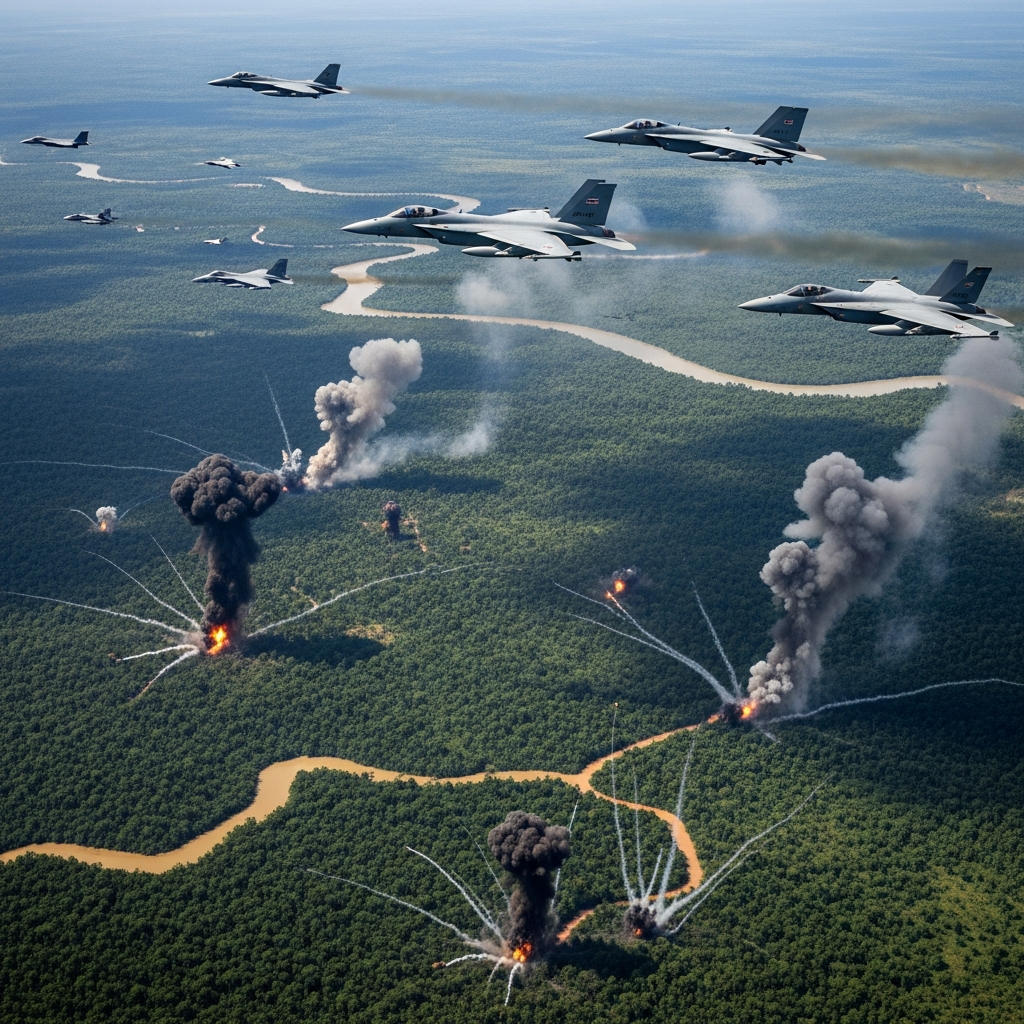
The volatile border region between Thailand and Cambodia has once again erupted, thrusting Southeast Asia into a renewed state of tension. Recent reports confirm that Thailand has launched air strikes against Cambodia, marking a dangerous escalation in the long-standing territorial dispute. These deadly border clashes represent a significant threat to regional stability, demanding immediate international attention and diplomatic intervention. This article delves into the origins of the conflict, the immediate triggers for this dangerous escalation, and the potential far-reaching implications for both nations and the broader ASEAN community.
Escalating Tensions: A Deep Dive into the Border Conflict
The recent Thailand-Cambodia border clashes are not an isolated incident but rather the latest chapter in a protracted dispute rooted in history and overlapping territorial claims. For decades, the precise demarcation of the 800-kilometer border has been a source of contention, particularly around ancient temple sites. The use of air strikes signifies a grave shift in military engagement, moving beyond traditional ground skirmishes to a more aggressive posture. This heightened military action raises concerns about civilian casualties and further destabilizing an already fragile peace. Understanding the historical context is crucial to grasping the gravity of the current situation.
The Historical Roots of the Thailand-Cambodia Dispute
At the heart of much of the historical friction lies the Preah Vihear Temple, a UNESCO World Heritage site situated atop a cliff in the Dangrek Mountains. While the International Court of Justice ruled in 1962 that the temple itself belonged to Cambodia, the land surrounding it has remained a focal point of contention. Maps drawn during French colonial rule, differing interpretations of treaties, and nationalist sentiments on both sides have continuously fueled disagreements. These historical claims, often intertwined with national identity, make resolution incredibly complex. Each flare-up reopens old wounds and solidifies entrenched positions.
The dispute is more than just about a temple; it concerns resource-rich areas and strategic border crossings. Periodic skirmishes have resulted in fatalities on both sides, displacing thousands of civilians and causing significant humanitarian concern. The current escalation with air strikes indicates that previous diplomatic efforts and ceasefires have been insufficient to resolve the underlying issues. Both governments face internal pressures to assert sovereignty, complicating any path toward a peaceful resolution.
Immediate Triggers and the Path to Air Strikes
While the exact sequence of events leading to the recent air strikes remains under intense scrutiny, initial reports suggest a rapid intensification of ground fighting. Small-scale artillery exchanges or troop movements could quickly ignite a larger conflict in such a militarized zone. The decision to deploy air power marks a deliberate and calculated move by Thailand, signaling a significant shift in its response strategy. Such actions are typically reserved for situations where ground forces face overwhelming pressure or to achieve a decisive tactical advantage.
The impact of these strikes extends beyond military targets. Civilian populations residing near the border are invariably the first to suffer. Homes are destroyed, livelihoods are disrupted, and families are forced to flee, creating a burgeoning humanitarian crisis. International observers are now closely monitoring the situation, urging restraint and calling for an immediate cessation of hostilities. The use of advanced weaponry like fighter jets elevates the conflict to a new and dangerous level, risking a broader regional conflagration if not contained swiftly.
International Reactions and Calls for De-escalation
The escalation of border clashes between Thailand and Cambodia has naturally drawn sharp reactions from the international community. Regional bodies like the Association of Southeast Asian Nations (ASEAN) are under immense pressure to mediate effectively. As member states, both Thailand and Cambodia are expected to uphold the principles of peaceful dispute resolution outlined in the ASEAN Charter. However, past attempts at mediation have yielded limited long-term success, highlighting the deep-seated nature of the conflict.
The United Nations (UN) and various international humanitarian organizations have also voiced grave concerns. They are emphasizing the need for both parties to protect civilians and ensure access for aid workers. Diplomatic channels are likely buzzing with efforts to establish a new ceasefire and pave the way for renewed negotiations. The credibility of regional security frameworks is tested during such crises, demonstrating the urgent need for robust mechanisms to prevent armed conflict between neighboring states. Ignoring the geopolitical implications could lead to a precedent that undermines peace in the entire Southeast Asian region.
Humanitarian Impact and Long-Term Implications
The human cost of the deadly border clashes is immense. Displaced families often face inadequate shelter, food, and medical care. Children are particularly vulnerable, with their education disrupted and their psychological well-being severely affected by the violence. Humanitarian agencies are mobilizing resources, but ongoing fighting makes delivering aid incredibly challenging and dangerous. The long-term recovery for these communities will be arduous, even if a ceasefire is achieved quickly. Infrastructure will need rebuilding, and trust between border communities will need to be painstakingly restored.
Beyond the immediate human suffering, the Thailand-Cambodia conflict carries significant long-term implications for regional trade, tourism, and diplomatic relations. Instability on such a vital border can disrupt supply chains and deter foreign investment. Tourist numbers, a crucial economic driver for both nations, are likely to plummet during periods of conflict. Furthermore, the use of military force by one ASEAN member against another could strain internal cohesion within the bloc, potentially weakening its collective ability to address other regional challenges. The path forward requires sustained dialogue, mutual respect, and a genuine commitment to peace.
Pathways to Lasting Peace and Regional Security
Achieving a lasting peace between Thailand and Cambodia demands more than just ceasefires. It requires a comprehensive approach addressing historical grievances, clarifying border demarcation, and fostering mutual understanding. Joint border commissions could play a vital role in resolving technical aspects of the dispute. Confidence-building measures, such as joint patrols or shared economic zones in disputed areas, could help transform adversarial relationships into cooperative ones. Ultimately, political will from both governments, supported by sustained international encouragement, is paramount.
The role of ASEAN as a mediator cannot be overstated. A strong, unified ASEAN can leverage its influence to facilitate dialogue and provide a neutral platform for negotiations. Long-term solutions might involve international arbitration or robust peacekeeping presences to monitor compliance with any future agreements. Without genuine commitment to these pathways, the region risks continuous cycles of violence, undermining decades of efforts towards a peaceful and prosperous Southeast Asia.
Frequently Asked Questions
What caused the escalation of the Thailand-Cambodia border conflict to air strikes?
The escalation to air strikes between Thailand and Cambodia is the result of long-standing territorial disputes, primarily over the precise demarcation of their shared border and sovereignty claims around sites like the Preah Vihear Temple. While specific triggers for this particular escalation are often rooted in intensified ground skirmishes or perceived incursions, the decision to deploy air power signifies a strategic move by Thailand in response to heightened tensions and ongoing deadly clashes, marking a significant and dangerous shift in military engagement.
Where is the disputed territory primarily located in the Thailand-Cambodia conflict?
The most prominent disputed territory in the Thailand-Cambodia conflict is the area surrounding the Preah Vihear Temple, a UNESCO World Heritage site located on a cliff in the Dangrek Mountains. While the International Court of Justice awarded the temple itself to Cambodia in 1962, the precise boundaries of the land directly adjacent to and surrounding the temple have remained a point of contention. Other sections along the 800-kilometer border, particularly resource-rich or strategically important areas, also contribute to ongoing disputes.
How do international bodies typically respond to border clashes like those between Thailand and Cambodia?
International bodies, notably the Association of Southeast Asian Nations (ASEAN) and the United Nations (UN), typically respond to border clashes like those between Thailand and Cambodia by urging immediate de-escalation and a cessation of hostilities. ASEAN, as a regional bloc, often attempts to mediate through diplomatic channels, offering a neutral platform for dialogue and negotiation between member states. The UN typically calls for restraint, protection of civilians, and humanitarian access, while potentially offering good offices for mediation or deploying observer missions if both parties agree.
Conclusion
The escalation of border clashes between Thailand and Cambodia, culminating in Thai air strikes, is a stark reminder of unresolved territorial disputes’ enduring danger. This perilous situation not only threatens the lives of those directly impacted but also casts a long shadow over regional stability and cooperation within ASEAN. A return to sustained dialogue, respect for international law, and a genuine commitment to peaceful resolution are imperative. The international community, especially regional partners, must redouble efforts to facilitate a lasting peace, ensuring that this latest escalation does not spiral into a wider, more devastating conflict in Southeast Asia. The lessons of history demand that diplomatic pathways are prioritized over military solutions to safeguard lives and foster true regional security.