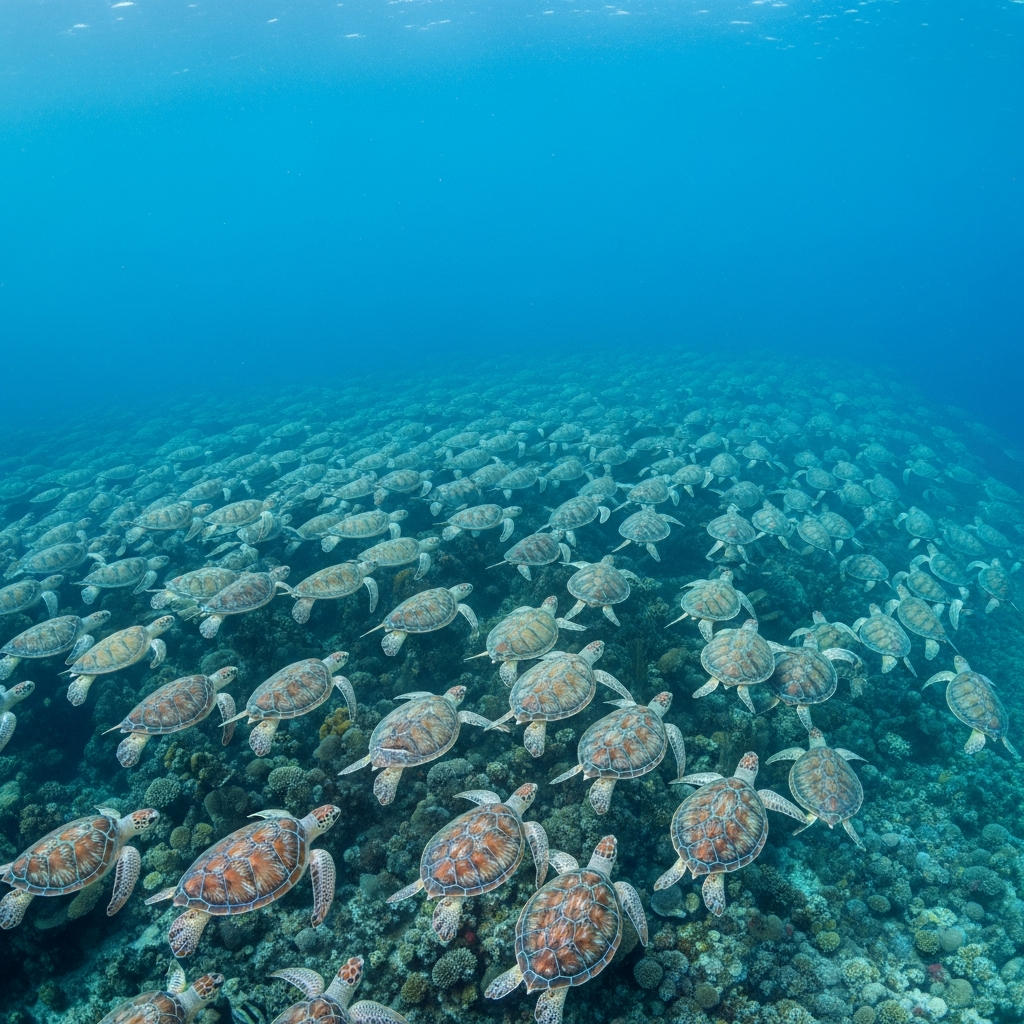
The ocean’s depths constantly surprise us, but few discoveries have captivated marine biologists quite like the phenomenon dubbed the “sea turtle stampede.” Imagine thousands of majestic loggerhead sea turtles, moving in synchronized, rapid formation across vast underwater landscapes. This groundbreaking observation, brought to light by advanced tracking technologies, has profoundly reshaped our understanding of marine life and ignited new urgency in conservation efforts. Dive in with us as we uncover the thrilling details behind this epic discovery and its far-reaching implications for one of the ocean’s most ancient mariners.
The Unprecedented Discovery of Mass Turtle Migrations
For centuries, sea turtles have been creatures of mystery, their vast ocean migrations largely unseen by human eyes. That changed dramatically with the “sea turtle stampede” discovery. Scientists, primarily from the University of Exeter and their partners, utilized sophisticated sonar imaging and satellite telemetry to witness an astonishing spectacle. Off the coast of Central Africa, near Gabon, they observed massive aggregations of loggerhead turtles (Caretta caretta) moving with unprecedented coordination and speed. These weren’t just scattered groups; this was a concentrated, synchronized movement of potentially thousands, if not tens of thousands, of individuals. This remarkable insight was a testament to the power of modern marine science.
The discovery fundamentally challenged previous assumptions about sea turtle behavior. Traditionally, solitary journeys or smaller group movements were thought to be the norm outside of nesting periods. However, this “stampede” revealed a complex, large-scale social dynamic previously unknown. Researchers affixed satellite tags to numerous turtles, tracking their movements over extensive distances. Concurrently, sonar equipment painted vivid underwater pictures, confirming the immense scale of these aggregations. This innovative combination of technologies allowed for a comprehensive view of the turtles’ journeys, mapping migratory corridors that span thousands of kilometers across the Atlantic.
What Drives the Loggerhead “Stampede”?
Understanding the forces behind such a colossal movement is a central puzzle for marine scientists. While the exact triggers remain an active area of research, several theories attempt to explain the loggerhead sea turtle stampede. One primary hypothesis points to rich foraging grounds. These vast aggregations might be a coordinated effort to exploit abundant food sources, such as jellyfish or other invertebrates, that appear seasonally in specific oceanic regions. Moving as a large group could allow for more efficient detection and consumption of these dispersed resources.
Another compelling theory suggests a reproductive drive. The “stampede” could represent a mass migration towards crucial breeding grounds or nesting beaches. By traveling together, turtles might enhance their chances of finding mates or navigating challenging oceanic currents. Environmental factors, such as strong ocean currents or prevailing winds, could also play a significant role, effectively “herding” turtles along specific pathways. Predator avoidance is another consideration; moving in large numbers might offer a collective defense mechanism against sharks and other marine predators. The coordinated nature of the movement indicates a complex interplay of instinct, environmental cues, and possibly even social communication among the turtles.
Ecological Significance and Broader Impact
The discovery of the sea turtle stampede carries profound ecological significance. It highlights the vast, interconnected nature of marine ecosystems and the critical role large-scale animal movements play within them. Loggerhead turtles are keystone species, influencing the health of coral reefs, seagrass beds, and open ocean environments through their foraging habits. Their mass migrations, therefore, represent a significant transfer of biomass and nutrients across oceanic regions. This phenomenon could drive nutrient cycling and energy flow in ways previously underestimated.
Furthermore, these large aggregations provide invaluable data for estimating population sizes. Observing such immense numbers offers a more accurate glimpse into the true health and abundance of loggerhead populations, which are globally classified as endangered. This newfound understanding helps conservationists identify critical habitats and migratory corridors that require protection, moving beyond individual nesting sites to safeguard their entire life cycle. The stampede also serves as a powerful indicator of ocean health; disruptions to this natural phenomenon could signal broader environmental issues like climate change or overfishing impacting the food web.
Conservation Imperatives Stemming from the Discovery
The revelation of the sea turtle stampede underscores urgent conservation imperatives. Protecting these migratory corridors is paramount. These routes often cross international boundaries and traverse areas facing various threats, including shipping lanes, offshore oil and gas exploration, and high fishing pressure. Identifying and safeguarding these specific pathways from human disturbance is crucial to ensure the loggerheads can continue their epic journeys unimpeded. This requires international cooperation and robust marine protected area networks.
Threats such as bycatch in fisheries, plastic pollution, and habitat degradation at nesting and foraging sites continue to menace loggerhead populations worldwide. The stampede discovery emphasizes that conservation efforts must extend beyond protecting individual beaches or small coastal zones. A holistic, ecosystem-based approach is essential, one that considers the entire migratory range and the complex interactions within the marine environment. Public awareness, policy changes, and sustainable fishing practices are all vital components of ensuring the future of these magnificent creatures and the continuation of their spectacular “stampedes.”
Advancing Research with Cutting-Edge Technology
The initial discovery was just the beginning. Scientists are now leveraging even more sophisticated technologies to delve deeper into the secrets of the sea turtle stampede. Miniature acoustic tags provide high-resolution data on individual turtle movements and interactions within the group. Autonomous underwater vehicles (AUVs) equipped with advanced sensors can monitor migratory pathways without human intervention, gathering data on ocean currents, temperature, and potential food sources. Even drone technology is being explored to observe surface-level aggregations and movements.
Genetic analysis is another powerful tool being employed. By analyzing DNA samples from turtles in these stampedes, researchers can determine the genetic connectivity between different populations. This helps understand if turtles from various nesting regions converge for these mass movements or if they originate from specific genetic groups. Such insights are critical for effective conservation planning, allowing targeted efforts to protect distinct genetic lineages. These technological advancements ensure a continually evolving understanding of this remarkable natural event, providing ever-clearer pictures of the ocean’s hidden wonders.
Frequently Asked Questions
What exactly is the “sea turtle stampede” and where was it discovered?
The “sea turtle stampede” refers to the discovery of massive, coordinated aggregations of thousands of loggerhead sea turtles moving rapidly and synchronously across the ocean. This unprecedented phenomenon was primarily observed by scientists off the coast of Central Africa, specifically near Gabon, using advanced sonar technology and satellite tagging. It reveals a previously unknown large-scale social behavior for these marine reptiles, challenging older assumptions about their more solitary movements outside of nesting seasons.
Why do sea turtles participate in these mass movements, and what are the scientific theories?
Scientists are still actively researching the exact reasons behind these mass turtle movements, but several theories exist. Primary hypotheses include exploitation of abundant, seasonally available food sources, such as jellyfish, through coordinated foraging. Another theory suggests these are mass migrations to crucial breeding grounds or nesting beaches, where traveling in groups might enhance reproductive success or aid navigation. Environmental factors like strong ocean currents or collective defense against predators are also considered contributing factors to this synchronized behavior.
How does the discovery of the sea turtle stampede impact conservation efforts?
The discovery significantly impacts conservation by highlighting the critical importance of protecting vast marine migratory corridors, not just individual nesting or foraging sites. It provides invaluable data for more accurate loggerhead population estimates, which are classified as endangered. Understanding these stampedes necessitates international cooperation to safeguard these routes from threats like bycatch, plastic pollution, and habitat disruption from human activities. This knowledge guides the establishment of more effective, large-scale marine protected areas to ensure the survival of loggerheads.
Conclusion: A Glimpse into the Ocean’s Undiscovered Wonders
The discovery of the sea turtle stampede stands as a monumental achievement in marine biology. It offers an awe-inspiring glimpse into the complex and often hidden lives of loggerhead sea turtles, revealing social behaviors and migratory patterns on a scale previously unimagined. This unique phenomenon not only expands our scientific understanding but also serves as a potent reminder of the vast, unexplored wonders that still exist within our oceans. As research continues to unfold, powered by cutting-edge technology, our appreciation for these ancient mariners only deepens. Protecting these magnificent creatures and their incredible journeys is not just a scientific endeavor; it’s a shared responsibility to preserve the health and biodiversity of our planet’s most vital ecosystem. Let this discovery inspire continued curiosity, research, and unwavering dedication to marine conservation.