For years, a baffling 3.4-million-year-old foot fossil unearthed in Ethiopia remained an enigma. Its unusual anatomy hinted at a creature unlike “Lucy,” our famous bipedal ancestor. Now, after sixteen years of dedicated research, scientists have definitively identified the owner of this mysterious “Burtele foot,” a breakthrough that is dramatically reshaping our understanding of early human evolution. This discovery confirms that multiple hominin species, each with unique ways of moving and eating, coexisted in the same ancient landscapes, challenging the long-held idea of a single, linear path to humanity.
The Enduring Mystery of the Burtele Foot
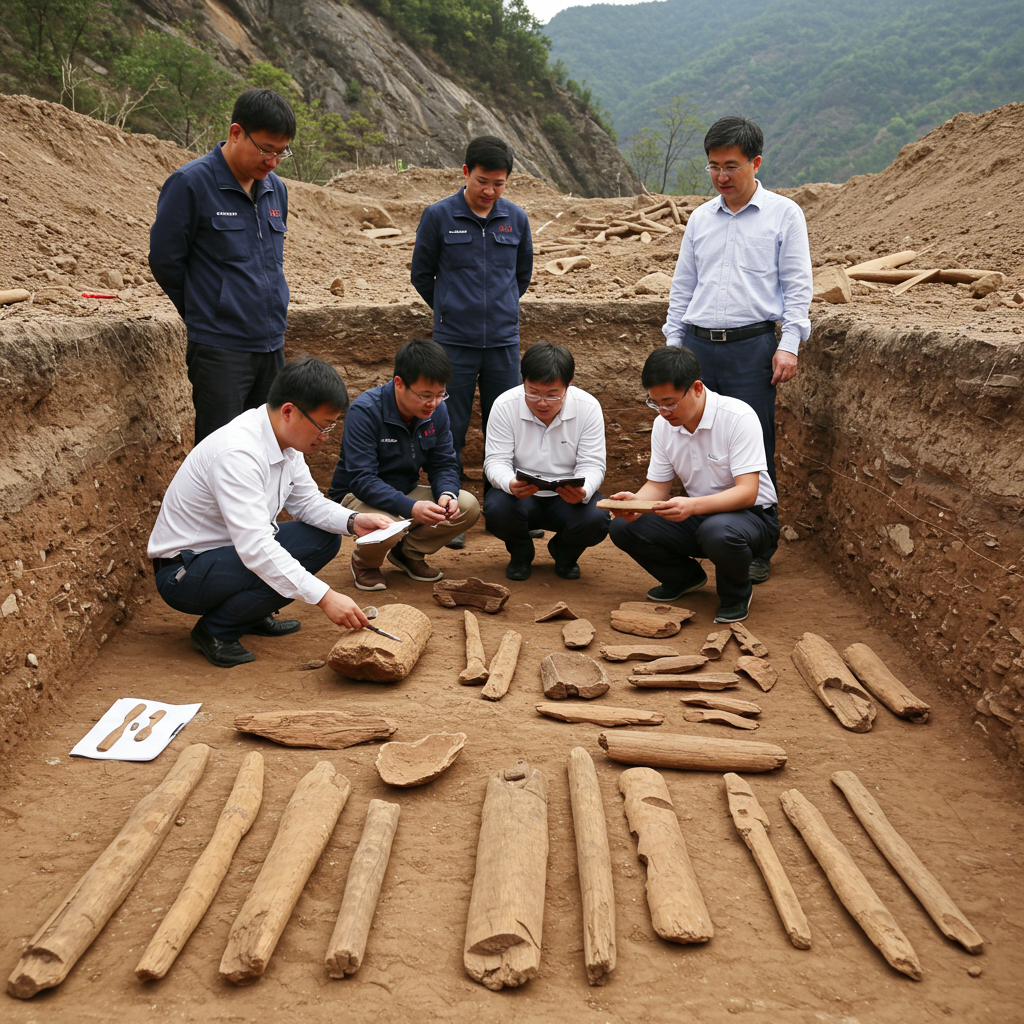
The story began in 2009 when anthropologists discovered a set of fossilized foot bones at the Woranso-Mille site in Ethiopia’s Afar Rift. Instantly, these 3.4-million-year-old remains, nicknamed the Burtele foot, presented a significant puzzle. While clearly hominin, they were remarkably different from the feet of Australopithecus afarensis, the species represented by the iconic “Lucy.” Lucy’s species walked upright on arched feet, much like modern humans. In stark contrast, the Burtele foot possessed a distinctive, gorilla-like opposable big toe. This grasping toe was clearly adapted for climbing trees, a primitive trait suggesting a lifestyle markedly different from Lucy’s more terrestrial existence.
Without a skull, jaw, or teeth directly associated with the foot, scientists couldn’t definitively assign it to a known species. Initial debates swirled: did it belong to a new Australopithecus species, or perhaps to an even older, more primitive hominin like Ardipithecus, which also had an opposable big toe? The challenge lay in firmly linking the peculiar foot to any other skeletal evidence.
Unmasking Lucy’s Ancient Neighbor: Australopithecus deyiremeda
The first crucial clue emerged in 2015. Researchers reported the existence of a new hominin species, Australopithecus deyiremeda, based on fossilized jawbones and teeth dating back 3.5 to 3.3 million years, found in the same general region. Paleoanthropologists, including Yohannes Haile-Selassie of Arizona State University, who led the discovery team, immediately suspected that the Burtele foot might belong to this newly identified species. However, a conclusive link remained elusive. The Burtele foot and the initial A. deyiremeda jawbones, though geographically close, were not found in identical geological layers, making a definitive association difficult.
The possibility of Australopithecus deyiremeda living alongside A. afarensis introduced exciting complexity to the early human story. It suggested that our ancient past was far more diverse than previously imagined. The ongoing challenge was to find stronger evidence, specifically, fossils that could bridge the gap between the unique foot and the new species’ dental and cranial features.
A Decades-Long Quest: The Breakthrough Discoveries
Solving this long-standing paleoanthropological mystery required immense patience and persistent effort. For twenty years, Haile-Selassie’s team diligently returned to the Woranso-Mille site every single year, meticulously re-examining localities, including the Burtele area. This sustained commitment ultimately yielded the critical evidence needed.
During recent visits to the Ethiopian site, the team made several pivotal finds. They unearthed fragments of pelvic bones, and most importantly, a partial skull and a jawbone containing a dozen teeth. These new fossils were discovered in sediment layers consistent in age and location with the original Burtele foot. Detailed analysis of the teeth, particularly the shape of the canines and molars, confirmed their attribution to Australopithecus deyiremeda. Crucially, the jaw exhibited more primitive features when compared to those of its A. afarensis relatives, further solidifying its distinct species status. By combining these newly discovered cranial and dental remains with the unique foot morphology and considering the absence of other hominin fossils at the immediate site, the scientists could finally confirm: the mysterious Burtele foot belonged to Australopithecus deyiremeda.
A Unique Lifestyle: Diet and Locomotion of A. deyiremeda
The identification of the Burtele foot’s owner provided a wealth of information about how Australopithecus deyiremeda navigated its world. Analysis of carbon isotopes in the newly discovered teeth offered significant insights into its diet. Unlike Lucy’s species, which primarily consumed vegetation from mixed woodland areas and grassland plants, A. deyiremeda showed a distinct preference for resources from trees and shrubs, including fruits and leaves. This diet was more similar to that of older, more primitive hominins.
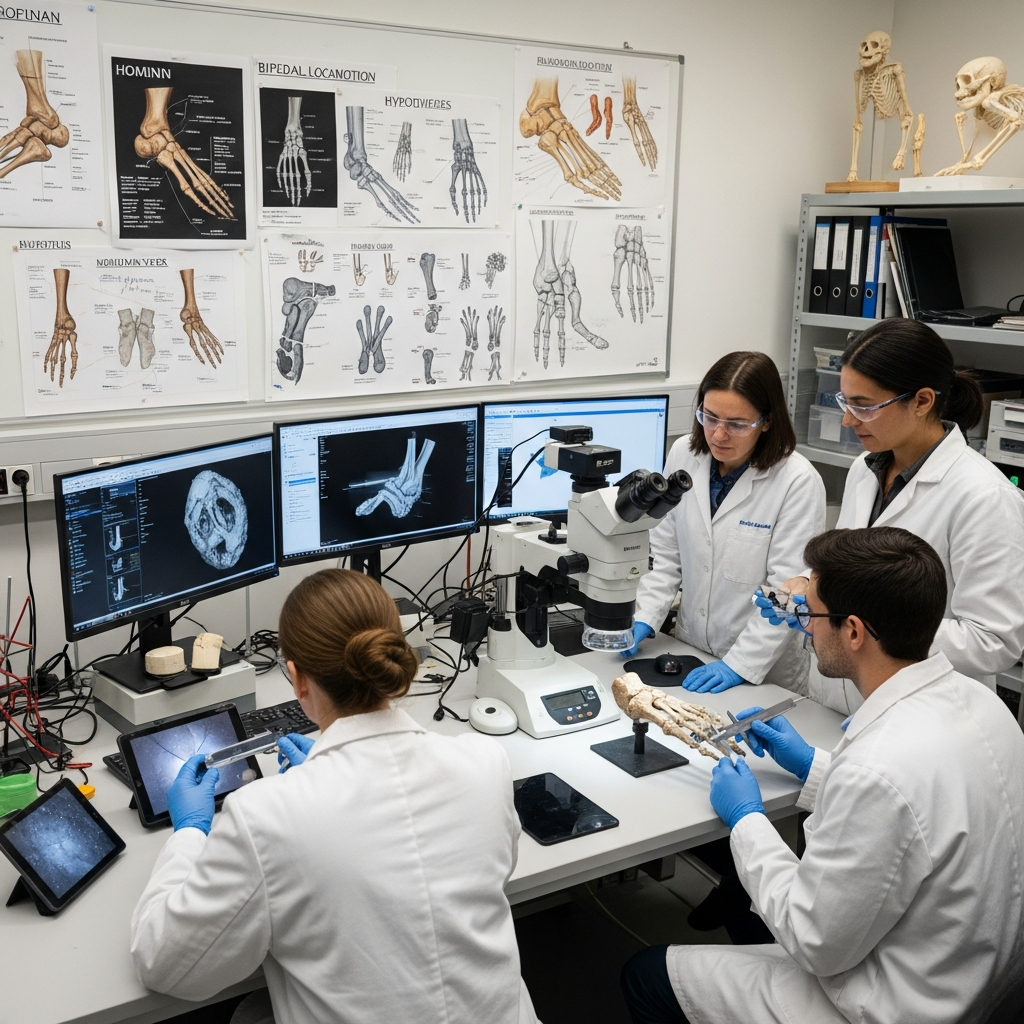
This dietary specialization perfectly aligned with the foot’s unique anatomy. The Burtele foot’s long, curved toes and flexible bones were ideally suited for adeptly scaling and gripping trees to access sustenance. Even the bones of its big toe were slender and curved, indicating its ability to wrap around branches. This suggests A. deyiremeda was a skilled climber, spending significant time in trees. Interestingly, while capable of bipedal locomotion on the ground, the species likely pushed off with its second toe, a feature distinct from both modern humans and Lucy’s species. This highlights the varied “experiments” in bipedalism that occurred during early human evolution.
Reshaping the Narrative of Human Evolution
The definitive identification of Australopithecus deyiremeda as a distinct species coexisting with A. afarensis has profound implications. University of Missouri anthropologist Carol Ward highlights the significance: “Not only do we have different species living at pretty similar times in a similar area but they are navigating the world in a different way from one another.”
This finding challenges the long-held, simpler view of human evolution as a linear progression, where one species directly evolves into the next. Instead, the evidence strongly supports a more complex, “bushy” family tree with multiple hominin species living concurrently, each exploring different ecological niches and locomotor strategies. Donald Carl Johanson, who discovered Lucy, notes that the new study suggests A. deyiremeda inherited its foot traits from an ancestral species different from Lucy’s lineage.
The distinct diets of A. deyiremeda and A. afarensis are crucial for understanding their peaceful coexistence. By specializing in different food sources—woodland resources for A. deyiremeda and mixed grassland/woodland vegetation for A. afarensis—these two species likely minimized direct competition, allowing both to thrive in the same geographical area. This dietary partitioning suggests a fascinating scenario where members of A. deyiremeda might have been seen in trees while A. afarensis roamed the grasslands nearby, demonstrating a remarkable early pattern of ecological adaptation and interspecies harmony.
Validating a Species and Glimpsing the Future
The confirmation of the Burtele foot’s owner also helps to solidify the validity of Australopithecus deyiremeda as a distinct species. The 2015 discovery of A. deyiremeda faced some skepticism, with critics suggesting the specimens might simply be variants of A. afarensis. However, the new anatomical and dietary evidence, particularly the unique foot, provides compelling support for its separate classification. This robust evidence strengthens the case for a more diverse early human lineage.
Yohannes Haile-Selassie and his team plan to continue their annual expeditions to the Burtele site. There are still many questions to explore about the biology, behavior, and geographic distribution of Australopithecus deyiremeda. Future discoveries will undoubtedly provide even deeper insights into this remarkable period of hominin diversity and the fascinating evolutionary experiments that ultimately led to modern humans. This journey into our distant past continues to unveil surprising complexities, reminding us that the story of human origins is far from fully told.
Frequently Asked Questions
What is the Burtele foot and why was its identity a mystery for so long?
The Burtele foot refers to a set of 3.4-million-year-old fossilized foot bones discovered in Ethiopia in 2009. Its identity remained a mystery primarily because it possessed a distinctive grasping big toe, adapted for climbing trees, which sharply contrasted with the arched, bipedal foot of Australopithecus afarensis (Lucy’s species), the dominant hominin in the region at that time. Without associated skull or teeth fossils, scientists couldn’t definitively link the unique foot to a specific species, leading to years of debate and uncertainty.
Which specific features of Australopithecus deyiremeda reveal its unique lifestyle?
Australopithecus deyiremeda exhibited a fascinating combination of traits indicating a lifestyle distinct from its contemporary, Lucy’s species. Its most telling feature is the opposable, grasping big toe and flexible foot bones, perfectly adapted for climbing trees and holding onto branches. Dietary analysis of its teeth further revealed a preference for woodland resources like leaves, fruits, and shrubs. These anatomical and dietary clues together paint a picture of a hominin that relied on arboreal environments for sustenance and possibly refuge, while also being capable of bipedal locomotion on the ground.
How does this discovery fundamentally change our understanding of human evolution?
This discovery significantly alters our understanding of human evolution by demonstrating that it was not a linear progression with a single hominin species at a time. Instead, it proves that at least two distinct hominin species, Australopithecus deyiremeda and Australopithecus afarensis, coexisted in the same region of Ethiopia over three million years ago. These species had different locomotor strategies (tree-climbing vs. more dedicated bipedalism) and distinct diets, suggesting they occupied different ecological niches. This coexistence challenges the “single-lineage” model and highlights a period of rich hominin diversity and evolutionary experimentation, paving the way for a more complex and nuanced view of our ancestral past.