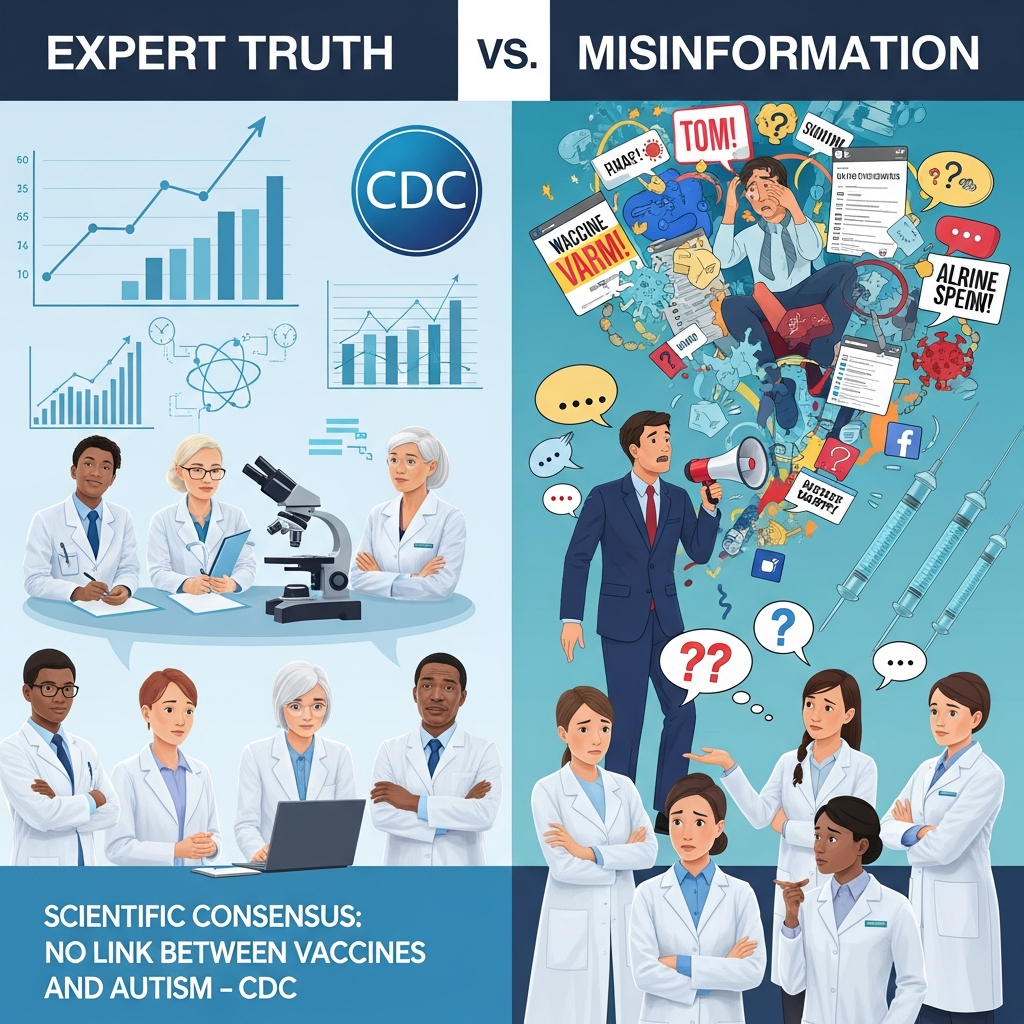
A recent, controversial update to the Centers for Disease Control and Prevention’s (CDC) website regarding vaccines and autism has ignited widespread alarm among national autism, disability, and public health organizations. This significant shift in messaging challenges nearly three decades of conclusive scientific research. It has prompted an urgent, unified condemnation from advocacy groups worldwide, who accuse the agency of undermining public trust and scientific integrity. This article delves into the changes, the expert backlash, and the critical importance of evidence-based public health information, particularly concerning CDC autism vaccine information.
The Alarming Shift: What the CDC Changed
The Centers for Disease Control and Prevention, historically a cornerstone of reliable public health information, recently altered its website’s stance on the vaccine-autism link. The prior, clear statement – “no links have been found between any vaccine ingredients and Autism spectrum disorder” – was replaced. The updated text now asserts, “‘vaccines do not cause autism’ is not an evidence-based claim.” Furthermore, the site misleadingly suggests that studies supporting a vaccine-autism link have been “ignored by health authorities.” This change was reportedly ordered by Health and Human Services Secretary Robert F. Kennedy Jr., bypassing the CDC’s own scientific experts.
Contradicting Decades of Science
This new assertion directly contradicts an overwhelming body of scientific evidence. Over 40 high-quality studies, conducted by independent researchers across seven countries and involving more than 5.6 million individuals, have definitively found no causal link between vaccines and autism. Leading experts, including Dr. Susan Kressly of the American Academy of Pediatrics, emphasize that this conclusion is “clear and unambiguous.” Autism is a complex neurodevelopmental disorder. Its causes are understood to be genetic or related to fetal development, with factors like prematurity, older parental age, and certain prenatal conditions increasing risk.
The Discredited Origins of the Vaccine-Autism Myth
The misconception linking vaccines, particularly the MMR vaccine, to autism originated from a fraudulent 1998 study. Conducted by Andrew Wakefield, this paper was later fully retracted by The Lancet. Subsequent investigations revealed ethical violations, scientific misrepresentation, and outright falsification of evidence. Despite its debunking, this discredited study’s influence unfortunately persists. The CDC’s recent website update risks inadvertently legitimizing such misinformation, fueling vaccine hesitancy, and potentially reversing critical public health achievements like disease eradication.
The Unanimous Outcry from Autism and Disability Advocates
A broad coalition of national autism and disability organizations has issued a powerful joint statement, expressing “deep disappointment” and unequivocally denouncing the CDC’s updated messaging as false and dangerous. Groups including the Autism Science Foundation, Autism Society of America, and the Autistic Self Advocacy Network are united in their condemnation. They highlight that the CDC’s action sows confusion, especially for parents seeking to protect their children from preventable infectious diseases. This erosion of trust jeopardizes the health of communities nationwide.
Misinformation Endangers Public Trust and Health
The shift at the CDC, a once-unquestioned authority on vaccine safety, creates a perilous “information vacuum.” When a federal agency casts doubt on established evidence, it undermines public confidence in all health guidance. Experts warn this could lead to decreased vaccination rates. Such a decline would increase vulnerability to preventable disease outbreaks, as seen with recent measles cases. The fear is that these “falsehoods” from the government could “scare parents and further stigmatize” autistic individuals. This harmful narrative deflects from the actual challenges faced by the autism community.
The True Needs of the Autism Community
Autism and disability advocates stress that investing resources in a discredited vaccine-autism link distracts from the pressing needs of the community. There are countless legitimate research opportunities. These could focus on personalized healthcare, effective services, and community-based support for autistic individuals and their families. Organizations call for funding to be redirected towards these impactful areas. They believe this would better serve the genuine needs and well-being of the autistic population.
Political Intervention and Public Health Risks
The controversial changes at the CDC underscore concerns about political interference in scientific institutions. Secretary Robert F. Kennedy Jr. confirmed he personally ordered the website changes. This bypassed input from the CDC’s developmental disability group and immunization experts. Critics, including former CDC officials, describe the agency as being “lobotomized” and operating on “decision-based evidence making” rather than scientific fact. This unprecedented move represents a critical “inflection point” for the agency’s credibility.
Erosion of Credibility and Trust
The scientific and public health communities have largely condemned Kennedy’s actions. Amesh Adalja of Johns Hopkins called the CDC “an organ of anti-vaccine propaganda.” This erosion of trust is particularly concerning given ongoing measles outbreaks and other vaccine-preventable diseases. The integrity of public health messaging is paramount. Undermining it with unsubstantiated claims risks long-term damage to population health. Trust in public health messaging is fundamental to disease prevention and control.
The Broader Implications for Child Health
Beyond autism, many experts fear this website alteration is a precursor to a wider assault on childhood vaccination programs. Kennedy’s administration has hinted at reviewing and changing the CDC-approved vaccination schedule. This could include abandoning the recommendation for the hepatitis B vaccine for newborns. Such policy shifts, driven by unsupported claims, would put children at unnecessary risk. Protecting children’s health requires adherence to robust, peer-reviewed scientific consensus.
Urgent Call to Action: Restoring Scientific Integrity
In response to these developments, the coalition of autism and disability organizations has issued a strong call to action for the CDC. Their demands are clear and reflect a unified stance on prioritizing scientific integrity and community needs. They are advocating for a swift return to evidence-based communication and responsible resource allocation.
Demands from Leading Organizations
The organizations urge the CDC to immediately revert its website to its previous, science-backed version. They also demand a commitment to nationwide vaccine education initiatives. These programs must emphasize the high-quality scientific evidence that clearly demonstrates vaccines do not cause autism. Furthermore, they insist that the CDC invest in research projects and initiatives that are directly responsive to the needs of autistic people and their families. This redirection of focus is vital.
Upholding Science for All Communities
Beyond the CDC, the organizations appeal to public leaders, institutions, and media. They ask them to uphold scientific integrity and collaboratively strengthen the support infrastructure for the entire autism community. This includes recognizing that parents often notice autism symptoms in a child’s second year, which coincides with routine vaccinations. However, this is the natural progression of symptom presentation, not a vaccine link. Protecting public health and supporting vulnerable populations demands clear, consistent, and scientifically accurate communication.
Frequently Asked Questions
What specific changes did the CDC make to its website regarding vaccines and autism, and why are they controversial?
The CDC’s website was altered to state that “‘vaccines do not cause autism’ is not an evidence-based claim” and that studies supporting a link have been “ignored.” This is highly controversial because it directly contradicts decades of overwhelming scientific evidence from over 40 high-quality global studies involving millions of people, which unequivocally show no causal link between vaccines and autism. Experts argue this change introduces misinformation, undermines the CDC’s credibility, and endangers public health.
Where can parents find reliable, science-backed information about vaccine safety and autism causes?
Parents seeking reliable information on vaccine safety and autism causes should consult trusted sources like the American Academy of Pediatrics (AAP), the World Health Organization (WHO), and major university research centers focused on autism (e.g., Children’s Hospital of Philadelphia’s Center for Autism Research). Organizations like the Autism Science Foundation and Autism Society of America also provide evidence-based resources. These bodies consistently uphold the scientific consensus that vaccines do not cause autism, offering accurate guidance rooted in peer-reviewed research.
How are leading autism and disability organizations advocating for a return to science-based public health messaging?
Leading autism and disability organizations, in a unified statement, are demanding that the CDC revert its website to its previous, scientifically accurate version. They are also calling for the CDC to initiate nationwide vaccine education campaigns emphasizing the robust evidence against a vaccine-autism link. Furthermore, they advocate for redirecting research funding towards projects that genuinely address the needs of autistic individuals and their families, such as personalized healthcare and support services, rather than discredited theories.
Conclusion
The recent changes to the CDC’s vaccine-autism webpage represent a critical moment for public health and scientific integrity. The unified condemnation from leading autism and disability organizations underscores the gravity of this misinformation. It is imperative that public health messaging remains grounded in rigorous science, protecting communities and fostering trust. Prioritizing evidence-based information and investing in research that genuinely benefits the autism community are essential steps forward. We must all uphold scientific truth to safeguard the health and well-being of every individual.