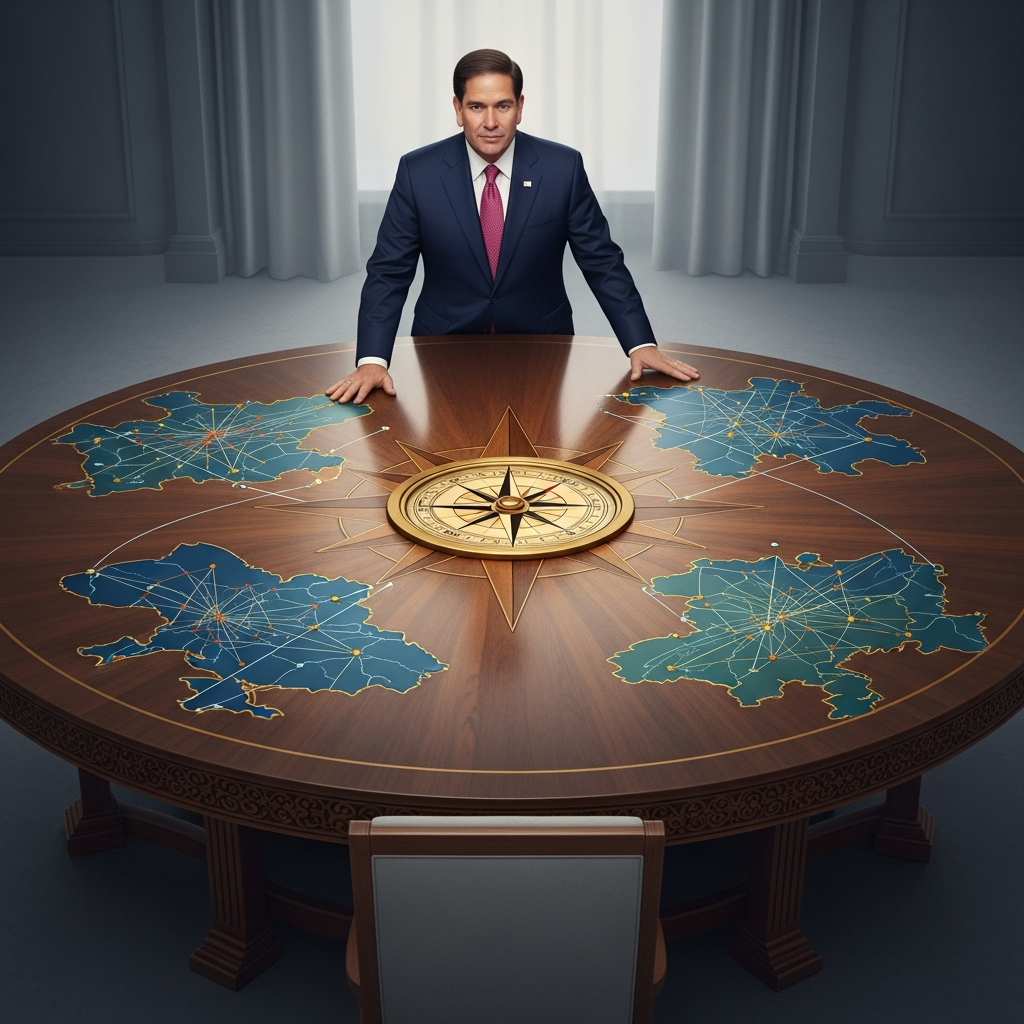
High-stakes diplomatic discussions recently unfolded in Geneva, offering a glimmer of hope for an end to the prolonged Russia-Ukraine war. U.S. Secretary of State Marco Rubio expressed significant optimism on November 23, 2025, describing a “tremendous amount of progress” at the peace talks. These crucial negotiations involved delegations from the United States, Ukraine, and key European allies, all striving to find a path to a resolution. However, beneath the surface of optimism, deep divisions and contentious proposals threatened to derail the fragile diplomatic efforts, particularly concerning a controversial 28-point peace plan.
High-Stakes Diplomacy Unfolds in Geneva
The Swiss city of Geneva became the epicenter of intense diplomatic activity as officials from Washington, Kyiv, and various European capitals convened. Secretary Rubio reported a “very good day” and felt “very optimistic” about reaching an agreement “very soon,” possibly within a matter of days. These discussions were touted as “the most productive and meaningful meeting we’ve had so far” in the peace process. The urgency of the talks was underscored by the ongoing conflict, with Ukrainian President Volodymyr Zelenskyy grappling with the monumental decision of balancing national dignity against crucial international support.
The Controversial 28-Point Peace Plan
At the core of these Ukraine peace talks was a contentious 28-point peace plan, reportedly backed by the United States. This draft proposal, developed in a complex process that included input from both Russian and Ukrainian sides according to Rubio, contained several maximalist demands long sought by Russia. Key provisions of the initial plan reportedly included:
Ukraine ceding significant territories, including previously annexed Crimea.
Reducing its armed forces by over half.
Formally abandoning its aspirations to join NATO.
Moscow retaining virtually all occupied territory.
Critics were swift and vocal, with some describing the proposal as a “capitulation document” that would “reward Russia for its invasion.” Concerns were raised by some U.S. senators that the plan might have been “effectively drawn up by Russia,” a claim Rubio explicitly denied, insisting it was “authored by the U.S.” Despite this, reports from Sky News suggested the initial framework was drafted by the White House and Kremlin without Ukraine’s involvement, setting a challenging precedent for its acceptance.
Trump’s Pressure and Aid Ultimatum
U.S. President Donald Trump’s involvement added a significant layer of complexity and pressure to the Ukraine peace talks. Earlier, he had publicly accused Ukraine of “zero gratitude” for U.S. efforts to end the war, seemingly questioning Kyiv’s commitment. He also pushed for a swift resolution, reportedly imposing a “Thursday” deadline for Ukraine to respond to the peace proposal.
Crucially, a high-ranking Ukrainian official revealed a stark U.S. leverage tactic: a direct threat to halt all U.S. assistance to Kyiv, including vital air defense missiles, intelligence sharing, and other weapons support, if Ukraine did not agree to the proposed deal. This ultimatum placed immense pressure on President Zelenskyy and his delegation. Despite his initial criticisms, Rubio later affirmed that President Trump was “quite pleased” with the progress made and Ukraine’s attitude towards the talks, while still acknowledging his offer was “not final.”
Ukraine’s Guarded Hope for “Dignified Peace”
Amidst the diplomatic maneuvering, Ukrainian President Volodymyr Zelenskyy maintained a more guarded, yet hopeful, stance. He welcomed the “reinvigorated” diplomacy, indicating “signals” that President Trump’s team “is hearing us.” Zelenskyy stressed the paramount importance of achieving a “dignified peace” that respects Ukraine’s sovereignty and prevents future Russian aggression. He described Ukraine as facing “one of the most difficult moments,” weighing the “loss of our dignity or the risk of losing a key partner” (the U.S.).
Ukrainian officials, including Andriy Yermak, head of President Zelenskyy’s office, and Rustem Umerov, head of Ukraine’s National Security and Defense Council, reported a “very constructive mood.” Umerov noted that the “current version” of the U.S. draft plan, following several rounds of talks, now incorporates “most of Ukraine’s key priorities.” This cautious optimism unfolded against the grim backdrop of ongoing hostilities, with cities like Kharkiv still facing “massive” Russian drone and missile strikes, underscoring the daily human cost of the conflict.
European Allies Push Back with Counter-Proposals
The initial U.S.-backed peace plan faced substantial resistance from European allies, who voiced strong reservations and even outright opposition to certain elements. German Chancellor Friedrich Merz unequivocally declared Ukrainian sovereignty “non-negotiable,” stating that Europe could not support components of the contentious plan that suggested territorial concessions or limitations on Ukraine’s military. European Commission President Ursula von der Leyen further emphasized that “borders cannot be changed by force,” directly contradicting reported demands for Ukraine to cede territory. She also argued against restricting the size of Ukraine’s armed forces, warning it would compromise future security.
Former Lithuanian Foreign Minister Gabrielius Landsbergis went as far as to describe Trump’s 28-point plan as “horrible,” drawing parallels to post-World War II pacts that divided Europe. In response to these significant concerns, Ukraine and its European allies collaborated to submit a comprehensive counter-proposal. This alternative plan challenged key aspects of the original and included:
Allowing Ukraine to field up to 800,000 troops in peacetime, significantly higher than the 600,000 cap reportedly suggested.
Committing Ukraine to negotiate territorial arrangements from the existing line of contact, rather than recovering occupied territory by military means.
Specifying that Ukraine’s potential NATO membership would depend on full consensus among alliance members, acknowledging current limitations.
Proposing a robust U.S. security guarantee for Ukraine, mirroring NATO’s Article 5, which offers collective defense.
Calling for financial compensation for Ukraine, potentially through frozen Russian sovereign assets.
Suggesting the readmission of Moscow into the G8, contingent on agreement from all relevant parties.
Russian media, predictably, reacted caustically to these European interventions, viewing them as attempts to “sabotage” negotiations and describing the proposals as “stillborn.”
Navigating a “Delicate Moment”: Future of Negotiations
Despite the declared progress, Secretary Rubio acknowledged that “some issues remain outstanding” and described the situation as a “delicate moment” and an “ongoing process.” He indicated that points of contention included “semantics,” issues requiring “higher level decisions and consultation,” and those needing “more time to work through.” The concept of the plan being a “living, breathing document” subject to “changes and adjustments” reflects a dynamic negotiation. Some observers, like BBC World News Correspondent Joe Inwood, even suggested the initial plan might be a negotiating technique known as “anchoring,” designed to shift the debate and allow for later concessions, creating a sense of “winning” for the other side.
Rubio confirmed that providing robust security guarantees for Ukraine to feel “safe” is a critical discussion point where “substantial progress” had been made. While no final agreement was reached during these initial Geneva talks, both the U.S. and Ukrainian teams described their meetings as “very productive,” with continuous work expected in the coming days. The intricate interplay of proposals, national interests, and geopolitical strategy suggests a protracted and difficult path ahead for a final Ukraine peace plan.
Frequently Asked Questions
What was the core controversy surrounding the initial US peace plan for Ukraine?
The initial 28-point U.S. peace plan proposed during the Geneva talks was highly controversial because it reportedly contained maximalist demands favoring Russia. These included Ukraine ceding significant territories, drastically cutting its armed forces, and abandoning its NATO aspirations. Critics, including European allies and some U.S. senators, viewed it as a “capitulation document” that would unfairly reward Russia and undermine Ukraine’s sovereignty, leading to accusations that it was “effectively drawn up by Russia.”
Who were the key international figures involved in the Geneva Ukraine peace talks?
The primary figures involved in the Geneva Ukraine peace talks included U.S. Secretary of State Marco Rubio, representing the U.S. delegation, and Ukrainian officials like Andriy Yermak (head of President Zelenskyy’s office) and Rustem Umerov (head of Ukraine’s National Security and Defense Council). U.S. President Donald Trump’s directives heavily influenced the U.S. position. Key European leaders like German Chancellor Friedrich Merz and European Commission President Ursula von der Leyen also played a significant role by voicing strong opposition and proposing counter-points to the initial plan.
What were the main points of contention and proposed solutions during the Ukraine peace negotiations?
Main points of contention included Ukraine’s territorial integrity (with the initial plan suggesting ceding territory), the size of Ukraine’s future military (with a U.S. proposal for significant cuts), and Ukraine’s aspiration for NATO membership. In response, European and Ukrainian counter-proposals suggested allowing a much larger Ukrainian army (up to 800,000 troops), negotiating territorial arrangements from the existing line of contact, and proposing a U.S. security guarantee mirroring NATO’s Article 5. Financial compensation for Ukraine, possibly through frozen Russian assets, was another key solution proposed.
The recent Geneva Ukraine peace talks represent a critical juncture in the ongoing conflict. While Secretary Rubio’s optimism painted a picture of progress, the deeply contentious nature of the proposed peace plan and the stark geopolitical realities highlight the immense challenges ahead. The significant threat of halted U.S. aid, coupled with strong European and Ukrainian resistance to unfavorable terms, underscores the high stakes for all parties. The path to a lasting and dignified peace remains fraught with diplomatic complexities, requiring continued dialogue, compromise, and an unwavering commitment to Ukraine’s sovereignty and security.