At a critical international security gathering in Canada, a controversial “peace plan” for the Russia-Ukraine war sparked outrage among a bipartisan group of U.S. senators. Initially widely reported as a proposal from the Trump administration, later clarifications revealed its true origin: a comprehensive “wish list” crafted by the Kremlin itself. Despite this distinction, the senators’ vehement criticism highlighted deep concerns about rewarding aggression and undermining Ukrainian sovereignty, setting the stage for intense diplomatic discussions.
The Disputed Framework: Concessions Without Consent
The 28-point plan, which ignited the political firestorm, reportedly detailed significant territorial concessions from Ukraine to Russia. Crucially, it was crafted by the Kremlin, initially with reported input from the Trump administration, yet completely bypassed Ukrainian involvement. Reports indicated that former President Trump was actively pressuring Kyiv to accept this framework within a tight deadline. Ukrainian President Volodymyr Zelenskyy has, on numerous occasions, categorically rejected demands for ceding large swaths of territory. This proposed plan directly contradicted Kyiv’s steadfast position, raising immediate alarm bells among Washington lawmakers.
Bipartisan Outcry: A Perilous Precedent
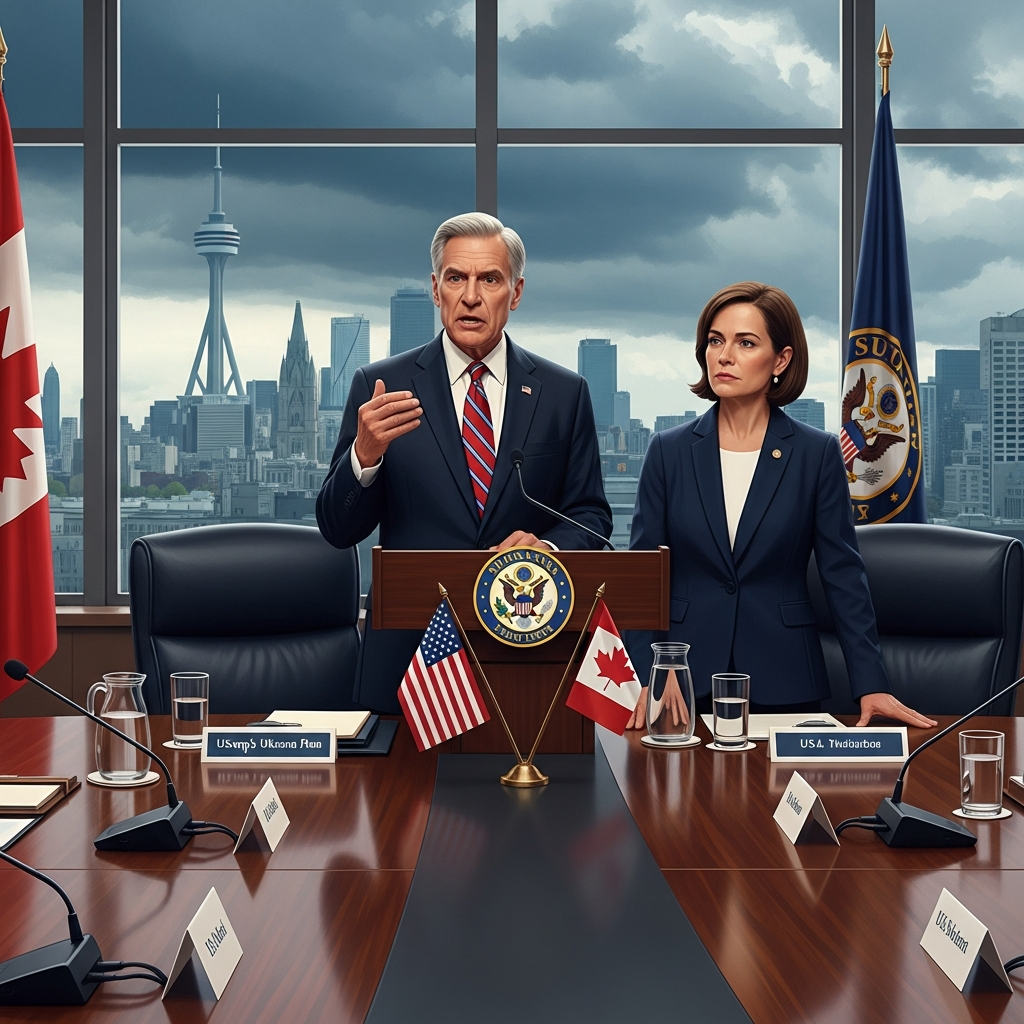
The Halifax International Security Forum in Nova Scotia became the stage for a powerful display of bipartisan opposition to the controversial proposal. Senators from across the political spectrum united to denounce the plan. Independent Maine Senator Angus King, a prominent member of the Senate Foreign Relations Committee, minced no words. “It rewards aggression. This is pure and simple,” King asserted during a panel discussion. He stressed that there was “no ethical, legal, moral, political justification for Russia claiming eastern Ukraine.”
Senator King drew a stark historical parallel, likening the proposal to British Prime Minister Neville Chamberlain’s infamous 1938 Munich Pact with Adolf Hitler. That agreement, a failed act of appeasement, is widely seen as a precursor to World War II. This historical reference underscored the senators’ deep-seated fear of validating territorial seizures by force.
Republican Senator Thom Tillis of North Carolina echoed King’s concerns, suggesting that even former Republican Senate leader Mitch McConnell’s critique had not gone far enough. McConnell had warned that if administration officials were “more concerned with appeasing Putin than securing real peace,” new advisers should be sought. Tillis unequivocally stated, “We should not do anything that makes [Putin] feel like he has a win here.” He emphasized the imperative of denying Moscow any perception of victory derived from its aggressive actions. Democratic Senator Jeanne Shaheen of New Hampshire, ranking member of the Senate Foreign Relations Committee, labeled the entire proposal an “outrage.”
The Pivotal Clarification: Unmasking the Russian Blueprint
A significant turn in the narrative emerged from the Halifax forum. Following discussions with U.S. Secretary of State Marco Rubio, attending senators clarified the true nature of the plan. Senator King confirmed that Secretary Rubio had stated it was “not the administration’s plan” but rather a “wish list of the Russians.” Senator Shaheen concurred, emphasizing, “This is a Russian proposal. There is so much in that plan that is totally unacceptable.”
Republican Senator Mike Rounds further substantiated this revelation, confirming, “it is not our peace plan.” He suggested the document “looked more like it was written in Russian to begin with.” This clarification repositioned the contentious document from an American initiative to a Kremlin-orchestrated proposal, intended by the U.S. as merely a “starting point” for future discussions. This distinction, while crucial, did not diminish the senators’ initial alarm regarding the plan’s contents or the perception that the U.S. was engaging with such a framework. The revelation highlighted the delicate and often opaque nature of international diplomacy, particularly in highly charged conflicts like the one in Ukraine.
International Reactions: Kyiv’s Caution, Moscow’s Welcome
The global response to the proposed peace framework diverged sharply along predictable lines. Russian President Vladimir Putin openly welcomed the proposal. He suggested that it “could form the basis of a final peace settlement” if the United States could persuade Ukraine and its European allies to agree. This immediate embrace from Moscow further fueled concerns among critics that the plan would indeed legitimize Russian aggression.
Ukrainian President Volodymyr Zelenskyy, while not outright rejecting the concept of a peace plan, reacted with characteristic caution. In an address, he insisted on “fair treatment” for Ukraine and pledged to “work calmly” with Washington and other international partners. Zelenskyy described the current period as “truly one of the most difficult moments in our history,” underscoring the immense pressures facing his nation. His measured response reflected Ukraine’s precarious position, navigating urgent military needs while seeking diplomatic solutions that uphold its sovereignty.
Beyond the Plan: The Halifax Forum and Diplomatic Strains
The presence of a large, bipartisan delegation of U.S. senators at the 17th annual Halifax International Security Forum was particularly noteworthy this year. The Trump administration had notably suspended the participation of U.S. defense officials in events hosted by think tanks, including this prestigious forum. Consequently, congressional leaders stepped into the void, underscoring the importance of maintaining international dialogue.
Senator Shaheen explained that the substantial senatorial turnout was partly driven by strained relations between Canada and the United States under the previous administration. Former President Trump’s trade disputes and his controversial suggestion that Canada should become the 51st U.S. state had created significant friction with America’s northern neighbor. These tensions had tangible economic impacts, including a dramatic drop in Canadian tourism to U.S. border states like New Hampshire. Shaheen voiced profound concern, stating that Trump’s policies and comments were “not only detrimental to Canada and our relationship, but I think they are detrimental globally. They show a lack of respect of sovereign nations.” This broader context highlighted the complex geopolitical landscape in which discussions about the Russia-Ukraine conflict were taking place.
The Enduring Debate: Appeasement Versus Resolution
The controversy surrounding the Ukraine peace plan, even as a “Russian wish list,” reignited a perennial debate in international relations: the delicate balance between achieving peace and avoiding appeasement. Critics argue that any plan requiring a victim nation to cede territory seized through aggression sets a dangerous precedent, potentially emboldening other authoritarian regimes. They emphasize the importance of upholding international law and the principle of territorial integrity.
Conversely, proponents of diplomatic solutions, even those involving difficult compromises, often highlight the immense human cost of prolonged conflict. They seek pathways to de-escalation, even if it means unconventional negotiations. This incident underscores the profound challenge facing global leaders: how to facilitate genuine, lasting peace without inadvertently rewarding aggression or sacrificing fundamental principles of national sovereignty. The senators’ strong stance signaled a clear commitment from a significant segment of U.S. political leadership to resist perceived appeasement, even in the face of complex geopolitical pressures.
Frequently Asked Questions
What was the controversial ‘peace plan’ for Ukraine discussed by US senators?
The plan was a 28-point proposal detailing significant territorial concessions from Ukraine, reportedly crafted by the Kremlin. It was initially perceived by many as being pushed by the Trump administration, prompting strong bipartisan criticism from U.S. senators at the Halifax International Security Forum. However, U.S. Secretary of State Marco Rubio later clarified to senators that it was actually a “Russian wish list” and not an official U.S. administration peace plan, intended merely as a potential starting point for discussions.
Why were US senators critical of the proposed Ukraine peace plan at the Halifax Forum?
U.S. senators, including Independent Angus King, Republican Thom Tillis, and Democrat Jeanne Shaheen, voiced strong objections because they viewed the plan as “rewarding aggression.” They argued it would legitimize Russia’s seizure of Ukrainian territory and set a dangerous international precedent, with Senator King comparing it to the Munich Pact of 1938. Their criticism highlighted concerns that the plan was drafted without Ukraine’s involvement and acquiesced to Russian demands, undermining Ukrainian sovereignty and international law.
How does the debate over this ‘peace plan’ reflect broader US foreign policy challenges?
The debate reflects ongoing challenges in U.S. foreign policy, particularly regarding Russia, Ukraine, and the balance between diplomacy and principles. It underscores the difficulty of crafting peace agreements during active conflicts without appearing to legitimize aggression. The senators’ strong stance also highlighted internal U.S. political divisions on how to approach these complex issues, amidst broader diplomatic strains, such as those with Canada, that impacted the context of the Halifax forum. This incident showcases the intricate layers of geopolitical strategy, ethical considerations, and domestic politics inherent in international relations.
Conclusion
The intense debate at the Halifax International Security Forum over a purported “peace plan” for Ukraine underscores the intricate challenges of modern geopolitics. While initially sparking outrage as a Trump administration initiative, the pivotal clarification that it was a “Russian wish list” offered a new perspective on the diplomatic landscape. Nevertheless, the bipartisan condemnation from U.S. senators highlighted unwavering concerns about appeasing aggression and upholding international norms. As the Russia-Ukraine conflict continues, the incident serves as a stark reminder of the delicate balance required to pursue peace while rigorously defending sovereignty and justice on the global stage. The ongoing dialogue reinforces the need for transparent, equitable, and principled approaches to resolving international disputes.