A defunct NASA scientific satellite, known as Van Allen Probe A, recently concluded its mission not with a controlled deorbit, but with an uncontrolled plunge back into Earth’s atmosphere. This dramatic event, confirmed by the U.S. Space Force, highlights both the success of a vital scientific endeavor and the growing challenges of managing space debris. Reentering over the Pacific Ocean, west of the Galapagos Islands, the 1,323-pound (600-kilogram) spacecraft largely disintegrated, posing a minimal 1-in-4,200 risk of bodily harm on the ground. This incident serves as a critical reminder of the increasing need for sustainable space practices as Earth’s orbit becomes increasingly cluttered.
The Van Allen Probe A: A Fiery Farewell Over the Pacific
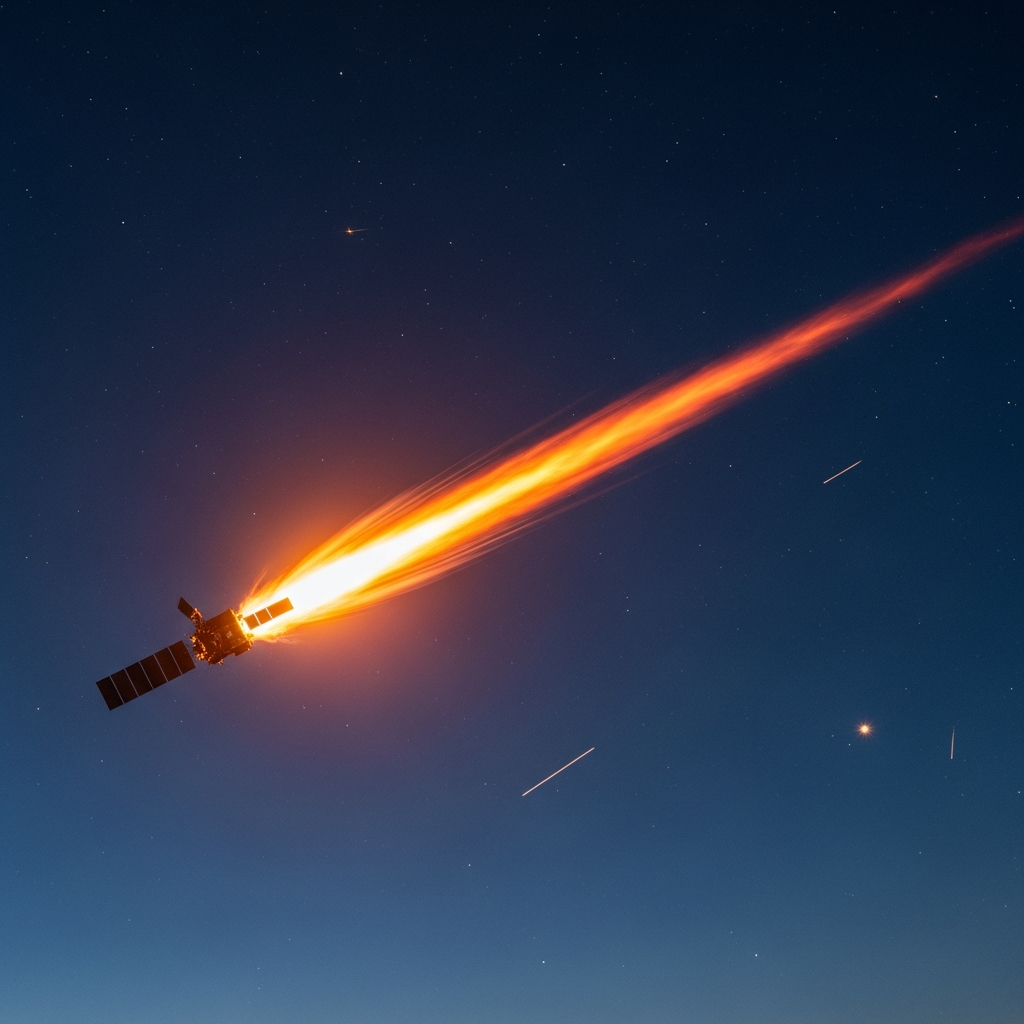
On a Wednesday in March 2026, the venerable Van Allen Probe A met its fiery end, marking the conclusion of an impactful scientific journey. After years orbiting our planet, this former NASA satellite made an uncontrolled reentry into Earth’s atmosphere. Most of the spacecraft was expected to burn up completely due to intense atmospheric friction. While some robust components might have survived the scorching descent, the U.S. Space Force meticulously tracked its trajectory. They confirmed its reentry point near the Galapagos Islands, far from populated landmasses. This ensured public safety, despite the satellite’s significant mass.
What Happened During the Reentry?
The reentry was an uncontrolled event, meaning ground control could not guide its final descent path. NASA had always anticipated that the majority of the satellite would vaporize. This is a common outcome for objects reentering at high speeds. Experts estimated a very low risk to people on Earth. Such events, while rare in terms of impact risk, are becoming more frequent. They underscore the difficulties in predicting precise reentry locations.
A Mission of Discovery: Unveiling Earth’s Radiation Belts
Launched in 2012, the Van Allen Probes—A and its twin, Probe B—were a groundbreaking mission. Their primary objective was to study Earth’s Van Allen radiation belts. These two doughnut-shaped regions of highly energetic particles encircle our planet. They are held in place by Earth’s magnetic field. Understanding these belts is crucial for safeguarding satellites and astronauts. The probes provided invaluable data on space weather, solar storms, and their impacts.
The Science Behind the Mission
For seven years, the twin spacecraft navigated these hazardous regions. They gathered critical information about the dynamics of the radiation belts. This data helped scientists understand how solar activity impacts our space environment. Their work significantly advanced our knowledge of heliophysics. It also improved space weather forecasting models. These models are vital for protecting communication and navigation systems. The probes ceased operations in 2019 after exhausting their fuel supply. They had successfully completed their data collection phase.
Why the Early Return? Solar Activity and Orbital Decay
Initially, NASA projected that the Van Allen Probes would remain in orbit until around 2034. However, Van Allen Probe A’s journey was cut short. Intense solar activity over the past several years played a significant role. Heightened solar activity increases the density of Earth’s upper atmosphere. This atmospheric drag acts like a brake on satellites. It gradually pulls them closer to the planet.
The Impact of Solar Storms
Solar storms release bursts of energy and particles. These can heat and expand Earth’s upper atmosphere. This expansion creates more drag on objects in low Earth orbit. For Van Allen Probe A, this increased drag accelerated its orbital decay. It caused the satellite to reenter almost a decade earlier than anticipated. Dutch scientist Marco Langbroek noted the complexity of such predictions. He highlighted that Probe A’s “eccentric, lopsided orbit” made its specific reentry path especially challenging to forecast. This early return illustrates the unpredictable nature of our dynamic space environment.
The Twin Remains: Van Allen Probe B’s Ongoing Orbit
While Probe A has returned, its twin, Van Allen Probe B, continues its silent vigil in orbit. Like its sibling, Probe B is no longer functional. It ceased operations in 2019 due to lack of fuel. Scientists are closely monitoring its trajectory. However, its reentry is not expected until approximately 2030. This staggered return provides further opportunities for observation. It also offers more insights into orbital mechanics. The distinct reentry timelines for the twins underscore the complex factors influencing orbital decay.
The Growing Challenge of Space Debris and Uncontrolled Reentries
The uncontrolled reentry of Van Allen Probe A serves as a potent symbol. It highlights the urgent global issue of space debris. Earth’s orbit is becoming increasingly congested with defunct satellites and discarded rocket stages. Each uncontrolled reentry, no matter how small, carries inherent risks. While the risk from Probe A was minimal, future, larger uncontrolled reentries could pose greater hazards.
Managing a Crowded Orbit
The international community is grappling with how to manage this growing problem. Currently, there are thousands of non-functional objects in orbit. These range from tiny fragments to entire rocket bodies. Each presents a collision risk to operational satellites. They also carry the potential for uncontrolled atmospheric reentry. Developing effective strategies for controlled deorbiting is paramount. This includes designing satellites to reenter safely. It also involves removing larger, high-risk pieces of debris.
Mitigating Future Risks: A Path to Sustainable Space
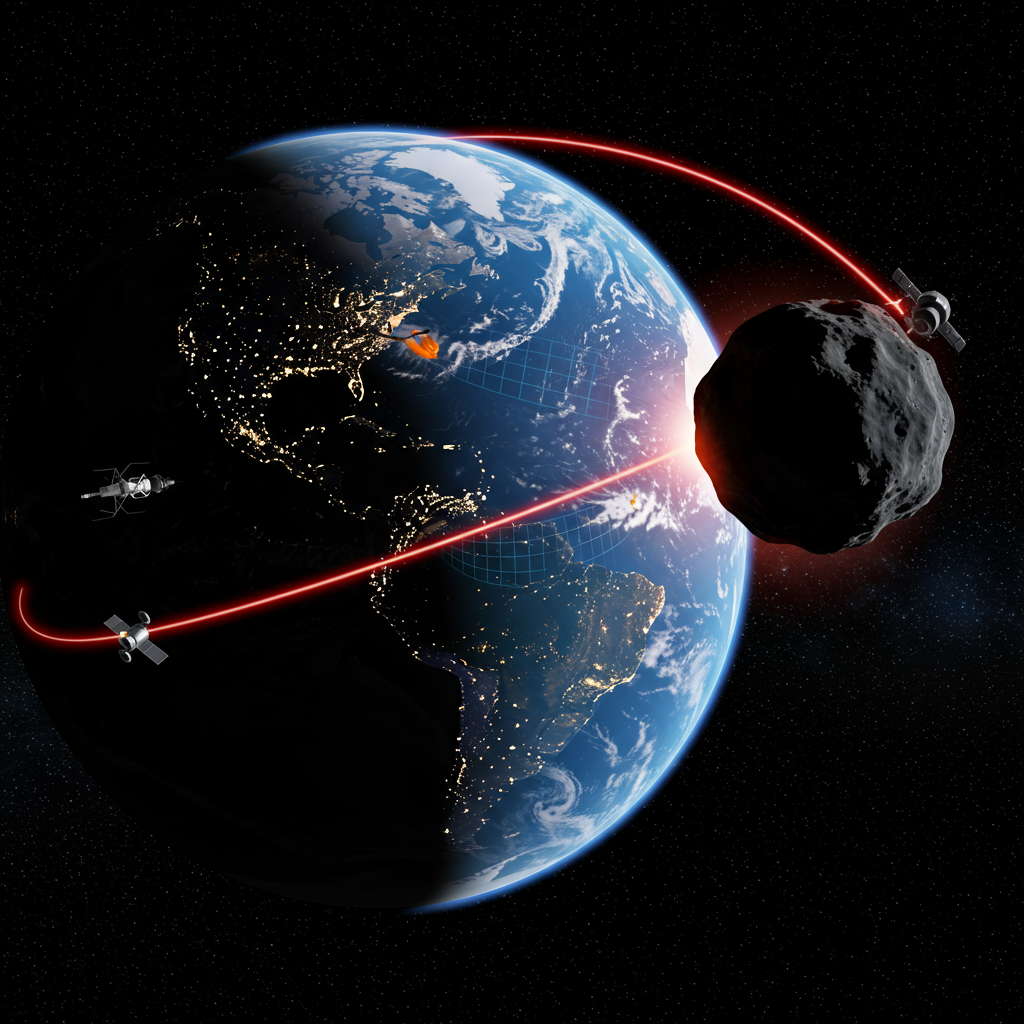
Addressing the challenge of space debris requires a multi-faceted approach. International collaboration is essential for creating global standards. New technologies for active debris removal are under development. These could involve capture mechanisms or laser-based systems. Satellite operators are also encouraged to design their spacecraft for controlled deorbiting. This ensures safe disposal at the end of their mission.
Designing for Deorbiting
New regulations often stipulate that satellites must be removed from orbit within 25 years. This can be achieved either through controlled reentry or by moving them to a “graveyard” orbit. However, older satellites like the Van Allen Probes predate some of these guidelines. Their uncontrolled reentries emphasize the need for retroactive solutions. They also highlight the importance of adhering to future sustainability practices. The ultimate goal is to preserve a safe and accessible space environment for generations to come.
Beyond the Reentry: The Lasting Legacy of the Van Allen Probes
Despite its uncontrolled return, the legacy of the Van Allen Probe A is firmly cemented in scientific achievement. Along with its twin, it provided an unprecedented view into Earth’s radiation belts. Their data continues to inform research on space weather. This knowledge is critical for protecting our modern, technology-dependent society. The mission showcased humanity’s drive for discovery. It also left a lasting impact on our understanding of Earth’s complex interaction with the Sun. The dramatic reentry serves as a fitting, albeit unplanned, capstone to a highly successful scientific mission. It simultaneously pushes us to address the evolving realities of space sustainability.
Frequently Asked Questions
What was the primary mission of the Van Allen Probes, and why were they important?
The Van Allen Probes, launched in 2012, had the primary mission of studying Earth’s Van Allen radiation belts. These two belts of charged particles encircle our planet, and understanding their dynamics is crucial for space weather forecasting. The probes collected data for seven years, significantly advancing scientific knowledge on how solar activity influences these hazardous regions. Their work improved models for protecting satellites, communication systems, and astronauts from space radiation, making their contribution invaluable to heliophysics and space exploration.
Where did NASA’s Van Allen Probe A reenter Earth’s atmosphere, and what was the public risk?
NASA’s Van Allen Probe A made an uncontrolled reentry over the Pacific Ocean, specifically to the west of the Galapagos Islands. The U.S. Space Force confirmed its precise re-entry point. While the 1,323-pound (600-kilogram) satellite was expected to largely burn up upon atmospheric friction, NASA assessed the risk of bodily harm from any surviving debris at a very low 1-in-4,200. This location and low risk assessment ensured the event posed no significant threat to populated areas or maritime traffic.
What challenges do uncontrolled satellite reentries like this pose for the future of space?
Uncontrolled satellite reentries, such as that of Van Allen Probe A, pose several challenges for the future of space. Firstly, they highlight the growing issue of space debris, as Earth’s orbit becomes increasingly cluttered with defunct spacecraft. Secondly, predicting their exact reentry location is difficult, creating a minor, albeit managed, public safety concern. Lastly, these events underscore the urgent need for international standards and technologies for controlled deorbiting. This ensures that future satellites are designed for safe disposal, preventing further accumulation of debris and protecting operational spacecraft from collision risks.
Conclusion
The uncontrolled reentry of NASA’s Van Allen Probe A marks a significant moment, encapsulating both triumph and challenge. It celebrates the successful conclusion of a mission that profoundly deepened our understanding of Earth’s radiation belts and the dynamic forces of space weather. Simultaneously, this event serves as a stark reminder of the escalating problem of space debris and the complexities of managing human-made objects in orbit. As humanity continues to expand its presence in space, lessons from events like Probe A’s final plunge will be crucial. They will guide us towards a future of more responsible and sustainable space exploration, ensuring our orbital environment remains safe and accessible for generations to come.