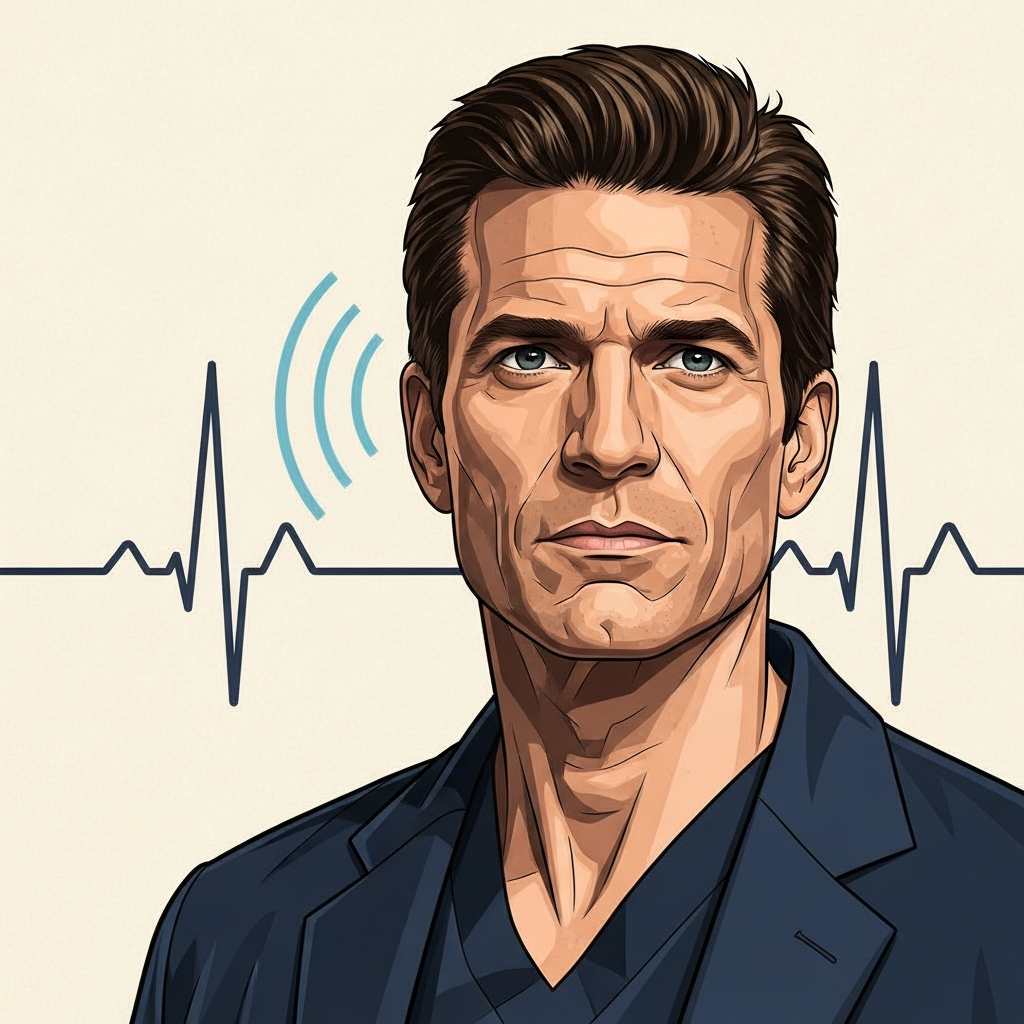
The late actor Eric Dane, widely celebrated for his iconic role as Dr. Mark Sloan, “McSteamy,” on “Grey’s Anatomy,” faced a devastating battle with Amyotrophic Lateral Sclerosis (ALS) before his passing in February 2026. His former wife, Rebecca Gayheart, now reveals the profound impact of a particular ALS symptom that Dane “really dreaded”: the permanent loss of his distinctive voice. This struggle, however, has unexpectedly shaped a powerful legacy through groundbreaking AI voice technology, offering a new beacon of hope for others experiencing similar challenges. Gayheart is actively championing an initiative that harnesses artificial intelligence to restore communicative agency to individuals living with permanent voice loss, ensuring Dane’s fight continues to inspire.
The Devastating Silence: Eric Dane’s Battle with Voice Loss
ALS, also known as Lou Gehrig’s disease, is a progressive neurodegenerative condition that systematically attacks nerve cells in the brain and spinal cord. As the Mayo Clinic explains, this deterioration gradually strips away a person’s ability to control voluntary muscles, ultimately affecting movement, speech, swallowing, and breathing. For many patients, including Dane, difficulty speaking or a change in voice, often manifesting as slow or slurred speech, is among the first noticeable symptoms.
For an actor and storyteller like Eric Dane, his voice was not merely a tool; it was a fundamental part of his identity. Rebecca Gayheart vividly recounts the gradual, yet “shocking,” onset of his voice loss. “When more of his voice was lost, we would really feel it. And he really felt it,” she shared with TODAY.com. As his disease advanced, Dane’s means of expression dwindled, leaving him increasingly reliant on just his voice and facial expressions. Gayheart observed a heartbreaking shift: “As speaking became harder for him, I watched his spark fade away.”
This fear of losing his voice was deeply rooted. Dane had always dreaded this specific symptom, understanding its profound implications for his career and his ability to connect with his loved ones. The struggle was further compounded by his personal history; Dane often expressed profound anger and fear of being taken from his young daughters, Billie and Georgia, mirroring his own childhood trauma of losing his father at a young age. His primary desire, above all else, was to spend as much time with his family as possible.
A Breakthrough: AI Voice Cloning Offers Renewed Hope
Amidst the growing despair, a significant turning point emerged with the introduction of new AI voice cloning technology developed by ElevenLabs. This innovative solution offered a pathway for Dane to reclaim a piece of himself that ALS was relentlessly stealing. Using existing recordings of his voice, the technology meticulously created an AI voice clone that replicated his unique cadence and emotional inflections.
The moment Dane and his family heard his AI voice clone was “profound” and deeply “emotional.” Gayheart described it as “such a gift,” igniting a renewed sense of hope in Dane. Losing one’s speech often means that others begin to speak on behalf of the individual, leading to a palpable loss of personal power and autonomy. For Dane, the AI voice provided a critical means to “reclaim a part of himself,” a truly “big deal.”
ElevenLabs makes this technology remarkably accessible. A functional AI voice clone can be generated for free with just 30 seconds of audio material, with improved quality achieved with 10 minutes and optimal results from 30 minutes of recordings. What started as a focused project to aid ALS patients has now expanded its reach, assisting individuals facing a spectrum of medical challenges, including cerebral palsy, stroke, and brain injuries.
Eric Dane’s Enduring Legacy: Advocacy Beyond the Screen
Although Eric Dane wasn’t able to fully utilize his AI voice clone before his passing in February 2026, his desire for others to benefit from this technology now forms a core part of his enduring legacy. He had publicly revealed his ALS diagnosis nearly a year prior, becoming a passionate advocate for awareness and research. His commitment was unwavering, pledging to “ring every bell” and “fight until the last breath” for his daughters. This included meeting with California Congressman Eric Swalwell to discuss ALS initiatives.
Rebecca Gayheart, despite her separation from Dane in 2018 (they never divorced and remained close, co-parenting their daughters), is now dedicated to continuing his mission. At the annual SXSW festival, she is actively promoting ElevenLabs’ “11 Voices” project, a pioneering docuseries that features individuals with voice loss narrating their own stories using AI technology. Furthermore, ElevenLabs has committed to offering its voice restoration technology to one million people free of charge, a testament to Dane’s vision. Gayheart hopes Dane will be remembered not just for his acting, but for “how he showed up for other people, and his advocacy for ALS and the good fight that he fought.”
Beyond the Voice: Lessons in Resilience and Purpose
Dane’s battle with ALS also illuminated his profound resilience and his commitment to living a life of purpose. Even as the disease progressed, he continued to act, starring in the TNT action drama “The Last Ship” and reprising his role as Cal Jacobs on HBO’s “Euphoria.” Notably, he took on a poignant role in the medical drama “Brilliant Minds,” portraying a firefighter diagnosed with ALS, drawing directly from his personal experience to add authenticity and profound emotional depth. The crew’s ten-minute standing ovation after one particularly moving scene underscored his bravery.
In his final interview for the Netflix special “Famous Last Words: Eric Dane,” he shared four crucial life lessons with his daughters:
Live in the Present: Emphasizing that the past holds regrets and the future is unknown, Dane urged them to “treasure it, cherish every moment.”
Fall in Love: He encouraged them to find a passion or joy that inspires them daily, much like acting did for him through his “darkest hours.”
Find Your People: Dane stressed the importance of supportive, non-judgmental friends who will “entertain, guide, help, support, and for some, save you.”
Fight With Every Ounce of Your Being: He implored them to face challenges with dignity, “never give up,” and fight until their “last breath,” asserting that while ALS took his body, it would “never take my spirit.”
These lessons encapsulate Dane’s unwavering spirit and his refusal to let ALS strip away his hope, purpose, or relationships. His life, even amidst profound illness, remained a testament to resilience and advocacy, providing inspiration to countless others facing similar struggles.
Understanding ALS: A Broader Perspective
ALS is a brutal and relentless disease. While there is currently no cure, certain medications can help slow its progression, highlighting the critical need for ongoing research and support. Dane joined a list of other prominent figures who have battled ALS, including theoretical physicist Stephen Hawking and R&B singer Roberta Flack, underscoring the widespread impact of this condition.
The initiative championed by Rebecca Gayheart and ElevenLabs offers more than just restored speech; it restores dignity, autonomy, and a crucial connection to the world for those whose voices have been silenced. It is a powerful embodiment of Eric Dane’s wish that “other people experience that feeling of knowing that you can still communicate after experiencing voice loss.” His legacy now extends far beyond the screen, resonating as a powerful voice for hope and innovation in the fight against ALS.
Frequently Asked Questions
What is ALS, and how did it impact Eric Dane’s ability to speak?
Amyotrophic Lateral Sclerosis (ALS) is a progressive neurodegenerative disease that causes nerve cells controlling voluntary muscles to deteriorate and die. For Eric Dane, like many ALS patients, this led to a gradual yet “shocking” loss of his distinctive voice, a symptom he greatly feared. ALS can cause slow or slurred speech, making communication increasingly difficult and affecting a person’s ability to express themselves, leading to a sense of losing personal “spark” and “agency.”
How can AI voice cloning technology help individuals experiencing voice loss from ALS?
AI voice cloning technology, like that developed by ElevenLabs, uses existing recordings of a person’s voice to create an artificial version that mimics their unique cadence and emotional tone. For ALS patients experiencing voice loss, this technology can restore their ability to communicate using a voice that is recognizably their own. It provides a means to regain personal “power” and “agency,” allowing them to express themselves authentically and maintain vital connections, as seen with Eric Dane’s “profound” experience.
What is Rebecca Gayheart doing to continue Eric Dane’s legacy in ALS advocacy?
Rebecca Gayheart is actively continuing Eric Dane’s advocacy by promoting AI voice technology for ALS patients. She is championing ElevenLabs’ “11 Voices” project, a docuseries featuring individuals with voice loss narrating their stories using AI. Furthermore, she supports ElevenLabs’ commitment to offer its voice restoration technology free to one million people. Gayheart aims to ensure Dane is remembered for his dedication to helping others and his unwavering fight against ALS, fulfilling his wish that others experiencing voice loss could regain their ability to communicate.